Road to Liverpool: Moldova

We can not wait for the Eurovision Song Contest in Liverpool. Therefore, we have a closer look at one of the contestants every day. Today: Moldova.

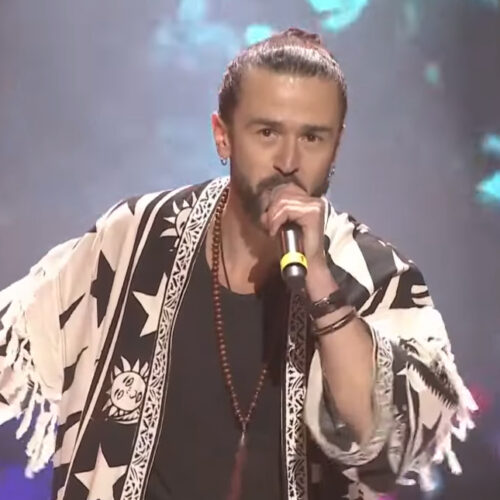
Pasha Parfeny

After a very exciting national final, it was Pasha Parfeny who won the contest. His song “Soarele și luna”, which translates as “The sun and the moon”, was composed by the singer himself and Andrei Vulpe. For the lyrics, Pasha’s wife Iuliana Parfeny is responsible. 

Pasha Parfeny, officially named Pavel Parfeni, studied music in the beginning of this century. He took part in several contests. He won two contests in Bulgaria in 2007. After this, he joined the group Sunstroke Project. In 2009, the group took part in the national selection for the Eurovision Song Contest with the song “No crime“. Parfeny left the group in 2010 for a solo career. Eurovision became a part of his life when he represented Moldova in 2012 with the song “Lăutar”. He became 11th in the final. A year later, he wrote the song “A million” for Aliona Moon. Fun fact: Pasha, Sunstroke Project and Aliona formed the top-3 in this year’s national final. In 2020, Pasha returned to the national selection for Eurovision. His song was called “My wine” and became 2nd. Three years later Pasha won the contest again.
Ma-i-a hi, ma-i-a hu…

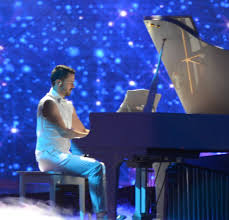
We can talk about Pasha, Sunstroke Project and Zdob şi Zdub, but the most famous band from Moldova ever is another one: O-Zone. They rose to fame in the beginning of the century. In 2003 they released their single “Dragostea din tei“, which became a hit in Romania. But after Italian duo Haiducii covered the song, the original one became a huge hit all over the world. It reached the number 1 spot in the charts in Austria, Belgium, Denmark, France, Germany, the Netherlands, Norway and Switzerland. And be honest…. who doesnt remember “Ma-i-a hi, ma-i-a hu, ma-i-a ho, ma-i-a haha”. The song was followed by another hit, “Destre tine“, but in 2005 the band split up. Isn’t there any Eurovision connection? Yes there is! Band member Arsenium took part in the 2006 Eurovision Song Contest, along with Natalia Gordienko en Connect-R.
Moldova in the Eurovision Song Contest

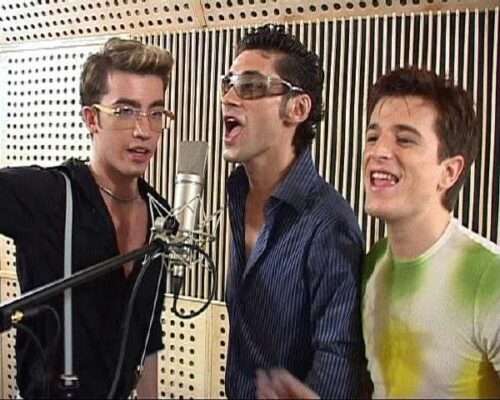
Moldova first took part in the Eurovision Song Contest in 2005, and it was an instant success. Zdob şi Zdub became 6th! Moldova kept on being succesful. The country reached the final on many occasions, and in 2017 they ended up in the top-3. Sunstroke Project managed to do that with their song “Hey mama”.

Bookmakers

The betting odds currently predict a 17th place for Moldova. That is not as good as Pasha did 11 years ago. Let’s hope for him that the bookmakers are wrong and he’ll do better.

The song

And of course, this is the song:

Related news

Uncategorized

Israel Eurovision 2025 Participation Sparks Boycott

Israel Eurovision 2025 Participation Sparks Boycott Israel’s participation in the Eurovision Song Contest 2025 has ignited a major controversy. After organizers decided to allow Israel to remain in the competition, four countries, the Netherlands, Spain, Ireland, and Slovenia, announced their withdrawal from Eurovision 2026 in protest. This rare Eurovision boycott has turned the contest into a political flashpoint. Background: Israel in Eurovision 2025 Israel finished second at Eurovision 2025, a strong result driven by public votes. However, several countries complained that Israel had artificially boosted its tally through a broad advertising campaign urging Europeans to vote for its entry. The dispute unfolded amid the Gaza war, pushing the ostensibly apolitical contest into an uncomfortable spotlight. In response, the European Broadcasting Union (EBU) rolled out new measures to protect Eurovision’s neutrality. Government-led promotion campaigns were discouraged under the updated rules. In early December, EBU members reviewed these changes and decided not to hold a vote on Israel’s status. With this, they effectively confirmed Israel would remain in Eurovision 2026. Four Countries Withdraw in Protest Following the EBU decision to keep Israel in the contest, four national broadcasters promptly confirmed their withdrawal from Eurovision 2026. Ireland’s RTÉ deemed participation “unconscionable” amid Gaza’s civilian death toll. Spain’s RTVE and the Netherlands’ AVROTROS also pulled out after the Geneva vote, arguing that taking part was incompatible with their public service values. Slovenia likewise confirmed it would boycott the contest, as it had vowed if Israel stayed. Impact and Reactions The boycott is especially significant because it includes Spain. The country is one of Eurovision’s “Big Five” nations that provide major funding and automatic finalist spots. Organizers warn that losing multiple major countries could dent the show’s global audience (typically around 150 million viewers) and deter sponsors. Israeli officials, meanwhile, welcomed the EBU’s decision. President Isaac Herzog said Israel “deserves to be represented on every stage around the world”. This saga presents Eurovision with an unprecedented challenge: upholding its spirit of musical unity in the face of deep geopolitical divides.

Read More »
Uncategorized
Martijn

Israel Eurovision 2025 Participation Sparks Boycott

Israel Eurovision 2025 Participation Sparks Boycott Israel’s participation in the Eurovision Song Contest 2025 has ignited a major controversy. After organizers decided to allow Israel to remain in the competition, four countries, the Netherlands, Spain, Ireland, and Slovenia, announced their withdrawal from Eurovision 2026 in protest. This rare Eurovision boycott has turned the contest into a political flashpoint. Background: Israel in Eurovision 2025 Israel finished second at Eurovision 2025, a strong result driven by public votes. However, several countries complained that Israel had artificially boosted its tally through a broad advertising campaign urging Europeans to vote for its entry. The dispute unfolded amid the Gaza war, pushing the ostensibly apolitical contest into an uncomfortable spotlight. In response, the European Broadcasting Union (EBU) rolled out new measures to protect Eurovision’s neutrality. Government-led promotion campaigns were discouraged under the updated rules. In early December, EBU members reviewed these changes and decided not to hold a vote on Israel’s status. With this, they effectively confirmed Israel would remain in Eurovision 2026. Four Countries Withdraw in Protest Following the EBU decision to keep Israel in the contest, four national broadcasters promptly confirmed their withdrawal from Eurovision 2026. Ireland’s RTÉ deemed participation “unconscionable” amid Gaza’s civilian death toll. Spain’s RTVE and the Netherlands’ AVROTROS also pulled out after the Geneva vote, arguing that taking part was incompatible with their public service values. Slovenia likewise confirmed it would boycott the contest, as it had vowed if Israel stayed. Impact and Reactions The boycott is especially significant because it includes Spain. The country is one of Eurovision’s “Big Five” nations that provide major funding and automatic finalist spots. Organizers warn that losing multiple major countries could dent the show’s global audience (typically around 150 million viewers) and deter sponsors. Israeli officials, meanwhile, welcomed the EBU’s decision. President Isaac Herzog said Israel “deserves to be represented on every stage around the world”. This saga presents Eurovision with an unprecedented challenge: upholding its spirit of musical unity in the face of deep geopolitical divides.

Read More »
Follow Us: