🇬🇧 Blast from the past: UK 1967

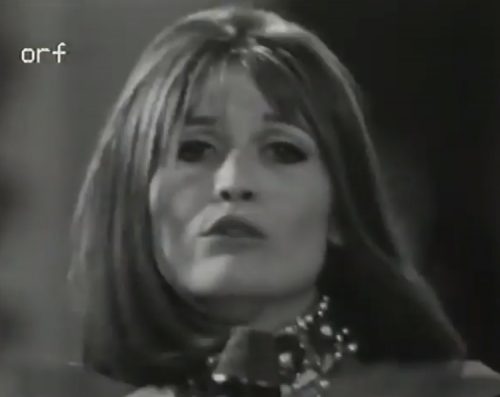
We know a lot about Eurovision and we want to share this knowledge with you! Therefore we’d like to bring you a blast from the past. Today, we go back to 1967, when Sandie Shaw brought the first victory to the United Kingdom with “Puppet On A String”.

United Kingdom in the Eurovision Song Contest

Few countries have a Eurovision pedigree like the United Kingdom. Since debuting in 1957, the UK has won five times: Sandie Shaw (1967), Lulu (1969), Brotherhood of Man (1976), Bucks Fizz (1981) and Katrina & The Waves (1997). The country hosted on nine occasions, most recently Liverpool 2023. t also holds the record for most runner‑up finishes, with 16 second places; the last came in 2022 when Sam Ryder’s “SPACE MAN” topped the jury vote. Recent form has been mixed: in 2023, host act Mae Muller finished 25th with 24 points; in 2024, Olly Alexander placed 18th with 46 points; and in 2025, Remember Monday ended 19th on 88 points.  Such swings epitomise the UK’s roller‑coaster history: long stretches of podiums and wins, punctuated by lean years, yet always central to Eurovision’s story and spectacle. 
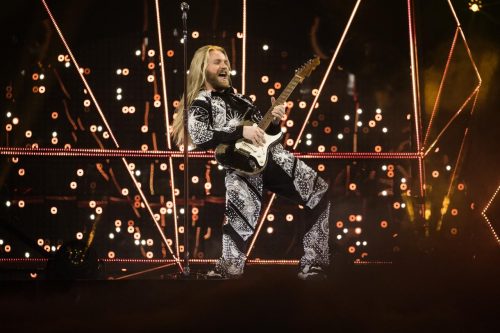
Sam Ryder, EBU

A Song For Europe 1967

The UK national final in those days was called A Song For Europe. One artist sang 5 or 6 songs. Sandie Shaw was chosen to do the job in 1967. The contest was held on February 25. The results were announced one week later.
The 5 titles were:

  1. Tell The Boys, 2nd place
  2. I’ll Cry Myself To Sleep, 3rd place
  3. Had A Dream Last Night, 4th place
  4. Puppet On A String, 1st place
  5. Ask Any Woman, 5th place


“Had A Dream Last Night” was written by another very popular pop star from those days: Chris Andrews. He is known for a lot of hits in the late sixties, “Yesterday Man” and “Pretty Belinda” being the biggest.

You can watch a recap of all songs here in good quality.

Sandie Shaw

Sandie Shaw (born Sandra Ann Goodrich on 26 February 1947 in Dagenham) ranks among Britain’s defining 1960s pop voices. As a teenager, talent scouts noticed her; Pye Records signed her, and in 1964 she hit No. 1 with the Burt Bacharach–Hal David song “(There’s) Always Something There to Remind Me.” She followed it with a run of singles—“Girl Don’t Come,” “Long Live Love,” and “Message Understood”—that cemented her chart presence. Performing barefoot, she turned a quirk into a signature and a style statement. In 1967, Shaw won the Eurovision Song Contest for the United Kingdom in Vienna with “Puppet on a String,” securing the country’s first victory, and the single topped charts across Europe.

In the early 1970s, Shaw stepped away from pop to pursue stage roles and business ventures. She later challenged her recording contracts. In the 1980s she returned to the charts through collaborations with indie admirers, notably The Smiths. Her 1988 album “Hello Angel” showcased a mature voice. Through the 1990s and 2000s she recorded selectively. She curated reissues of her catalogue. Sandie trained as a psychotherapist, mentoring artists and advocating for performers’ rights. She published memoirs and kept performing. In 2017 the UK honoured her with an MBE for services to music. It’s an honour that recognized a career bridging eras while remaining unmistakably hers.

I’m going to the toilet

Boudewijn Büch (1948–2002) was a Dutch author, poet, bibliophile, and television presenter. He became famous for literary travel programs on VARA, a Dutch public broadcaster.

In 1988, Büch invited Sandie Shaw onto his VARA show. He kept the conversation light, comparing music “then and now.” Sandie’s ground rules forbade any talk of the Eurovision Song Contest. When Büch raised the topic anyway, Shaw stood up, said “I’m going to the toilet,” and walked out, almost yanking her microphone cable free. Büch closed the episode in the restroom, singing “Puppet on a String,” and he concluded that the song had gone down the toilet.

Puppet On A String

“Puppet On A String” is Sandie Shaw’s bright, bouncy slice of 1960s Europop. Lyricist Bill Martin and composer Phil Coulter wrote the song. At Eurovision 1967 in Vienna, Shaw performed barefoot, locking onto the camera with crisp phrasing and a smile. The arrangement rides an oom‑pah, fairground swing with brisk brass and a skippy rhythm. The hook lodges instantly, and the melody aims squarely at continental tastes. The United Kingdom stormed to victory with 47 points. That is more than double the runner‑up. This way the UK its first Eurovision win.

The single topped the UK charts, and Shaw recorded versions in multiple languages, cementing its cross‑European appeal. Lyrically, the song toys with the image of a lover manipulated like a marionette, “a puppet on a string”, while the upbeat pop setting turns the drama into perfect television. “Puppet On A String” stands as a defining Eurovision winner and an enduring cornerstone of Sandie Shaw’s catalogue today.


Related news

Eurovision 2026

Vienna 12 points: from a princess to a winner

Several countries start their second rehearsals. As we still don’t have access to the rehearsals, we will do something else. Per entry, we highlight one subject and give you some more information. That can be something about the artist, the song, the lyrics or even something completely different.  Moldova – Satoshi, “Viva Moldova!” Running order: 1 | Rehearsal: 10:30–10:55 CEST “Viva Moldova,” sing the Moldovans this year, and they do so in Romanian. That language choice carries more history than many Eurovision viewers may realise. Romanian was long officially referred to as Moldovan in Moldova, a name rooted mainly in Soviet and post-Soviet politics rather than linguistic difference. In practice, Moldovan and Romanian are the same language, with regional accents and vocabulary, as Dutch in the Netherlands and Flanders can differ without becoming separate languages. In 2013, Moldova’s Constitutional Court ruled that the Declaration of Independence, which names Romanian, prevails. Since 2023, the constitution also refers to Romanian. At Eurovision, “Viva Moldova” therefore is not only a patriotic slogan from Chișinău, but also a clear political and linguistic statement today.Oddly enough, Satoshi uses a Japanese name. He explains why in an interview with us. Another interview with Satoshi came after the rehearsals:  Sweden – FELICIA, “My System” Running order: 2 | Rehearsal: 11:05–11:30 CEST Fröken Snusk was one of Sweden’s most talked-about pop phenomena: a pink-balaclava-wearing persona built on anonymity, provocative lyrics and the booming EPA-dunk sound. The act broke through online and became known far beyond its party-music niche, helped by Melodifestivalen 2024 and a strong visual identity that made the mask as recognisable as the songs. Behind the original Fröken Snusk was Felicia Eriksson, who later left the project and moved forward under her own name. That background gives today’s Eurovision rehearsal extra context. Still wearing a mask, Felicia is no longer hiding inside the Fröken Snusk character, but the confidence, controversy and curiosity around that chapter still follow her onto the Vienna stage.  Croatia – LELEK, “Andromeda” Running order: 3 | Rehearsal: 11:40–12:05 CEST Andromeda is a figure from Greek mythology: a princess, not a goddess, and the daughter of King Cepheus and Queen Cassiopeia. After her mother angered the sea nymphs by boasting of Andromeda’s beauty, Poseidon sent a monster to ravage the kingdom. To save her people, Andromeda was chained to a rock as a sacrifice, until Perseus rescued her. In Lelek’s song, that story becomes more than a myth. Andromeda can be read as a symbol of women treated as bodies, victims or bargaining chips by forces bigger than themselves. The title also carries a cosmic meaning: Andromeda is a constellation and gives its name to the Andromeda Galaxy. That link to the stars fits the song’s imagery of escape, distance and survival. For contemporary listeners, her ancient story adds emotional weight. Lelek’s Andromeda is therefore both a mythological princess and a powerful metaphor for pain, resistance and hard-won freedom.  Greece – Akylas, “Ferto” Running order: 4 | Rehearsal: 12:20–12:45 CEST Akylas has become an important figure for Greece’s LGBTQ+ community because his visibility is not presented as a side note, but as part of his artistic identity. Long before Eurovision, his music and stage presence were linked to queer self-expression, emotional honesty and performances at events such as Athens Pride. That background gives his Eurovision journey a broader meaning. In a country where queer voices have often had to fight for space in mainstream culture, Akylas represents a new kind of openness. He has also spoken about homophobic bullying and the support he received after winning the Greek selection, turning his own experiences into a message for younger LGBTQ+ people. For many Greek fans, his participation is therefore not only about a song. It is also about recognition: seeing someone openly queer carry Greek pop culture onto one of Europe’s biggest stages with confidence, vulnerability and a distinctly Greek sound.  Portugal – Bandidos do Cante, “Rosa” Running order: 5 | Rehearsal: 12:55–13:20 CEST Cante Alentejano is the traditional polyphonic singing of the Alentejo, the vast southern Portuguese region between the Tagus and the Algarve. It is usually performed by groups of amateur singers, without instruments. It’s in a slow, collective style built around two vocal lines and distinctive melodies. UNESCO added it to the Representative List of the Intangible Cultural Heritage of Humanity in 2014. In Portugal’s 2026 Eurovision entry, Bandidos do Cante bring that tradition into a pop setting. “Rosa” does not simply borrow a regional sound; it places the warmth of group singing at the centre of the song. That gives the entry a clear Portuguese identity. The voices suggest landscape, memory and togetherness, while the modern arrangement makes the old tradition accessible to a Eurovision audience that may be hearing Cante Alentejano for the first time, without losing its roots. You can read more about the meaningful lyrics here.  Georgia – Bzikebi, “On Replay” Running order: 6 | Rehearsal: 13:30–13:55 CEST Junior Eurovision has often been a first step towards bigger stages, but only four winners have later returned as Eurovision contestants. The Tolmachevy Sisters opened that path: after winning Junior Eurovision 2006 for Russia with “Vesenniy Jazz”, they represented Russia in 2014 with “Shine”, finishing seventh. Destiny followed Malta’s 2015 Junior victory with “Not My Soul” by taking “Je Me Casse” to Eurovision 2021, also ending seventh. Georgia’s Iru, winner as part of Candy in 2011, returned solo in 2023 with “Echo”. This year, Georgia completes the circle again with Bzikebi, the buzzing trio who won Junior Eurovision 2008 with “Bzz..” and now step onto the adult contest stage with “On Replay”. Their return adds a nostalgic layer to 2026. Still, one milestone remains untouched: no artist or group has ever won both Junior Eurovision and the Eurovision Song Contest. That unresolved challenge keeps the crossover story fascinating.

Read More »
Eurovision 2026
Martijn

Vienna 12 points: from a princess to a winner

Several countries start their second rehearsals. As we still don’t have access to the rehearsals, we will do something else. Per entry, we highlight one subject and give you some more information. That can be something about the artist, the song, the lyrics or even something completely different.  Moldova – Satoshi, “Viva Moldova!” Running order: 1 | Rehearsal: 10:30–10:55 CEST “Viva Moldova,” sing the Moldovans this year, and they do so in Romanian. That language choice carries more history than many Eurovision viewers may realise. Romanian was long officially referred to as Moldovan in Moldova, a name rooted mainly in Soviet and post-Soviet politics rather than linguistic difference. In practice, Moldovan and Romanian are the same language, with regional accents and vocabulary, as Dutch in the Netherlands and Flanders can differ without becoming separate languages. In 2013, Moldova’s Constitutional Court ruled that the Declaration of Independence, which names Romanian, prevails. Since 2023, the constitution also refers to Romanian. At Eurovision, “Viva Moldova” therefore is not only a patriotic slogan from Chișinău, but also a clear political and linguistic statement today.Oddly enough, Satoshi uses a Japanese name. He explains why in an interview with us. Another interview with Satoshi came after the rehearsals:  Sweden – FELICIA, “My System” Running order: 2 | Rehearsal: 11:05–11:30 CEST Fröken Snusk was one of Sweden’s most talked-about pop phenomena: a pink-balaclava-wearing persona built on anonymity, provocative lyrics and the booming EPA-dunk sound. The act broke through online and became known far beyond its party-music niche, helped by Melodifestivalen 2024 and a strong visual identity that made the mask as recognisable as the songs. Behind the original Fröken Snusk was Felicia Eriksson, who later left the project and moved forward under her own name. That background gives today’s Eurovision rehearsal extra context. Still wearing a mask, Felicia is no longer hiding inside the Fröken Snusk character, but the confidence, controversy and curiosity around that chapter still follow her onto the Vienna stage.  Croatia – LELEK, “Andromeda” Running order: 3 | Rehearsal: 11:40–12:05 CEST Andromeda is a figure from Greek mythology: a princess, not a goddess, and the daughter of King Cepheus and Queen Cassiopeia. After her mother angered the sea nymphs by boasting of Andromeda’s beauty, Poseidon sent a monster to ravage the kingdom. To save her people, Andromeda was chained to a rock as a sacrifice, until Perseus rescued her. In Lelek’s song, that story becomes more than a myth. Andromeda can be read as a symbol of women treated as bodies, victims or bargaining chips by forces bigger than themselves. The title also carries a cosmic meaning: Andromeda is a constellation and gives its name to the Andromeda Galaxy. That link to the stars fits the song’s imagery of escape, distance and survival. For contemporary listeners, her ancient story adds emotional weight. Lelek’s Andromeda is therefore both a mythological princess and a powerful metaphor for pain, resistance and hard-won freedom.  Greece – Akylas, “Ferto” Running order: 4 | Rehearsal: 12:20–12:45 CEST Akylas has become an important figure for Greece’s LGBTQ+ community because his visibility is not presented as a side note, but as part of his artistic identity. Long before Eurovision, his music and stage presence were linked to queer self-expression, emotional honesty and performances at events such as Athens Pride. That background gives his Eurovision journey a broader meaning. In a country where queer voices have often had to fight for space in mainstream culture, Akylas represents a new kind of openness. He has also spoken about homophobic bullying and the support he received after winning the Greek selection, turning his own experiences into a message for younger LGBTQ+ people. For many Greek fans, his participation is therefore not only about a song. It is also about recognition: seeing someone openly queer carry Greek pop culture onto one of Europe’s biggest stages with confidence, vulnerability and a distinctly Greek sound.  Portugal – Bandidos do Cante, “Rosa” Running order: 5 | Rehearsal: 12:55–13:20 CEST Cante Alentejano is the traditional polyphonic singing of the Alentejo, the vast southern Portuguese region between the Tagus and the Algarve. It is usually performed by groups of amateur singers, without instruments. It’s in a slow, collective style built around two vocal lines and distinctive melodies. UNESCO added it to the Representative List of the Intangible Cultural Heritage of Humanity in 2014. In Portugal’s 2026 Eurovision entry, Bandidos do Cante bring that tradition into a pop setting. “Rosa” does not simply borrow a regional sound; it places the warmth of group singing at the centre of the song. That gives the entry a clear Portuguese identity. The voices suggest landscape, memory and togetherness, while the modern arrangement makes the old tradition accessible to a Eurovision audience that may be hearing Cante Alentejano for the first time, without losing its roots. You can read more about the meaningful lyrics here.  Georgia – Bzikebi, “On Replay” Running order: 6 | Rehearsal: 13:30–13:55 CEST Junior Eurovision has often been a first step towards bigger stages, but only four winners have later returned as Eurovision contestants. The Tolmachevy Sisters opened that path: after winning Junior Eurovision 2006 for Russia with “Vesenniy Jazz”, they represented Russia in 2014 with “Shine”, finishing seventh. Destiny followed Malta’s 2015 Junior victory with “Not My Soul” by taking “Je Me Casse” to Eurovision 2021, also ending seventh. Georgia’s Iru, winner as part of Candy in 2011, returned solo in 2023 with “Echo”. This year, Georgia completes the circle again with Bzikebi, the buzzing trio who won Junior Eurovision 2008 with “Bzz..” and now step onto the adult contest stage with “On Replay”. Their return adds a nostalgic layer to 2026. Still, one milestone remains untouched: no artist or group has ever won both Junior Eurovision and the Eurovision Song Contest. That unresolved challenge keeps the crossover story fascinating.

Read More »
Follow Us: