🇬🇧 Blast from the past: UK 1967

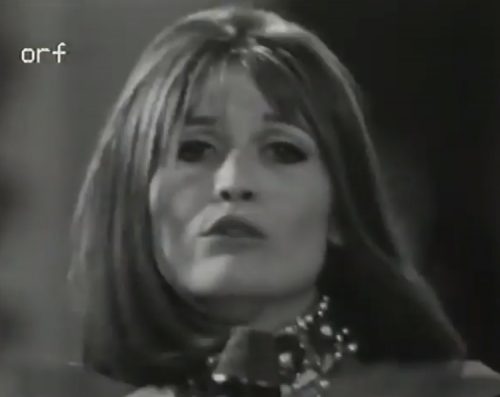
We know a lot about Eurovision and we want to share this knowledge with you! Therefore we’d like to bring you a blast from the past. Today, we go back to 1967, when Sandie Shaw brought the first victory to the United Kingdom with “Puppet On A String”.

United Kingdom in the Eurovision Song Contest

Few countries have a Eurovision pedigree like the United Kingdom. Since debuting in 1957, the UK has won five times: Sandie Shaw (1967), Lulu (1969), Brotherhood of Man (1976), Bucks Fizz (1981) and Katrina & The Waves (1997). The country hosted on nine occasions, most recently Liverpool 2023. t also holds the record for most runner‑up finishes, with 16 second places; the last came in 2022 when Sam Ryder’s “SPACE MAN” topped the jury vote. Recent form has been mixed: in 2023, host act Mae Muller finished 25th with 24 points; in 2024, Olly Alexander placed 18th with 46 points; and in 2025, Remember Monday ended 19th on 88 points.  Such swings epitomise the UK’s roller‑coaster history: long stretches of podiums and wins, punctuated by lean years, yet always central to Eurovision’s story and spectacle. 
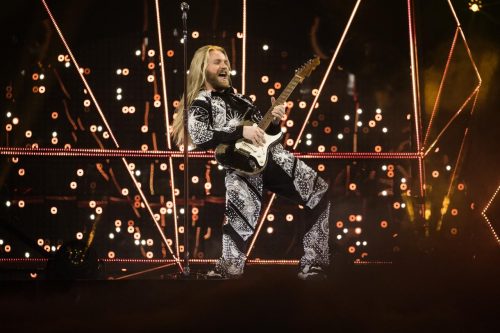
Sam Ryder, EBU

A Song For Europe 1967

The UK national final in those days was called A Song For Europe. One artist sang 5 or 6 songs. Sandie Shaw was chosen to do the job in 1967. The contest was held on February 25. The results were announced one week later.
The 5 titles were:

  1. Tell The Boys, 2nd place
  2. I’ll Cry Myself To Sleep, 3rd place
  3. Had A Dream Last Night, 4th place
  4. Puppet On A String, 1st place
  5. Ask Any Woman, 5th place


“Had A Dream Last Night” was written by another very popular pop star from those days: Chris Andrews. He is known for a lot of hits in the late sixties, “Yesterday Man” and “Pretty Belinda” being the biggest.

You can watch a recap of all songs here in good quality.

Sandie Shaw

Sandie Shaw (born Sandra Ann Goodrich on 26 February 1947 in Dagenham) ranks among Britain’s defining 1960s pop voices. As a teenager, talent scouts noticed her; Pye Records signed her, and in 1964 she hit No. 1 with the Burt Bacharach–Hal David song “(There’s) Always Something There to Remind Me.” She followed it with a run of singles—“Girl Don’t Come,” “Long Live Love,” and “Message Understood”—that cemented her chart presence. Performing barefoot, she turned a quirk into a signature and a style statement. In 1967, Shaw won the Eurovision Song Contest for the United Kingdom in Vienna with “Puppet on a String,” securing the country’s first victory, and the single topped charts across Europe.

In the early 1970s, Shaw stepped away from pop to pursue stage roles and business ventures. She later challenged her recording contracts. In the 1980s she returned to the charts through collaborations with indie admirers, notably The Smiths. Her 1988 album “Hello Angel” showcased a mature voice. Through the 1990s and 2000s she recorded selectively. She curated reissues of her catalogue. Sandie trained as a psychotherapist, mentoring artists and advocating for performers’ rights. She published memoirs and kept performing. In 2017 the UK honoured her with an MBE for services to music. It’s an honour that recognized a career bridging eras while remaining unmistakably hers.

I’m going to the toilet

Boudewijn Büch (1948–2002) was a Dutch author, poet, bibliophile, and television presenter. He became famous for literary travel programs on VARA, a Dutch public broadcaster.

In 1988, BĂĽch invited Sandie Shaw onto his VARA show. He kept the conversation light, comparing music “then and now.” Sandie’s ground rules forbade any talk of the Eurovision Song Contest. When BĂĽch raised the topic anyway, Shaw stood up, said “I’m going to the toilet,” and walked out, almost yanking her microphone cable free. BĂĽch closed the episode in the restroom, singing “Puppet on a String,” and he concluded that the song had gone down the toilet.

Puppet On A String

“Puppet On A String” is Sandie Shaw’s bright, bouncy slice of 1960s Europop. Lyricist Bill Martin and composer Phil Coulter wrote the song. At Eurovision 1967 in Vienna, Shaw performed barefoot, locking onto the camera with crisp phrasing and a smile. The arrangement rides an oom‑pah, fairground swing with brisk brass and a skippy rhythm. The hook lodges instantly, and the melody aims squarely at continental tastes. The United Kingdom stormed to victory with 47 points. That is more than double the runner‑up. This way the UK its first Eurovision win.

The single topped the UK charts, and Shaw recorded versions in multiple languages, cementing its cross‑European appeal. Lyrically, the song toys with the image of a lover manipulated like a marionette, “a puppet on a string”, while the upbeat pop setting turns the drama into perfect television. “Puppet On A String” stands as a defining Eurovision winner and an enduring cornerstone of Sandie Shaw’s catalogue today.


Related news

Uncategorized

Israel Eurovision 2025 Participation Sparks Boycott

Israel Eurovision 2025 Participation Sparks Boycott Israel’s participation in the Eurovision Song Contest 2025 has ignited a major controversy. After organizers decided to allow Israel to remain in the competition, four countries, the Netherlands, Spain, Ireland, and Slovenia, announced their withdrawal from Eurovision 2026 in protest. This rare Eurovision boycott has turned the contest into a political flashpoint. Background: Israel in Eurovision 2025 Israel finished second at Eurovision 2025, a strong result driven by public votes. However, several countries complained that Israel had artificially boosted its tally through a broad advertising campaign urging Europeans to vote for its entry. The dispute unfolded amid the Gaza war, pushing the ostensibly apolitical contest into an uncomfortable spotlight. In response, the European Broadcasting Union (EBU) rolled out new measures to protect Eurovision’s neutrality. Government-led promotion campaigns were discouraged under the updated rules. In early December, EBU members reviewed these changes and decided not to hold a vote on Israel’s status. With this, they effectively confirmed Israel would remain in Eurovision 2026. Four Countries Withdraw in Protest Following the EBU decision to keep Israel in the contest, four national broadcasters promptly confirmed their withdrawal from Eurovision 2026. Ireland’s RTÉ deemed participation “unconscionable” amid Gaza’s civilian death toll. Spain’s RTVE and the Netherlands’ AVROTROS also pulled out after the Geneva vote, arguing that taking part was incompatible with their public service values. Slovenia likewise confirmed it would boycott the contest, as it had vowed if Israel stayed. Impact and Reactions The boycott is especially significant because it includes Spain. The country is one of Eurovision’s “Big Five” nations that provide major funding and automatic finalist spots. Organizers warn that losing multiple major countries could dent the show’s global audience (typically around 150 million viewers) and deter sponsors. Israeli officials, meanwhile, welcomed the EBU’s decision. President Isaac Herzog said Israel “deserves to be represented on every stage around the world”. This saga presents Eurovision with an unprecedented challenge: upholding its spirit of musical unity in the face of deep geopolitical divides.

Read More »
Uncategorized
Martijn

Israel Eurovision 2025 Participation Sparks Boycott

Israel Eurovision 2025 Participation Sparks Boycott Israel’s participation in the Eurovision Song Contest 2025 has ignited a major controversy. After organizers decided to allow Israel to remain in the competition, four countries, the Netherlands, Spain, Ireland, and Slovenia, announced their withdrawal from Eurovision 2026 in protest. This rare Eurovision boycott has turned the contest into a political flashpoint. Background: Israel in Eurovision 2025 Israel finished second at Eurovision 2025, a strong result driven by public votes. However, several countries complained that Israel had artificially boosted its tally through a broad advertising campaign urging Europeans to vote for its entry. The dispute unfolded amid the Gaza war, pushing the ostensibly apolitical contest into an uncomfortable spotlight. In response, the European Broadcasting Union (EBU) rolled out new measures to protect Eurovision’s neutrality. Government-led promotion campaigns were discouraged under the updated rules. In early December, EBU members reviewed these changes and decided not to hold a vote on Israel’s status. With this, they effectively confirmed Israel would remain in Eurovision 2026. Four Countries Withdraw in Protest Following the EBU decision to keep Israel in the contest, four national broadcasters promptly confirmed their withdrawal from Eurovision 2026. Ireland’s RTÉ deemed participation “unconscionable” amid Gaza’s civilian death toll. Spain’s RTVE and the Netherlands’ AVROTROS also pulled out after the Geneva vote, arguing that taking part was incompatible with their public service values. Slovenia likewise confirmed it would boycott the contest, as it had vowed if Israel stayed. Impact and Reactions The boycott is especially significant because it includes Spain. The country is one of Eurovision’s “Big Five” nations that provide major funding and automatic finalist spots. Organizers warn that losing multiple major countries could dent the show’s global audience (typically around 150 million viewers) and deter sponsors. Israeli officials, meanwhile, welcomed the EBU’s decision. President Isaac Herzog said Israel “deserves to be represented on every stage around the world”. This saga presents Eurovision with an unprecedented challenge: upholding its spirit of musical unity in the face of deep geopolitical divides.

Read More »
Follow Us: