Weekly Update

It’s Tuesday, October 28, 2025, and time for another weekly Eurovision update! This week brings national selection news from across Europe and a heated debate over Israel’s participation in Eurovision 2026. Ukraine’s broadcaster faces a legal threat over Vidbir rules, Germany wraps up its song submission phase, and several countries unveil plans for choosing their next Eurovision acts. Meanwhile, Austrian officials are speaking out strongly against any boycott of Israel. Here are this week’s top stories:

National finals
🇺🇦 Ukraine: Broadcaster Stands Firm on Vidbir Rules Amid Lawsuit Threat

Ukraine’s public broadcaster Suspilne has refused to alter its Eurovision selection rules despite pressure from a major pop star. Singer Olya Polyakova’s team appealed to the EBU and Suspilne, demanding a rule change. Otherwise “an inevitable lawsuit… could lead to even bigger scandals,” her producer Mykhailo Yasinskyi warned. The dispute centers on a policy barring artists who performed in Russia-occupied Crimea, Russia (after March 2014) or Belarus (after Feb 2022) from entering Vidbir 2026. Polyakova, who last performed in Russia in 2015, is thus ineligible under current rules. Suspilne flatly rejected her appeal, noting the selection process already began in September. Despite the controversy, Vidbir 2026 preparations continue with Eurovision 2016 winner Jamala as music producer, and the national final set for February. source: unn.ua and Suspilne
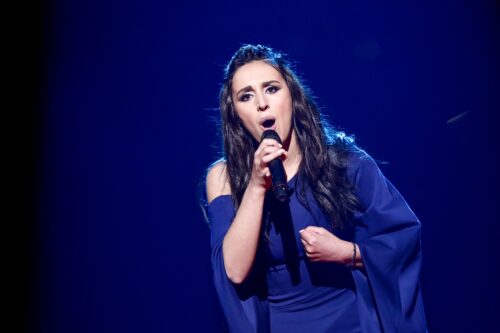
📷 Jamala, Andres Putting EBU

🇩🇪 Germany: Eurovision 2026 Song Submissions Window Closes

Germany has closed the song submission period for its Eurovision 2026 selection. October 22 was the last day for artists and songwriters to send entries to broadcaster SWR. The German selection will now move into a multi-stage review process. In the first round, SWR’s editorial team evaluates each submission based on “artistic and vocal quality”. Next, international jurors and a sample of European viewers will listen and vote, simulating Eurovision’s scoring. Their input will produce a shortlist of acts, from which the final contestants will be chosen. Germany’s national final is planned for late February 2026, broadcast live on Das Erste. The eventual winner will go on to represent Germany at the 70th Eurovision Song Contest in Vienna. source: eurovoix.com

🇸🇲 San Marino: New “San Marino Song Contest” Format & March 7 Final

The microstate of San Marino has announced an overhauled national selection format for Eurovision. Broadcaster SMRTV will hold a “San Marino Song Contest” with a format mirroring Eurovision itself. There will be two semi-finals on March 3 and 4, leading to a Grand Final on March 7, 2026. A total of 40 emerging artists, sourced from the parallel “Dreaming San Marino Song Contest” talent project, will compete in the semi-finals. Only 10 of them will advance to the final. They’ll join 10 pre-qualified established artists. In the March 7 final, these 20 acts will battle for the ticket to Eurovision 2026. The winner of San Marino’s contest will represent the country in Vienna next May. This marks a significant change from previous years’ formats, aiming to give new talent a chance alongside bigger names.  source: dreamingsanmarinosongcontest and SMRTV

🇱🇺 Luxembourg: 58 Hopefuls Audition for Eurovision Comeback

Luxembourg’s quest for its next Eurovision entrant is in full swing with live auditions. From October 24–26, 58 candidates took part in auditions at RTL studios, vying for a spot in the Luxembourg Song Contest 2026. The aspiring acts had to meet at least one of three criteria: hold Luxembourgish nationality, reside in Luxembourg for 3+ months, or have a strong link to the nation’s music scene. The 58 contestants hail from 17 different cultural backgrounds. An international jury is evaluating the performances during the auditions, which feature 83 songs across six languages. 59% in English, plus French, Luxembourgish, Portuguese, Spanish, and German. The jury will select the best acts to advance to the televised final. The national final will be held on January 24, 2026 at the Rockhal arena, where one lucky artist will earn the ticket to Eurovision in Vienna. source: eurovision.rtl.lu.

🇲🇪 Montenegro: Songwriting Teams Revealed for MonteSong 2025

This week RTCG published the list of composers, lyricists, and arrangers for each of the 15 songs competing in MonteSong 2025. The lineup showcases a broad range of talent and international collaboration. Several local Montenegrin songwriters are joined by contributors from elsewhere in Europe and even the United States. For example, former Eurovision entrant Andrea Demirović returns as a co-writer of her song “I Believe,” teaming up with American songwriter Casey McQuillen. Other entries feature songwriting teams blending domestic and foreign talent, highlighting Montenegro’s openness to global influences in its music. MonteSong 2025 will feature 15 artists (previously announced by RTCG) performing original songs on December 21, 2025. By unveiling the creative teams now, RTCG is building anticipation and giving credit to the people behind the music. The national final’s winning song and artist will represent Montenegro at Eurovision 2026. source: RTCG

📷 Andrea Demirović

🇦🇱 Albania: Festivali i Këngës 64 Song Details Unveiled on Instagram

In Albania, preparations for the 64th Festivali i Këngës are well underway. This week, the titles, genres, and songwriting credits of six competing songs were published. Among them are 2Farm’s song “Valle mbi hi” (Dance on the Ashes), an alternative track the band wrote and composed themselves, and Evi Reçi’s “Code of Life,” described as a modern ethno-EDM song. Notably, one of the revealed songwriters is Beatriçe Gjergji, who gave Albania a Top-10 finish at Eurovision 2025 with “Zjerm”. She returns as the lyricist-composer of the entry “Okej!” by newcomer Ghiti. In total, 28 artists will compete at Festivali i Këngës 64 in Tirana from December 17–20, 2025. RTSH has confirmed a revamped voting system. The FiK winner will be decided by 50% jury vote, 25% public televote and 25% international voting via the new “FiK” app. 

Israel in the Eurovision Song Contest
Austria: ORF and Government Reject Calls to Boycott Israel

As the host country for Eurovision 2026, Austria is grappling with political pressure over Israel’s participation. In recent weeks, officials in some countries (including Spain, the Netherlands, and Ireland) threatened to withdraw from Eurovision if Israel competes, given the ongoing war in Gaza. The European Broadcasting Union even considered an early vote on Israel’s status, before postponing debate to December. Austria’s leaders, however, are taking a firm stand against any boycott. Roland Weißmann, Director-General of Austrian broadcaster ORF, urged everyone to remember Eurovision’s core motto “United by Music.” “It is not a political, but a musical event,” Weißmann stressed, affirming that for him “Israel must participate” in Vienna. He and ORF’s leadership are conducting behind-the-scenes diplomacy to ensure Israel remains in the contest.

Austria’s newly appointed Chancellor Christian Stocker echoed this stance. “I would consider it a fatal mistake to exclude Israel,” Stocker said in an interview with Germany’s DPA news agency. He noted that Israel “just belongs” in the Eurovision family, responding to those questioning Israel’s place. Stocker’s view aligns with that of Germany’s opposition leader Friedrich Merz, who earlier called it “scandalous” to even debate Israel’s participation. Despite the boycott threats, ORF remains optimistic that most countries, possibly even all Big Five members, will ultimately take part in the 70th Eurovision Song Contest in Vienna. Austria is moving full steam ahead with host city preparations. ORF officials insist Eurovision 2026 will be held in Vienna as planned, welcoming all eligible participants, including Israel. sources: vol.at and rtl.nl
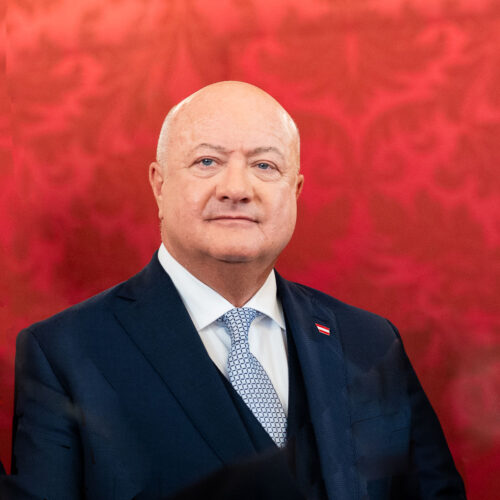
📷 Chancellor Christian Stocker, BMEIA/ Michael Gruber

Related news

History

Austria in the Eurovision Song Contest, part 7

This year’s Eurovision Song Contest has been won by Austria. It was the 57th Austrian entry. Reason for us to go back to all the Austrian entries in history! For Austria in the Eurovision Song Contest, part 7, we look back at the start of the 21st century. Alf Poier participated for Austria, but there were also some unsuccesful entries. And there was a 3-year gap. 2000 – The Rounder Girls – All To You Austria’s 2000 entry “All To You” was internally selected by broadcaster ORF. The song was written by American songwriter Dave Moskin. Moskin gave the three-piece vocal group The Rounder Girls an up-tempo, gospel-influenced pop track. Performing last in the Stockholm final, the trio, with members from Austria, the US and the UK, delivered slick harmonies and choreography. They finished 14th out of 24 countries with 34 points. The Rounder Girls were a seasoned soul/gospel ensemble, and their Eurovision appearance raised their profile, though Austria’s middling result meant the country sat out the contest in 2001. 2002 – Manuel Ortega – Say A Word “Say A Word” by Manuel Ortega won Austria’s “Song.Null.Zwei” 2002 national final out of ten songs. this entry was an upbeat pop song with a catchy, boy-band style hook. It was composed by Alexander Kahr with lyrics by Robert Pfluger. At Eurovision 2002 in Tallinn, Ortega performed third and Austria placed 18th (26 points) in the final. Manuel Ortega, a young pop singer, had scored a summer hit in 2001 and was nicknamed “the Austrian Ricky Martin” for his Latin pop flair. His Eurovision song’s fun choreography and positive message reflected that image, though the result was a lower mid-table finish. 2003 – Alf Poier – Weil der Mensch zählt ORF organized the “Song.Null.Drei” 2003 selection. Petra Frey (ESC 1994) was the runner up. Comedian-singer Alf Poier triumphed with “Weil der Mensch zählt”. Poier penned this satirical song himself. Musically it’s a quirky folk-pop tune delivered in Styrian dialect. The performance, complete with cartoonish animal props, was a parody of Eurovision’s over-the-top style. At the Riga contest, this offbeat entry surprised many by scoring 6th place with 101 points. Alf Poier, an Austrian stand-up comedian known for absurdist humor, thus earned Austria’s best Eurovision result in over a decade. His comedic approach and catchy refrain turned him into a fan favorite that year. 2004 – Tie Break – Du bist Austria’s national final “Song.Null.Vier” chose Tie Break’s “Du bist” for Eurovision 2004. Waterloo & Robinson (ESC 1976!) were the runners up. Note that a song, written by popstar Falco, participated too. So posthumously, Falco did a Eurovision attempt!Written by composer Peter Zimmermann, “Du bist” is a tender schlager-style pop ballad performed in German. Tie Break, a trio of fresh-faced male singers (a boy band formed via a talent search), delivered tight harmonies in Istanbul’s final. Thanks to Austria’s top-10 result the year before, they pre-qualified directly for the final. Tie Break finished 21st out of 24 with 9 points. The group had gained national fame through the selection process, but on the Eurovision stage their gentle ballad struggled to stand out in a field dominated by more dynamic acts. 2005 – Global.Kryner – Y así In 2005, “Song.Null.Fünf” was held and the crossover folk band Global.Kryner won with “Y así”. They narrowly beated Alf Poier. The controversy was that Austria changed the rules of the voting on the very last moment. Would the original voting procedure be used, Alf Poier would have won. Band members Edi Köhldorfer (composer) and Christof Spörk (lyricist) combined Latin salsa rhythms with Austrian alpine polka to create this unique “salsa-polka-pop” song. Global.Kryner was a six-member ensemble known for blending folk and jazz influences. They opened the Eurovision semi-final in Kyiv with an energetic performance featuring yodels and Latin dance breaks. However, “Y así” did not advance to the final, placing 21st of 25 in the semi-final with 30 points. The group had earned acclaim in Austria and Germany, but their daring genre fusion proved too quirky for the Eurovision televote that year. 2007 – Eric Papilaya – Get A Life – Get Alive After a brief Eurovision hiatus, Austria returned in 2007 by internally selecting Eric Papilaya. His entry “Get A Life – Get Alive” – composed by Greg Usek with lyrics by Austin Howard. It was the official anthem of Vienna’s Life Ball AIDS charity event. This song is an upbeat pop-rock anthem with an inspirational message and flashy staging. Papilaya performed with a giant red ribbon on stage. Papilaya, a rock vocalist who rose to fame on the TV talent show Starmania, gave a spirited performance in Helsinki’s semi-final. Unfortunately Austria did not qualify for the final; he placed 27th (four points) in the semi. The entry drew media attention for its charity theme, but it wasn’t enough to overcome tough competition in 2007. 2011 – Nadine Beiler – The Secret Is Love Austria returned to Eurovision in 2011 through the national selection “Düsseldorf – wir kommen!”. The competition featured ten songs. However, well-known artists Alf Poier and Petra Frey failed to pass the online preselection. As a result, Nadine Beiler won the final with her soulful ballad “The Secret Is Love”. She co-wrote the song with veteran producer Thomas Rabitsch. Musically, the entry combines elements of gospel and pop, while it clearly highlights Beiler’s strong vocal range. Previously, Nadine Beiler had gained national fame by winning the television talent show Starmania in 2007 at the age of 16. Therefore, expectations were already high when she took the stage in Düsseldorf. Her Eurovision performance began a cappella and gradually built towards a powerful climax. Consequently, Austria qualified from the semi-final in seventh place with 69 points. In the grand final, Beiler finished 18th, scoring 64 points. Nevertheless, this result marked Austria’s first appearance in a Eurovision final in seven years and therefore signalled a credible and positive comeback.

Read More »
History
Martijn

Austria in the Eurovision Song Contest, part 7

This year’s Eurovision Song Contest has been won by Austria. It was the 57th Austrian entry. Reason for us to go back to all the Austrian entries in history! For Austria in the Eurovision Song Contest, part 7, we look back at the start of the 21st century. Alf Poier participated for Austria, but there were also some unsuccesful entries. And there was a 3-year gap. 2000 – The Rounder Girls – All To You Austria’s 2000 entry “All To You” was internally selected by broadcaster ORF. The song was written by American songwriter Dave Moskin. Moskin gave the three-piece vocal group The Rounder Girls an up-tempo, gospel-influenced pop track. Performing last in the Stockholm final, the trio, with members from Austria, the US and the UK, delivered slick harmonies and choreography. They finished 14th out of 24 countries with 34 points. The Rounder Girls were a seasoned soul/gospel ensemble, and their Eurovision appearance raised their profile, though Austria’s middling result meant the country sat out the contest in 2001. 2002 – Manuel Ortega – Say A Word “Say A Word” by Manuel Ortega won Austria’s “Song.Null.Zwei” 2002 national final out of ten songs. this entry was an upbeat pop song with a catchy, boy-band style hook. It was composed by Alexander Kahr with lyrics by Robert Pfluger. At Eurovision 2002 in Tallinn, Ortega performed third and Austria placed 18th (26 points) in the final. Manuel Ortega, a young pop singer, had scored a summer hit in 2001 and was nicknamed “the Austrian Ricky Martin” for his Latin pop flair. His Eurovision song’s fun choreography and positive message reflected that image, though the result was a lower mid-table finish. 2003 – Alf Poier – Weil der Mensch zählt ORF organized the “Song.Null.Drei” 2003 selection. Petra Frey (ESC 1994) was the runner up. Comedian-singer Alf Poier triumphed with “Weil der Mensch zählt”. Poier penned this satirical song himself. Musically it’s a quirky folk-pop tune delivered in Styrian dialect. The performance, complete with cartoonish animal props, was a parody of Eurovision’s over-the-top style. At the Riga contest, this offbeat entry surprised many by scoring 6th place with 101 points. Alf Poier, an Austrian stand-up comedian known for absurdist humor, thus earned Austria’s best Eurovision result in over a decade. His comedic approach and catchy refrain turned him into a fan favorite that year. 2004 – Tie Break – Du bist Austria’s national final “Song.Null.Vier” chose Tie Break’s “Du bist” for Eurovision 2004. Waterloo & Robinson (ESC 1976!) were the runners up. Note that a song, written by popstar Falco, participated too. So posthumously, Falco did a Eurovision attempt!Written by composer Peter Zimmermann, “Du bist” is a tender schlager-style pop ballad performed in German. Tie Break, a trio of fresh-faced male singers (a boy band formed via a talent search), delivered tight harmonies in Istanbul’s final. Thanks to Austria’s top-10 result the year before, they pre-qualified directly for the final. Tie Break finished 21st out of 24 with 9 points. The group had gained national fame through the selection process, but on the Eurovision stage their gentle ballad struggled to stand out in a field dominated by more dynamic acts. 2005 – Global.Kryner – Y así In 2005, “Song.Null.Fünf” was held and the crossover folk band Global.Kryner won with “Y así”. They narrowly beated Alf Poier. The controversy was that Austria changed the rules of the voting on the very last moment. Would the original voting procedure be used, Alf Poier would have won. Band members Edi Köhldorfer (composer) and Christof Spörk (lyricist) combined Latin salsa rhythms with Austrian alpine polka to create this unique “salsa-polka-pop” song. Global.Kryner was a six-member ensemble known for blending folk and jazz influences. They opened the Eurovision semi-final in Kyiv with an energetic performance featuring yodels and Latin dance breaks. However, “Y así” did not advance to the final, placing 21st of 25 in the semi-final with 30 points. The group had earned acclaim in Austria and Germany, but their daring genre fusion proved too quirky for the Eurovision televote that year. 2007 – Eric Papilaya – Get A Life – Get Alive After a brief Eurovision hiatus, Austria returned in 2007 by internally selecting Eric Papilaya. His entry “Get A Life – Get Alive” – composed by Greg Usek with lyrics by Austin Howard. It was the official anthem of Vienna’s Life Ball AIDS charity event. This song is an upbeat pop-rock anthem with an inspirational message and flashy staging. Papilaya performed with a giant red ribbon on stage. Papilaya, a rock vocalist who rose to fame on the TV talent show Starmania, gave a spirited performance in Helsinki’s semi-final. Unfortunately Austria did not qualify for the final; he placed 27th (four points) in the semi. The entry drew media attention for its charity theme, but it wasn’t enough to overcome tough competition in 2007. 2011 – Nadine Beiler – The Secret Is Love Austria returned to Eurovision in 2011 through the national selection “Düsseldorf – wir kommen!”. The competition featured ten songs. However, well-known artists Alf Poier and Petra Frey failed to pass the online preselection. As a result, Nadine Beiler won the final with her soulful ballad “The Secret Is Love”. She co-wrote the song with veteran producer Thomas Rabitsch. Musically, the entry combines elements of gospel and pop, while it clearly highlights Beiler’s strong vocal range. Previously, Nadine Beiler had gained national fame by winning the television talent show Starmania in 2007 at the age of 16. Therefore, expectations were already high when she took the stage in Düsseldorf. Her Eurovision performance began a cappella and gradually built towards a powerful climax. Consequently, Austria qualified from the semi-final in seventh place with 69 points. In the grand final, Beiler finished 18th, scoring 64 points. Nevertheless, this result marked Austria’s first appearance in a Eurovision final in seven years and therefore signalled a credible and positive comeback.

Read More »
Follow Us: