Weekly Update

It’s Tuesday, March 17, 2026, which means it’s time for another weekly Eurovision update! Over the past week, the final wave of song reveals for Eurovision 2026 generated plenty of buzz both on and off the stage. Four more countries unveiled their entries, completing the Vienna line-up. Meanwhile, controversies erupted around a few artists and songs. Preparations also ramped up as EuroClub tickets went on sale and pre-party announcements rolled out. The Heads of Delegation met in Vienna to finalize plans. The betting odds also shifted as new favorites emerged. Here are this week’s top stories:

New Eurovision Entries Confirmed
🇨🇭 Switzerland

Switzerland has revealed its entry for Eurovision 2026: Veronica Fusaro will perform the song “Alice”. The track is an intense alternative pop ballad with rock influences. It tells the story of a woman whose personal boundaries are gradually crossed under the guise of affection. Fusaro was internally selected by Swiss broadcaster SRG SSR. “Alice” is a revamped version of a song from her 2025 album, updated in collaboration with producer Charlie McClean.

🇦🇲 Armenia

Armenia completed this year’s Eurovision roster by announcing SIMÓN as its representative with the song “Paloma Rumba”. The entry delivers a “rebellious anthem” about breaking free from a suffocating 9-to-5 routine. Its title literally translates to “Dove’s Dance” and symbolizes a joyful dance of freedom. Lilit Navasardyan (LI’LITH) composed “Paloma Rumba”. David Tserunyan, Eva Voskanyan, and Rosa Linn (Armenia’s 2022 representative) wrote the lyrics. SIMÓN earned the selection after finishing as the runner-up in Armenia’s national final.

🇨🇿 Czechia

Czech Television (ČT) confirmed 23-year-old Daniel Zizka as the Czech representative for Eurovision 2026 with his song “CROSSROADS”. During the artist reveal on March 8, the broadcaster highlighted his soulful voice and authentic style. Daniel impressed the selection team by performing his song flawlessly in the studio on his first attempt. He premiered “CROSSROADS” on March 11, completing Czechia’s line-up for Eurovision 2026.

🇬🇪 Georgia

Georgia unveiled its entry “On Replay”, which trio Bzikebi will perform. Bzikebi famously won Junior Eurovision 2008 as children. Now the three members return to the Eurovision stage as adults. Giga Kukhianidze composed “On Replay”, while Lizi Japaridze wrote the lyrics. The song closed the release schedule for the 70th contest. Georgia will present “On Replay” in the first semi-final on May 12.

2026
🇸🇪 Sweden: Felicia’s Israel Comment Draws EBU Reminder

Sweden’s Eurovision representative, Felicia, sparked controversy by stating that Israel “should not be allowed to compete” in Eurovision 2026. The European Broadcasting Union responded by contacting SVT and Felicia to reiterate the contest’s rules against political statements. SVT held a meeting with Felicia following the incident. The broadcaster confirmed that she has been clearly reminded of Eurovision’s guidelines forbidding political advocacy. The EBU also stressed that all contestants must respect the event’s neutrality and keep the focus on music. source: SVT

🇦🇿 Azerbaijan: Broadcaster Denies AI Rumors Around Entry

Azerbaijan’s broadcaster İctimai officially dismissed rumors that its Eurovision entry “Just Go” by JIVA was created using artificial intelligence. Speculation had spread online after fans noted that the song’s composer, Fuad Javadov, used AI tools in some previous projects. In a public statement, İctimai clarified that “Just Go” is an original work “created through a professional process.” The broadcaster stated that allegations of AI involvement “do not correspond to reality”. They also noted the increased involvement of local songwriters this year, with 107 of 186 submissions written by Azerbaijani creators. The selection committee chose JIVA for her strong live vocals. This aligned with Azerbaijan’s focus on vocal quality, especially now that juries have returned for the semi-finals. source: Instagram İctimai

🇷🇴 Romania: Entry “Choke Me” Faces Backlash

Romania’s Eurovision entry “Choke Me” by Alexandra Căpitănescu has come under fire from anti-violence campaigners. Critics argue that the song’s lyrics – which repeat the phrase “choke me” – glamorize sexual strangulation. Campaigners have called the entry “dangerous” and “reckless” for young audiences. Many people have urged the EBU to disqualify the song or demand a lyric change. So far, no official action has been taken. Alexandra has defended her song. She explains that the vivid “choking” imagery is a metaphor for feeling overwhelmed by emotions and self-doubt, not a literal call for violence. source: Romania Insider

EuroClub 2026 Tickets Now on Sale

EuroClub – the official afterparty venue during Eurovision week – is coming to Vienna, and tickets are now on sale. Nightly EuroClub events will run from May 11 through May 16 at the Prater DOME in Vienna, giving fans and delegations a place to celebrate after each show. Early-bird tickets cost around €28 for OGAE fan club members and about €37 for non-members. These discounted prices are only available until March 14. The EuroClub will feature different themed nights and guest DJs. It is open to all fans aged 18 and over. With the Eurovision party atmosphere returning, many attendees are already snapping up EuroClub passes to dance into the early hours during contest week. source: Instagram Euroclub
 

Heads of Delegation Meeting Held in Vienna

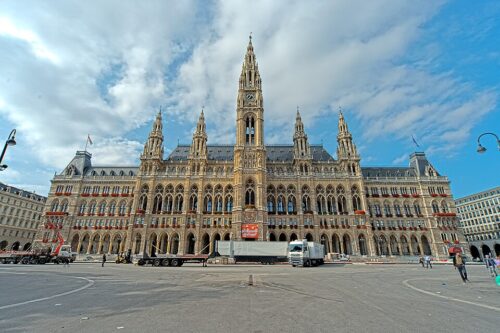
The Heads of Delegation meeting for the Eurovision Song Contest 2026 took place today in Vienna. Representatives from all 35 participating countries gathered on March 17. This was one week after the deadline for each broadcaster to submit their song, staging plans and other materials for the contest. During the meeting, each delegation handed over its final entry and performance plans to the EBU and host broadcaster ORF. This annual summit allows producers to review all plans, ensure rules are being followed, and begin working on the show’s running order. Now that the Heads of Delegation meeting is complete, preparations move into the next phase. In the coming weeks, ORF will focus on postcard filming, stage design work and other production tasks as the road to Vienna continues. source: Eurovoix

Update: A draw decided that Austria will perform in 25th position in the final of the Eurovision Song Contest.
Eurovision Song Contest 2026 - Banner

Betting Odds Update

With all 35 songs now revealed, the betting markets are starting to solidify around a few favorites. As of mid-March, Finland remains the clear favorite to win Eurovision 2026. The Finnish duo (Linda Lampenius & Pete Parkkonen with their rock-violin entry “Liekinheitin”) currently holds nearly a 30% implied chance of victory. Close behind, France and Denmark have emerged as the second- and third-favorites, respectively. They are a few percentage points ahead of the rest of the field. Rounding out the current top five are Greece in fourth place and Australia in fifth. Just behind them, entries like Sweden and Israel are next in line. However, anything can change once rehearsals and live performances get underway in May. source: Eurovisionworld

Eurovision Pre-Party Season Kicks Off

The Eurovision pre-party season is in full swing. Events across Europe are giving artists a chance to perform their songs live before May:

Nordic Eurovision Party (Oslo)

This Scandinavian pre-party will take place at Rockefeller Music Hall in Oslo on March 21. Its lineup features a mix of Eurovision 2026 entrants and Nordic Eurovision veterans. Current acts like Malta’s Aidan and Austria’s Cosmó will share the stage with Eurovision alumni. Guests include stars such as Poli Genova (Bulgaria 2016) and Elisabeth Andreassen of Bobbysocks (Norway 1985). The event is open to fans 18 and older, and tickets are on sale now.

source: Nordic Eurovision

Eurovision in Concert (Amsterdam)
Eurovision in Concert 2026, the largest annual pre-party, is set for April 11 at AFAS Live in Amsterdam. So far, 11 countries from this year’s contest have confirmed that their acts will perform. The attendees include Finland, Denmark, Ukraine, Albania and others. The concert will be hosted by Eurovision alum Krista Siegfrids (who represented Finland in 2013) alongside Dutch commentator Cornald Maas. Eurovision in Concert is renowned for featuring one of the biggest line-ups of performers each year. source: Eurovisioninconcert


Eurovision Pre-Party Bucharest
A brand-new event will debut in Romania’s capital on April 18. The Eurovision Pre-Party Bucharest 2026 will be held at the Arenele Romane amphitheater. It is organized by OGAE Romania in partnership with TVR and other sponsors. The show will feature some of this year’s competitors as well as guest performers from past contests. This marks the first time a Eurovision pre-party is being held in Romania, adding an Eastern European stop to the pre-contest circuit. source: Eurovoix


London Eurovision Party
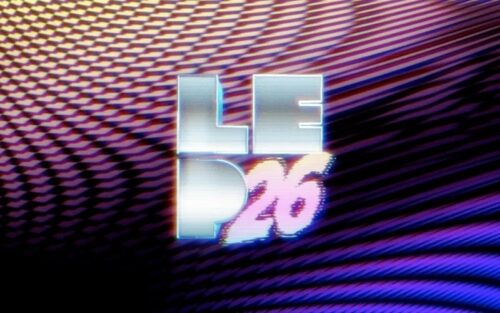
The UK’s official Eurovision pre-party returns on April 19 at Here at Outernet in London. Now in its 17th edition, the London Eurovision Party will welcome over a dozen of the Eurovision 2026 acts to its stage. The confirmed line-up so far includes Linda Lampenius & Pete Parkkonen from Finland and Søren Torpegaard Lund from Denmark. It will also feature Leléka from Ukraine, Lion Ceccah from Lithuania, and others. Fans can also look forward to guest performances by past Eurovision stars. For example, Moldova’s Aliona Moon (who represented her country in 2013) is slated to appear at the London show. Tickets for the London event have already sold out. Eurovision enthusiasts are eagerly awaiting this night of music and celebration in the heart of London. source: London Eurovision Party

Related news

History

70 years of Eurovision: the semifinal came

The Eurovision Song Contest is celebrating its 70th anniversary. That is a wonderful milestone. We at Eurovision Universe love diving into the history of the contest. That is why we are taking a closer look at the contests of the past 70 years. 2004 It was a nice idea to have Enrique Iglesias host the Eurovision Song Contest. It didn’t happen. Whether it was an excessive fee or protests within the broadcaster because the man wasn’t Turkish, we don’t know exactly. But in the now-demolished Abdi İpekçi Arena in Istanbul, Korhan Abay and Meltem Cumbul hosted the contest. And for the first time, there was a semi-final. Countries that had not finished in the top 10 the previous year and countries that were on the reserve bench at the time had to participate. Debuting countries Albania, Belarus, Serbia & Montenegro, and Andorra were also in it. The songs The Belarusians sent the duo Aleksandra and Konstantin with the song “My Galileo”. It was sung in English, but you had to mention that. For a few years, there was an Aleksandra and Konstantin Award for the very worst English. Jonathan Cerrada was the participant for France. By then, the Belgian was a big star in the French-speaking countries. Amidst the stilt-walking backing singers, he failed to live up to expectations. Neither did the Belgian top favorite Xandee with the disco track “1 Life.” How different it was for the Albanian Anjeza Shahini. Festivali i Këngës, a major Albanian national song contest held at the end of December, became the national selection from then on. Only the song “Dua të jem imazhi yt” had to be shortened by a minute and a half, and was therefore immediately translated into English. The Bosnian Dane also stood out with his disco beat, his bleached hair, and his pink suit. Macedonia sent its biggest star, Toše Proeski. He would die in a car accident four years later. His fame has since grown to legendary proportions. Lena Philipsson was already a big star in Sweden. Yet she never managed to win Melodifestivalen. Until 2004, that is. Greece had had an extensive national final. But while it was still underway, their biggest star, Sakis Rouvas, announced his intention to go to the Eurovision Song Contest. The entire national final was set aside, and Sakis went to Istanbul. Serbia and Montenegro were represented by Željko Joksimović, who performed a piece of his own Serbian culture with “Lane moje.” Sakis and Željko would go on to compete in the final. Ruslana But they did not fight that final battle alone. The Ukrainian Ruslana also participated. She, too, had brought her own culture with her. In the song “Wild Dances,” a Ukrainian instrument, the trembita, played the leading role. Ruslana had been internally selected to go to the Eurovision Song Contest. When she won, she was honored by President Kuchma with the highest possible distinction, People’s Artist of Ukraine. With the presidential elections of late 2004 and the subsequent Orange Revolution, she sided with presidential candidate Yushchenko. He did not win; fraud was suspected. During the revolution that followed, Ruslana went on a hunger strike for a short time. Besides being a singer, she would remain a political activist and politician. 2005 Ruslana was set to present the Eurovision Song Contest, which was held at the Palace of Sports in Kyiv. She was to do so together with Pavlo Shylko. However, Ruslana withdrew, officially because she had other commitments. But it is quite possible that her poor English also played a role. Since there was a semifinal,  Bulgaria and Moldova wanted to participate as well, Hungary returned, and even Monaco came back after 26 years. The songs The Icelandic Selma participated one more time. This time, however, she did not reach the final. Chiara from Malta also took part again. She even improved on her previous success by finishing second with her “Angel”. Constantinos from Cyprus even participated for the third time. And Helena Paparizou, who represented Greece in 2001 with the duo Antique, was also present again. Debuting Moldova sent the group Zdob și Zdub. They performed their ode to a grandmother with a real grandmother on stage, who occasionally beat a huge drum. Moldova finished an impressive sixth with it. Host country Ukraine really went all out. From no fewer than 75 songs, 15 finalists emerged. But actually, no one doubted the victory for top favorite Ani Lorak. Until the broadcaster suddenly awarded wildcards to four songs: protest songs stemming from the recently concluded revolution. With that, Ani Lorak lost her chance. Karma catches up with them: the winning group Greenjolly first had to change the lyrics of their song of praise to the president. Ultimately, the group finished 19th. The German entry was controversial. Gracia already had a major hit in her own country at the time she won the German national final. What turned out to be the case? Producer David Brandes had personally bought up many CDs to boost the sales figures. David Brandes was also the producer of the Swiss entry: the Estonian group Vanilla Ninja. But these four rock chicks, popular in German-speaking countries, experienced no hindrance from their producer. And then there was a song from Latvia, sung by the duo Walters and Kazha. They sang part of their song in sign language. Helena Paparizou Greece won for the first time. As mentioned, Helena Paparizou had participated before. The singer, who lives in Sweden, previously sang in the popular duo Antique. Now she sang solo. She was to sing four songs from which one Eurovision entry would be chosen. However, the favorite, “The Light of Our Soul”, was disqualified because it had been released too early. The song chosen from the remaining three was “My Number One”. And that did indeed become number 1.

Read More »
History
Martijn

70 years of Eurovision: the semifinal came

The Eurovision Song Contest is celebrating its 70th anniversary. That is a wonderful milestone. We at Eurovision Universe love diving into the history of the contest. That is why we are taking a closer look at the contests of the past 70 years. 2004 It was a nice idea to have Enrique Iglesias host the Eurovision Song Contest. It didn’t happen. Whether it was an excessive fee or protests within the broadcaster because the man wasn’t Turkish, we don’t know exactly. But in the now-demolished Abdi İpekçi Arena in Istanbul, Korhan Abay and Meltem Cumbul hosted the contest. And for the first time, there was a semi-final. Countries that had not finished in the top 10 the previous year and countries that were on the reserve bench at the time had to participate. Debuting countries Albania, Belarus, Serbia & Montenegro, and Andorra were also in it. The songs The Belarusians sent the duo Aleksandra and Konstantin with the song “My Galileo”. It was sung in English, but you had to mention that. For a few years, there was an Aleksandra and Konstantin Award for the very worst English. Jonathan Cerrada was the participant for France. By then, the Belgian was a big star in the French-speaking countries. Amidst the stilt-walking backing singers, he failed to live up to expectations. Neither did the Belgian top favorite Xandee with the disco track “1 Life.” How different it was for the Albanian Anjeza Shahini. Festivali i Këngës, a major Albanian national song contest held at the end of December, became the national selection from then on. Only the song “Dua të jem imazhi yt” had to be shortened by a minute and a half, and was therefore immediately translated into English. The Bosnian Dane also stood out with his disco beat, his bleached hair, and his pink suit. Macedonia sent its biggest star, Toše Proeski. He would die in a car accident four years later. His fame has since grown to legendary proportions. Lena Philipsson was already a big star in Sweden. Yet she never managed to win Melodifestivalen. Until 2004, that is. Greece had had an extensive national final. But while it was still underway, their biggest star, Sakis Rouvas, announced his intention to go to the Eurovision Song Contest. The entire national final was set aside, and Sakis went to Istanbul. Serbia and Montenegro were represented by Željko Joksimović, who performed a piece of his own Serbian culture with “Lane moje.” Sakis and Željko would go on to compete in the final. Ruslana But they did not fight that final battle alone. The Ukrainian Ruslana also participated. She, too, had brought her own culture with her. In the song “Wild Dances,” a Ukrainian instrument, the trembita, played the leading role. Ruslana had been internally selected to go to the Eurovision Song Contest. When she won, she was honored by President Kuchma with the highest possible distinction, People’s Artist of Ukraine. With the presidential elections of late 2004 and the subsequent Orange Revolution, she sided with presidential candidate Yushchenko. He did not win; fraud was suspected. During the revolution that followed, Ruslana went on a hunger strike for a short time. Besides being a singer, she would remain a political activist and politician. 2005 Ruslana was set to present the Eurovision Song Contest, which was held at the Palace of Sports in Kyiv. She was to do so together with Pavlo Shylko. However, Ruslana withdrew, officially because she had other commitments. But it is quite possible that her poor English also played a role. Since there was a semifinal,  Bulgaria and Moldova wanted to participate as well, Hungary returned, and even Monaco came back after 26 years. The songs The Icelandic Selma participated one more time. This time, however, she did not reach the final. Chiara from Malta also took part again. She even improved on her previous success by finishing second with her “Angel”. Constantinos from Cyprus even participated for the third time. And Helena Paparizou, who represented Greece in 2001 with the duo Antique, was also present again. Debuting Moldova sent the group Zdob și Zdub. They performed their ode to a grandmother with a real grandmother on stage, who occasionally beat a huge drum. Moldova finished an impressive sixth with it. Host country Ukraine really went all out. From no fewer than 75 songs, 15 finalists emerged. But actually, no one doubted the victory for top favorite Ani Lorak. Until the broadcaster suddenly awarded wildcards to four songs: protest songs stemming from the recently concluded revolution. With that, Ani Lorak lost her chance. Karma catches up with them: the winning group Greenjolly first had to change the lyrics of their song of praise to the president. Ultimately, the group finished 19th. The German entry was controversial. Gracia already had a major hit in her own country at the time she won the German national final. What turned out to be the case? Producer David Brandes had personally bought up many CDs to boost the sales figures. David Brandes was also the producer of the Swiss entry: the Estonian group Vanilla Ninja. But these four rock chicks, popular in German-speaking countries, experienced no hindrance from their producer. And then there was a song from Latvia, sung by the duo Walters and Kazha. They sang part of their song in sign language. Helena Paparizou Greece won for the first time. As mentioned, Helena Paparizou had participated before. The singer, who lives in Sweden, previously sang in the popular duo Antique. Now she sang solo. She was to sing four songs from which one Eurovision entry would be chosen. However, the favorite, “The Light of Our Soul”, was disqualified because it had been released too early. The song chosen from the remaining three was “My Number One”. And that did indeed become number 1.

Read More »
Follow Us: