Liveblog: press conferences 13 may

Today, we will also attend the press conferences again. We will keep you updated with this liveblog. Find out what the artists have to say.

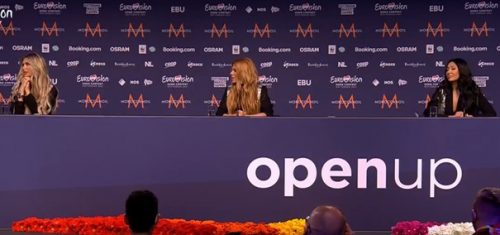
16.52 Hurricane singer Ksenija says that the rehearsal was much better than the previous one. They had made some small changes, some new things. But this is just a minor thing compared to what we’re going to see in the semifinal. The ladies have just had an interview with Nikkie Tutorials, and have enjoyed it. She has the same energy as the ladies and they could imagine that Nikkie would be the fourth group member. As inspiration they cite Knez, participant in 2015 and the father of Ksenija. Furthermore, the ladies indicate that they see each other so often that they are just like sisters from time to time. They say something about each other’s clothes, for example. 
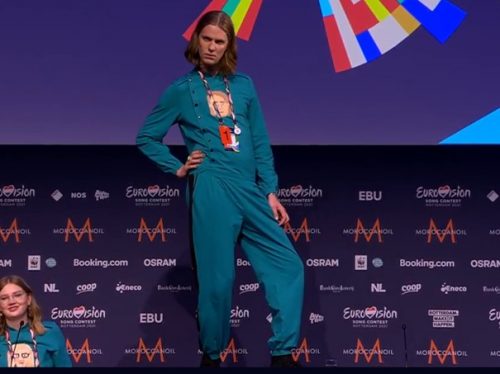
16.24 Tv-presenter Koos van Plateringen, who is hosting the press conference, asks Daði Freyr’s wife Maria how Laura is doing. She is fine, says Maria. This needs some explanation: Maria is pregnant and the baby would be called Laura. “It’s a working title,” Maria adds. Minor changes have been made to Iceland’s performance, Daði Freyr explains. The camera is looked into at different times than before. The members of Gagnamagnið are not normally dancers except in Gagnamagnið. When asked about his favorite video games, he says that three Playstations, a Nintendo and a Nintendo Wii have been brought along. The secret of the green jerseys dates back to 2017, when the group took part in the Icelandic national final. Live instruments may not be used, so old computers were put on stage. The jerseys are a result of those computers. Daði promises new music in the near future. An album will be released in 2022.
16.00 The Moldovan Natalia Gordienko is feeling much better than after the first rehearsal. Everything went better, she is satisfied. With the first she was much more busy with all kinds of other things, now she could focus. She and Filipp Kirkorov drew attention to the fact that the song contains the longest high note ever (17 seconds). It must be said that every question put to Natalia was partly answered by Kirkorov. Natalia still gets the chance to thank everyone for all the support. She’s been dreaming about this for fifteen years; she shows a picture of her child and says that all dreams can come true. 
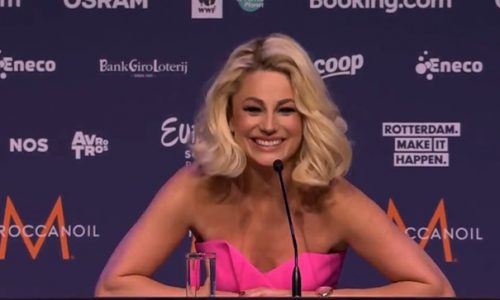
15.29 Rafał notices that things are getting a bit more serious. He says he is almost ready for the semifinal. Rafał’s father was a wrestler, and he wanted to do that too. A few injuries forced him to quit, and he switched to the music. Yet he has no regrets: he would do it again rightaway. Talking about the rehearsals: moving a lot and then singing is difficult. If you keep moving, you feel like you need to take a deep breath. That is the biggest challenge for him. The timing for singing and dancing is also different, which makes it extra difficult. He also says that he is a man of the 80s and was inspired by it. There are several retro songs on his album, and this had to be a retro song as well.
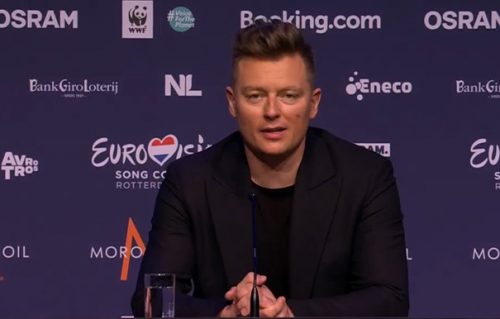
15:07 The stage and act are fantastic according to Vincent Bueno from Austria. As far as he is concerned, there are still small details, but in fact the whole team is ready for the semi-final. Of course you are nervous, but that is part of the deal. Vincent enjoys every moment. Of course he goes for gold, but in his opinion it should also be enjoyed. The song is about a situation such as a funeral, breaking up, letting go. Vincent has three children, one of which is no longer with us. She is like an angel in heaven who is always with him. Vincent also plays “Amen” on guitar. That is typically how they like it in the Philippines: simple, with a guitar. So his background as a Filipino certainly helps him in his musical career. He also cites Filipino fans as very loyal fans. One of the journalists also draws attention to the fact that many Filipinos in Europe work in healthcare. 
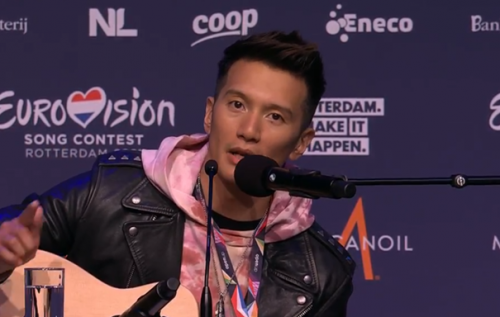
13.43 The Greek / Dutch Stefania says she is very happy with the second rehearsal. The first time she was still nervous, that was now gone. The dancers also did everything well. She says this act was exactly what she and her team wanted. She is the youngest participant. She doesn’t care, she’s in Rotterdam to have fun. She is 18 years old and this is her dream. In her outfit she feels like Jennifer Lopez. She feels Dutch because they go shopping but then don’t buy anything and then do it online. She feels typically Dutch because she is open and hospitable, inviting people to dinner immediately. She keeps her voice good by not worrying. That’s advice she got from her vocal coach. They work hard: Stefania practices her Greek, the dancers practice a lot, because in her opinion nothing goes without saying. 
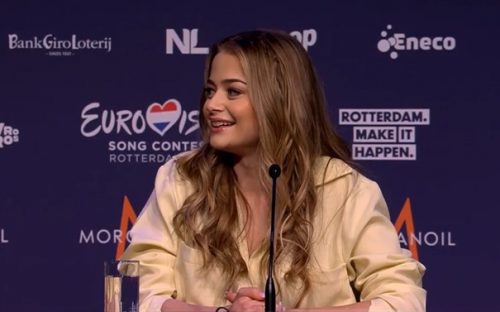
13.19 We try to get to know the stage, Benny Cristo from Czech Republic says. Benny is much more satisfied with today’s performance than the first rehearsal. Benny is vegan. He does not want to shout that out loud, but he does want to say that he thinks the food in Rotterdam is fantastic. There is a very good vegan restaurant next to the hotel. Another thing he brings up that he enjoys is sprinkles. Back to the song “Omaga” he announces that it will definitely be a party. He is happy with the rehearsals, which give him the chance to keep it going! A painful moment comes when he is asked about his Angolan roots: the marriage of his parents ended in a fight divorce and his mother especially did not want to be reminded of everything that is Angolan. Now Benny Cristo has renewed interest in the Portuguese language. Benny Cristo has no ambition to become an international star. He is in Rotterdam to have a bigger stage. 
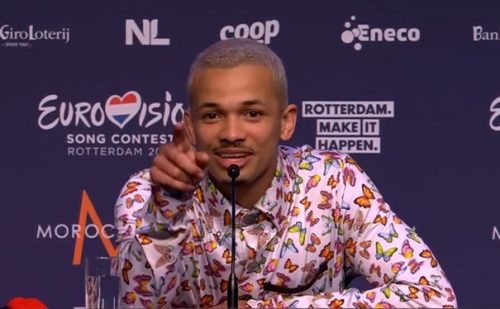
12.52 Uku Suviste is happy with the small changes in the performance, especially the choice of shots and camera positions. He is impressed with the LED screens. Anyway, it was hard for him to imagine what the act would look like before he actually saw it. That’s why he felt better about it now. Uku played in musicals but also made pop songs. He would opt for pop and urban, because he doesn’t really feel like a musical star.
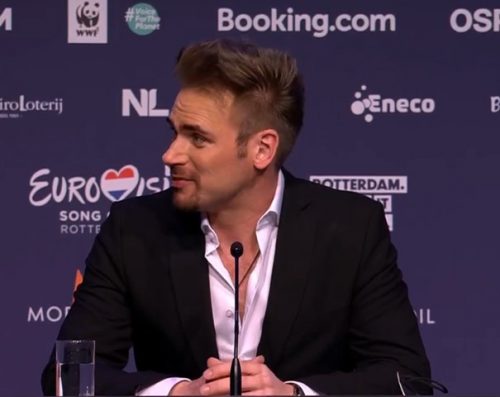
12.29 Senhit enters the pressroom with the icon on her head. She puts the thing next to her and says, “Flo Rida has to sit here”. Senhit is very happy with the second rehearsal. Senhit continues to be secretive about Flo Rida’s presence. She met him through Zoom and Skype. He is proud to participate. They don’t want to put pressure on him, but he really wants to come. Senhit says that between 2011, when she first took part and now, she has performed a lot, did studies, collaborated a lot with others. Senhit must confess something: she speaks Tygrinia, the language of Eritrea, but that is not her mother tongue. Another, smaller language is her parents’ native language.

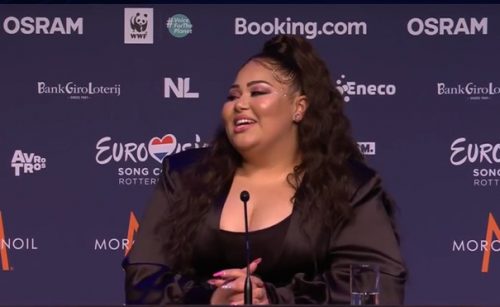
11.59 Rehearsals are to practice, Maltese Destiny says. She feels good in these clothes. She bases her song on soul. Her father is Nigerian and that gives her the strength to sing soul. “Je me casse!” is a strong sentence, which is why she uses it. Her song is about girl power and female power. She notices that people are starting to understand. Please, please, believe in yourself, she urges people. About her clothes (pink or silver with pink stockings?) She says: “Secrets are there to be kept”. Destiny sees two big differences between the Junior Eurovision Song Contest and the adult version: interviews, there are a lot of them, and the pressure, which is much higher. She received a lot of hate because of the first rehearsals. Her post on instagram, in which she says she feels good in the clothes, should be a boost for people with low self-esteem. It is an important message to them! 
In cooperation with Eurovision Artists

Related news

Eurovision 2026

Vienna 12 points: the joy of being 2nd

Several countries start their second rehearsals in Vienna. As we still don’t have access to the rehearsals, we will do something else. Per entry, we highlight one subject and give you some more information. That can be something about the artist, the song, the lyrics or even something completely different.  🇩🇪 Germany — Sarah Engels, “Fire” Running order: – | Rehearsal: 9 May, 15:00–15:25 CEST Deutschland sucht den Superstar is one of Germany’s longest-running TV talent shows. Since its first broadcast on RTL in 2002, DSDS has introduced many singers to a national audience. One of its most memorable former contestants is Sarah Engels. Her story in the show was not an instant success. She auditioned in 2009 and 2010, but failed to reach the live shows. In 2011, her third attempt changed everything. Sarah reached the final of Deutschland sucht den Superstar and finished second behind Pietro Lombardi. That season also brought strong media attention, partly because Sarah and Pietro became a couple during the competition. For Sarah Engels, DSDS became the platform that launched a lasting music and television career. Her journey shows why casting shows can still matter. A failed audition does not always mark the end. Sometimes, as Sarah proved, it is only the beginning for many artists in Germany today. 🇫🇷 France — Monroe, “Regarde!” Running order: – | Rehearsal: 9 May, 15:35–16:00 CEST France at Eurovision has rediscovered its confidence since Barbara Pravi’s “Voilà” in 2021. The chanson finished second with 499 points and quickly became a modern Eurovision classic. It gave France something it had missed for years: a clear identity and real winning momentum. The years after “Voilà” were not perfect. Alvan & Ahez finished 24th in 2022, while La Zarra ended 16th in 2023. Still, both entries showed France was willing to take risks. In 2024, Slimane restored the country’s place near the top. His emotional performance of “Mon amour” finished fourth with 445 points. In 2025, Louane kept the positive run alive, taking seventh place with “maman”. This year, Monroe’s “Regarde !” keeps France in the top-five conversation. Whether it reaches that result remains uncertain. Yet France now looks like a country that believes in its Eurovision choices again. That confidence may be its strongest result of the decade so far. 🇬🇧 United Kingdom — Look Mum No Computer, “Eins, Zwei, Drei” Running order: – | Rehearsal: 9 May, 16:10–16:35 CEST Before Look Mum No Computer was confirmed for Eurovision 2026, the BBC faced reports about another possible UK act. In January, media claimed that a participant had been dropped. Routine checks had reportedly raised concerns about historic online comments. The Euro Trip Podcast later gave a more careful account. It reported that an unnamed act was told they would not represent the United Kingdom in Vienna. However, the person had not signed a contract. The BBC also said no formal offer had been made. That means the story is not a simple rejection. It suggests the artist was considered, but never officially chosen. Weeks later, the BBC announced Look Mum No Computer, the stage name of Sam Battle. His song “Eins, Zwei, Drei” gives the United Kingdom a strikingly unusual entry. With synth-pop, humour and eccentric British creativity, it marks a clear change of direction for the BBC at Eurovision. 🇦🇹 Austria — Cosmó, “Tanzschein” Running order: 25 | Rehearsal: 9 May, 16:45–17:10 CEST Hosting Eurovision has become more of a curse than an advantage. Since 2015, many host countries have struggled on the scoreboard. Austria finished 26th in 2015. Ukraine came 24th in 2017. Portugal ended last in 2018, while Israel placed 23rd in 2019. The Netherlands also finished 23rd in 2021. The United Kingdom came 25th in 2023. There were brighter results too. Sweden finished fifth in 2016 and ninth in 2024. Italy came sixth in 2022. Switzerland reached tenth in 2025 with Zoë Më and “Voyage”. Still, six of the last ten host countries ended in the bottom five. No host country has won Eurovision since Ireland in 1994. Fans often call this trend the “host country curse”. Some speculate that broadcasters avoid another expensive victory. Whatever the reason, hosting now seems to bring pressure rather than a clear advantage. Recent results make that debate easy to understand for many fans.  

Read More »
Eurovision 2026
Martijn

Vienna 12 points: the joy of being 2nd

Several countries start their second rehearsals in Vienna. As we still don’t have access to the rehearsals, we will do something else. Per entry, we highlight one subject and give you some more information. That can be something about the artist, the song, the lyrics or even something completely different.  🇩🇪 Germany — Sarah Engels, “Fire” Running order: – | Rehearsal: 9 May, 15:00–15:25 CEST Deutschland sucht den Superstar is one of Germany’s longest-running TV talent shows. Since its first broadcast on RTL in 2002, DSDS has introduced many singers to a national audience. One of its most memorable former contestants is Sarah Engels. Her story in the show was not an instant success. She auditioned in 2009 and 2010, but failed to reach the live shows. In 2011, her third attempt changed everything. Sarah reached the final of Deutschland sucht den Superstar and finished second behind Pietro Lombardi. That season also brought strong media attention, partly because Sarah and Pietro became a couple during the competition. For Sarah Engels, DSDS became the platform that launched a lasting music and television career. Her journey shows why casting shows can still matter. A failed audition does not always mark the end. Sometimes, as Sarah proved, it is only the beginning for many artists in Germany today. 🇫🇷 France — Monroe, “Regarde!” Running order: – | Rehearsal: 9 May, 15:35–16:00 CEST France at Eurovision has rediscovered its confidence since Barbara Pravi’s “Voilà” in 2021. The chanson finished second with 499 points and quickly became a modern Eurovision classic. It gave France something it had missed for years: a clear identity and real winning momentum. The years after “Voilà” were not perfect. Alvan & Ahez finished 24th in 2022, while La Zarra ended 16th in 2023. Still, both entries showed France was willing to take risks. In 2024, Slimane restored the country’s place near the top. His emotional performance of “Mon amour” finished fourth with 445 points. In 2025, Louane kept the positive run alive, taking seventh place with “maman”. This year, Monroe’s “Regarde !” keeps France in the top-five conversation. Whether it reaches that result remains uncertain. Yet France now looks like a country that believes in its Eurovision choices again. That confidence may be its strongest result of the decade so far. 🇬🇧 United Kingdom — Look Mum No Computer, “Eins, Zwei, Drei” Running order: – | Rehearsal: 9 May, 16:10–16:35 CEST Before Look Mum No Computer was confirmed for Eurovision 2026, the BBC faced reports about another possible UK act. In January, media claimed that a participant had been dropped. Routine checks had reportedly raised concerns about historic online comments. The Euro Trip Podcast later gave a more careful account. It reported that an unnamed act was told they would not represent the United Kingdom in Vienna. However, the person had not signed a contract. The BBC also said no formal offer had been made. That means the story is not a simple rejection. It suggests the artist was considered, but never officially chosen. Weeks later, the BBC announced Look Mum No Computer, the stage name of Sam Battle. His song “Eins, Zwei, Drei” gives the United Kingdom a strikingly unusual entry. With synth-pop, humour and eccentric British creativity, it marks a clear change of direction for the BBC at Eurovision. 🇦🇹 Austria — Cosmó, “Tanzschein” Running order: 25 | Rehearsal: 9 May, 16:45–17:10 CEST Hosting Eurovision has become more of a curse than an advantage. Since 2015, many host countries have struggled on the scoreboard. Austria finished 26th in 2015. Ukraine came 24th in 2017. Portugal ended last in 2018, while Israel placed 23rd in 2019. The Netherlands also finished 23rd in 2021. The United Kingdom came 25th in 2023. There were brighter results too. Sweden finished fifth in 2016 and ninth in 2024. Italy came sixth in 2022. Switzerland reached tenth in 2025 with Zoë Më and “Voyage”. Still, six of the last ten host countries ended in the bottom five. No host country has won Eurovision since Ireland in 1994. Fans often call this trend the “host country curse”. Some speculate that broadcasters avoid another expensive victory. Whatever the reason, hosting now seems to bring pressure rather than a clear advantage. Recent results make that debate easy to understand for many fans.  

Read More »
Follow Us: