🇩đŸ‡Č Road to Basel: Armenia

Road to Basel: Armenia

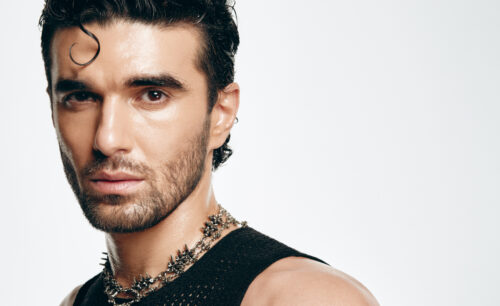
Road to Basel: Armenia! As the Eurovision Song Contest 2025 in Basel approaches, we continue our daily spotlight on this year’s contestants. Today, we focus on Armenia.

Parg

Pargev Vardanyan, known professionally as Parg, is an Armenian singer-songwriter born in Hayravank, Gegharkunik Province, in 1994 or 1995. His early musical experiences included singing in a church choir until the age of six. Later, he moved to Volgograd, Russia, where he studied at the Volgograd State Institute of Theater and Cinema, earning a degree in Theater Arts and Acting. During his time in Russia, Parg co-founded the band The Edge Chronicles, which performed across Armenia, Russia, Georgia, and Ukraine between 2017 and 2019. In 2022, he returned to Armenia and launched his solo career, releasing singles such as “Ginin u grely” and “Araj,” the latter earning a nomination for Best Music Video at the Armenian Music Awards. He has also collaborated with artists like Brunette and covered songs by Rosa Linn. ​

“Survivor” (What does AI say?)

Parg’s Eurovision entry, “Survivor,” is a pop song co-written by Parg himself alongside Alex Wilke, Armen Paul, Benjamin Alasu, Eva Voskanian, Jon Aljidi, Joshua Curran, Martin Mooradian, Peter Boström, and Thomas G:son. The song was released on 21 March 2025 and showcases a blend of contemporary pop elements with emotive lyrics, reflecting themes of resilience and personal strength. ​

National Selection Process

Armenia’s national broadcaster, AMPTV, organized Depi Evratesil 2025 to select its Eurovision entry. The competition took place on 16 February 2025 at the Karen Demirchyan Sports and Concert Complex in Yerevan, featuring twelve acts. Parg’s “Survivor” was revealed on 9 February 2025. In the final, the winner was determined by a combination of votes from an international jury, a national jury, and a public televote. Parg received the second most points from both juries and secured first place in the televote, ultimately winning the competition and earning the right to represent Armenia in Basel. 

  1. Parg, “Survivor
  2. Simon, “Ay paparey bye
  3. Athena Manoukian, “Daqueenation
  4. Anahit Hakobyan & Gasoiia, “Wild
  5. Anahit Adamyan, “Tiny Little Boo
  6. Mels, “Losing
  7. Gevorg Harutyunyan, “Hey Man
  8. Flora Bichakhchyan, “Prayer
  9. Milena Mirijanyan, “Romantic Net
  10. Arsen feat. Kamil, “Will You Marry Me?
  11. Altsight, “Dare to Dream
  12. Sevagir, “Falling
Armenia in the Eurovision Song Contest

Armenia has participated in the Eurovision Song Contest 15 times since its debut in 2006. The country achieved its best results with fourth-place finishes in 2008, with Sirusho‘s “QĂ©lĂ©, QĂ©lĂ©,” and in 2014, with Aram Mp3‘s “Not Alone.” After withdrawing from the contest in 2021, Armenia returned in 2022 with Rosa Linn’s “Snap,” which, while placing 20th in the final, gained significant popularity post-contest. ​

A Random Armenian Entry

Reflecting on Armenia’s Eurovision history, random.org chose 2009, when Inga and Anush represented the country with the song “Jan Jan”. In traditional Armenian clothes they reached a 10th place. Inga returned to Eurovision in 2015 with the group Genealogy.

​

Betting Odds

As of now, Parg’s “Survivor” is currently in 33rd place in order to win the Eurovision Song Contest this year. In the odds for the 2nd semifinal, Parg has a 13th place. A tough job to reach the final, but yet not impossible!​

We eagerly await the Eurovision Song Contest in Basel and look forward to witnessing Parg’s performance on the grand stage.

Related news

Uncategorized

70 years of Eurovision: An audio selection and a hit

The Eurovision Song Contest is celebrating its 70th anniversary. That is a wonderful milestone. We at Eurovision Universe love diving into the history of the contest. That is why we are taking a closer look at the contests of the past 70 years. 1996 Thirty countries wanted to participate in the Eurovision Song Contest in Oslo. That did not happen. All countries, except host country Norway, therefore had to fight for a spot. This took place via an audio selection round. Denmark, Germany, Hungary, Israel, debuting Macedonia, Romania, and Russia did not make it through. The contest was presented by Ingvild Bryn and the famous Morten Harkett, singer of A-ha. During the broadcast, extensive use was made of virtual reality, allowing Ingvild Bryn to easily walk between the sections of the scoreboard, or even through it. The songs Marianna Efstratou participated for Greece for the second time. Elisabeth Andreassen performed for no less than the fourth time, but for the first time solo. Notable was LĂșcia Moniz, who represented Portugal. Her “O meu coração nĂŁo tem cor” finished sixth, which for a long time was the best score ever for the Portuguese. Maarja-Liis Illus and Ivo Linna really caught the eye of Estonia. She was 15, he 46. The duo sang a sweet song titled “Kaelakee hÀÀl”. And what Finland failed to achieve in all those years, Estonia did effortlessly: walking straight into the top 5 with a song in a Finno-Ugric language. There was also a major difference between the two Dutch duo partners, Maxine and Franklin Brown. However, in this case, it concerned the length. The Dutch entry “De eerste keer” is one of the few that rose in the rankings ĂĄfter the Eurovision Song Contest. The Spanish jury had, or so people thought, said “Poland, 6 points”. But the somewhat nasal-speaking jury chairwoman had said “Holland, 6 points”. People only found out about that later. It is not for nothing that this country ought to be called The Netherlands. Austria (“Weil’s dr guat got” in Vorarlberg) and France “Diwanit bugale” in Breton both sang in a minority language. The new generation after ABBA was also making its appearance. Peter Grönvall was one of the members of the group One More Time. And he was the son of Benny Andersson of ABBA. The group had already had a major hit in Europe with “Highland”. Singer Nanne Grönvall would participate in the Swedish Melodifestivalen a number of times, and even once in the British national final. Eimear Quinn Around this time, the Belgian documentary filmmaker Herman Molle made a documentary titled “How do I win the Eurovision Song Contest?”. Molle’s main recommendation: become Irish. Because Ireland won again. Eimear Quinn had sung with AnĂșna, the choir that accompanied River Dance. With her song “The Voice”, she effortlessly secured the seventh victory for Ireland. “You’re bringing it back too soon,” Morten Harkett grumbled briefly. But the party in Ireland was no less big for it. Nor was the nervous breakdown among the people at the Irish broadcaster RTÉ. 1997 The Eurovision Song Contest practically resided in the Point Theatre in Dublin. However, the audio pre-selection had been scrapped. The relegation zone was back, so a number of countries swapped places again. Italy returned after a three-year absence. Also new: televoting. In five countries, the public was allowed to cast their vote. The Eurovision Song Contest was presented by Carrie Crowley and, once again, someone from a boy band: Ronan Keating of Boyzone. The songs ƞebnem Parker participated for Turkey for the second consecutive time. Her “Dinle” was roughly at the bottom in the odds, but surprisingly finished third in the final ranking. Celebrations in Turkey, which now finally dared to dream of a victory. Young Maarja-Liis Illus from Estonia also returned after a year, this time solo. And Alma ČardĆŸić from Bosnia and Herzegovina also took a second try. Tor Endresen participated for Norway. He had competed in the Norwegian national final almost every year and had finally won. How disappointing that he finished with zero points. The duo Jalisse competed for Italy. The two finished fourth. It didn’t really help: Italy dropped out immediately afterwards. Bianca Shomburg had won the Soundmixshow in Germany, where she imitated Celine Dion. However, she did not do that in terms of the result at the Eurovision Song Contest. Russia sent the country’s biggest star. For years, Alla Pugacheva had been unmatched. There was no sign of that at the Eurovision Song Contest. The rest of Europe appreciated her with a fifteenth place. And then there was Paul Oscar. He represented Iceland. Lying on a sofa, surrounded by female beauty (which he had no eye for in real life), he sang his song. At the end of the song, he made a ‘gun gesture’ with his hand, shooting himself in the mouth. It was striking that Oscar received points exclusively from televoting countries. Katrina & The Waves An unwritten rule is that when an established name participates, they can finish very high but do not win. Katrina & The Waves did not adhere to this. In the 80s, they had a big hit with “Walking On Sunshine”. The song “Love Shine A Light” was originally intended as an anthem for Samaritans in recognition of the thirtieth anniversary of the Swindon branch of that organization. Nevertheless, it ended up at the Eurovision Song Contest, where it won effortlessly. Katrina & The Waves had an international hit with it. The song remains a Eurovision classic to this day. In 2020, it took center stage in the replacement broadcast for the canceled Song Contest: Eurovision Shine A Light.

Read More »
Uncategorized
Martijn

70 years of Eurovision: An audio selection and a hit

The Eurovision Song Contest is celebrating its 70th anniversary. That is a wonderful milestone. We at Eurovision Universe love diving into the history of the contest. That is why we are taking a closer look at the contests of the past 70 years. 1996 Thirty countries wanted to participate in the Eurovision Song Contest in Oslo. That did not happen. All countries, except host country Norway, therefore had to fight for a spot. This took place via an audio selection round. Denmark, Germany, Hungary, Israel, debuting Macedonia, Romania, and Russia did not make it through. The contest was presented by Ingvild Bryn and the famous Morten Harkett, singer of A-ha. During the broadcast, extensive use was made of virtual reality, allowing Ingvild Bryn to easily walk between the sections of the scoreboard, or even through it. The songs Marianna Efstratou participated for Greece for the second time. Elisabeth Andreassen performed for no less than the fourth time, but for the first time solo. Notable was LĂșcia Moniz, who represented Portugal. Her “O meu coração nĂŁo tem cor” finished sixth, which for a long time was the best score ever for the Portuguese. Maarja-Liis Illus and Ivo Linna really caught the eye of Estonia. She was 15, he 46. The duo sang a sweet song titled “Kaelakee hÀÀl”. And what Finland failed to achieve in all those years, Estonia did effortlessly: walking straight into the top 5 with a song in a Finno-Ugric language. There was also a major difference between the two Dutch duo partners, Maxine and Franklin Brown. However, in this case, it concerned the length. The Dutch entry “De eerste keer” is one of the few that rose in the rankings ĂĄfter the Eurovision Song Contest. The Spanish jury had, or so people thought, said “Poland, 6 points”. But the somewhat nasal-speaking jury chairwoman had said “Holland, 6 points”. People only found out about that later. It is not for nothing that this country ought to be called The Netherlands. Austria (“Weil’s dr guat got” in Vorarlberg) and France “Diwanit bugale” in Breton both sang in a minority language. The new generation after ABBA was also making its appearance. Peter Grönvall was one of the members of the group One More Time. And he was the son of Benny Andersson of ABBA. The group had already had a major hit in Europe with “Highland”. Singer Nanne Grönvall would participate in the Swedish Melodifestivalen a number of times, and even once in the British national final. Eimear Quinn Around this time, the Belgian documentary filmmaker Herman Molle made a documentary titled “How do I win the Eurovision Song Contest?”. Molle’s main recommendation: become Irish. Because Ireland won again. Eimear Quinn had sung with AnĂșna, the choir that accompanied River Dance. With her song “The Voice”, she effortlessly secured the seventh victory for Ireland. “You’re bringing it back too soon,” Morten Harkett grumbled briefly. But the party in Ireland was no less big for it. Nor was the nervous breakdown among the people at the Irish broadcaster RTÉ. 1997 The Eurovision Song Contest practically resided in the Point Theatre in Dublin. However, the audio pre-selection had been scrapped. The relegation zone was back, so a number of countries swapped places again. Italy returned after a three-year absence. Also new: televoting. In five countries, the public was allowed to cast their vote. The Eurovision Song Contest was presented by Carrie Crowley and, once again, someone from a boy band: Ronan Keating of Boyzone. The songs ƞebnem Parker participated for Turkey for the second consecutive time. Her “Dinle” was roughly at the bottom in the odds, but surprisingly finished third in the final ranking. Celebrations in Turkey, which now finally dared to dream of a victory. Young Maarja-Liis Illus from Estonia also returned after a year, this time solo. And Alma ČardĆŸić from Bosnia and Herzegovina also took a second try. Tor Endresen participated for Norway. He had competed in the Norwegian national final almost every year and had finally won. How disappointing that he finished with zero points. The duo Jalisse competed for Italy. The two finished fourth. It didn’t really help: Italy dropped out immediately afterwards. Bianca Shomburg had won the Soundmixshow in Germany, where she imitated Celine Dion. However, she did not do that in terms of the result at the Eurovision Song Contest. Russia sent the country’s biggest star. For years, Alla Pugacheva had been unmatched. There was no sign of that at the Eurovision Song Contest. The rest of Europe appreciated her with a fifteenth place. And then there was Paul Oscar. He represented Iceland. Lying on a sofa, surrounded by female beauty (which he had no eye for in real life), he sang his song. At the end of the song, he made a ‘gun gesture’ with his hand, shooting himself in the mouth. It was striking that Oscar received points exclusively from televoting countries. Katrina & The Waves An unwritten rule is that when an established name participates, they can finish very high but do not win. Katrina & The Waves did not adhere to this. In the 80s, they had a big hit with “Walking On Sunshine”. The song “Love Shine A Light” was originally intended as an anthem for Samaritans in recognition of the thirtieth anniversary of the Swindon branch of that organization. Nevertheless, it ended up at the Eurovision Song Contest, where it won effortlessly. Katrina & The Waves had an international hit with it. The song remains a Eurovision classic to this day. In 2020, it took center stage in the replacement broadcast for the canceled Song Contest: Eurovision Shine A Light.

Read More »
Follow Us: