Day 5: A sun that doesn’t move, a Greek tavern and COVID19

Today we saw the second rehearsals for the first 14 countries from the first semifinal. For the first time the press was allowed to see the rehearsals on large TV screens in the press center. It is now certain that the kinetic sun does not rotate. During the first rehearsals it turned out that the time between performances was too short to move the center part of the sun. As a result, several countries had to adjust their graphics, because they were not or only partially visible

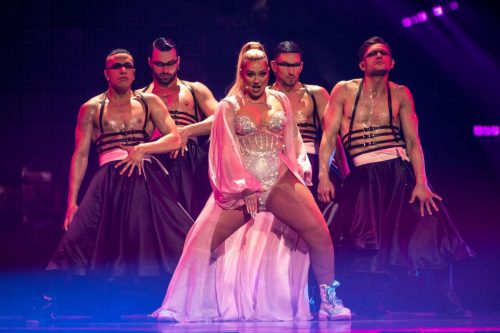
ALBANIA: The outfit had been changed and Ronela Hajati also had her own blond hair again, instead of the pink hair she had during the first rehearsal. It was a dynamic performance, in which there was almost constant dancing, together with her four dancers and a dancer. After the first rehearsal, there were some comments about an allegedly offensive dance move by Ronela with her dancer, but she kept it in anyway.
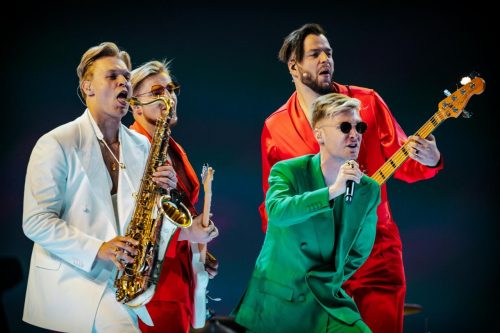
LATVIA: The six were wearing the familiar colorful suits and the decor was also very colorful. Various types of vegetables were displayed on the LED screen. In the middle of the song there was a moment for the saxophonist. The performance ended with the singer making a split.
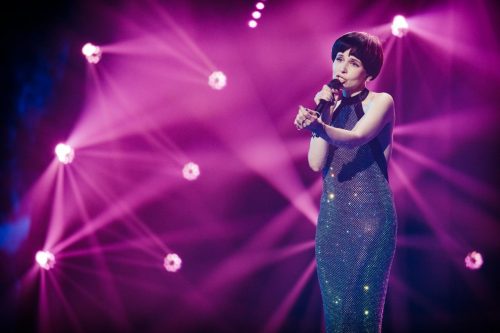
LITHUANIA: Monika Liu stood alone on the big stage in Turin and mainly sang her song into the camera. She moved elegantly and attracted all the attention. The song doesn’t really need anything more.
SWITZERLAND: Dressed all in black, Marius Bear was on stage and a broken heart was visible on his face and on the floor. So emotions abound.
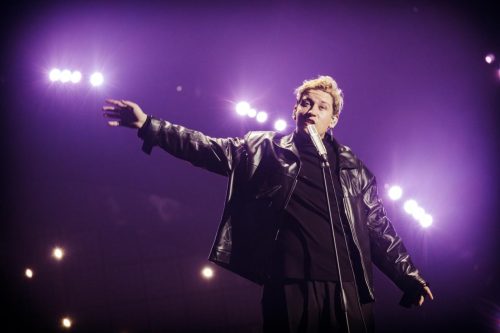
SLOVENIA: As said before, it was a big disco ball that mainly caught the attention of the Slovenian act. The boys wore 1970s-style velvet suits and the drummer appeared to be drumming above the disco ball. Compared to the previous rehearsal, there was little change.
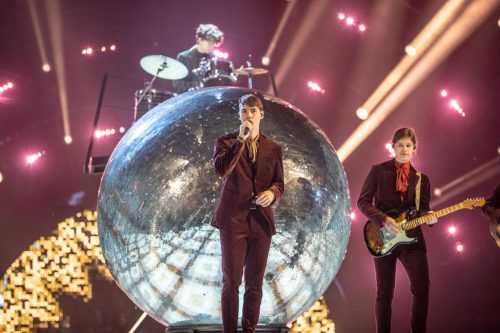
UKRAINE: There was a lot to see on stage, besides the colorful costumes there was a lot of visual spectacle. It was traditional, ethnic with a modern twist, just like last year’s contribution. Because of the war in Ukraine, this performance has something emotional and that is subtly reflected in the visual spectacle.
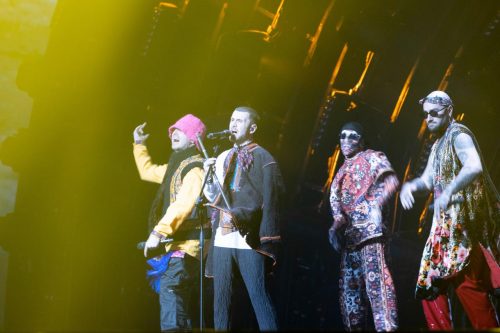
BULGARIA: The performance started with a split screen, showing the drummer on one side and another member of the group. A small rock concert with all the trimmings, including a lot of fire(work).
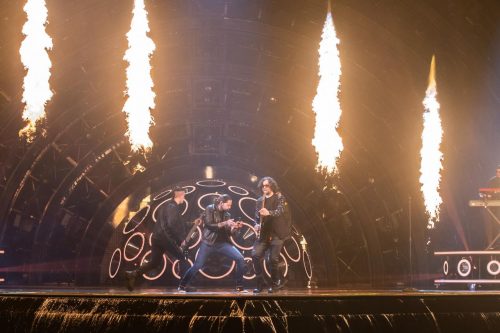
THE NETHERLANDS: There were few noticeable changes from the first rehearsal of S10. In the Netherlands, there was some fuss about the singer’s bare belly, but it is still naked for a while. A lot has been taken out of the lighting of S10.
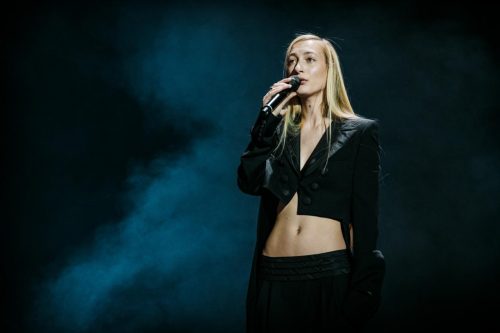
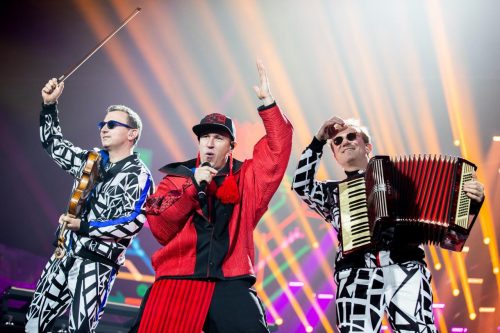
MOLDOVA: After the intimate moment of the Netherlands, a party erupted on stage with the contribution of Zdob şi Zdub, who are participating for the third time. They used the entire stage for their folklore song: Hey ho, let’s go…, but no train on stage. Lots of color, matching the contribution.
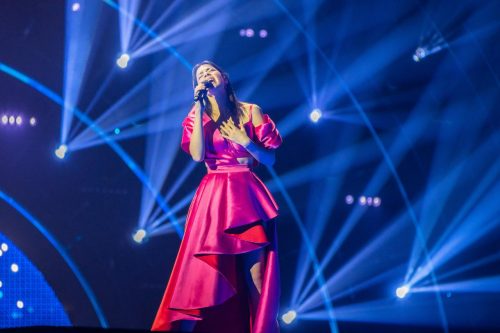
CROATIA: During rehearsals today, Mia had problems with her in-ears. No surprises at Mia’s performance. The postcards were also shown to the press today. A drone searches for the location where the artist of the country in question can be seen and we see the visual artist in the area.
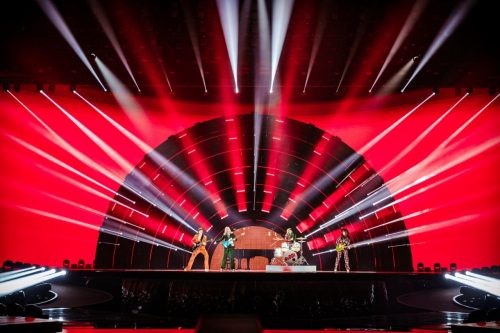
DENMARK: The beginning was just like in the national final, Siggy starts alone at the piano, with her quieter part of the song and then the rock show starts. Last year we went back to the eighties with Denmark, now it seems back to the nineties. In case you don’t remember the name of the band, REDDI appeared on the LED screen.
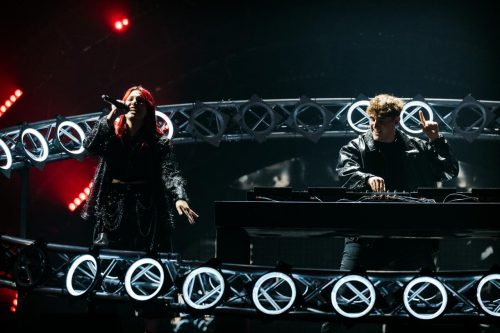
AUSTRIA: Of course there is a Halo on stage. Lots of fireworks and strong staging. The vocal part of the duo was, as we can see now, quite disappointing.
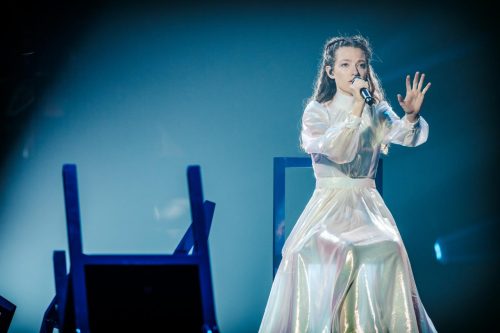
GREECE: For those who don’t understand the act of Greece: Amanda seems to be in a Greek tavern; hence the chairs around her. But some of the seats have fallen over. That fits with the lyrics of the song. Amanda could count on a big round of applause from the audience.
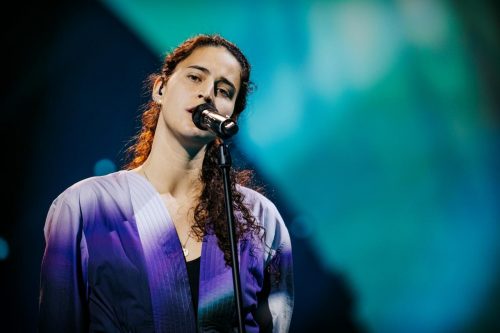
PORTUGAL: A delegation member from Portugal tested positive for corona, so the entire delegation had to go back to the hotel and be tested. Fortunately none of the ladies tested positive and they were able to rehearse for their performance, but later than planned. After all the rehearsals had been completed, Portugal was allowed to go on stage after Greece. During this rehearsal it was clear that it was one of the background singers who tested positive for corona. The ladies were lined up in a circle and brought this atmospheric contribution in a good way.
Related news

Eurovision 2026

Vienna 12 points: From MUSEXPO to Musical

Several countries start their second rehearsals in Vienna. As we still don’t have access to the rehearsals, we will do something else. Per entry, we highlight one subject and give you some more information. That can be something about the artist, the song, the lyrics or even something completely different.  Switzerland — Veronica Fusaro, “Alice” Running order: 7 | Rehearsal: 8 May, 15:00–15:25 CEST MUSEXPO is one of the music industry’s key meeting places, where artists, labels, publishers, managers and media professionals come together to discover new talent and discuss the future of music. Founded by A&R Worldwide, the event combines panels, networking sessions, awards and live showcases. It has been held in Los Angeles and has also had European editions, including London, making it a truly international platform. For Eurovision fans, MUSEXPO is interesting because it often gives rising artists a stage before a wider breakthrough. Singer Veronica Fusaro performed at MUSEXPO in London and Los Angeles, showing how the event can connect young talent with influential people from the global music business. Unlike a traditional festival, MUSEXPO is mainly aimed at professionals. Its goal is not only entertainment, but also discovery, cooperation and new opportunities across the music, media and technology world, especially for artists ready to grow internationally today.  Cyprus — Antigoni, “Jalla” Running order: 8 | Rehearsal: 8 May, 15:35–16:00 CEST Tsifteteli is a lively dance style from Greece, Cyprus, Turkey and the wider eastern Mediterranean. The name comes from the Turkish çiftetelli, often linked to a “double string” musical style. In Greek culture, tsifteteli is known for fluid hip movements, expressive arms and a sensual, celebratory feeling. It is often compared with belly dancing, but it also belongs to everyday social life: people dance it at parties, weddings and festivals, not only on stage. That background gives extra colour to Antigoni’s Eurovision lyric “Shake my hips to tsifteteli”. As a British artist with Greek-Cypriot roots, she uses the word as a cultural reference, not just as a dance instruction. In “Jalla”, tsifteteli helps create a Mediterranean party atmosphere, mixing modern pop energy with sounds and movements that many Greek and Cypriot listeners will instantly recognise. For international fans, it is a small word with big cultural meaning at Eurovision 2026 in Vienna.  Latvia — Atvara, “Ēnā” Running order: 9 | Rehearsal: 8 May, 16:10–16:35 CEST Ēnā meaning is central to Latvia’s Eurovision 2026 entry by Atvara. In Latvian, ēna means “shadow” or “shade”, while ēnā means “in the shadow” or “in the shade”. That small grammatical change gives the title extra weight, because the song places its main character inside darkness, not just near it. The lyrics show someone losing confidence, hiding feelings and drifting away from the light. Atvara links this image to the pain of growing up around another person’s addiction, which gives “Ēnā” a personal and emotional meaning. For Eurovision viewers, the title explains the dark atmosphere of Latvia’s entry. This song does not tell a simple story about sadness. It explores fear, family pressure and the courage someone needs to step out of darkness in Vienna at Eurovision 2026. That makes it a strong title for a dramatic performance. “Ēnā” proves how one Latvian word can carry emotion, memory and resilience.  Denmark — Søren Torpegaard Lund, “Før vi går hjem” Running order: 10 | Rehearsal: 8 May, 16:45–17:10 CEST Matador musical brings one of Denmark’s best-loved classics to the stage. The story comes from DR’s “Matador”, with scripts by Lise Nørgaard and direction by Erik Balling, and takes audiences back to the fictional town of Korsbæk. There, banker Hans Christian Varnæs and newcomer Mads Skjern represent two families, two social worlds and a changing Denmark before and during the Second World War. In 2024, One & Only Musicals presented a new original version with songs by Lise Cabble and Burhan G. The production mixed nostalgia, humour, ambition and family drama with a fresh musical sound. Søren Torpegaard Lund played Daniel Skjern, the son of Mads and Ingeborg Skjern. His role gave him a touching solo moment with “En dreng som mig”, a song about expectations and identity. For Eurovision fans, Matador shows the theatre background behind Denmark’s 2026 artist and adds context to his performance skills on the Eurovision stage in Vienna.  

Read More »
Eurovision 2026
Martijn

Vienna 12 points: From MUSEXPO to Musical

Several countries start their second rehearsals in Vienna. As we still don’t have access to the rehearsals, we will do something else. Per entry, we highlight one subject and give you some more information. That can be something about the artist, the song, the lyrics or even something completely different.  Switzerland — Veronica Fusaro, “Alice” Running order: 7 | Rehearsal: 8 May, 15:00–15:25 CEST MUSEXPO is one of the music industry’s key meeting places, where artists, labels, publishers, managers and media professionals come together to discover new talent and discuss the future of music. Founded by A&R Worldwide, the event combines panels, networking sessions, awards and live showcases. It has been held in Los Angeles and has also had European editions, including London, making it a truly international platform. For Eurovision fans, MUSEXPO is interesting because it often gives rising artists a stage before a wider breakthrough. Singer Veronica Fusaro performed at MUSEXPO in London and Los Angeles, showing how the event can connect young talent with influential people from the global music business. Unlike a traditional festival, MUSEXPO is mainly aimed at professionals. Its goal is not only entertainment, but also discovery, cooperation and new opportunities across the music, media and technology world, especially for artists ready to grow internationally today.  Cyprus — Antigoni, “Jalla” Running order: 8 | Rehearsal: 8 May, 15:35–16:00 CEST Tsifteteli is a lively dance style from Greece, Cyprus, Turkey and the wider eastern Mediterranean. The name comes from the Turkish çiftetelli, often linked to a “double string” musical style. In Greek culture, tsifteteli is known for fluid hip movements, expressive arms and a sensual, celebratory feeling. It is often compared with belly dancing, but it also belongs to everyday social life: people dance it at parties, weddings and festivals, not only on stage. That background gives extra colour to Antigoni’s Eurovision lyric “Shake my hips to tsifteteli”. As a British artist with Greek-Cypriot roots, she uses the word as a cultural reference, not just as a dance instruction. In “Jalla”, tsifteteli helps create a Mediterranean party atmosphere, mixing modern pop energy with sounds and movements that many Greek and Cypriot listeners will instantly recognise. For international fans, it is a small word with big cultural meaning at Eurovision 2026 in Vienna.  Latvia — Atvara, “Ēnā” Running order: 9 | Rehearsal: 8 May, 16:10–16:35 CEST Ēnā meaning is central to Latvia’s Eurovision 2026 entry by Atvara. In Latvian, ēna means “shadow” or “shade”, while ēnā means “in the shadow” or “in the shade”. That small grammatical change gives the title extra weight, because the song places its main character inside darkness, not just near it. The lyrics show someone losing confidence, hiding feelings and drifting away from the light. Atvara links this image to the pain of growing up around another person’s addiction, which gives “Ēnā” a personal and emotional meaning. For Eurovision viewers, the title explains the dark atmosphere of Latvia’s entry. This song does not tell a simple story about sadness. It explores fear, family pressure and the courage someone needs to step out of darkness in Vienna at Eurovision 2026. That makes it a strong title for a dramatic performance. “Ēnā” proves how one Latvian word can carry emotion, memory and resilience.  Denmark — Søren Torpegaard Lund, “Før vi går hjem” Running order: 10 | Rehearsal: 8 May, 16:45–17:10 CEST Matador musical brings one of Denmark’s best-loved classics to the stage. The story comes from DR’s “Matador”, with scripts by Lise Nørgaard and direction by Erik Balling, and takes audiences back to the fictional town of Korsbæk. There, banker Hans Christian Varnæs and newcomer Mads Skjern represent two families, two social worlds and a changing Denmark before and during the Second World War. In 2024, One & Only Musicals presented a new original version with songs by Lise Cabble and Burhan G. The production mixed nostalgia, humour, ambition and family drama with a fresh musical sound. Søren Torpegaard Lund played Daniel Skjern, the son of Mads and Ingeborg Skjern. His role gave him a touching solo moment with “En dreng som mig”, a song about expectations and identity. For Eurovision fans, Matador shows the theatre background behind Denmark’s 2026 artist and adds context to his performance skills on the Eurovision stage in Vienna.  

Read More »
Follow Us: