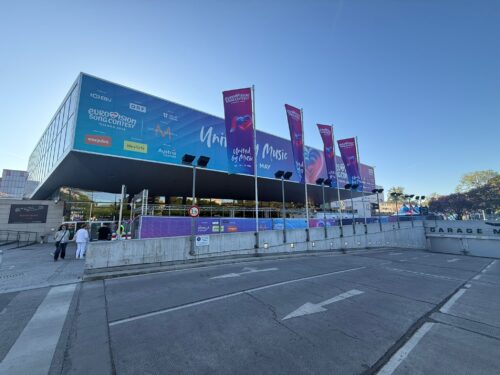
In the spotlight: Iceland-Daði & Gagnamagnið

Tonight is the night… the 2nd semifinal of the Eurovision Song Contest. 17 countries compete for a place in the final, including Iceland with Daði & Gagnamagnið. But who are they actually?

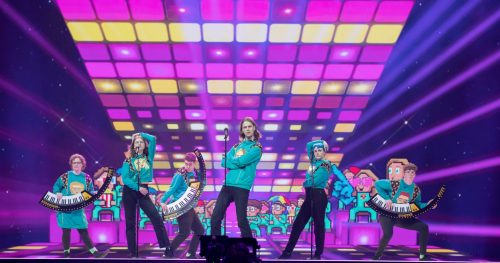
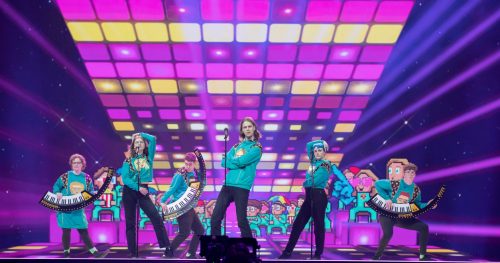
(It was announced yesterday( May 19th 2021) that one of the members, Jóhann Sigurður Jóhannsson, has tested positive for Covid-19. The entire band is in quarantine, and at least they will not be performing live at Ahoy tonight. footage from their rehearsals on May 13)

Daði (full name: Daði Freyr Pétursson) was born on June 30, 1992 in Reykjavik, the capital of Iceland. Shortly after his birth, he moved to Denmark, only to return to Iceland, Ásahreppur, at the age of 9, where he spent his childhood. From an early age he has been involved in music, playing drums, piano and bass guitar. In 2012 he founded the band RetRoBot, with which he won Músíktilraunir, a national competition for emerging talent. The band disbanded in 2014, after which Daði left for Berlin, where he still lives, for musical training. In 2017 he founded Gagnamagnið (Meaning: Amount of Dates), together with his sister Sigrún Birna Pétursdóttir and his wife Árný Fjóla Ásmundsdóttir, and childhood friends Hulda Kristín Kolbrúnardóttir (backing vocalist), Stefán Hannóðursson (dancer), and Jóðóðursson (dancer), and Jóðursson . Árný and Daði have 1 daughter together, Áróra Björg, and are expecting their second child at the end of 2021.

In 2017 they participate with Söngvakeppn in the Icelandic preselection for the Eurovision Song Contest, and become 2nd. They were already performing in what would become their trademark; the signature green sweaters, on which an avatar of themselves is printed, inspired by Daði’s greatest hobby; Lego.

 

In 2020 they will give it another try and they win.  The 2020 Eurovision Song Contest was canceled due to the Covid-19 pandemic, but Iceland was declared the unofficial winner of the festival. In October 2020, Icelandic public broadcaster Ríkisútvarpið, confirmed  that Daði & Gagnamagnið was chosen internally to participate in the Eurovision Song Contest 2021, in which they will participate with the song “Ten Years”.

Anyone who thinks that tonight’s act is a gathering of accidentally awkward dance steps will be disappointed. Nothing at all has been left to chance. Everything, but everything is thought out, practiced and executed in detail. The costumes were devised and made by themselves, including the rings, which were designed by sister Sigrún (student goldsmith).
They are also high in the polls this year. They will certainly make it to the final. Despite the dire circumstances, we wish Daði & Gagnamagnið a lot of success.


In Cooperation with Eurovision Artists

Photo-Video Credits: EBU


Related news

Eurovision 2026

Road to Vienna: Luxembourg

Road to Vienna: Luxembourg We cannot wait for the Eurovision Song Contest in Vienna Therefore, we take a closer look at one of the contestants each day. Today, we highlight Luxembourg. Eva Marija: Luxembourg’s Voice for Eurovision 2026 Eva Marija Kavaš Puc, born on December 24, 2005, in Luxembourg, grew up in a multicultural Slovenian family. Inspired by Eurovision at a young age, she began learning violin early and later studied at the Conservatoire de Luxembourg. Her training in violin, vocals, piano, and bass shaped her versatile style, blending classical, jazz, and contemporary pop. From Young Performer to Songwriter By her early teens, Eva Marija was already performing live and writing her own songs. Her music focuses on emotional storytelling, authenticity, and personal reflection. She later moved to London to study songwriting, expanding her artistic vision and international influences. Music Releases and Artistic Growth Eva Marija debuted with “When 2 Lovers Meet” (2021), followed by “Toxic Trait” (2023) and later singles like “TIME TO GO” and “Sweet Child” (2025). Her sound evolved into a more mature, introspective pop style, earning her recognition in Luxembourg’s music scene. A Promising Future in Music Representing a new generation of artists, Eva Marija combines strong musical training with authentic songwriting. As she prepares for Eurovision, her steady growth and artistic focus position her as one of Luxembourg’s most promising emerging talents. Mother Nature:  A Journey of Growth and Self-Discovery “Mother Nature” by Eva Marija explores personal growth and the path toward self-discovery. The song reflects how life evolves from simplicity into complexity, showing how challenges help shape identity and emotional maturity. Nature as a Symbol of Healing Nature is at the heart of the song’s meaning. It serves as a metaphor for renewal, balance, and inner strength. Just like the natural world, emotional healing is portrayed as a gradual and instinctive process. Letting Go and Finding Balance A central theme is learning to let go of doubt and emotional burdens. The song highlights acceptance, self-trust, and the importance of reconnecting with oneself to find inner balance. An Uplifting and Hopeful Message With its calm and introspective tone, “Mother Nature” delivers a positive message of renewal and self-acceptance. Eva Marija encourages listeners to embrace change and find strength through both vulnerability and connection to nature. Luxembourg in the Eurovision Song Contest Luxembourg has a storied history in the Eurovision Song Contest, participating 38 times since its debut in 1956. The country has won the contest five times: in 1961 (Jean-Claude Pascal‘s “Nous les amoureux”), 1965 (France Gall‘s “Poupée de cire, poupée de son”), 1972 (Vicky Leandros‘ “Après toi”), 1973 (Anne-Marie David‘s “Tu te reconnaîtras”, and 1983 (Corinne Hermès‘ “Si la vie est cadeau”). After a 31-year hiatus, Luxembourg returned to the contest in 2024.​ The Bookmakers Currently sitting 18th with the bookmakers, Luxembourg looks set for another Eurovision final — but could it climb even higher?

Read More »
Eurovision 2026
Anja Kroeze

Road to Vienna: Luxembourg

Road to Vienna: Luxembourg We cannot wait for the Eurovision Song Contest in Vienna Therefore, we take a closer look at one of the contestants each day. Today, we highlight Luxembourg. Eva Marija: Luxembourg’s Voice for Eurovision 2026 Eva Marija Kavaš Puc, born on December 24, 2005, in Luxembourg, grew up in a multicultural Slovenian family. Inspired by Eurovision at a young age, she began learning violin early and later studied at the Conservatoire de Luxembourg. Her training in violin, vocals, piano, and bass shaped her versatile style, blending classical, jazz, and contemporary pop. From Young Performer to Songwriter By her early teens, Eva Marija was already performing live and writing her own songs. Her music focuses on emotional storytelling, authenticity, and personal reflection. She later moved to London to study songwriting, expanding her artistic vision and international influences. Music Releases and Artistic Growth Eva Marija debuted with “When 2 Lovers Meet” (2021), followed by “Toxic Trait” (2023) and later singles like “TIME TO GO” and “Sweet Child” (2025). Her sound evolved into a more mature, introspective pop style, earning her recognition in Luxembourg’s music scene. A Promising Future in Music Representing a new generation of artists, Eva Marija combines strong musical training with authentic songwriting. As she prepares for Eurovision, her steady growth and artistic focus position her as one of Luxembourg’s most promising emerging talents. Mother Nature:  A Journey of Growth and Self-Discovery “Mother Nature” by Eva Marija explores personal growth and the path toward self-discovery. The song reflects how life evolves from simplicity into complexity, showing how challenges help shape identity and emotional maturity. Nature as a Symbol of Healing Nature is at the heart of the song’s meaning. It serves as a metaphor for renewal, balance, and inner strength. Just like the natural world, emotional healing is portrayed as a gradual and instinctive process. Letting Go and Finding Balance A central theme is learning to let go of doubt and emotional burdens. The song highlights acceptance, self-trust, and the importance of reconnecting with oneself to find inner balance. An Uplifting and Hopeful Message With its calm and introspective tone, “Mother Nature” delivers a positive message of renewal and self-acceptance. Eva Marija encourages listeners to embrace change and find strength through both vulnerability and connection to nature. Luxembourg in the Eurovision Song Contest Luxembourg has a storied history in the Eurovision Song Contest, participating 38 times since its debut in 1956. The country has won the contest five times: in 1961 (Jean-Claude Pascal‘s “Nous les amoureux”), 1965 (France Gall‘s “Poupée de cire, poupée de son”), 1972 (Vicky Leandros‘ “Après toi”), 1973 (Anne-Marie David‘s “Tu te reconnaîtras”, and 1983 (Corinne Hermès‘ “Si la vie est cadeau”). After a 31-year hiatus, Luxembourg returned to the contest in 2024.​ The Bookmakers Currently sitting 18th with the bookmakers, Luxembourg looks set for another Eurovision final — but could it climb even higher?

Read More »
Follow Us: