Blast from the past: Belgium 1980

We know a lot about Eurovision; this is knowledge we want to share with you. Therefore we’d like to bring you a blast from the past. Today: the 1980 Belgian entry.

Belgium in the Eurovision Song Contest

When Belgium first took part in the Eurovision Song Contest in 1956, it was decided that Flemish and Walloon TV would submit a song alternately. The 1979 Flemish entry “Hey nana” was a complete failure. It took the last place. However, the 1978 Walloon entry, sung by Jean Vallée, got the best score so far for Belgium: a second place. A difficult task for Walloon TV RTBf to do it as good as they did in 1978.

National final

After the success of Jean Vallée, one would have expected a huge national preselection. However, “Eliminatoires Belges du Grand Prix de la chanson Europeenne” was nothing of all that. Jean Vallée hosted a small show in which 7 songs were presented; all prerecorded. There was no voting: after the show, RTBf decided that Telex was going to represent Belgium in The Hague.

1.Bruno Brel sings “Etre heureux rien qu’une heure”
2.Domani sings “Toute ma vie”
3.Lou and the Hollywood Bananas sing “Et puis, et puis…. rien
4.Kevin Morane sings “Ivre de vie
5.Sonia sings “La star maniaque”
6.Telex sing “Euro-vision
7.Timothy sings “Parle-moi grand-pêre”

Bruno Brel was a cousin of the famous Jacques Brel. Lou Deprijck was a famous singer in Belgium. Plastic Bertrand’s international hit “Ça plane pour moi” was originally sung by Deprijck. Plastic Bertrand denied that until a judge decided in 2010 that Deprijck was proven to be the singer.

source: André Vermeulen, “Van Canzonissima tot Eurosong – 65 jaar Belgische preselecties voor het Eurovisie Songfestival”.

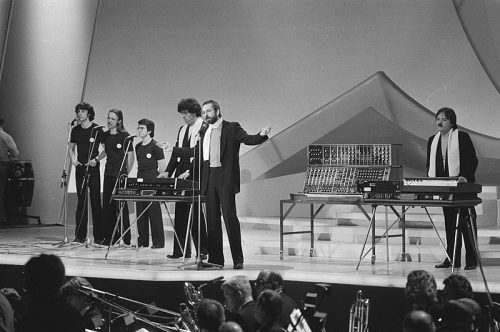
Telex

Telex was a three man band, made up of Marc Moulin, Dan Lacksman and Michel Moers. The band was formed in 1978; a band combining disco, punk and synthesizer pop to an exclusive sound. Their first album “Looking for Saint-Tropez” was a huge succes. The song “Moskow diskow“. Other hits were “Twist à Saint-Tropez” and “Rock around the clock“. A second album, “Neurovision”, followed around the Eurovision participation. For Telex, Eurovision came at the right moment. Because of the contest, the band was discovered by a larger audience. A few albums followed, but the group split up in 1986. However, there was a return of the trio in 2006. “On the road again” became a hit, but Telex also made their own version of “J’aime la vie“. In 2008, group member Marc Moulin passed away.

Euro-vision

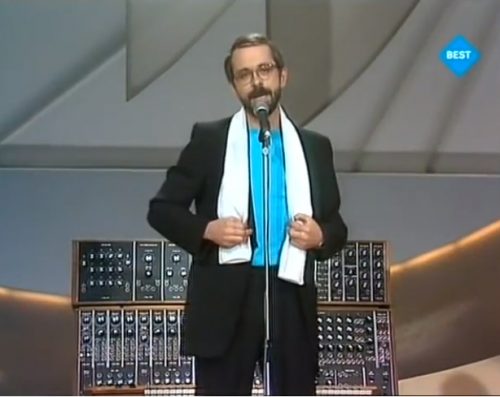
There are not much songs in the Eurovision Song Contest with the contest itself as a subject. But that is what “Euro-vision” is about. You can find the complete lyrics and translation here. Lacksman, Moulin and Moers co-wrote the song themselves. There was no conductor. As there was no live music, which was not allowed in those days, the members of Telex decided to start the synthesizer-like machine on screen, so that at least the suggestion of live music was made. In the end of the performance, singer Michel Moers made a picture of the audience. Recently, the picture was published in the book “65 jaar België op het songfestival”, by Jasper van Biesen and Jonathan Hendrickx.
Results

In several interviews, the members of Telex showed their disappointment about the 17th place. Not because they thought it was too low, but because they did not become last. The UK jury gave it 1 point, Greece gave it 3 points but Portugal gave the song its 10 points! Telex blamed Portugal for ruining their chances.

photo credits: fotocollectie Anefo


Related news

History

Austria in the Eurovision Song Contest, part 7

This year’s Eurovision Song Contest has been won by Austria. It was the 57th Austrian entry. Reason for us to go back to all the Austrian entries in history! For Austria in the Eurovision Song Contest, part 7, we look back at the start of the 21st century. Alf Poier participated for Austria, but there were also some unsuccesful entries. And there was a 3-year gap. 2000 – The Rounder Girls – All To You Austria’s 2000 entry “All To You” was internally selected by broadcaster ORF. The song was written by American songwriter Dave Moskin. Moskin gave the three-piece vocal group The Rounder Girls an up-tempo, gospel-influenced pop track. Performing last in the Stockholm final, the trio, with members from Austria, the US and the UK, delivered slick harmonies and choreography. They finished 14th out of 24 countries with 34 points. The Rounder Girls were a seasoned soul/gospel ensemble, and their Eurovision appearance raised their profile, though Austria’s middling result meant the country sat out the contest in 2001. 2002 – Manuel Ortega – Say A Word “Say A Word” by Manuel Ortega won Austria’s “Song.Null.Zwei” 2002 national final out of ten songs. this entry was an upbeat pop song with a catchy, boy-band style hook. It was composed by Alexander Kahr with lyrics by Robert Pfluger. At Eurovision 2002 in Tallinn, Ortega performed third and Austria placed 18th (26 points) in the final. Manuel Ortega, a young pop singer, had scored a summer hit in 2001 and was nicknamed “the Austrian Ricky Martin” for his Latin pop flair. His Eurovision song’s fun choreography and positive message reflected that image, though the result was a lower mid-table finish. 2003 – Alf Poier – Weil der Mensch zählt ORF organized the “Song.Null.Drei” 2003 selection. Petra Frey (ESC 1994) was the runner up. Comedian-singer Alf Poier triumphed with “Weil der Mensch zählt”. Poier penned this satirical song himself. Musically it’s a quirky folk-pop tune delivered in Styrian dialect. The performance, complete with cartoonish animal props, was a parody of Eurovision’s over-the-top style. At the Riga contest, this offbeat entry surprised many by scoring 6th place with 101 points. Alf Poier, an Austrian stand-up comedian known for absurdist humor, thus earned Austria’s best Eurovision result in over a decade. His comedic approach and catchy refrain turned him into a fan favorite that year. 2004 – Tie Break – Du bist Austria’s national final “Song.Null.Vier” chose Tie Break’s “Du bist” for Eurovision 2004. Waterloo & Robinson (ESC 1976!) were the runners up. Note that a song, written by popstar Falco, participated too. So posthumously, Falco did a Eurovision attempt!Written by composer Peter Zimmermann, “Du bist” is a tender schlager-style pop ballad performed in German. Tie Break, a trio of fresh-faced male singers (a boy band formed via a talent search), delivered tight harmonies in Istanbul’s final. Thanks to Austria’s top-10 result the year before, they pre-qualified directly for the final. Tie Break finished 21st out of 24 with 9 points. The group had gained national fame through the selection process, but on the Eurovision stage their gentle ballad struggled to stand out in a field dominated by more dynamic acts. 2005 – Global.Kryner – Y así In 2005, “Song.Null.Fünf” was held and the crossover folk band Global.Kryner won with “Y así”. They narrowly beated Alf Poier. The controversy was that Austria changed the rules of the voting on the very last moment. Would the original voting procedure be used, Alf Poier would have won. Band members Edi Köhldorfer (composer) and Christof Spörk (lyricist) combined Latin salsa rhythms with Austrian alpine polka to create this unique “salsa-polka-pop” song. Global.Kryner was a six-member ensemble known for blending folk and jazz influences. They opened the Eurovision semi-final in Kyiv with an energetic performance featuring yodels and Latin dance breaks. However, “Y así” did not advance to the final, placing 21st of 25 in the semi-final with 30 points. The group had earned acclaim in Austria and Germany, but their daring genre fusion proved too quirky for the Eurovision televote that year. 2007 – Eric Papilaya – Get A Life – Get Alive After a brief Eurovision hiatus, Austria returned in 2007 by internally selecting Eric Papilaya. His entry “Get A Life – Get Alive” – composed by Greg Usek with lyrics by Austin Howard. It was the official anthem of Vienna’s Life Ball AIDS charity event. This song is an upbeat pop-rock anthem with an inspirational message and flashy staging. Papilaya performed with a giant red ribbon on stage. Papilaya, a rock vocalist who rose to fame on the TV talent show Starmania, gave a spirited performance in Helsinki’s semi-final. Unfortunately Austria did not qualify for the final; he placed 27th (four points) in the semi. The entry drew media attention for its charity theme, but it wasn’t enough to overcome tough competition in 2007. 2011 – Nadine Beiler – The Secret Is Love Austria returned to Eurovision in 2011 through the national selection “Düsseldorf – wir kommen!”. The competition featured ten songs. However, well-known artists Alf Poier and Petra Frey failed to pass the online preselection. As a result, Nadine Beiler won the final with her soulful ballad “The Secret Is Love”. She co-wrote the song with veteran producer Thomas Rabitsch. Musically, the entry combines elements of gospel and pop, while it clearly highlights Beiler’s strong vocal range. Previously, Nadine Beiler had gained national fame by winning the television talent show Starmania in 2007 at the age of 16. Therefore, expectations were already high when she took the stage in Düsseldorf. Her Eurovision performance began a cappella and gradually built towards a powerful climax. Consequently, Austria qualified from the semi-final in seventh place with 69 points. In the grand final, Beiler finished 18th, scoring 64 points. Nevertheless, this result marked Austria’s first appearance in a Eurovision final in seven years and therefore signalled a credible and positive comeback.

Read More »
History
Martijn

Austria in the Eurovision Song Contest, part 7

This year’s Eurovision Song Contest has been won by Austria. It was the 57th Austrian entry. Reason for us to go back to all the Austrian entries in history! For Austria in the Eurovision Song Contest, part 7, we look back at the start of the 21st century. Alf Poier participated for Austria, but there were also some unsuccesful entries. And there was a 3-year gap. 2000 – The Rounder Girls – All To You Austria’s 2000 entry “All To You” was internally selected by broadcaster ORF. The song was written by American songwriter Dave Moskin. Moskin gave the three-piece vocal group The Rounder Girls an up-tempo, gospel-influenced pop track. Performing last in the Stockholm final, the trio, with members from Austria, the US and the UK, delivered slick harmonies and choreography. They finished 14th out of 24 countries with 34 points. The Rounder Girls were a seasoned soul/gospel ensemble, and their Eurovision appearance raised their profile, though Austria’s middling result meant the country sat out the contest in 2001. 2002 – Manuel Ortega – Say A Word “Say A Word” by Manuel Ortega won Austria’s “Song.Null.Zwei” 2002 national final out of ten songs. this entry was an upbeat pop song with a catchy, boy-band style hook. It was composed by Alexander Kahr with lyrics by Robert Pfluger. At Eurovision 2002 in Tallinn, Ortega performed third and Austria placed 18th (26 points) in the final. Manuel Ortega, a young pop singer, had scored a summer hit in 2001 and was nicknamed “the Austrian Ricky Martin” for his Latin pop flair. His Eurovision song’s fun choreography and positive message reflected that image, though the result was a lower mid-table finish. 2003 – Alf Poier – Weil der Mensch zählt ORF organized the “Song.Null.Drei” 2003 selection. Petra Frey (ESC 1994) was the runner up. Comedian-singer Alf Poier triumphed with “Weil der Mensch zählt”. Poier penned this satirical song himself. Musically it’s a quirky folk-pop tune delivered in Styrian dialect. The performance, complete with cartoonish animal props, was a parody of Eurovision’s over-the-top style. At the Riga contest, this offbeat entry surprised many by scoring 6th place with 101 points. Alf Poier, an Austrian stand-up comedian known for absurdist humor, thus earned Austria’s best Eurovision result in over a decade. His comedic approach and catchy refrain turned him into a fan favorite that year. 2004 – Tie Break – Du bist Austria’s national final “Song.Null.Vier” chose Tie Break’s “Du bist” for Eurovision 2004. Waterloo & Robinson (ESC 1976!) were the runners up. Note that a song, written by popstar Falco, participated too. So posthumously, Falco did a Eurovision attempt!Written by composer Peter Zimmermann, “Du bist” is a tender schlager-style pop ballad performed in German. Tie Break, a trio of fresh-faced male singers (a boy band formed via a talent search), delivered tight harmonies in Istanbul’s final. Thanks to Austria’s top-10 result the year before, they pre-qualified directly for the final. Tie Break finished 21st out of 24 with 9 points. The group had gained national fame through the selection process, but on the Eurovision stage their gentle ballad struggled to stand out in a field dominated by more dynamic acts. 2005 – Global.Kryner – Y así In 2005, “Song.Null.Fünf” was held and the crossover folk band Global.Kryner won with “Y así”. They narrowly beated Alf Poier. The controversy was that Austria changed the rules of the voting on the very last moment. Would the original voting procedure be used, Alf Poier would have won. Band members Edi Köhldorfer (composer) and Christof Spörk (lyricist) combined Latin salsa rhythms with Austrian alpine polka to create this unique “salsa-polka-pop” song. Global.Kryner was a six-member ensemble known for blending folk and jazz influences. They opened the Eurovision semi-final in Kyiv with an energetic performance featuring yodels and Latin dance breaks. However, “Y así” did not advance to the final, placing 21st of 25 in the semi-final with 30 points. The group had earned acclaim in Austria and Germany, but their daring genre fusion proved too quirky for the Eurovision televote that year. 2007 – Eric Papilaya – Get A Life – Get Alive After a brief Eurovision hiatus, Austria returned in 2007 by internally selecting Eric Papilaya. His entry “Get A Life – Get Alive” – composed by Greg Usek with lyrics by Austin Howard. It was the official anthem of Vienna’s Life Ball AIDS charity event. This song is an upbeat pop-rock anthem with an inspirational message and flashy staging. Papilaya performed with a giant red ribbon on stage. Papilaya, a rock vocalist who rose to fame on the TV talent show Starmania, gave a spirited performance in Helsinki’s semi-final. Unfortunately Austria did not qualify for the final; he placed 27th (four points) in the semi. The entry drew media attention for its charity theme, but it wasn’t enough to overcome tough competition in 2007. 2011 – Nadine Beiler – The Secret Is Love Austria returned to Eurovision in 2011 through the national selection “Düsseldorf – wir kommen!”. The competition featured ten songs. However, well-known artists Alf Poier and Petra Frey failed to pass the online preselection. As a result, Nadine Beiler won the final with her soulful ballad “The Secret Is Love”. She co-wrote the song with veteran producer Thomas Rabitsch. Musically, the entry combines elements of gospel and pop, while it clearly highlights Beiler’s strong vocal range. Previously, Nadine Beiler had gained national fame by winning the television talent show Starmania in 2007 at the age of 16. Therefore, expectations were already high when she took the stage in Düsseldorf. Her Eurovision performance began a cappella and gradually built towards a powerful climax. Consequently, Austria qualified from the semi-final in seventh place with 69 points. In the grand final, Beiler finished 18th, scoring 64 points. Nevertheless, this result marked Austria’s first appearance in a Eurovision final in seven years and therefore signalled a credible and positive comeback.

Read More »
Follow Us: