
đŸ‡©đŸ‡° Blast from the past: Denmark 2013

We know a lot about Eurovision and we want to share this knowledge with you! Therefore we’d like to bring you a blast from the past. Today we talk about yet another winner: Denmark 2013.

Denmark in the Eurovision Song Contest

Denmark made its debut in the contest in 1957. The country won its first Eurovision in 1963 with the song “Dansevise” performed by Grethe & JĂžrgen Ingmann. Denmark took a hiatus from the contest between 1966 and 1978 due to poor results and disagreement with the voting structure. After their return, it took a while but in 2000 the Olsen Brothers got to first place with “Fly On The Wings Of Love”. In 2013, the third Danish win was there: Emmelie De Forest sang “Only Teardrops”.
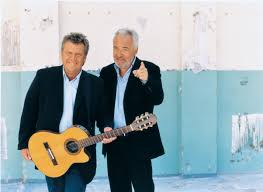
Photo credits: Robin Skjoldborg

National Final

To select its entries for Eurovision, Denmark holds an annual national selection called Dansk Melodi Grand Prix. In 2013, it was held in the Jyske Bank Boxen in Herning on 26 January. The show was hosted by Lise RĂžnne, Louise Wolff and Sofie Lassen-Kahlke. The 10 competing songs were:

  1. Jeg har hele tiden vidst det“, sung by Frederikke Vedel
  2. Human“, sung by Brinck
  3. I’m not alone“, sung by Kate Hall
  4. Rejs dig op“, sung by Louise Dubiel
  5. We own the universe“, sung by Daze
  6. Stay awake“, sung by Simone
  7. Invincible“, sung by Jack Rowan feat. Sam Gray
  8. Only teardrops“, sung by Emmelie De Forest
  9. Beautiful to me“, sung by Albin
  10. Unbreakable“, sung by Mohamed Ali


In a superfinal, 3 songs came out:

  1. “Stay awake”, sung by Simone (15 pts., 3rd)
  2. “Only teardrops”, sung by Emmelie De Forest (26 pts., 1st)
  3. “Unbreakable”, sung by Mohamed Ali (19 pts., 2nd)


Photo credits: Albin Olsson

Emmelie De Forest

Emmelie Charlotte-Victoria de Forest, born on 28 February 1993 in Randers, Denmark, has music in her blood, claiming descent from Queen Victoria of the UK. With a Swedish father and Danish mother, her multicultural roots have influenced her musical journey. Starting her singing career at a tender age, Emmelie found her passion in jazz classics from the 1930s and 1940s, performing in local festivals by the age of 14.

Her moment of international recognition came in 2013 when she represented Denmark at the Eurovision Song Contest with her song “Only Teardrops.” Winning the competition, Emmelie became a sensation not only in Denmark but throughout Europe. This triumph was followed by her debut album of the same name and numerous tours across the continent.

Further establishing her Eurovision legacy, Emmelie introduced “Rainmaker” in 2014, which became the official anthem for the Eurovision Song Contest the following year. Her commitment to music continued with her sophomore album and various singles. After parting ways with Universal Music Group in 2015, she joined Cosmos Music and shifted her focus to songwriting. Her lyrical contributions graced multiple Eurovision stages, including penning Lucie Jones’ “Never Give Up on You” in 2017.

By 2018, Emmelie released her second album “History.” Her most recent endeavors include launching “Typical Love Song” in 2021 and making an appearance in the short film “Text Me When You Get Home.” Emmelie’s journey from a local festival singer to an international sensation underscores her enduring impact in the music industry.

Only Teardrops

The song combines a pop melody with folky undertones, particularly noticeable with the inclusion of the flute. Its catchy chorus and emotive lyrics discuss the complexities of love and conflict, suggesting that both love and understanding can be the solution to disputes. 

At the Eurovision contest, “Only Teardrops” stood out both in terms of its melodic appeal and Emmelie’s spirited performance. Garnering a total of 281 points, the song allowed Denmark to clinch the Eurovision victory that year. Emmelie’s barefoot performance added a unique touch and became one of the memorable moments from the contest. After its Eurovision win, “Only Teardrops” became a hit across Europe, charting in multiple countries.



Related news

Uncategorized

70 years of Eurovision: when Irish eyes are smiling

The Eurovision Song Contest is celebrating its 70th anniversary. That is a wonderful milestone. We at Eurovision Universe love diving into the history of the contest. That is why we are taking a closer look at the contests of the past 70 years. 1994 The EBU was frantically searching for a new system. The countries with the worst scores from the previous year had to sit on the sidelines for a year. They had to make way for Estonia, Hungary, Lithuania, Poland, Romania, Russia, and Slovakia. Proud Ireland hosted the Song Contest again, this time simply in Dublin, at the Point Theatre. The hosts were Cynthia NĂ­ MhurchĂș and Gerry Ryan. The interval act was the most talked-about ever: River Dance. A dance written by Bill Whelan, but which later grew into an internationally acclaimed act. The songs Marie Bergman represented Sweden, in a duet with Roger Pontare. Marie had also participated in 1971 and 1972. Evridiki returned for Cyprus. Former Bobbysocks member Elisabeth Andreasson sang, also in a duet, for Norway. And the Icelandic Sigga, who had participated in a group twice, now took part solo. That was quite a challenge. Her duo partner from two years earlier, Sissa, was actually supposed to sing the song “NĂŠtur,” but she was sidelined by the Icelandic broadcaster. Portugal caught attention with Sara Tavares. She had won a singing competition in her own country; back then, she imitated Whitney Houston. Her song “Chamar a musica” impressed the audience. Germany opted more for a lot of cheerfulness. The all-female trio Mekado, formed especially for the occasion, performed the cheerful “Wir geben ‘ner Party.” It was sung in German, but with many international terms. And it was a song by Ralph Siegel and Bernd Meinunger. The aforementioned Elisabeth Andreasson sang a duet with the much younger (and sadly enough deceased very young) Jan Werner Danielsen: “Duett,” a mystical song. Friderika Bayer from Hungary sang the serene “Kinek mondjam el vĂ©tkeimet?” For a moment, it seemed Hungary was going to win. The first juries all gave their 12 to the debuting country. Ultimately, Friderika finished fourth. Youddiph also came from Eastern Europe. She represented Russia with “Vechny strannik,” but above all with her dress. She constantly changed it into a different dress, keeping the viewer mesmerized and focused on it. The Polish Edyta GĂłrniak had dressed much more simple. The song, too, stood out for its simplicity. It came in second. Because Ireland won, of course. That was how it was done in those days. Paul Harrington & Charlie McGettigan Rumour has it that Ireland had sent two middle-aged men with a ballad because they didn’t want to win again. If that was the case, that plan was not exactly successful. For it was precisely as anti-heroes that Paul Harrington and Charlie McGettigan made a huge impression. Halfway through the voting, they took a lead with their “Rock ‘n’ roll kids” that they never relinquished. The crowd went wild; Ireland was celebrating one big party. Except perhaps at the Irish broadcaster RTÉ, which now found itself facing the organization of the contest once again. Charlie McGettigan recently made the news by wanting to return his trophy, following in the footsteps of Nemo (2024). He, too, could not live with Israel’s participation. However, he could not find his trophy. Understandable, because anyone who looks closely at the award ceremony will see that only composer Brendan Graham received a trophy. 1995 Once again, a number of countries had to make way so that others could return. However, Italy and Luxembourg, both on the reserve bench the previous year, did not return. 23 countries participated in this festival. It was hosted by Mary Kennedy. The songs Arzu Ece participated for Turkey for the second time, having entered the Eurovision stage six years earlier as a member of the group Pan. She was the only artist returning. Justyna Steczkowska participated for Poland. Although she did not finish high, she did attract attention due to the atonal singing during her song. Also noteworthy: Eddie Friel for Ireland. His song “Dreamin’” was such a shameless copy of Julie Felix’s “Moonlight” (just listen to the two songs) that disqualification loomed. Anabel Conde was the participant for Spain. She finished in second place. The group Magazin represented Croatia, with opera singer Lidija HorvĂĄth as an additional vocalist. Whereas all group members sang at the national final, now only Lidija and group singer Danijela were visible. The rest had faded into the background. Danijela would not stay with Magazin for much longer. And then there was Alexandros Panayi: he was the fan favorite for Cyprus with “Sti fotia”. He would later often travel with Greece and Cyprus as a backing vocalist or vocal coach. One of the favorites was the Swede Jan Johansen with the ballad “Se pĂ„ mej”. Another notable ballad was that of Slovenia, “Prisluhni mi”. Neither song won. And then we do not want to leave Iceland unmentioned. After many attempts in national finals, the broadcaster there had selected Bo HalldĂłrsson. He sang the beautiful ballad “NĂșna”. Later, his daughter Svala would also represent her country. We mention him because Bo HalldĂłrsson passed away last week at 74. Secret Garden Norway won with a remarkable song. The winning “Nocturne” contained only 25 words. The group, Secret Garden, was built around Rolf LĂžvland, who wrote the winning song 10 years earlier, and his girlfriend Fionualla Sherry. As a violinist, she played a leading role in the song. Singer Gunnhild Tvinnereim, along with the other group members, had only a supporting role. Remarkably: although Ireland did not win, Fionualla Sherry was indeed Irish. And so Ireland won again, but then without winning.

Read More »
Uncategorized
Martijn

70 years of Eurovision: when Irish eyes are smiling

The Eurovision Song Contest is celebrating its 70th anniversary. That is a wonderful milestone. We at Eurovision Universe love diving into the history of the contest. That is why we are taking a closer look at the contests of the past 70 years. 1994 The EBU was frantically searching for a new system. The countries with the worst scores from the previous year had to sit on the sidelines for a year. They had to make way for Estonia, Hungary, Lithuania, Poland, Romania, Russia, and Slovakia. Proud Ireland hosted the Song Contest again, this time simply in Dublin, at the Point Theatre. The hosts were Cynthia NĂ­ MhurchĂș and Gerry Ryan. The interval act was the most talked-about ever: River Dance. A dance written by Bill Whelan, but which later grew into an internationally acclaimed act. The songs Marie Bergman represented Sweden, in a duet with Roger Pontare. Marie had also participated in 1971 and 1972. Evridiki returned for Cyprus. Former Bobbysocks member Elisabeth Andreasson sang, also in a duet, for Norway. And the Icelandic Sigga, who had participated in a group twice, now took part solo. That was quite a challenge. Her duo partner from two years earlier, Sissa, was actually supposed to sing the song “NĂŠtur,” but she was sidelined by the Icelandic broadcaster. Portugal caught attention with Sara Tavares. She had won a singing competition in her own country; back then, she imitated Whitney Houston. Her song “Chamar a musica” impressed the audience. Germany opted more for a lot of cheerfulness. The all-female trio Mekado, formed especially for the occasion, performed the cheerful “Wir geben ‘ner Party.” It was sung in German, but with many international terms. And it was a song by Ralph Siegel and Bernd Meinunger. The aforementioned Elisabeth Andreasson sang a duet with the much younger (and sadly enough deceased very young) Jan Werner Danielsen: “Duett,” a mystical song. Friderika Bayer from Hungary sang the serene “Kinek mondjam el vĂ©tkeimet?” For a moment, it seemed Hungary was going to win. The first juries all gave their 12 to the debuting country. Ultimately, Friderika finished fourth. Youddiph also came from Eastern Europe. She represented Russia with “Vechny strannik,” but above all with her dress. She constantly changed it into a different dress, keeping the viewer mesmerized and focused on it. The Polish Edyta GĂłrniak had dressed much more simple. The song, too, stood out for its simplicity. It came in second. Because Ireland won, of course. That was how it was done in those days. Paul Harrington & Charlie McGettigan Rumour has it that Ireland had sent two middle-aged men with a ballad because they didn’t want to win again. If that was the case, that plan was not exactly successful. For it was precisely as anti-heroes that Paul Harrington and Charlie McGettigan made a huge impression. Halfway through the voting, they took a lead with their “Rock ‘n’ roll kids” that they never relinquished. The crowd went wild; Ireland was celebrating one big party. Except perhaps at the Irish broadcaster RTÉ, which now found itself facing the organization of the contest once again. Charlie McGettigan recently made the news by wanting to return his trophy, following in the footsteps of Nemo (2024). He, too, could not live with Israel’s participation. However, he could not find his trophy. Understandable, because anyone who looks closely at the award ceremony will see that only composer Brendan Graham received a trophy. 1995 Once again, a number of countries had to make way so that others could return. However, Italy and Luxembourg, both on the reserve bench the previous year, did not return. 23 countries participated in this festival. It was hosted by Mary Kennedy. The songs Arzu Ece participated for Turkey for the second time, having entered the Eurovision stage six years earlier as a member of the group Pan. She was the only artist returning. Justyna Steczkowska participated for Poland. Although she did not finish high, she did attract attention due to the atonal singing during her song. Also noteworthy: Eddie Friel for Ireland. His song “Dreamin’” was such a shameless copy of Julie Felix’s “Moonlight” (just listen to the two songs) that disqualification loomed. Anabel Conde was the participant for Spain. She finished in second place. The group Magazin represented Croatia, with opera singer Lidija HorvĂĄth as an additional vocalist. Whereas all group members sang at the national final, now only Lidija and group singer Danijela were visible. The rest had faded into the background. Danijela would not stay with Magazin for much longer. And then there was Alexandros Panayi: he was the fan favorite for Cyprus with “Sti fotia”. He would later often travel with Greece and Cyprus as a backing vocalist or vocal coach. One of the favorites was the Swede Jan Johansen with the ballad “Se pĂ„ mej”. Another notable ballad was that of Slovenia, “Prisluhni mi”. Neither song won. And then we do not want to leave Iceland unmentioned. After many attempts in national finals, the broadcaster there had selected Bo HalldĂłrsson. He sang the beautiful ballad “NĂșna”. Later, his daughter Svala would also represent her country. We mention him because Bo HalldĂłrsson passed away last week at 74. Secret Garden Norway won with a remarkable song. The winning “Nocturne” contained only 25 words. The group, Secret Garden, was built around Rolf LĂžvland, who wrote the winning song 10 years earlier, and his girlfriend Fionualla Sherry. As a violinist, she played a leading role in the song. Singer Gunnhild Tvinnereim, along with the other group members, had only a supporting role. Remarkably: although Ireland did not win, Fionualla Sherry was indeed Irish. And so Ireland won again, but then without winning.

Read More »
Follow Us: