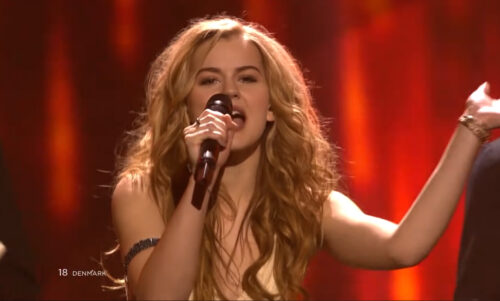
🇩🇰 Blast from the past: Denmark 2013

We know a lot about Eurovision and we want to share this knowledge with you! Therefore we’d like to bring you a blast from the past. Today we talk about yet another winner: Denmark 2013.

Denmark in the Eurovision Song Contest

Denmark made its debut in the contest in 1957. The country won its first Eurovision in 1963 with the song “Dansevise” performed by Grethe & Jørgen Ingmann. Denmark took a hiatus from the contest between 1966 and 1978 due to poor results and disagreement with the voting structure. After their return, it took a while but in 2000 the Olsen Brothers got to first place with “Fly On The Wings Of Love”. In 2013, the third Danish win was there: Emmelie De Forest sang “Only Teardrops”.
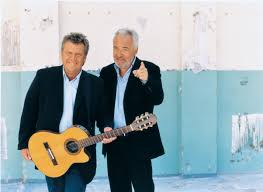
Photo credits: Robin Skjoldborg

National Final

To select its entries for Eurovision, Denmark holds an annual national selection called Dansk Melodi Grand Prix. In 2013, it was held in the Jyske Bank Boxen in Herning on 26 January. The show was hosted by Lise Rønne, Louise Wolff and Sofie Lassen-Kahlke. The 10 competing songs were:

  1. Jeg har hele tiden vidst det“, sung by Frederikke Vedel
  2. Human“, sung by Brinck
  3. I’m not alone“, sung by Kate Hall
  4. Rejs dig op“, sung by Louise Dubiel
  5. We own the universe“, sung by Daze
  6. Stay awake“, sung by Simone
  7. Invincible“, sung by Jack Rowan feat. Sam Gray
  8. Only teardrops“, sung by Emmelie De Forest
  9. Beautiful to me“, sung by Albin
  10. Unbreakable“, sung by Mohamed Ali


In a superfinal, 3 songs came out:

  1. “Stay awake”, sung by Simone (15 pts., 3rd)
  2. “Only teardrops”, sung by Emmelie De Forest (26 pts., 1st)
  3. “Unbreakable”, sung by Mohamed Ali (19 pts., 2nd)


Photo credits: Albin Olsson

Emmelie De Forest

Emmelie Charlotte-Victoria de Forest, born on 28 February 1993 in Randers, Denmark, has music in her blood, claiming descent from Queen Victoria of the UK. With a Swedish father and Danish mother, her multicultural roots have influenced her musical journey. Starting her singing career at a tender age, Emmelie found her passion in jazz classics from the 1930s and 1940s, performing in local festivals by the age of 14.

Her moment of international recognition came in 2013 when she represented Denmark at the Eurovision Song Contest with her song “Only Teardrops.” Winning the competition, Emmelie became a sensation not only in Denmark but throughout Europe. This triumph was followed by her debut album of the same name and numerous tours across the continent.

Further establishing her Eurovision legacy, Emmelie introduced “Rainmaker” in 2014, which became the official anthem for the Eurovision Song Contest the following year. Her commitment to music continued with her sophomore album and various singles. After parting ways with Universal Music Group in 2015, she joined Cosmos Music and shifted her focus to songwriting. Her lyrical contributions graced multiple Eurovision stages, including penning Lucie Jones’ “Never Give Up on You” in 2017.

By 2018, Emmelie released her second album “History.” Her most recent endeavors include launching “Typical Love Song” in 2021 and making an appearance in the short film “Text Me When You Get Home.” Emmelie’s journey from a local festival singer to an international sensation underscores her enduring impact in the music industry.

Only Teardrops

The song combines a pop melody with folky undertones, particularly noticeable with the inclusion of the flute. Its catchy chorus and emotive lyrics discuss the complexities of love and conflict, suggesting that both love and understanding can be the solution to disputes. 

At the Eurovision contest, “Only Teardrops” stood out both in terms of its melodic appeal and Emmelie’s spirited performance. Garnering a total of 281 points, the song allowed Denmark to clinch the Eurovision victory that year. Emmelie’s barefoot performance added a unique touch and became one of the memorable moments from the contest. After its Eurovision win, “Only Teardrops” became a hit across Europe, charting in multiple countries.



Related news

History

Austria in the Eurovision Song Contest, part 7

This year’s Eurovision Song Contest has been won by Austria. It was the 57th Austrian entry. Reason for us to go back to all the Austrian entries in history! For Austria in the Eurovision Song Contest, part 7, we look back at the start of the 21st century. Alf Poier participated for Austria, but there were also some unsuccesful entries. And there was a 3-year gap. 2000 – The Rounder Girls – All To You Austria’s 2000 entry “All To You” was internally selected by broadcaster ORF. The song was written by American songwriter Dave Moskin. Moskin gave the three-piece vocal group The Rounder Girls an up-tempo, gospel-influenced pop track. Performing last in the Stockholm final, the trio, with members from Austria, the US and the UK, delivered slick harmonies and choreography. They finished 14th out of 24 countries with 34 points. The Rounder Girls were a seasoned soul/gospel ensemble, and their Eurovision appearance raised their profile, though Austria’s middling result meant the country sat out the contest in 2001. 2002 – Manuel Ortega – Say A Word “Say A Word” by Manuel Ortega won Austria’s “Song.Null.Zwei” 2002 national final out of ten songs. this entry was an upbeat pop song with a catchy, boy-band style hook. It was composed by Alexander Kahr with lyrics by Robert Pfluger. At Eurovision 2002 in Tallinn, Ortega performed third and Austria placed 18th (26 points) in the final. Manuel Ortega, a young pop singer, had scored a summer hit in 2001 and was nicknamed “the Austrian Ricky Martin” for his Latin pop flair. His Eurovision song’s fun choreography and positive message reflected that image, though the result was a lower mid-table finish. 2003 – Alf Poier – Weil der Mensch zählt ORF organized the “Song.Null.Drei” 2003 selection. Petra Frey (ESC 1994) was the runner up. Comedian-singer Alf Poier triumphed with “Weil der Mensch zählt”. Poier penned this satirical song himself. Musically it’s a quirky folk-pop tune delivered in Styrian dialect. The performance, complete with cartoonish animal props, was a parody of Eurovision’s over-the-top style. At the Riga contest, this offbeat entry surprised many by scoring 6th place with 101 points. Alf Poier, an Austrian stand-up comedian known for absurdist humor, thus earned Austria’s best Eurovision result in over a decade. His comedic approach and catchy refrain turned him into a fan favorite that year. 2004 – Tie Break – Du bist Austria’s national final “Song.Null.Vier” chose Tie Break’s “Du bist” for Eurovision 2004. Waterloo & Robinson (ESC 1976!) were the runners up. Note that a song, written by popstar Falco, participated too. So posthumously, Falco did a Eurovision attempt!Written by composer Peter Zimmermann, “Du bist” is a tender schlager-style pop ballad performed in German. Tie Break, a trio of fresh-faced male singers (a boy band formed via a talent search), delivered tight harmonies in Istanbul’s final. Thanks to Austria’s top-10 result the year before, they pre-qualified directly for the final. Tie Break finished 21st out of 24 with 9 points. The group had gained national fame through the selection process, but on the Eurovision stage their gentle ballad struggled to stand out in a field dominated by more dynamic acts. 2005 – Global.Kryner – Y así In 2005, “Song.Null.Fünf” was held and the crossover folk band Global.Kryner won with “Y así”. They narrowly beated Alf Poier. The controversy was that Austria changed the rules of the voting on the very last moment. Would the original voting procedure be used, Alf Poier would have won. Band members Edi Köhldorfer (composer) and Christof Spörk (lyricist) combined Latin salsa rhythms with Austrian alpine polka to create this unique “salsa-polka-pop” song. Global.Kryner was a six-member ensemble known for blending folk and jazz influences. They opened the Eurovision semi-final in Kyiv with an energetic performance featuring yodels and Latin dance breaks. However, “Y así” did not advance to the final, placing 21st of 25 in the semi-final with 30 points. The group had earned acclaim in Austria and Germany, but their daring genre fusion proved too quirky for the Eurovision televote that year. 2007 – Eric Papilaya – Get A Life – Get Alive After a brief Eurovision hiatus, Austria returned in 2007 by internally selecting Eric Papilaya. His entry “Get A Life – Get Alive” – composed by Greg Usek with lyrics by Austin Howard. It was the official anthem of Vienna’s Life Ball AIDS charity event. This song is an upbeat pop-rock anthem with an inspirational message and flashy staging. Papilaya performed with a giant red ribbon on stage. Papilaya, a rock vocalist who rose to fame on the TV talent show Starmania, gave a spirited performance in Helsinki’s semi-final. Unfortunately Austria did not qualify for the final; he placed 27th (four points) in the semi. The entry drew media attention for its charity theme, but it wasn’t enough to overcome tough competition in 2007. 2011 – Nadine Beiler – The Secret Is Love Austria returned to Eurovision in 2011 through the national selection “Düsseldorf – wir kommen!”. The competition featured ten songs. However, well-known artists Alf Poier and Petra Frey failed to pass the online preselection. As a result, Nadine Beiler won the final with her soulful ballad “The Secret Is Love”. She co-wrote the song with veteran producer Thomas Rabitsch. Musically, the entry combines elements of gospel and pop, while it clearly highlights Beiler’s strong vocal range. Previously, Nadine Beiler had gained national fame by winning the television talent show Starmania in 2007 at the age of 16. Therefore, expectations were already high when she took the stage in Düsseldorf. Her Eurovision performance began a cappella and gradually built towards a powerful climax. Consequently, Austria qualified from the semi-final in seventh place with 69 points. In the grand final, Beiler finished 18th, scoring 64 points. Nevertheless, this result marked Austria’s first appearance in a Eurovision final in seven years and therefore signalled a credible and positive comeback.

Read More »
Eurovision 2026

Weekly Update

It’s Tuesday, January 13, 2026, and time for another weekly update! This week saw a Eurovision icon bow out, national finals making headlines, and key developments for the 2026 contest in Vienna. Conchita Wurst announced her departure from all Eurovision activities, Ukraine’s Vidbir added its final wildcard act, and Moldova set the stage for its national final. Meanwhile, Eurovision 2026 preparations accelerated with ticket sales (which sold out within an hour) and the Semi-Final Allocation Draw results. Plus, we’ve introduced new features on Eurovision Universe – including a country-by-country lyrics search and a dedicated 2026 page. Here are this week’s top stories: Conchita Wurst Conchita Wurst has shared a personal statement on social media. In her message, she reflects on recent developments in her life and career. She explains that she will step back from all Eurovision-related activities. According to Conchita, the contest will remain an important part of her history, but no longer a place for future projects. 📷 EBU She thanks Eurovision for the opportunities it gave her and for the impact it had on her personal growth. Fans and colleagues reacted quickly to the statement. Many expressed support and appreciation for her openness. Conchita’s words once again underline her role as a strong voice within the Eurovision community. Her influence reaches far beyond her victory in 2014. source: Facebook Conchita Wurst National finals: Ukraine and Moldova 🇺🇦 In Ukraine, broadcaster Suspilne has confirmed the final participant for Vidbir 2026. The artist won the public vote for the remaining spot in the national final. This result completes the line-up for the Ukrainian selection show. Vidbir continues to attract strong interest from the public. It remains an important platform for Ukrainian artists. Source: suspilne.media 🇲🇩 Moldova has also shared new details about its national final. The show will take place on 17 January. Broadcaster TRM confirmed that Paula Seling and Jamala will appear as special guests. Their participation adds international attention to the Moldovan selection. The event marks Moldova’s official return to the Eurovision stage. source: RTM Agenda: January 15 🇲🇹 Malta semifinal 21.00 CET TVM January 17 🇲🇩 Moldova final 18.00 CET TRM or YouTube January 17 🇲🇹 Malta final 21.00 CET TVM January 20 🇮🇱 Israel final artists 20.30 CET To be announced   Eurovision 2026: tickets and allocation draw Ticket sales for the Eurovision Song Contest 2026 in Vienna started today. Demand proved extremely high. The first range of tickets sold out within around one hour after sales opened. This result highlights the strong interest in the contest. It also suggests that future ticket waves may sell quickly. source: instagram eurovision The allocation draw has also taken place. Participating countries learned in which semi-final they will compete. The draw also decided whether they will perform in the first or second half of the show. With this step completed, the on-screen Eurovision season for 2026 has officially begun. Find all about the draw here. New on Eurovision Universe Eurovision Universe has expanded its online encyclopedia. A new tool now allows visitors to search Eurovision lyrics by country. This feature offers a fresh way to explore songs and themes. Have a look at it here! In addition, the dedicated Eurovision 2026 page is now online. It brings together confirmed news, background information, and updates about the upcoming contest. Readers who want to follow the road to Vienna are encouraged to explore both new sections.

Read More »
Eurovision 2026
Martijn

Weekly Update

It’s Tuesday, January 13, 2026, and time for another weekly update! This week saw a Eurovision icon bow out, national finals making headlines, and key developments for the 2026 contest in Vienna. Conchita Wurst announced her departure from all Eurovision activities, Ukraine’s Vidbir added its final wildcard act, and Moldova set the stage for its national final. Meanwhile, Eurovision 2026 preparations accelerated with ticket sales (which sold out within an hour) and the Semi-Final Allocation Draw results. Plus, we’ve introduced new features on Eurovision Universe – including a country-by-country lyrics search and a dedicated 2026 page. Here are this week’s top stories: Conchita Wurst Conchita Wurst has shared a personal statement on social media. In her message, she reflects on recent developments in her life and career. She explains that she will step back from all Eurovision-related activities. According to Conchita, the contest will remain an important part of her history, but no longer a place for future projects. 📷 EBU She thanks Eurovision for the opportunities it gave her and for the impact it had on her personal growth. Fans and colleagues reacted quickly to the statement. Many expressed support and appreciation for her openness. Conchita’s words once again underline her role as a strong voice within the Eurovision community. Her influence reaches far beyond her victory in 2014. source: Facebook Conchita Wurst National finals: Ukraine and Moldova 🇺🇦 In Ukraine, broadcaster Suspilne has confirmed the final participant for Vidbir 2026. The artist won the public vote for the remaining spot in the national final. This result completes the line-up for the Ukrainian selection show. Vidbir continues to attract strong interest from the public. It remains an important platform for Ukrainian artists. Source: suspilne.media 🇲🇩 Moldova has also shared new details about its national final. The show will take place on 17 January. Broadcaster TRM confirmed that Paula Seling and Jamala will appear as special guests. Their participation adds international attention to the Moldovan selection. The event marks Moldova’s official return to the Eurovision stage. source: RTM Agenda: January 15 🇲🇹 Malta semifinal 21.00 CET TVM January 17 🇲🇩 Moldova final 18.00 CET TRM or YouTube January 17 🇲🇹 Malta final 21.00 CET TVM January 20 🇮🇱 Israel final artists 20.30 CET To be announced   Eurovision 2026: tickets and allocation draw Ticket sales for the Eurovision Song Contest 2026 in Vienna started today. Demand proved extremely high. The first range of tickets sold out within around one hour after sales opened. This result highlights the strong interest in the contest. It also suggests that future ticket waves may sell quickly. source: instagram eurovision The allocation draw has also taken place. Participating countries learned in which semi-final they will compete. The draw also decided whether they will perform in the first or second half of the show. With this step completed, the on-screen Eurovision season for 2026 has officially begun. Find all about the draw here. New on Eurovision Universe Eurovision Universe has expanded its online encyclopedia. A new tool now allows visitors to search Eurovision lyrics by country. This feature offers a fresh way to explore songs and themes. Have a look at it here! In addition, the dedicated Eurovision 2026 page is now online. It brings together confirmed news, background information, and updates about the upcoming contest. Readers who want to follow the road to Vienna are encouraged to explore both new sections.

Read More »
Follow Us: