đŸ‡±đŸ‡» Road to Basel: Latvia

Road to Basel: Latvia

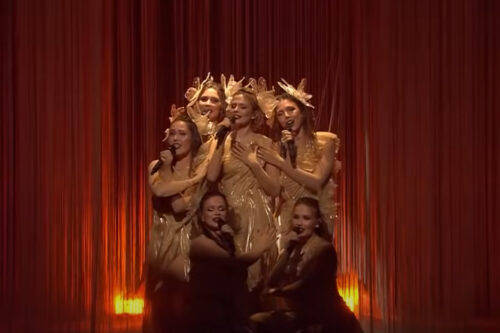
Road to Basel: Latvia! As the Eurovision Song Contest 2025 in Basel approaches, we continue our daily spotlight on this year’s contestants. Today, we focus on Latvia.

photo: LTV/Vents ĀboltiƆơ

Tautumeitas

Tautumeitas is a Latvian folk and world music band that was formed in 2015. The group is made up of six vocalists and instrumentalists: Asnate Rancāne, Aurēlija Rancāne, Annemarija Moiseja, Laura Marta LÄ«cÄ«te, Gabriēla ZvaigznÄ«te, and Kate Sliƥāne. Since their formation, they have become known for blending traditional Latvian folk elements with contemporary sounds. As a result, their music offers a fresh take on cultural heritage.

Over the years, Tautumeitas has released several albums. Their self-titled debut album came out in 2018, marking an important step in their artistic journey. Later, in 2022, they followed up with the album SkrejceÄŒĆĄ, further developing their unique sound.

In addition to their own work, the group has also collaborated with other artists. For example, in 2017, they joined forces with the Latvian bagpipe and drum ensemble AuÄŒi on the album Lai māsiƆa rotājās!, combining powerful vocals with rich instrumental textures. Through both their recordings and collaborations, Tautumeitas continues to explore and expand the boundaries of Latvian folk music.

“Bur man laimi” (What does AI say?)

Their Eurovision entry, “Bur man laimi” (translated as “Bring me happiness”), is a folk song written by group members Asnate Rancāne, Aurēlija Rancāne, Elvis LintiƆơ, Laura LÄ«cÄ«te, and Gabriēla ZvaigznÄ«te. Released on 4 December 2024, the song is performed entirely in Latvian and showcases the group’s signature blend of traditional and modern musical elements. “Bur man laimi” is the first song written entirely in Latvian to represent the country at Eurovision since 2004. 

National Selection Process

Latvia’s national broadcaster, LTV, organized Supernova 2025 to select its Eurovision entry. The competition consisted of a semi-final on 1 February 2025 and a final on 8 February 2025. Tautumeitas advanced from the semi-final and ultimately won the final with “Bur man laimi.” The final results were determined by a combination of jury and public votes. In the final, Tautumeitas received 8 points from the jury and 10 points from the public televote, totaling 18 points, which secured their victory.

This is the full result of the final:

  1. Tautumeitas, “Bur man laimi
  2. Emilija, “Heartbeat
  3. Citi Zēni, “Ramtai
  4. The Ludvig, “LÄ«go
  5. Chris Noah, “Romance Isn’t Dead
  6. Bel Tempo x Legzdina, “The Water
  7. PalĂș, “Delusional
  8. Marcus Riva, “Bigger Than This
  9. SinerÄŁija, “Bound By The Light
  10. Tepat, “Sadzejot
Latvia in the Eurovision Song Contest

Latvia has participated in the Eurovision Song Contest 24 times since its debut in 2000. Immediately, the country was succesful, with a 3rd place for Brainstorm‘s “My Star”. The country achieved its best result in 2002 when Marie N won the contest with “I Wanna.” After several years of not qualifying for the final, Latvia returned to the Grand Final in 2024 with Dons‘ “Hollow,” which placed 16th. ​

A Random Latvian Entry

Reflecting on Latvia’s Eurovision history, random.org chose the 2017 entry. It was Triana Park with the song “Line”. It was the 6th time that the band took part in the national final, so it was 6th time lucky for them!

​

Betting Odds

As of now, Tautumeitas’ “Bur man laimi” is on a 32nd place to win the Eurovision Song Contest. They are 14th in line to win the 2nd semifinal. A tough time for the ladies, but wasn’t Dons an unexpected finalist last year too? Maybe Tautumeitas can repeat that success this year!​

We eagerly await the Eurovision Song Contest in Basel and look forward to witnessing Tautumeitas’ performance on the grand stage.

Related news

Eurovision 2026

Road to Vienna: Poland

Road to Vienna: Poland As the Eurovision Song Contest in Basel approaches, we continue our daily spotlight on this year’s contestants. Today, we focus on Poland. Alicja SzempliƄska: Poland’s Pop and Soul talent Alicja SzempliƄska, born on 29 April 2002 in CiechanĂłw, Poland, is a talented singer and songwriter known for her powerful and emotional voice. She began singing at a young age, taking lessons at a local community centre and performing in a church choir. By the age of 12, she was already receiving professional vocal training, shaping her style with influences from pop and soul music. Breakthrough and Career Beginnings Alicja first gained national recognition in 2016 after winning the TV show Hit, Hit, Hurra!, earning training with renowned vocal coach Seth Riggs. Her career took a major leap in 2019 when she won The Voice of Poland. Soon after, she signed with Universal Music Polska and released her debut single “Prawie my,” which quickly gained over one million views. Growing Presence in Music and Media Beyond talent shows, Alicja has built a strong presence in Poland’s music scene. She has performed at major televised events and festivals, including the Junior Eurovision Song Contest 2020. In 2022, she expanded her career by hosting the radio show 21 grams of soul. She also recorded “Stick Together,” the official song for the 2023 Men’s Handball World Championship. Major Achievements and Debut Album By her early twenties, Alicja had already won three major Polish talent competitions, highlighting her rapid rise. In 2024, she released her debut album Nie wracam, marking an important milestone and establishing her as a serious recording artist in the Polish pop industry. Eurovision Journey: From 2020 to 2026 Alicja was originally selected to represent Poland at the Eurovision Song Contest 2020 with her song “Empires,” but the event was cancelled due to the COVID-19 pandemic. Despite this setback, she continued developing her music career. In 2026, she made a successful return by winning Poland’s national selection with her self-written song “Pray.” This victory secures her long-awaited debut on the Eurovision stage in Vienna, confirming her growth as both a performer and songwriter. Pray: Faith, Freedom, and Self-Empowerment A Powerful Story of Growth Pray is a deeply emotional track that blends vulnerability with confidence. The song explores personal struggle, spiritual reflection, and the journey toward self-belief. It tells the story of an artist learning to grow, take control, and embrace independence. Searching for Freedom and Inner Peace At its core, “Pray” is about finding freedom—emotionally and spiritually. The artist feels incomplete and searches for meaning and balance. Faith plays a key role, creating tension between doubt and hope. Prayer becomes a way to cope, heal, and stay grounded. From Insecurity to Confidence As the song develops, the message shifts from self-doubt to empowerment. The artist begins to reject outside expectations and defines success on their own terms. This transformation highlights a relatable journey toward self-worth and authenticity. The Reality Behind Success “Pray” also reflects the pressure that comes with ambition. Even with growing confidence, challenges remain. The song shows that success is not perfect—it requires resilience, persistence, and strength. A Bold Message of Independence By the end, the artist takes full control, expressing confidence and determination. Faith remains a central theme, driving both personal and artistic growth. Poland in the Eurovision Song Contest Poland made its Eurovision debut in 1994 and achieved its best result that year, finishing second with Edyta GĂłrniak‘s “To nie ja!” Since then, the country has participated numerous times, with varying degrees of success. They never made it to the top-5 again. Ich Troje was the most succesful group with “Keine Grenzen – Ć»adnych granic” in 2003.  The Bookmakers Poland is currently ranked 30th with the bookmakers—meaning a spot in the final seems unlikely
 but who knows? It’s Eurovision, baby!

Read More »
Eurovision 2026
Anja Kroeze

Road to Vienna: Poland

Road to Vienna: Poland As the Eurovision Song Contest in Basel approaches, we continue our daily spotlight on this year’s contestants. Today, we focus on Poland. Alicja SzempliƄska: Poland’s Pop and Soul talent Alicja SzempliƄska, born on 29 April 2002 in CiechanĂłw, Poland, is a talented singer and songwriter known for her powerful and emotional voice. She began singing at a young age, taking lessons at a local community centre and performing in a church choir. By the age of 12, she was already receiving professional vocal training, shaping her style with influences from pop and soul music. Breakthrough and Career Beginnings Alicja first gained national recognition in 2016 after winning the TV show Hit, Hit, Hurra!, earning training with renowned vocal coach Seth Riggs. Her career took a major leap in 2019 when she won The Voice of Poland. Soon after, she signed with Universal Music Polska and released her debut single “Prawie my,” which quickly gained over one million views. Growing Presence in Music and Media Beyond talent shows, Alicja has built a strong presence in Poland’s music scene. She has performed at major televised events and festivals, including the Junior Eurovision Song Contest 2020. In 2022, she expanded her career by hosting the radio show 21 grams of soul. She also recorded “Stick Together,” the official song for the 2023 Men’s Handball World Championship. Major Achievements and Debut Album By her early twenties, Alicja had already won three major Polish talent competitions, highlighting her rapid rise. In 2024, she released her debut album Nie wracam, marking an important milestone and establishing her as a serious recording artist in the Polish pop industry. Eurovision Journey: From 2020 to 2026 Alicja was originally selected to represent Poland at the Eurovision Song Contest 2020 with her song “Empires,” but the event was cancelled due to the COVID-19 pandemic. Despite this setback, she continued developing her music career. In 2026, she made a successful return by winning Poland’s national selection with her self-written song “Pray.” This victory secures her long-awaited debut on the Eurovision stage in Vienna, confirming her growth as both a performer and songwriter. Pray: Faith, Freedom, and Self-Empowerment A Powerful Story of Growth Pray is a deeply emotional track that blends vulnerability with confidence. The song explores personal struggle, spiritual reflection, and the journey toward self-belief. It tells the story of an artist learning to grow, take control, and embrace independence. Searching for Freedom and Inner Peace At its core, “Pray” is about finding freedom—emotionally and spiritually. The artist feels incomplete and searches for meaning and balance. Faith plays a key role, creating tension between doubt and hope. Prayer becomes a way to cope, heal, and stay grounded. From Insecurity to Confidence As the song develops, the message shifts from self-doubt to empowerment. The artist begins to reject outside expectations and defines success on their own terms. This transformation highlights a relatable journey toward self-worth and authenticity. The Reality Behind Success “Pray” also reflects the pressure that comes with ambition. Even with growing confidence, challenges remain. The song shows that success is not perfect—it requires resilience, persistence, and strength. A Bold Message of Independence By the end, the artist takes full control, expressing confidence and determination. Faith remains a central theme, driving both personal and artistic growth. Poland in the Eurovision Song Contest Poland made its Eurovision debut in 1994 and achieved its best result that year, finishing second with Edyta GĂłrniak‘s “To nie ja!” Since then, the country has participated numerous times, with varying degrees of success. They never made it to the top-5 again. Ich Troje was the most succesful group with “Keine Grenzen – Ć»adnych granic” in 2003.  The Bookmakers Poland is currently ranked 30th with the bookmakers—meaning a spot in the final seems unlikely
 but who knows? It’s Eurovision, baby!

Read More »
Follow Us: