Road to Vienna: Poland

Road to Vienna: Poland

As the Eurovision Song Contest in Basel approaches, we continue our daily spotlight on this year’s contestants. Today, we focus on Poland.

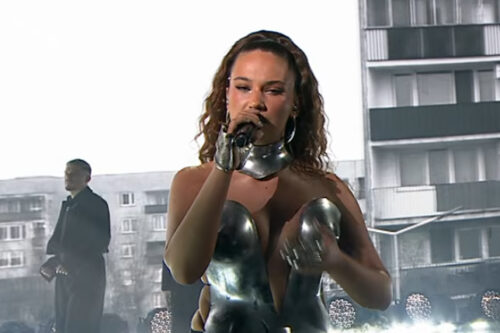
Alicja Szemplińska: Poland’s Pop and Soul talent

Alicja Szemplińska, born on 29 April 2002 in Ciechanów, Poland, is a talented singer and songwriter known for her powerful and emotional voice. She began singing at a young age, taking lessons at a local community centre and performing in a church choir. By the age of 12, she was already receiving professional vocal training, shaping her style with influences from pop and soul music.

Breakthrough and Career Beginnings

Alicja first gained national recognition in 2016 after winning the TV show Hit, Hit, Hurra!, earning training with renowned vocal coach Seth Riggs. Her career took a major leap in 2019 when she won The Voice of Poland. Soon after, she signed with Universal Music Polska and released her debut single “Prawie my,” which quickly gained over one million views.

Growing Presence in Music and Media

Beyond talent shows, Alicja has built a strong presence in Poland’s music scene. She has performed at major televised events and festivals, including the Junior Eurovision Song Contest 2020. In 2022, she expanded her career by hosting the radio show 21 grams of soul. She also recorded “Stick Together,” the official song for the 2023 Men’s Handball World Championship.

Major Achievements and Debut Album

By her early twenties, Alicja had already won three major Polish talent competitions, highlighting her rapid rise. In 2024, she released her debut album Nie wracam, marking an important milestone and establishing her as a serious recording artist in the Polish pop industry.

Eurovision Journey: From 2020 to 2026

Alicja was originally selected to represent Poland at the Eurovision Song Contest 2020 with her song “Empires,” but the event was cancelled due to the COVID-19 pandemic. Despite this setback, she continued developing her music career.

In 2026, she made a successful return by winning Poland’s national selection with her self-written song “Pray.” This victory secures her long-awaited debut on the Eurovision stage in Vienna, confirming her growth as both a performer and songwriter.

Pray: Faith, Freedom, and Self-Empowerment

A Powerful Story of Growth

Pray is a deeply emotional track that blends vulnerability with confidence. The song explores personal struggle, spiritual reflection, and the journey toward self-belief. It tells the story of an artist learning to grow, take control, and embrace independence.

Searching for Freedom and Inner Peace

At its core, “Pray” is about finding freedom—emotionally and spiritually. The artist feels incomplete and searches for meaning and balance. Faith plays a key role, creating tension between doubt and hope. Prayer becomes a way to cope, heal, and stay grounded.

From Insecurity to Confidence

As the song develops, the message shifts from self-doubt to empowerment. The artist begins to reject outside expectations and defines success on their own terms. This transformation highlights a relatable journey toward self-worth and authenticity.

The Reality Behind Success

“Pray” also reflects the pressure that comes with ambition. Even with growing confidence, challenges remain. The song shows that success is not perfect—it requires resilience, persistence, and strength.

A Bold Message of Independence

By the end, the artist takes full control, expressing confidence and determination. Faith remains a central theme, driving both personal and artistic growth.

Poland in the Eurovision Song Contest

Poland made its Eurovision debut in 1994 and achieved its best result that year, finishing second with Edyta Górniak‘s “To nie ja!” Since then, the country has participated numerous times, with varying degrees of success. They never made it to the top-5 again. Ich Troje was the most succesful group with “Keine Grenzen – Żadnych granic” in 2003. 

The Bookmakers

Poland is currently ranked 30th with the bookmakers—meaning a spot in the final seems unlikely… but who knows? It’s Eurovision, baby!

Related news

Uncategorized

70 years of Eurovision: An audio selection and a hit

The Eurovision Song Contest is celebrating its 70th anniversary. That is a wonderful milestone. We at Eurovision Universe love diving into the history of the contest. That is why we are taking a closer look at the contests of the past 70 years. 1996 Thirty countries wanted to participate in the Eurovision Song Contest in Oslo. That did not happen. All countries, except host country Norway, therefore had to fight for a spot. This took place via an audio selection round. Denmark, Germany, Hungary, Israel, debuting Macedonia, Romania, and Russia did not make it through. The contest was presented by Ingvild Bryn and the famous Morten Harkett, singer of A-ha. During the broadcast, extensive use was made of virtual reality, allowing Ingvild Bryn to easily walk between the sections of the scoreboard, or even through it. The songs Marianna Efstratou participated for Greece for the second time. Elisabeth Andreassen performed for no less than the fourth time, but for the first time solo. Notable was Lúcia Moniz, who represented Portugal. Her “O meu coração não tem cor” finished sixth, which for a long time was the best score ever for the Portuguese. Maarja-Liis Illus and Ivo Linna really caught the eye of Estonia. She was 15, he 46. The duo sang a sweet song titled “Kaelakee hääl”. And what Finland failed to achieve in all those years, Estonia did effortlessly: walking straight into the top 5 with a song in a Finno-Ugric language. There was also a major difference between the two Dutch duo partners, Maxine and Franklin Brown. However, in this case, it concerned the length. The Dutch entry “De eerste keer” is one of the few that rose in the rankings áfter the Eurovision Song Contest. The Spanish jury had, or so people thought, said “Poland, 6 points”. But the somewhat nasal-speaking jury chairwoman had said “Holland, 6 points”. People only found out about that later. It is not for nothing that this country ought to be called The Netherlands. Austria (“Weil’s dr guat got” in Vorarlberg) and France “Diwanit bugale” in Breton both sang in a minority language. The new generation after ABBA was also making its appearance. Peter Grönvall was one of the members of the group One More Time. And he was the son of Benny Andersson of ABBA. The group had already had a major hit in Europe with “Highland”. Singer Nanne Grönvall would participate in the Swedish Melodifestivalen a number of times, and even once in the British national final. Eimear Quinn Around this time, the Belgian documentary filmmaker Herman Molle made a documentary titled “How do I win the Eurovision Song Contest?”. Molle’s main recommendation: become Irish. Because Ireland won again. Eimear Quinn had sung with Anúna, the choir that accompanied River Dance. With her song “The Voice”, she effortlessly secured the seventh victory for Ireland. “You’re bringing it back too soon,” Morten Harkett grumbled briefly. But the party in Ireland was no less big for it. Nor was the nervous breakdown among the people at the Irish broadcaster RTÉ. 1997 The Eurovision Song Contest practically resided in the Point Theatre in Dublin. However, the audio pre-selection had been scrapped. The relegation zone was back, so a number of countries swapped places again. Italy returned after a three-year absence. Also new: televoting. In five countries, the public was allowed to cast their vote. The Eurovision Song Contest was presented by Carrie Crowley and, once again, someone from a boy band: Ronan Keating of Boyzone. The songs Şebnem Parker participated for Turkey for the second consecutive time. Her “Dinle” was roughly at the bottom in the odds, but surprisingly finished third in the final ranking. Celebrations in Turkey, which now finally dared to dream of a victory. Young Maarja-Liis Illus from Estonia also returned after a year, this time solo. And Alma Čardžić from Bosnia and Herzegovina also took a second try. Tor Endresen participated for Norway. He had competed in the Norwegian national final almost every year and had finally won. How disappointing that he finished with zero points. The duo Jalisse competed for Italy. The two finished fourth. It didn’t really help: Italy dropped out immediately afterwards. Bianca Shomburg had won the Soundmixshow in Germany, where she imitated Celine Dion. However, she did not do that in terms of the result at the Eurovision Song Contest. Russia sent the country’s biggest star. For years, Alla Pugacheva had been unmatched. There was no sign of that at the Eurovision Song Contest. The rest of Europe appreciated her with a fifteenth place. And then there was Paul Oscar. He represented Iceland. Lying on a sofa, surrounded by female beauty (which he had no eye for in real life), he sang his song. At the end of the song, he made a ‘gun gesture’ with his hand, shooting himself in the mouth. It was striking that Oscar received points exclusively from televoting countries. Katrina & The Waves An unwritten rule is that when an established name participates, they can finish very high but do not win. Katrina & The Waves did not adhere to this. In the 80s, they had a big hit with “Walking On Sunshine”. The song “Love Shine A Light” was originally intended as an anthem for Samaritans in recognition of the thirtieth anniversary of the Swindon branch of that organization. Nevertheless, it ended up at the Eurovision Song Contest, where it won effortlessly. Katrina & The Waves had an international hit with it. The song remains a Eurovision classic to this day. In 2020, it took center stage in the replacement broadcast for the canceled Song Contest: Eurovision Shine A Light.

Read More »
Eurovision 2026
Anja Kroeze

Road to Vienna: Poland

Road to Vienna: Poland As the Eurovision Song Contest in Basel approaches, we continue our daily spotlight on this year’s contestants. Today, we focus on Poland. Alicja Szemplińska: Poland’s Pop and Soul talent Alicja Szemplińska, born on 29 April 2002 in Ciechanów, Poland, is a talented singer and songwriter known for her powerful and emotional voice. She began singing at a young age, taking lessons at a local community centre and performing in a church choir. By the age of 12, she was already receiving professional vocal training, shaping her style with influences from pop and soul music. Breakthrough and Career Beginnings Alicja first gained national recognition in 2016 after winning the TV show Hit, Hit, Hurra!, earning training with renowned vocal coach Seth Riggs. Her career took a major leap in 2019 when she won The Voice of Poland. Soon after, she signed with Universal Music Polska and released her debut single “Prawie my,” which quickly gained over one million views. Growing Presence in Music and Media Beyond talent shows, Alicja has built a strong presence in Poland’s music scene. She has performed at major televised events and festivals, including the Junior Eurovision Song Contest 2020. In 2022, she expanded her career by hosting the radio show 21 grams of soul. She also recorded “Stick Together,” the official song for the 2023 Men’s Handball World Championship. Major Achievements and Debut Album By her early twenties, Alicja had already won three major Polish talent competitions, highlighting her rapid rise. In 2024, she released her debut album Nie wracam, marking an important milestone and establishing her as a serious recording artist in the Polish pop industry. Eurovision Journey: From 2020 to 2026 Alicja was originally selected to represent Poland at the Eurovision Song Contest 2020 with her song “Empires,” but the event was cancelled due to the COVID-19 pandemic. Despite this setback, she continued developing her music career. In 2026, she made a successful return by winning Poland’s national selection with her self-written song “Pray.” This victory secures her long-awaited debut on the Eurovision stage in Vienna, confirming her growth as both a performer and songwriter. Pray: Faith, Freedom, and Self-Empowerment A Powerful Story of Growth Pray is a deeply emotional track that blends vulnerability with confidence. The song explores personal struggle, spiritual reflection, and the journey toward self-belief. It tells the story of an artist learning to grow, take control, and embrace independence. Searching for Freedom and Inner Peace At its core, “Pray” is about finding freedom—emotionally and spiritually. The artist feels incomplete and searches for meaning and balance. Faith plays a key role, creating tension between doubt and hope. Prayer becomes a way to cope, heal, and stay grounded. From Insecurity to Confidence As the song develops, the message shifts from self-doubt to empowerment. The artist begins to reject outside expectations and defines success on their own terms. This transformation highlights a relatable journey toward self-worth and authenticity. The Reality Behind Success “Pray” also reflects the pressure that comes with ambition. Even with growing confidence, challenges remain. The song shows that success is not perfect—it requires resilience, persistence, and strength. A Bold Message of Independence By the end, the artist takes full control, expressing confidence and determination. Faith remains a central theme, driving both personal and artistic growth. Poland in the Eurovision Song Contest Poland made its Eurovision debut in 1994 and achieved its best result that year, finishing second with Edyta Górniak‘s “To nie ja!” Since then, the country has participated numerous times, with varying degrees of success. They never made it to the top-5 again. Ich Troje was the most succesful group with “Keine Grenzen – Żadnych granic” in 2003.  The Bookmakers Poland is currently ranked 30th with the bookmakers—meaning a spot in the final seems unlikely… but who knows? It’s Eurovision, baby!

Read More »
Follow Us: