Weekly Update

It’s Tuesday, October 28, 2025, and time for another weekly Eurovision update! This week brings national selection news from across Europe and a heated debate over Israel’s participation in Eurovision 2026. Ukraine’s broadcaster faces a legal threat over Vidbir rules, Germany wraps up its song submission phase, and several countries unveil plans for choosing their next Eurovision acts. Meanwhile, Austrian officials are speaking out strongly against any boycott of Israel. Here are this week’s top stories:

National finals
🇺🇦 Ukraine: Broadcaster Stands Firm on Vidbir Rules Amid Lawsuit Threat

Ukraine’s public broadcaster Suspilne has refused to alter its Eurovision selection rules despite pressure from a major pop star. Singer Olya Polyakova’s team appealed to the EBU and Suspilne, demanding a rule change. Otherwise “an inevitable lawsuit… could lead to even bigger scandals,” her producer Mykhailo Yasinskyi warned. The dispute centers on a policy barring artists who performed in Russia-occupied Crimea, Russia (after March 2014) or Belarus (after Feb 2022) from entering Vidbir 2026. Polyakova, who last performed in Russia in 2015, is thus ineligible under current rules. Suspilne flatly rejected her appeal, noting the selection process already began in September. Despite the controversy, Vidbir 2026 preparations continue with Eurovision 2016 winner Jamala as music producer, and the national final set for February. source: unn.ua and Suspilne
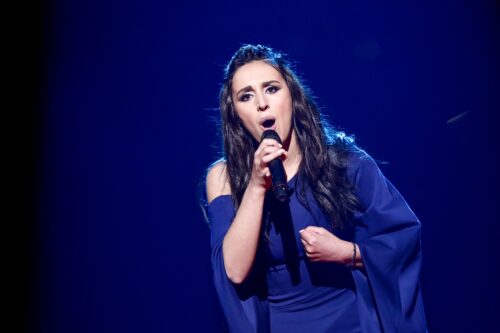
📷 Jamala, Andres Putting EBU

🇩🇪 Germany: Eurovision 2026 Song Submissions Window Closes

Germany has closed the song submission period for its Eurovision 2026 selection. October 22 was the last day for artists and songwriters to send entries to broadcaster SWR. The German selection will now move into a multi-stage review process. In the first round, SWR’s editorial team evaluates each submission based on “artistic and vocal quality”. Next, international jurors and a sample of European viewers will listen and vote, simulating Eurovision’s scoring. Their input will produce a shortlist of acts, from which the final contestants will be chosen. Germany’s national final is planned for late February 2026, broadcast live on Das Erste. The eventual winner will go on to represent Germany at the 70th Eurovision Song Contest in Vienna. source: eurovoix.com

🇸🇲 San Marino: New “San Marino Song Contest” Format & March 7 Final

The microstate of San Marino has announced an overhauled national selection format for Eurovision. Broadcaster SMRTV will hold a “San Marino Song Contest” with a format mirroring Eurovision itself. There will be two semi-finals on March 3 and 4, leading to a Grand Final on March 7, 2026. A total of 40 emerging artists, sourced from the parallel “Dreaming San Marino Song Contest” talent project, will compete in the semi-finals. Only 10 of them will advance to the final. They’ll join 10 pre-qualified established artists. In the March 7 final, these 20 acts will battle for the ticket to Eurovision 2026. The winner of San Marino’s contest will represent the country in Vienna next May. This marks a significant change from previous years’ formats, aiming to give new talent a chance alongside bigger names.  source: dreamingsanmarinosongcontest and SMRTV

🇱🇺 Luxembourg: 58 Hopefuls Audition for Eurovision Comeback

Luxembourg’s quest for its next Eurovision entrant is in full swing with live auditions. From October 24–26, 58 candidates took part in auditions at RTL studios, vying for a spot in the Luxembourg Song Contest 2026. The aspiring acts had to meet at least one of three criteria: hold Luxembourgish nationality, reside in Luxembourg for 3+ months, or have a strong link to the nation’s music scene. The 58 contestants hail from 17 different cultural backgrounds. An international jury is evaluating the performances during the auditions, which feature 83 songs across six languages. 59% in English, plus French, Luxembourgish, Portuguese, Spanish, and German. The jury will select the best acts to advance to the televised final. The national final will be held on January 24, 2026 at the Rockhal arena, where one lucky artist will earn the ticket to Eurovision in Vienna. source: eurovision.rtl.lu.

🇲🇪 Montenegro: Songwriting Teams Revealed for MonteSong 2025

This week RTCG published the list of composers, lyricists, and arrangers for each of the 15 songs competing in MonteSong 2025. The lineup showcases a broad range of talent and international collaboration. Several local Montenegrin songwriters are joined by contributors from elsewhere in Europe and even the United States. For example, former Eurovision entrant Andrea Demirović returns as a co-writer of her song “I Believe,” teaming up with American songwriter Casey McQuillen. Other entries feature songwriting teams blending domestic and foreign talent, highlighting Montenegro’s openness to global influences in its music. MonteSong 2025 will feature 15 artists (previously announced by RTCG) performing original songs on December 21, 2025. By unveiling the creative teams now, RTCG is building anticipation and giving credit to the people behind the music. The national final’s winning song and artist will represent Montenegro at Eurovision 2026. source: RTCG

📷 Andrea Demirović

🇦🇱 Albania: Festivali i Këngës 64 Song Details Unveiled on Instagram

In Albania, preparations for the 64th Festivali i Këngës are well underway. This week, the titles, genres, and songwriting credits of six competing songs were published. Among them are 2Farm’s song “Valle mbi hi” (Dance on the Ashes), an alternative track the band wrote and composed themselves, and Evi Reçi’s “Code of Life,” described as a modern ethno-EDM song. Notably, one of the revealed songwriters is Beatriçe Gjergji, who gave Albania a Top-10 finish at Eurovision 2025 with “Zjerm”. She returns as the lyricist-composer of the entry “Okej!” by newcomer Ghiti. In total, 28 artists will compete at Festivali i Këngës 64 in Tirana from December 17–20, 2025. RTSH has confirmed a revamped voting system. The FiK winner will be decided by 50% jury vote, 25% public televote and 25% international voting via the new “FiK” app. 

Israel in the Eurovision Song Contest
Austria: ORF and Government Reject Calls to Boycott Israel

As the host country for Eurovision 2026, Austria is grappling with political pressure over Israel’s participation. In recent weeks, officials in some countries (including Spain, the Netherlands, and Ireland) threatened to withdraw from Eurovision if Israel competes, given the ongoing war in Gaza. The European Broadcasting Union even considered an early vote on Israel’s status, before postponing debate to December. Austria’s leaders, however, are taking a firm stand against any boycott. Roland Weißmann, Director-General of Austrian broadcaster ORF, urged everyone to remember Eurovision’s core motto “United by Music.” “It is not a political, but a musical event,” Weißmann stressed, affirming that for him “Israel must participate” in Vienna. He and ORF’s leadership are conducting behind-the-scenes diplomacy to ensure Israel remains in the contest.

Austria’s newly appointed Chancellor Christian Stocker echoed this stance. “I would consider it a fatal mistake to exclude Israel,” Stocker said in an interview with Germany’s DPA news agency. He noted that Israel “just belongs” in the Eurovision family, responding to those questioning Israel’s place. Stocker’s view aligns with that of Germany’s opposition leader Friedrich Merz, who earlier called it “scandalous” to even debate Israel’s participation. Despite the boycott threats, ORF remains optimistic that most countries, possibly even all Big Five members, will ultimately take part in the 70th Eurovision Song Contest in Vienna. Austria is moving full steam ahead with host city preparations. ORF officials insist Eurovision 2026 will be held in Vienna as planned, welcoming all eligible participants, including Israel. sources: vol.at and rtl.nl
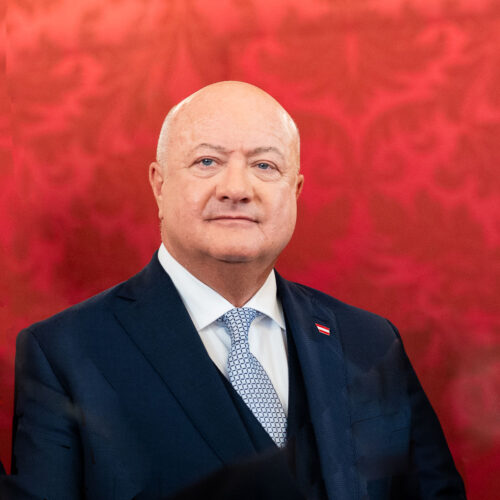
📷 Chancellor Christian Stocker, BMEIA/ Michael Gruber

Related news

Eurovision 2026

Vienna 12 points: from a princess to a winner

Several countries start their second rehearsals. As we still don’t have access to the rehearsals, we will do something else. Per entry, we highlight one subject and give you some more information. That can be something about the artist, the song, the lyrics or even something completely different.  Moldova – Satoshi, “Viva Moldova!” Running order: 1 | Rehearsal: 10:30–10:55 CEST “Viva Moldova,” sing the Moldovans this year, and they do so in Romanian. That language choice carries more history than many Eurovision viewers may realise. Romanian was long officially referred to as Moldovan in Moldova, a name rooted mainly in Soviet and post-Soviet politics rather than linguistic difference. In practice, Moldovan and Romanian are the same language, with regional accents and vocabulary, as Dutch in the Netherlands and Flanders can differ without becoming separate languages. In 2013, Moldova’s Constitutional Court ruled that the Declaration of Independence, which names Romanian, prevails. Since 2023, the constitution also refers to Romanian. At Eurovision, “Viva Moldova” therefore is not only a patriotic slogan from Chișinău, but also a clear political and linguistic statement today.Oddly enough, Satoshi uses a Japanese name. He explains why in an interview with us. Another interview with Satoshi came after the rehearsals:  Sweden – FELICIA, “My System” Running order: 2 | Rehearsal: 11:05–11:30 CEST Fröken Snusk was one of Sweden’s most talked-about pop phenomena: a pink-balaclava-wearing persona built on anonymity, provocative lyrics and the booming EPA-dunk sound. The act broke through online and became known far beyond its party-music niche, helped by Melodifestivalen 2024 and a strong visual identity that made the mask as recognisable as the songs. Behind the original Fröken Snusk was Felicia Eriksson, who later left the project and moved forward under her own name. That background gives today’s Eurovision rehearsal extra context. Still wearing a mask, Felicia is no longer hiding inside the Fröken Snusk character, but the confidence, controversy and curiosity around that chapter still follow her onto the Vienna stage.  Croatia – LELEK, “Andromeda” Running order: 3 | Rehearsal: 11:40–12:05 CEST Andromeda is a figure from Greek mythology: a princess, not a goddess, and the daughter of King Cepheus and Queen Cassiopeia. After her mother angered the sea nymphs by boasting of Andromeda’s beauty, Poseidon sent a monster to ravage the kingdom. To save her people, Andromeda was chained to a rock as a sacrifice, until Perseus rescued her. In Lelek’s song, that story becomes more than a myth. Andromeda can be read as a symbol of women treated as bodies, victims or bargaining chips by forces bigger than themselves. The title also carries a cosmic meaning: Andromeda is a constellation and gives its name to the Andromeda Galaxy. That link to the stars fits the song’s imagery of escape, distance and survival. For contemporary listeners, her ancient story adds emotional weight. Lelek’s Andromeda is therefore both a mythological princess and a powerful metaphor for pain, resistance and hard-won freedom.  Greece – Akylas, “Ferto” Running order: 4 | Rehearsal: 12:20–12:45 CEST Akylas has become an important figure for Greece’s LGBTQ+ community because his visibility is not presented as a side note, but as part of his artistic identity. Long before Eurovision, his music and stage presence were linked to queer self-expression, emotional honesty and performances at events such as Athens Pride. That background gives his Eurovision journey a broader meaning. In a country where queer voices have often had to fight for space in mainstream culture, Akylas represents a new kind of openness. He has also spoken about homophobic bullying and the support he received after winning the Greek selection, turning his own experiences into a message for younger LGBTQ+ people. For many Greek fans, his participation is therefore not only about a song. It is also about recognition: seeing someone openly queer carry Greek pop culture onto one of Europe’s biggest stages with confidence, vulnerability and a distinctly Greek sound.  Portugal – Bandidos do Cante, “Rosa” Running order: 5 | Rehearsal: 12:55–13:20 CEST Cante Alentejano is the traditional polyphonic singing of the Alentejo, the vast southern Portuguese region between the Tagus and the Algarve. It is usually performed by groups of amateur singers, without instruments. It’s in a slow, collective style built around two vocal lines and distinctive melodies. UNESCO added it to the Representative List of the Intangible Cultural Heritage of Humanity in 2014. In Portugal’s 2026 Eurovision entry, Bandidos do Cante bring that tradition into a pop setting. “Rosa” does not simply borrow a regional sound; it places the warmth of group singing at the centre of the song. That gives the entry a clear Portuguese identity. The voices suggest landscape, memory and togetherness, while the modern arrangement makes the old tradition accessible to a Eurovision audience that may be hearing Cante Alentejano for the first time, without losing its roots. You can read more about the meaningful lyrics here.  Georgia – Bzikebi, “On Replay” Running order: 6 | Rehearsal: 13:30–13:55 CEST Junior Eurovision has often been a first step towards bigger stages, but only four winners have later returned as Eurovision contestants. The Tolmachevy Sisters opened that path: after winning Junior Eurovision 2006 for Russia with “Vesenniy Jazz”, they represented Russia in 2014 with “Shine”, finishing seventh. Destiny followed Malta’s 2015 Junior victory with “Not My Soul” by taking “Je Me Casse” to Eurovision 2021, also ending seventh. Georgia’s Iru, winner as part of Candy in 2011, returned solo in 2023 with “Echo”. This year, Georgia completes the circle again with Bzikebi, the buzzing trio who won Junior Eurovision 2008 with “Bzz..” and now step onto the adult contest stage with “On Replay”. Their return adds a nostalgic layer to 2026. Still, one milestone remains untouched: no artist or group has ever won both Junior Eurovision and the Eurovision Song Contest. That unresolved challenge keeps the crossover story fascinating.

Read More »
Eurovision 2026
Martijn

Vienna 12 points: from a princess to a winner

Several countries start their second rehearsals. As we still don’t have access to the rehearsals, we will do something else. Per entry, we highlight one subject and give you some more information. That can be something about the artist, the song, the lyrics or even something completely different.  Moldova – Satoshi, “Viva Moldova!” Running order: 1 | Rehearsal: 10:30–10:55 CEST “Viva Moldova,” sing the Moldovans this year, and they do so in Romanian. That language choice carries more history than many Eurovision viewers may realise. Romanian was long officially referred to as Moldovan in Moldova, a name rooted mainly in Soviet and post-Soviet politics rather than linguistic difference. In practice, Moldovan and Romanian are the same language, with regional accents and vocabulary, as Dutch in the Netherlands and Flanders can differ without becoming separate languages. In 2013, Moldova’s Constitutional Court ruled that the Declaration of Independence, which names Romanian, prevails. Since 2023, the constitution also refers to Romanian. At Eurovision, “Viva Moldova” therefore is not only a patriotic slogan from Chișinău, but also a clear political and linguistic statement today.Oddly enough, Satoshi uses a Japanese name. He explains why in an interview with us. Another interview with Satoshi came after the rehearsals:  Sweden – FELICIA, “My System” Running order: 2 | Rehearsal: 11:05–11:30 CEST Fröken Snusk was one of Sweden’s most talked-about pop phenomena: a pink-balaclava-wearing persona built on anonymity, provocative lyrics and the booming EPA-dunk sound. The act broke through online and became known far beyond its party-music niche, helped by Melodifestivalen 2024 and a strong visual identity that made the mask as recognisable as the songs. Behind the original Fröken Snusk was Felicia Eriksson, who later left the project and moved forward under her own name. That background gives today’s Eurovision rehearsal extra context. Still wearing a mask, Felicia is no longer hiding inside the Fröken Snusk character, but the confidence, controversy and curiosity around that chapter still follow her onto the Vienna stage.  Croatia – LELEK, “Andromeda” Running order: 3 | Rehearsal: 11:40–12:05 CEST Andromeda is a figure from Greek mythology: a princess, not a goddess, and the daughter of King Cepheus and Queen Cassiopeia. After her mother angered the sea nymphs by boasting of Andromeda’s beauty, Poseidon sent a monster to ravage the kingdom. To save her people, Andromeda was chained to a rock as a sacrifice, until Perseus rescued her. In Lelek’s song, that story becomes more than a myth. Andromeda can be read as a symbol of women treated as bodies, victims or bargaining chips by forces bigger than themselves. The title also carries a cosmic meaning: Andromeda is a constellation and gives its name to the Andromeda Galaxy. That link to the stars fits the song’s imagery of escape, distance and survival. For contemporary listeners, her ancient story adds emotional weight. Lelek’s Andromeda is therefore both a mythological princess and a powerful metaphor for pain, resistance and hard-won freedom.  Greece – Akylas, “Ferto” Running order: 4 | Rehearsal: 12:20–12:45 CEST Akylas has become an important figure for Greece’s LGBTQ+ community because his visibility is not presented as a side note, but as part of his artistic identity. Long before Eurovision, his music and stage presence were linked to queer self-expression, emotional honesty and performances at events such as Athens Pride. That background gives his Eurovision journey a broader meaning. In a country where queer voices have often had to fight for space in mainstream culture, Akylas represents a new kind of openness. He has also spoken about homophobic bullying and the support he received after winning the Greek selection, turning his own experiences into a message for younger LGBTQ+ people. For many Greek fans, his participation is therefore not only about a song. It is also about recognition: seeing someone openly queer carry Greek pop culture onto one of Europe’s biggest stages with confidence, vulnerability and a distinctly Greek sound.  Portugal – Bandidos do Cante, “Rosa” Running order: 5 | Rehearsal: 12:55–13:20 CEST Cante Alentejano is the traditional polyphonic singing of the Alentejo, the vast southern Portuguese region between the Tagus and the Algarve. It is usually performed by groups of amateur singers, without instruments. It’s in a slow, collective style built around two vocal lines and distinctive melodies. UNESCO added it to the Representative List of the Intangible Cultural Heritage of Humanity in 2014. In Portugal’s 2026 Eurovision entry, Bandidos do Cante bring that tradition into a pop setting. “Rosa” does not simply borrow a regional sound; it places the warmth of group singing at the centre of the song. That gives the entry a clear Portuguese identity. The voices suggest landscape, memory and togetherness, while the modern arrangement makes the old tradition accessible to a Eurovision audience that may be hearing Cante Alentejano for the first time, without losing its roots. You can read more about the meaningful lyrics here.  Georgia – Bzikebi, “On Replay” Running order: 6 | Rehearsal: 13:30–13:55 CEST Junior Eurovision has often been a first step towards bigger stages, but only four winners have later returned as Eurovision contestants. The Tolmachevy Sisters opened that path: after winning Junior Eurovision 2006 for Russia with “Vesenniy Jazz”, they represented Russia in 2014 with “Shine”, finishing seventh. Destiny followed Malta’s 2015 Junior victory with “Not My Soul” by taking “Je Me Casse” to Eurovision 2021, also ending seventh. Georgia’s Iru, winner as part of Candy in 2011, returned solo in 2023 with “Echo”. This year, Georgia completes the circle again with Bzikebi, the buzzing trio who won Junior Eurovision 2008 with “Bzz..” and now step onto the adult contest stage with “On Replay”. Their return adds a nostalgic layer to 2026. Still, one milestone remains untouched: no artist or group has ever won both Junior Eurovision and the Eurovision Song Contest. That unresolved challenge keeps the crossover story fascinating.

Read More »
Follow Us: