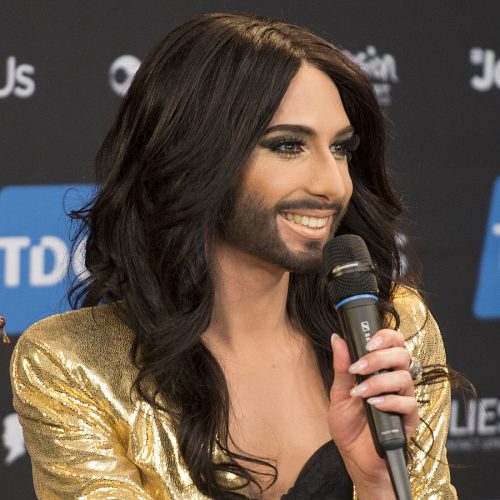
Austria in the Eurovision Song Contest, part 8

This year’s Eurovision Song Contest has been won by Austria. It was the 57th Austrian entry. Reason for us to go back to all the Austrian entries in history!

For Austria in the Eurovision Song Contest, part 8, we look back at the more recent years. Austria was back in the race, with even a victory for Conchita Wurst. Austria was a significant factor during this period.

2012 – Trackshittaz “Woki mit deim Popo”

Trackshittaz – a hip-hop duo known for their tongue-in-cheek “tractor gangster party rap” style – represented Austria at Eurovision 2012 with the song “Woki mit deim Popo”. The upbeat track was performed in an Austrian dialect. It was co-written by the duo’s members Lukas Plöchl and Manuel Hoffelner. They earned their spot by winning the national final “Österreich rockt den Song Contest” 2012. They narrowly won the contest. Conchita Wurst was the runner up. Despite a lively stage show, the entry failed to qualify for the final, placing 18th in its semi-final with only 8 points.

2013 – Natália Kelly “Shine”

Teenage singer Natália Kelly competed for Austria at Eurovision 2013. Her song was the mid-tempo pop song “Shine”. The track was co-written by Kelly along with songwriters Andreas Grass, Nikola Paryla and Alexander Kahr. She secured her Eurovision spot by winning Austria’s national selection in 2013 out of five entries. Performing first on the night of the semi-final in Malmö, “Shine” unfortunately did not advance to the final. It finished 14th out of 16 entries with 27 points.

2014 – Conchita Wurst “Rise Like a Phoenix”

Conchita Wurst, the drag stage persona of singer Tom Neuwirth, was internally selected to represent Austria at Eurovision 2014. Her power ballad “Rise Like a Phoenix” was a dramatic orchestral pop song, reminiscent of a James Bond theme. It was composed by an international team including Charlie Mason, Joey Patulka, Alexander “Ali” Zuckowski and Julian Maas. In Copenhagen, Conchita delivered a show-stopping performance with powerful vocals and theatrical flair. The entry captivated Europe and won the contest, earning Austria 1st place with 290 points in the Grand Final. This was the country’s first Eurovision victory since 1966.

2015 – The Makemakes “I Am Yours”

The Makemakes were an Austrian pop-rock band. They won the national final “Wer singt für Österreich?” 2015 to become the host country’s Eurovision act in Vienna. Their entry “I Am Yours” was a soulful, piano-driven ballad co-written by the band members together with American songwriter-producer Jimmy Harry. Despite a visually striking staging (including a burning fake piano mid-song), Austria’s home entry failed to win over voters. The Makemakes finished 26th (last) in the 2015 Grand Final with 0 points. This was marking the first time a host nation ever scored “nul points” at Eurovision.

2016 – Zoë “Loin d’ici”

Zoë Straub, performing simply as Zoë, represented Austria in 2016 with “Loin d’ici,” a rare French-language song for the country. The track is an upbeat, whimsical electropop tune co-written by Zoë and her father Christof Straub. She earned her Eurovision spot by winning Austria’s national selection (“Wer singt für Österreich? 2016”) in a televised final. Zoë won out of five finalists. At the contest in Stockholm, Zoë charmed the audience and qualified for the Grand Final, where she placed 13th with 151 points.

2017 – Nathan Trent “Running on Air”

Nathan Trent, an emerging singer-songwriter, was internally selected by ORF to compete for Austria at Eurovision 2017. His entry “Running on Air” was an upbeat pop song with an optimistic message. The song was written by Nathan himself along with co-writer Bernhard Penzias. Trent’s performance in the second semi-final earned Austria a spot in the Grand Final. In the final held in Kyiv, he finished in 16th place with a total of 93 points.

2018 – Cesár Sampson “Nobody But You”

Cesár Sampson is a seasoned vocalist and played a key role in Bulgaria’s successful Eurovision entries in 2016 and 2017. In 2018, ORF internally chose him to represent Austria. His song “Nobody But You” blends gospel and soul influences with contemporary pop. Sampson co-wrote the track with the Symphonix International team: Borislav Milanov, Sebastian Arman, Joacim Persson and Johan Alkenäs. On the Lisbon stage, Sampson delivered a confident and controlled performance. As a result, he achieved one of Austria’s strongest results of the decade. He finished third in the Eurovision Song Contest 2018 final with 342 points and even topped the jury vote.

Related news

News

🇬🇷 Marinella dies at 87; Greece’s first Eurovision participant passes away

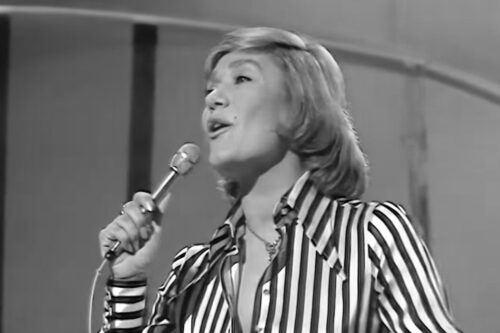
Greek music icon Marinella has died at the age of 87. Her family announced that she passed away on Saturday, 28 March 2026, after a long period of fragile health. In September 2024, Marinella suffered a stroke while performing at the Odeon of Herodes Atticus in Athens. She spent four months in hospital and later continued her rehabilitation at home. For Eurovision fans, Marinella will always hold a unique place in history. She was the very first Greek participant ever at the Eurovision Song Contest. In 1974, she represented Greece in Brighton with the song “Krassi, Thalassa Ke T’agori Mou.” That appearance marked Greece’s first-ever participation in the contest. Marinella finished in 11th place, but her performance opened the door to a Eurovision journey that would become an important part of Greek music history. Greece’s first Eurovision participant The name Marinella means far more than one Eurovision result. Still, her 1974 appearance remains historic. Every Greek artist who followed her on the Eurovision stage did so after Marinella had taken that first step. Because of that, her place in Eurovision history is secure. She did not just sing Greece’s debut entry. She became part of the foundation of Greece in the contest. A career that shaped Greek music Born as Kyriaki Papadopoulou in Thessaloniki, Marinella grew into one of the best-known voices in Greek music. Kathimerini described her as a singer whose name became linked with some of the biggest recording successes of the 20th century, while Euronews noted that her career stretched across more than six decades and included 66 solo albums. She also worked with major Greek composers such as Mikis Theodorakis, Stavros Xarhakos and Manos Hadjidakis. Kathimerini also recalled that Marinella never fully embraced the label of “legend.” In earlier interviews, she stressed that singing was about love and direct contact with her audience. That attitude perhaps explains why so many people in Greece felt close to her. She was not only admired for her voice, but also for the emotion and sincerity she brought to the stage. A lasting legacy Marinella dies, but her legacy will remain. For Greece, she was one of the defining voices of modern popular music. For Eurovision, she will always be remembered as the artist who started the Greek story in the contest. Her result in Brighton may not have brought Greece a trophy, yet her role was bigger than that. Marinella was first. That alone makes her unforgettable. source: Kathimerini

Read More »
News
Martijn

🇬🇷 Marinella dies at 87; Greece’s first Eurovision participant passes away

Greek music icon Marinella has died at the age of 87. Her family announced that she passed away on Saturday, 28 March 2026, after a long period of fragile health. In September 2024, Marinella suffered a stroke while performing at the Odeon of Herodes Atticus in Athens. She spent four months in hospital and later continued her rehabilitation at home. For Eurovision fans, Marinella will always hold a unique place in history. She was the very first Greek participant ever at the Eurovision Song Contest. In 1974, she represented Greece in Brighton with the song “Krassi, Thalassa Ke T’agori Mou.” That appearance marked Greece’s first-ever participation in the contest. Marinella finished in 11th place, but her performance opened the door to a Eurovision journey that would become an important part of Greek music history. Greece’s first Eurovision participant The name Marinella means far more than one Eurovision result. Still, her 1974 appearance remains historic. Every Greek artist who followed her on the Eurovision stage did so after Marinella had taken that first step. Because of that, her place in Eurovision history is secure. She did not just sing Greece’s debut entry. She became part of the foundation of Greece in the contest. A career that shaped Greek music Born as Kyriaki Papadopoulou in Thessaloniki, Marinella grew into one of the best-known voices in Greek music. Kathimerini described her as a singer whose name became linked with some of the biggest recording successes of the 20th century, while Euronews noted that her career stretched across more than six decades and included 66 solo albums. She also worked with major Greek composers such as Mikis Theodorakis, Stavros Xarhakos and Manos Hadjidakis. Kathimerini also recalled that Marinella never fully embraced the label of “legend.” In earlier interviews, she stressed that singing was about love and direct contact with her audience. That attitude perhaps explains why so many people in Greece felt close to her. She was not only admired for her voice, but also for the emotion and sincerity she brought to the stage. A lasting legacy Marinella dies, but her legacy will remain. For Greece, she was one of the defining voices of modern popular music. For Eurovision, she will always be remembered as the artist who started the Greek story in the contest. Her result in Brighton may not have brought Greece a trophy, yet her role was bigger than that. Marinella was first. That alone makes her unforgettable. source: Kathimerini

Read More »
Follow Us: