Austria in the Eurovision Song Contest, part 6

This year’s Eurovision Song Contest has been won by Austria. It was the 57th Austrian entry. Reason for us to go back to all the Austrian entries in history!

For the sixth episode, we look back at the nineties. With Tony Wegas’ double, and a total of three top-10 scores, the hard times began for Austria in the Eurovision Song Contest.

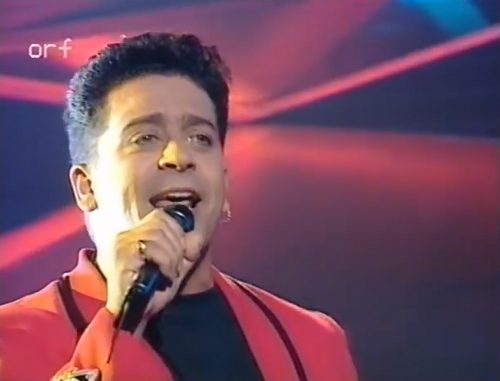
1992: Tony Wegas – “Zusammen geh’n”

Tony Wegas, an Austrian singer and television actor, represented Austria at Eurovision 1992 with the power ballad “Zusammen geh’n”. Dieter Bohlen composed the music and Joachim Horn-Bernges wrote the lyrics, giving the song a classic pop-ballad style. Wegas delivered an emotive performance of this German-language track on the Malmö stage. “Zusammen geh’n” earned 63 points, securing a 10th place finish for Austria at the 1992 contest.

1993: Tony Wegas – “Maria Magdalena”

Tony Wegas returned in 1993 to represent Austria with “Maria Magdalena,” a dramatic pop song with biblical references. He was selected internally, and presented 7 songs. Wegas, known for his singing career and TV acting, gave an engaging performance of this German-language track about Mary Magdalene. Christian Kolonovits and Johann Bertl composed the music, while Thomas Spitzer penned the lyrics, infusing the song with theatrical flair. Despite its uptempo style compared to the previous year, “Maria Magdalena” scored 32 points and placed 14th out of 25 entries at Eurovision 1993.

1994: Petra Frey – “Für den Frieden der Welt”

Eight artists and songs competed in the national final. Simone participated but did not win. Petra Frey, only 16 years old at the time, represented Austria at Eurovision 1994 in Dublin with the ballad “Für den Frieden der Welt” (translated as “For the Peace of the World”). Alfons Weindorf composed the music, and brothers Karl & Johann Brunner wrote the lyrics, creating a heartfelt pop ballad calling for world peace. The song showcased Frey’s strong vocals, honed from her early schlager music career, and delivered a sincere message on stage. Austria’s 1994 entry earned 19 points, finishing in 17th place among 25 countries.

1995: Stella Jones – “Die Welt dreht sich verkehrt”

Stella Jones, an Austrian singer with jazz and soul roots, took the stage in 1995 with “Die Welt dreht sich verkehrt” (meaning “The World Turns Upside Down”). Jones delivered a funky, blues-infused pop performance that reflected her versatile musical background. Michael W. Krausz both wrote the lyrics and composed the music for this entry, a song which stood out amid a contest often dominated by ballads. The Austrian entry scored 67 points, achieving a 13th place finish in the 1995 Eurovision final.

1996: George Nussbaumer – “Weil’s dr guat got”

George Nussbaumer, a blind Austrian blues musician, brought a unique gospel-blues flair to Eurovision 1996 with “Weil’s dr guat got”. Sung in his native Vorarlberg dialect (the title roughly means “Because You’re Doing Well”), the song blended upbeat soul and pop elements. Nussbaumer co-wrote the entry himself. He composed the music and co-authored the lyrics with Michael W. Krausz and infused it with authentic blues style. His uplifting performance in Oslo resonated with the juries, as Austria earned 68 points and a 10th place finish at the 1996 contest.

1997: Bettina Soriat – “One Step”

Bettina Soriat, an Austrian singer and stage performer, stepped into the spotlight in 1997 with “One Step.” Having been a backing vocalist for Austria’s 1996 entry, Soriat brought an upbeat dance-pop routine to Eurovision 1997. Marc Berry (stage name of Marcus Dlugaiczyk) wrote the song’s lyrics and co-composed the music with Ina Siber, crafting a catchy tune with playful choreography. Despite the energetic performance and its fun pop appeal, “One Step” received just 12 points, placing 21st out of 25 entries in the Dublin final.

1999: Bobbie Singer – “Reflection”

Bobbie Singer (born Tina Schosser), an 18-year-old Austrian pop singer, returned for Eurovision 1999 after Austria’s one-year absence. She performed “Reflection,” a contemporary English-language pop song that projected a youthful, radio-friendly vibe. Dave Moskin wrote and composed “Reflection”, providing a modern pop sound accompanied by a live band on stage. Bobbie’s engaging performance in Jerusalem gave Austria a fresh image in the contest. The entry scored 65 points, achieving a 10th place finish out of 23 countries – Austria’s best Eurovision result of the 1990s.


Related news

Eurovision 2026

Road to Vienna: Ukraine

Road to Vienna: Ukraine As the Eurovision Song Contest 2026 in Vienna approaches, we continue our daily spotlight on this year’s contestants. Road to Vienna: Ukraine.   Leléka: Ukraine’s Jazz singer Viktoriia Kornikova, known as Leléka, is a Ukrainian singer, songwriter, and composer based in Berlin. She rose to international attention after winning Vidbir 2026, securing her spot as Ukraine’s representative at the Eurovision Song Contest 2026 in Vienna.                                                                                                                                    Born on 10 November 1990 in Pershotravensk (now Shakhtarske), Ukraine, Leléka developed a passion for the arts at a young age. Initially trained as an actress at the Karpenko-Karyi Theatre University in Kyiv, she performed in stage productions, shaping her storytelling skills—now a key element of her music. Move to Germany and Musical Evolution In 2014, Leléka moved to Germany to focus fully on music. She studied jazz vocals and composition at the Carl Maria von Weber University of Music in Dresden. During this time, she created a unique sound blending jazz with Ukrainian folk influences.                                                                                                                                            In 2016, she founded the Berlin-based band LELÉKA, combining international jazz with Ukrainian folk traditions. The group quickly gained recognition, winning major awards such as the Creole Global Music Contest (2017) and the European Jazz Award Burghausen (2018). Their discography includes Tuman (2019) and Sonce u Serci (2021), the latter earning a German Jazz Award nomination. The band also contributed music to the Ukrainian TV series And There Will Be People. Recent Projects Leléka continued exploring Ukrainian heritage through music with Rizdvo (2023), focused on Christmas traditions, and Kolysanky (2025), inspired by lullabies. She has performed widely across Europe, building a strong presence on the jazz and world music scene. Ridnym: A Song About Change and Renewal    Ridnym explores transformation, resilience, and emotional renewal. The track uses natural imagery and atmospheric storytelling to show that change is inevitable—and often necessary for growth. From Loss to Strength Rather than presenting loss as defeat, “Ridnym” frames it as part of a cycle. The song highlights how accepting difficult moments can lead to healing, strength, and new beginnings. Themes of Identity and Connection At its core, the track focuses on facing fear, overcoming hardship, and staying connected to one’s roots. It emphasizes perseverance and shared experience, creating a strong sense of belonging and continuity. Cultural Depth and Ukrainian Influence The use of Ukrainian-language passages adds authenticity and emotional depth. These elements connect tradition with modern music, enriching the song’s message and broadening its global appeal. Ukraine in the Eurovision Song Contest Ukraine has a distinguished history in the Eurovision Song Contest, having participated since 2003. The country has achieved three victories: in 2004 with Ruslana‘s “Wild Dances,” in 2016 with Jamala‘s “1944,” and in 2022 with Kalush Orchestra‘s “Stefania.” But in fact, Ukraine did always score well. It is the only country that always reached the final! The Bookmakers With a predicted 9th place in the final and a third-place ranking in the semi-finals, Ukraine looks set to qualify with ease once again this year    

Read More »
Eurovision 2026
Anja Kroeze

Road to Vienna: Ukraine

Road to Vienna: Ukraine As the Eurovision Song Contest 2026 in Vienna approaches, we continue our daily spotlight on this year’s contestants. Road to Vienna: Ukraine.   Leléka: Ukraine’s Jazz singer Viktoriia Kornikova, known as Leléka, is a Ukrainian singer, songwriter, and composer based in Berlin. She rose to international attention after winning Vidbir 2026, securing her spot as Ukraine’s representative at the Eurovision Song Contest 2026 in Vienna.                                                                                                                                    Born on 10 November 1990 in Pershotravensk (now Shakhtarske), Ukraine, Leléka developed a passion for the arts at a young age. Initially trained as an actress at the Karpenko-Karyi Theatre University in Kyiv, she performed in stage productions, shaping her storytelling skills—now a key element of her music. Move to Germany and Musical Evolution In 2014, Leléka moved to Germany to focus fully on music. She studied jazz vocals and composition at the Carl Maria von Weber University of Music in Dresden. During this time, she created a unique sound blending jazz with Ukrainian folk influences.                                                                                                                                            In 2016, she founded the Berlin-based band LELÉKA, combining international jazz with Ukrainian folk traditions. The group quickly gained recognition, winning major awards such as the Creole Global Music Contest (2017) and the European Jazz Award Burghausen (2018). Their discography includes Tuman (2019) and Sonce u Serci (2021), the latter earning a German Jazz Award nomination. The band also contributed music to the Ukrainian TV series And There Will Be People. Recent Projects Leléka continued exploring Ukrainian heritage through music with Rizdvo (2023), focused on Christmas traditions, and Kolysanky (2025), inspired by lullabies. She has performed widely across Europe, building a strong presence on the jazz and world music scene. Ridnym: A Song About Change and Renewal    Ridnym explores transformation, resilience, and emotional renewal. The track uses natural imagery and atmospheric storytelling to show that change is inevitable—and often necessary for growth. From Loss to Strength Rather than presenting loss as defeat, “Ridnym” frames it as part of a cycle. The song highlights how accepting difficult moments can lead to healing, strength, and new beginnings. Themes of Identity and Connection At its core, the track focuses on facing fear, overcoming hardship, and staying connected to one’s roots. It emphasizes perseverance and shared experience, creating a strong sense of belonging and continuity. Cultural Depth and Ukrainian Influence The use of Ukrainian-language passages adds authenticity and emotional depth. These elements connect tradition with modern music, enriching the song’s message and broadening its global appeal. Ukraine in the Eurovision Song Contest Ukraine has a distinguished history in the Eurovision Song Contest, having participated since 2003. The country has achieved three victories: in 2004 with Ruslana‘s “Wild Dances,” in 2016 with Jamala‘s “1944,” and in 2022 with Kalush Orchestra‘s “Stefania.” But in fact, Ukraine did always score well. It is the only country that always reached the final! The Bookmakers With a predicted 9th place in the final and a third-place ranking in the semi-finals, Ukraine looks set to qualify with ease once again this year    

Read More »
Follow Us: