Road to Vienna: San Marino

Road to Vienna: San Marino

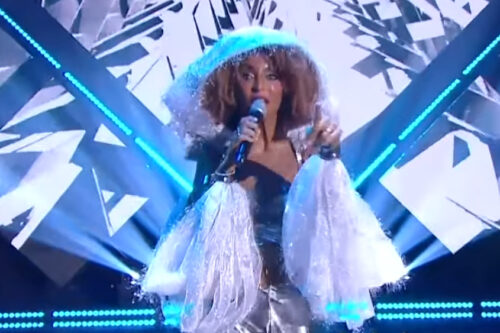
As the Eurovision Song Contest 2026 in Vienna approaches, we continue our daily spotlight on this year’s contestants. Today, we focus on San Marino.

Senhit: From Musical Theatre to Eurovision

Senhit, born in Bologna to Eritrean parents, began her career in musical theatre. In the late 1990s and early 2000s, she toured across Europe, starring in major productions like Fame, The Lion King, and Hair. These roles helped shape her stage presence and artistic foundation.

Transition to Music and Early Albums

After returning to Italy, Senhit launched her music career with her debut album Senit (2006), followed by Un tesoro è necessariamente nascosto (2007). In 2009, she released So High, an English-language album that highlighted her versatility in pop music.

Eurovision Debut and Career Growth

Senhit represented San Marino at Eurovision 2011 with “Stand By.” Although she didn’t reach the final, it boosted her international visibility. She continued releasing singles, rebranded from “Senit” to “Senhit” in 2014, and built a strong presence in the European club scene, leading to her EP Hey Buddy (2017).

Eurovision Comeback and “Adrenalina” Success

Selected again for Eurovision 2020, her entry was canceled due to the pandemic. She returned in 2021 with “Adrenalina” featuring Flo Rida, reaching the final and gaining major streaming success, becoming a fan favorite across Europe.

Recent Music and Projects

In recent years, Senhit has stayed active with new releases, live performances, and hosting San Marino’s national selection show. Her 2024 album Dangerous includes collaborations with top international producers and artists.

Eurovision 2026 Return

In 2026, Senhit won San Marino’s national selection with “Superstar,” featuring Boy George. This marks her third Eurovision appearance, reinforcing her status as a dynamic and enduring figure in the pop music scene.

Boy George: An 80s Icon

Boy George, born George Alan O’Dowd in London, grew up in a working-class Irish family. Inspired by glam rock legend David Bowie, he developed a passion for music early on. His bold, androgynous style and love for performance quickly made him stand out in London’s vibrant club scene.

Culture Club and Global Fame

In 1981, Boy George formed Culture Club, achieving worldwide success with hits like “Do You Really Want to Hurt Me” and “Karma Chameleon.” By the mid-1980s, the band became one of the biggest pop acts globally, winning a Grammy Award and multiple Brit Awards. His unique voice and image made him a defining figure of 80s pop culture.

Challenges and Solo Career

Facing personal struggles and addiction, Culture Club disbanded in 1986. Boy George later rebuilt his career with solo hits like “Everything I Own” and “The Crying Game.” He also explored DJing and dance music while becoming an influential LGBTQ+ icon.

Reinvention and Creative Projects

From the late 1990s onward, Boy George reunited with Culture Club and expanded into new ventures. He created the musical Taboo and remained active in music, television, and writing. Despite legal setbacks, he achieved sobriety and continued evolving as an artist.

Legacy and Continued Success

In the 2010s, Boy George appeared on shows like The Voice UK and toured globally. With over 50 million records sold, he is widely recognized as a trailblazer in music, fashion, and LGBTQ+ representation.

Eurovision 2026 Debut

In 2026, Boy George joins Senhit to represent San Marino at the Eurovision Song Contest 2026 with their song “Superstar.” This marks his long-awaited Eurovision debut, adding a new chapter to his legendary career.

Superstar: Confidence and Self-Expression

Set in a vibrant nightlife atmosphere, “Superstar” explores a world where appearances matter. People try to impress, creating a sense of pressure and expectation. In contrast, one person stands out—not for confidence, but for insecurity and self-doubt.

From Insecurity to Empowerment

As the song develops, it shifts into a powerful message of growth. The lyrics encourage stepping out of the shadows and embracing who you are. What starts as uncertainty transforms into confidence and self-belief.

Strength Through Struggles

References to heartbreak and emotional scars add depth to the story. The song highlights that true confidence doesn’t come from perfection, but from overcoming challenges and learning from past experiences.

Embracing Individuality

The second verse celebrates uniqueness, describing the individual as strong and valuable. Differences are not flaws—they are strengths. The journey through hardship becomes a source of inner power.

Be Your Own Superstar

At its heart, “Superstar” is about authenticity. It reminds listeners that being a “superstar” isn’t about fame, but about self-acceptance. By embracing imperfections and showing your true self, you turn vulnerability into confidence.

San Marino in the Eurovision Song Contest

San Marino has participated in the Eurovision Song Contest since 2008. Despite being one of the smallest countries in the competition, it has made notable contributions, with its best result in 2019 when Serhat‘s “Say Na Na Na” finished 19th in the Grand Final. But when we talk about San Marino, we must not forget Valentina Monetta. She participated for her country on no less than four occasions. She was, in 2014, the first one to bring San Marino to the final.

The Bookmakers

Ranked 27th with the bookmakers, San Marino faces an uphill battle — will they defy the odds and make it to the final?



Related news

Uncategorized

70 years of Eurovision: when Irish eyes are smiling

The Eurovision Song Contest is celebrating its 70th anniversary. That is a wonderful milestone. We at Eurovision Universe love diving into the history of the contest. That is why we are taking a closer look at the contests of the past 70 years. 1994 The EBU was frantically searching for a new system. The countries with the worst scores from the previous year had to sit on the sidelines for a year. They had to make way for Estonia, Hungary, Lithuania, Poland, Romania, Russia, and Slovakia. Proud Ireland hosted the Song Contest again, this time simply in Dublin, at the Point Theatre. The hosts were Cynthia Ní Mhurchú and Gerry Ryan. The interval act was the most talked-about ever: River Dance. A dance written by Bill Whelan, but which later grew into an internationally acclaimed act. The songs Marie Bergman represented Sweden, in a duet with Roger Pontare. Marie had also participated in 1971 and 1972. Evridiki returned for Cyprus. Former Bobbysocks member Elisabeth Andreasson sang, also in a duet, for Norway. And the Icelandic Sigga, who had participated in a group twice, now took part solo. That was quite a challenge. Her duo partner from two years earlier, Sissa, was actually supposed to sing the song “Nætur,” but she was sidelined by the Icelandic broadcaster. Portugal caught attention with Sara Tavares. She had won a singing competition in her own country; back then, she imitated Whitney Houston. Her song “Chamar a musica” impressed the audience. Germany opted more for a lot of cheerfulness. The all-female trio Mekado, formed especially for the occasion, performed the cheerful “Wir geben ‘ner Party.” It was sung in German, but with many international terms. And it was a song by Ralph Siegel and Bernd Meinunger. The aforementioned Elisabeth Andreasson sang a duet with the much younger (and sadly enough deceased very young) Jan Werner Danielsen: “Duett,” a mystical song. Friderika Bayer from Hungary sang the serene “Kinek mondjam el vétkeimet?” For a moment, it seemed Hungary was going to win. The first juries all gave their 12 to the debuting country. Ultimately, Friderika finished fourth. Youddiph also came from Eastern Europe. She represented Russia with “Vechny strannik,” but above all with her dress. She constantly changed it into a different dress, keeping the viewer mesmerized and focused on it. The Polish Edyta Górniak had dressed much more simple. The song, too, stood out for its simplicity. It came in second. Because Ireland won, of course. That was how it was done in those days. Paul Harrington & Charlie McGettigan Rumour has it that Ireland had sent two middle-aged men with a ballad because they didn’t want to win again. If that was the case, that plan was not exactly successful. For it was precisely as anti-heroes that Paul Harrington and Charlie McGettigan made a huge impression. Halfway through the voting, they took a lead with their “Rock ‘n’ roll kids” that they never relinquished. The crowd went wild; Ireland was celebrating one big party. Except perhaps at the Irish broadcaster RTÉ, which now found itself facing the organization of the contest once again. Charlie McGettigan recently made the news by wanting to return his trophy, following in the footsteps of Nemo (2024). He, too, could not live with Israel’s participation. However, he could not find his trophy. Understandable, because anyone who looks closely at the award ceremony will see that only composer Brendan Graham received a trophy. 1995 Once again, a number of countries had to make way so that others could return. However, Italy and Luxembourg, both on the reserve bench the previous year, did not return. 23 countries participated in this festival. It was hosted by Mary Kennedy. The songs Arzu Ece participated for Turkey for the second time, having entered the Eurovision stage six years earlier as a member of the group Pan. She was the only artist returning. Justyna Steczkowska participated for Poland. Although she did not finish high, she did attract attention due to the atonal singing during her song. Also noteworthy: Eddie Friel for Ireland. His song “Dreamin’” was such a shameless copy of Julie Felix’s “Moonlight” (just listen to the two songs) that disqualification loomed. Anabel Conde was the participant for Spain. She finished in second place. The group Magazin represented Croatia, with opera singer Lidija Horváth as an additional vocalist. Whereas all group members sang at the national final, now only Lidija and group singer Danijela were visible. The rest had faded into the background. Danijela would not stay with Magazin for much longer. And then there was Alexandros Panayi: he was the fan favorite for Cyprus with “Sti fotia”. He would later often travel with Greece and Cyprus as a backing vocalist or vocal coach. One of the favorites was the Swede Jan Johansen with the ballad “Se på mej”. Another notable ballad was that of Slovenia, “Prisluhni mi”. Neither song won. And then we do not want to leave Iceland unmentioned. After many attempts in national finals, the broadcaster there had selected Bo Halldórsson. He sang the beautiful ballad “Núna”. Later, his daughter Svala would also represent her country. We mention him because Bo Halldórsson passed away last week at 74. Secret Garden Norway won with a remarkable song. The winning “Nocturne” contained only 25 words. The group, Secret Garden, was built around Rolf Løvland, who wrote the winning song 10 years earlier, and his girlfriend Fionualla Sherry. As a violinist, she played a leading role in the song. Singer Gunnhild Tvinnereim, along with the other group members, had only a supporting role. Remarkably: although Ireland did not win, Fionualla Sherry was indeed Irish. And so Ireland won again, but then without winning.

Read More »
Eurovision 2026
Anja Kroeze

Road to Vienna: San Marino

Road to Vienna: San Marino As the Eurovision Song Contest 2026 in Vienna approaches, we continue our daily spotlight on this year’s contestants. Today, we focus on San Marino. Senhit: From Musical Theatre to Eurovision Senhit, born in Bologna to Eritrean parents, began her career in musical theatre. In the late 1990s and early 2000s, she toured across Europe, starring in major productions like Fame, The Lion King, and Hair. These roles helped shape her stage presence and artistic foundation. Transition to Music and Early Albums After returning to Italy, Senhit launched her music career with her debut album Senit (2006), followed by Un tesoro è necessariamente nascosto (2007). In 2009, she released So High, an English-language album that highlighted her versatility in pop music. Eurovision Debut and Career Growth Senhit represented San Marino at Eurovision 2011 with “Stand By.” Although she didn’t reach the final, it boosted her international visibility. She continued releasing singles, rebranded from “Senit” to “Senhit” in 2014, and built a strong presence in the European club scene, leading to her EP Hey Buddy (2017). Eurovision Comeback and “Adrenalina” Success Selected again for Eurovision 2020, her entry was canceled due to the pandemic. She returned in 2021 with “Adrenalina” featuring Flo Rida, reaching the final and gaining major streaming success, becoming a fan favorite across Europe. Recent Music and Projects In recent years, Senhit has stayed active with new releases, live performances, and hosting San Marino’s national selection show. Her 2024 album Dangerous includes collaborations with top international producers and artists. Eurovision 2026 Return In 2026, Senhit won San Marino’s national selection with “Superstar,” featuring Boy George. This marks her third Eurovision appearance, reinforcing her status as a dynamic and enduring figure in the pop music scene. Boy George: An 80s Icon Boy George, born George Alan O’Dowd in London, grew up in a working-class Irish family. Inspired by glam rock legend David Bowie, he developed a passion for music early on. His bold, androgynous style and love for performance quickly made him stand out in London’s vibrant club scene. Culture Club and Global Fame In 1981, Boy George formed Culture Club, achieving worldwide success with hits like “Do You Really Want to Hurt Me” and “Karma Chameleon.” By the mid-1980s, the band became one of the biggest pop acts globally, winning a Grammy Award and multiple Brit Awards. His unique voice and image made him a defining figure of 80s pop culture. Challenges and Solo Career Facing personal struggles and addiction, Culture Club disbanded in 1986. Boy George later rebuilt his career with solo hits like “Everything I Own” and “The Crying Game.” He also explored DJing and dance music while becoming an influential LGBTQ+ icon. Reinvention and Creative Projects From the late 1990s onward, Boy George reunited with Culture Club and expanded into new ventures. He created the musical Taboo and remained active in music, television, and writing. Despite legal setbacks, he achieved sobriety and continued evolving as an artist. Legacy and Continued Success In the 2010s, Boy George appeared on shows like The Voice UK and toured globally. With over 50 million records sold, he is widely recognized as a trailblazer in music, fashion, and LGBTQ+ representation. Eurovision 2026 Debut In 2026, Boy George joins Senhit to represent San Marino at the Eurovision Song Contest 2026 with their song “Superstar.” This marks his long-awaited Eurovision debut, adding a new chapter to his legendary career. Superstar: Confidence and Self-Expression Set in a vibrant nightlife atmosphere, “Superstar” explores a world where appearances matter. People try to impress, creating a sense of pressure and expectation. In contrast, one person stands out—not for confidence, but for insecurity and self-doubt. From Insecurity to Empowerment As the song develops, it shifts into a powerful message of growth. The lyrics encourage stepping out of the shadows and embracing who you are. What starts as uncertainty transforms into confidence and self-belief. Strength Through Struggles References to heartbreak and emotional scars add depth to the story. The song highlights that true confidence doesn’t come from perfection, but from overcoming challenges and learning from past experiences. Embracing Individuality The second verse celebrates uniqueness, describing the individual as strong and valuable. Differences are not flaws—they are strengths. The journey through hardship becomes a source of inner power. Be Your Own Superstar At its heart, “Superstar” is about authenticity. It reminds listeners that being a “superstar” isn’t about fame, but about self-acceptance. By embracing imperfections and showing your true self, you turn vulnerability into confidence. San Marino in the Eurovision Song Contest San Marino has participated in the Eurovision Song Contest since 2008. Despite being one of the smallest countries in the competition, it has made notable contributions, with its best result in 2019 when Serhat‘s “Say Na Na Na” finished 19th in the Grand Final. But when we talk about San Marino, we must not forget Valentina Monetta. She participated for her country on no less than four occasions. She was, in 2014, the first one to bring San Marino to the final. The Bookmakers Ranked 27th with the bookmakers, San Marino faces an uphill battle — will they defy the odds and make it to the final?    

Read More »
Follow Us: