🇬🇧 Road to Malmö: United Kingdom

We can not wait for the Eurovision Song Contest in Malmö. Therefore, we have a closer look at one of the contestants every day. Today: the United Kingdom.

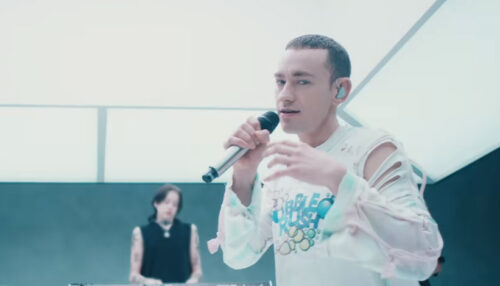
Olly Alexander

Olly Alexander, born on July 15, 1990, in Harrogate, North Yorkshire, England, has emerged as a leading voice in contemporary pop culture, celebrated for his musical talent, acting skills, and advocacy for LGBTQ+ rights. As the charismatic frontman of Years & Years, Olly has guided the band to international success with hits that blend infectious melodies with deeply personal and socially conscious lyrics. His commitment to exploring and expressing queer themes through music has earned him a dedicated following and critical acclaim.

Apart from music, Olly has made significant strides in acting. His compelling portrayal of a young man navigating the AIDS crisis in the 1980s in the critically acclaimed series “It’s a Sin” has been lauded for its emotional depth and authenticity. This role underscored his versatility as an artist and an advocate, using his platform to highlight important issues.

In a career-defining move, Olly Alexander will represent the United Kingdom at the Eurovision Song Contest 2024 with the song “Dizzy.” 

It’s a Sin

“It’s a Sin” is a powerful British television drama series that premiered in 2021, created by Russell T Davies. Set during the 1980s and early 1990s in London, the series explores the lives of a group of gay men and their friends as they navigate the joy, freedom, and heartbreak of their youth amidst the emerging AIDS crisis. Through a compelling narrative and rich character development, “It’s a Sin” captures the ignorance, stigma, and fear surrounding AIDS at the time, while also celebrating love, friendship, and the resilience of the LGBTQ+ community. The series has been critically acclaimed for its emotional depth, historical accuracy, and the performances of its cast, including a standout role by Olly Alexander. It’s a poignant reminder of a tragic period in history, offering both a tribute to those lost and a message of hope and solidarity.

United Kingdom in the Eurovision Song Contest

It was in 1957 when the United Kingdom debuted in the Eurovision Song Contest. The song “All” by Patricia Bredin was, with 1:52, one of the shortest Eurovision songs ever. The United Kingdom won no less than 5 times: in 1967, Sandie Shaw brought the UK their first victory. Only two years later, it was Lulu who won. In 1976, “Save your kisses for me” by the Brotherhood of Man reached a first place, while Bucks Fizz did the job in 1981 with “Making Your Mind Up”. The last victory so far was for Katrina & The Waves back in 1997 with “Love Shine A Light”. The United Kingdom reached no less than 16 second places, the last time in 2022 with Sam Ryder‘s “Spaceman”.

The Bookmakers

The United Kingdom is one of the six countries, placed directly in the final. Currently, they predict a 10th place for the UK, which would be one of the better scores in the last few years.

This is the song:

Related news

Uncategorized

Vienna 12 points: Of monsters, pink little stars and the Beatles

Several countries start their second rehearsals. As we still don’t have access to the rehearsals, we will do something else. Per entry, we highlight one subject and give you some more information. That can be something about the artist, the song, the lyrics or even something completely different.  Finland – Linda Lampenius x Pete Parkkonen, “Liekinheitin” Running order: 7 | Rehearsal: 15:00–15:25 CEST Finland has moved to the top of the Eurovision 2026 betting odds, putting extra attention on Linda Lampenius and Pete Parkkonen’s entry “Liekinheitin”. For Finnish fans, that leading position will inevitably bring back memories of the country’s greatest Eurovision night. In 2006, Lordi shocked and thrilled Europe with “Hard Rock Hallelujah”, a hard-rock anthem performed in monster costumes. The band won the contest in Athens with 292 points, giving Finland its first, and so far only, Eurovision victory. It was a turning point for a country that had often struggled at the contest and had waited decades for a win. Lordi proved that Eurovision could reward something loud, theatrical and completely different. Now, twenty years later, Finland once again finds itself at the centre of the race. The odds may still change, but the comparison with 2006 gives this year’s Finnish campaign an extra layer of excitement and expectation too.  Montenegro – Tamara Ĺ˝ivković, “Nova Zora” Running order: 8 | Rehearsal: 15:35–16:00 CEST Pinkove Zvezdice, literally “Pink’s Little Stars”, was a Serbian television talent show for young singers, broadcast by RTV Pink from 2014. The format was aimed at children and teenagers up to 15, and quickly became a regional platform across the former Yugoslav area. Contestants performed well-known Balkan and international songs in front of a star jury, often turning emotional performances into viral moments. For Eurovision fans, the show has become a useful talent-map. Montenegro’s Tamara Ĺ˝ivković was one of the young singers who took part, years before her Eurovision journey. Two Croatian Eurovision acts went even further: Marko Bošnjak, Croatia 2025, won the second season after breaking through as an 11-year-old, while Roko BlaĹľević, Croatia 2019, also won Pinkove Zvezdice before moving on to Dora and Eurovision. The programme therefore helped shape several Balkan pop careers, and its name still carries recognition among regional viewers with strong musical memories today.  Estonia – Vanilla Ninja, “Too Epic To Be True” Running order: 9 | Rehearsal: 16:10–16:35 CEST “Club Kung Fu” was the explosive first calling card of Vanilla Ninja. The Estonian girl band entered the song in Eurolaul 2003, Estonia’s national selection for Eurovision. Written by Sven Lõhmus and Piret Järvis, it mixed pop-rock guitars with a cheeky party lyric and a martial-arts gimmick that made the performance instantly memorable. The jury was not convinced: the song finished near the bottom with 32 points. The public, however, reacted very differently. “Club Kung Fu” became the moment that introduced Vanilla Ninja to a wider audience and helped turn them from a new Tallinn band into a national pop phenomenon at home and soon abroad. Later that year it appeared on their self-titled debut album, which launched their early career. In hindsight, the song is classic Vanilla Ninja: playful, loud, slightly absurd and impossible to ignore. It was less a Eurovision failure than the start of a European story. đź“· EBU/Sarah Louise Bennett  Israel – Noam Bettan, “Michelle” Running order: 10 | Rehearsal: 16:45–17:10 CEST There are more songs called ‘Michelle’. Yet the best-known remains the tender ballad introduced by The Beatles on their 1965 album Rubber Soul. Written mainly by Paul McCartney, with John Lennon contributing part of the middle section, it blends English lyrics with a few French lines, giving the song its unmistakable continental charm. Although The Beatles did not release it as a single in Britain, it quickly became one of their most covered compositions. The Overlanders, a British harmony group, seized the opportunity in 1966 and turned Michelle into a major hit, reaching number one on the UK Singles Chart. Their version is smoother and more folk-pop than the Beatles recording, but it keeps the melody’s quiet elegance. The song’s success shows how strong the composition was: even without The Beatles’ name on the label, Michelle could captivate listeners worldwide and become part of sixties pop history forever.    

Read More »
Uncategorized
Martijn

Vienna 12 points: Of monsters, pink little stars and the Beatles

Several countries start their second rehearsals. As we still don’t have access to the rehearsals, we will do something else. Per entry, we highlight one subject and give you some more information. That can be something about the artist, the song, the lyrics or even something completely different.  Finland – Linda Lampenius x Pete Parkkonen, “Liekinheitin” Running order: 7 | Rehearsal: 15:00–15:25 CEST Finland has moved to the top of the Eurovision 2026 betting odds, putting extra attention on Linda Lampenius and Pete Parkkonen’s entry “Liekinheitin”. For Finnish fans, that leading position will inevitably bring back memories of the country’s greatest Eurovision night. In 2006, Lordi shocked and thrilled Europe with “Hard Rock Hallelujah”, a hard-rock anthem performed in monster costumes. The band won the contest in Athens with 292 points, giving Finland its first, and so far only, Eurovision victory. It was a turning point for a country that had often struggled at the contest and had waited decades for a win. Lordi proved that Eurovision could reward something loud, theatrical and completely different. Now, twenty years later, Finland once again finds itself at the centre of the race. The odds may still change, but the comparison with 2006 gives this year’s Finnish campaign an extra layer of excitement and expectation too.  Montenegro – Tamara Ĺ˝ivković, “Nova Zora” Running order: 8 | Rehearsal: 15:35–16:00 CEST Pinkove Zvezdice, literally “Pink’s Little Stars”, was a Serbian television talent show for young singers, broadcast by RTV Pink from 2014. The format was aimed at children and teenagers up to 15, and quickly became a regional platform across the former Yugoslav area. Contestants performed well-known Balkan and international songs in front of a star jury, often turning emotional performances into viral moments. For Eurovision fans, the show has become a useful talent-map. Montenegro’s Tamara Ĺ˝ivković was one of the young singers who took part, years before her Eurovision journey. Two Croatian Eurovision acts went even further: Marko Bošnjak, Croatia 2025, won the second season after breaking through as an 11-year-old, while Roko BlaĹľević, Croatia 2019, also won Pinkove Zvezdice before moving on to Dora and Eurovision. The programme therefore helped shape several Balkan pop careers, and its name still carries recognition among regional viewers with strong musical memories today.  Estonia – Vanilla Ninja, “Too Epic To Be True” Running order: 9 | Rehearsal: 16:10–16:35 CEST “Club Kung Fu” was the explosive first calling card of Vanilla Ninja. The Estonian girl band entered the song in Eurolaul 2003, Estonia’s national selection for Eurovision. Written by Sven Lõhmus and Piret Järvis, it mixed pop-rock guitars with a cheeky party lyric and a martial-arts gimmick that made the performance instantly memorable. The jury was not convinced: the song finished near the bottom with 32 points. The public, however, reacted very differently. “Club Kung Fu” became the moment that introduced Vanilla Ninja to a wider audience and helped turn them from a new Tallinn band into a national pop phenomenon at home and soon abroad. Later that year it appeared on their self-titled debut album, which launched their early career. In hindsight, the song is classic Vanilla Ninja: playful, loud, slightly absurd and impossible to ignore. It was less a Eurovision failure than the start of a European story. đź“· EBU/Sarah Louise Bennett  Israel – Noam Bettan, “Michelle” Running order: 10 | Rehearsal: 16:45–17:10 CEST There are more songs called ‘Michelle’. Yet the best-known remains the tender ballad introduced by The Beatles on their 1965 album Rubber Soul. Written mainly by Paul McCartney, with John Lennon contributing part of the middle section, it blends English lyrics with a few French lines, giving the song its unmistakable continental charm. Although The Beatles did not release it as a single in Britain, it quickly became one of their most covered compositions. The Overlanders, a British harmony group, seized the opportunity in 1966 and turned Michelle into a major hit, reaching number one on the UK Singles Chart. Their version is smoother and more folk-pop than the Beatles recording, but it keeps the melody’s quiet elegance. The song’s success shows how strong the composition was: even without The Beatles’ name on the label, Michelle could captivate listeners worldwide and become part of sixties pop history forever.    

Read More »
Follow Us: