Vienna 12 points: Of monsters, pink little stars and the Beatles

Several countries start their second rehearsals. As we still don’t have access to the rehearsals, we will do something else. Per entry, we highlight one subject and give you some more information. That can be something about the artist, the song, the lyrics or even something completely different.

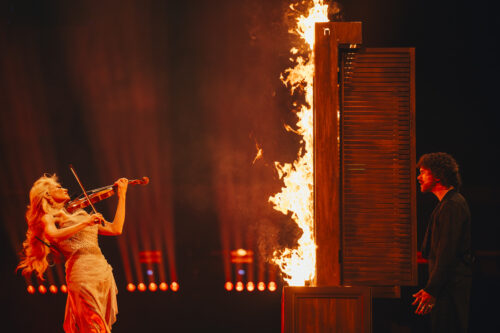
🇫🇮 Finland – Linda Lampenius x Pete Parkkonen, “Liekinheitin”

Running order: 7 | Rehearsal: 15:00–15:25 CEST

Finland has moved to the top of the Eurovision 2026 betting odds, putting extra attention on Linda Lampenius and Pete Parkkonen’s entry “Liekinheitin”. For Finnish fans, that leading position will inevitably bring back memories of the country’s greatest Eurovision night. In 2006, Lordi shocked and thrilled Europe with “Hard Rock Hallelujah”, a hard-rock anthem performed in monster costumes. The band won the contest in Athens with 292 points, giving Finland its first, and so far only, Eurovision victory. It was a turning point for a country that had often struggled at the contest and had waited decades for a win. Lordi proved that Eurovision could reward something loud, theatrical and completely different. Now, twenty years later, Finland once again finds itself at the centre of the race. The odds may still change, but the comparison with 2006 gives this year’s Finnish campaign an extra layer of excitement and expectation too.
📷 EBU/Sarah Louise Bennett

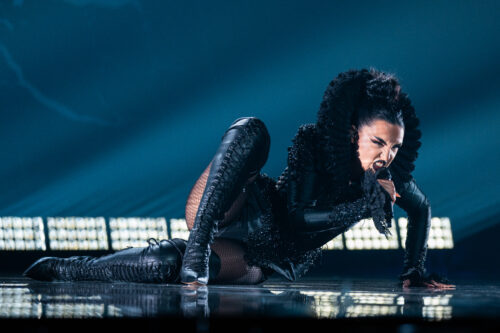
🇲🇪 Montenegro – Tamara Živković, “Nova Zora”

Running order: 8 | Rehearsal: 15:35–16:00 CEST

Pinkove Zvezdice, literally “Pink’s Little Stars”, was a Serbian television talent show for young singers, broadcast by RTV Pink from 2014. The format was aimed at children and teenagers up to 15, and quickly became a regional platform across the former Yugoslav area. Contestants performed well-known Balkan and international songs in front of a star jury, often turning emotional performances into viral moments. For Eurovision fans, the show has become a useful talent-map. Montenegro’s Tamara Živković was one of the young singers who took part, years before her Eurovision journey. Two Croatian Eurovision acts went even further: Marko Bošnjak, Croatia 2025, won the second season after breaking through as an 11-year-old, while Roko Blažević, Croatia 2019, also won Pinkove Zvezdice before moving on to Dora and Eurovision. The programme therefore helped shape several Balkan pop careers, and its name still carries recognition among regional viewers with strong musical memories today.
📷 Sarah Louise Bennett/EBU

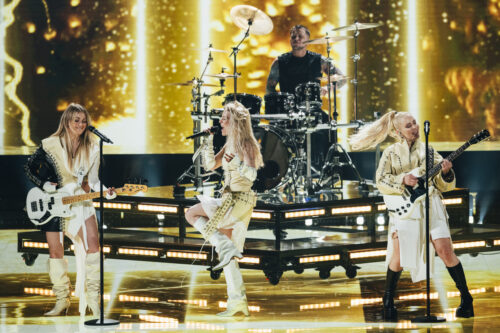
🇪🇪 Estonia – Vanilla Ninja, “Too Epic To Be True”

Running order: 9 | Rehearsal: 16:10–16:35 CEST

“Club Kung Fu” was the explosive first calling card of Vanilla Ninja. The Estonian girl band entered the song in Eurolaul 2003, Estonia’s national selection for Eurovision. Written by Sven Lõhmus and Piret Järvis, it mixed pop-rock guitars with a cheeky party lyric and a martial-arts gimmick that made the performance instantly memorable. The jury was not convinced: the song finished near the bottom with 32 points. The public, however, reacted very differently. “Club Kung Fu” became the moment that introduced Vanilla Ninja to a wider audience and helped turn them from a new Tallinn band into a national pop phenomenon at home and soon abroad. Later that year it appeared on their self-titled debut album, which launched their early career. In hindsight, the song is classic Vanilla Ninja: playful, loud, slightly absurd and impossible to ignore. It was less a Eurovision failure than the start of a European story.
📷 EBU/Sarah Louise Bennett

🇮🇱 Israel – Noam Bettan, “Michelle”

Running order: 10 | Rehearsal: 16:45–17:10 CEST
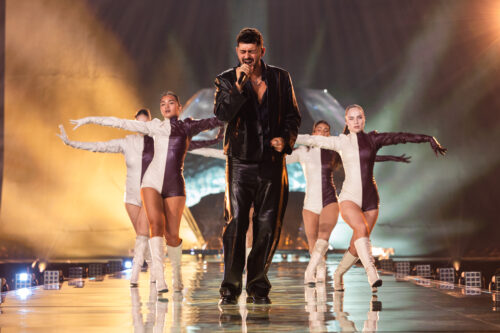
There are more songs called ‘Michelle’. Yet the best-known remains the tender ballad introduced by The Beatles on their 1965 album Rubber Soul. Written mainly by Paul McCartney, with John Lennon contributing part of the middle section, it blends English lyrics with a few French lines, giving the song its unmistakable continental charm. Although The Beatles did not release it as a single in Britain, it quickly became one of their most covered compositions. The Overlanders, a British harmony group, seized the opportunity in 1966 and turned Michelle into a major hit, reaching number one on the UK Singles Chart. Their version is smoother and more folk-pop than the Beatles recording, but it keeps the melody’s quiet elegance. The song’s success shows how strong the composition was: even without The Beatles’ name on the label, Michelle could captivate listeners worldwide and become part of sixties pop history forever.


📷EBU/Corinne Cumming

Related news

Eurovision 2026

Vienna 12 points: from a princess to a winner

Several countries start their second rehearsals. As we still don’t have access to the rehearsals, we will do something else. Per entry, we highlight one subject and give you some more information. That can be something about the artist, the song, the lyrics or even something completely different.  Moldova – Satoshi, “Viva Moldova!” Running order: 1 | Rehearsal: 10:30–10:55 CEST “Viva Moldova,” sing the Moldovans this year, and they do so in Romanian. That language choice carries more history than many Eurovision viewers may realise. Romanian was long officially referred to as Moldovan in Moldova, a name rooted mainly in Soviet and post-Soviet politics rather than linguistic difference. In practice, Moldovan and Romanian are the same language, with regional accents and vocabulary, as Dutch in the Netherlands and Flanders can differ without becoming separate languages. In 2013, Moldova’s Constitutional Court ruled that the Declaration of Independence, which names Romanian, prevails. Since 2023, the constitution also refers to Romanian. At Eurovision, “Viva Moldova” therefore is not only a patriotic slogan from Chișinău, but also a clear political and linguistic statement today.Oddly enough, Satoshi uses a Japanese name. He explains why in an interview with us. Another interview with Satoshi came after the rehearsals:  Sweden – FELICIA, “My System” Running order: 2 | Rehearsal: 11:05–11:30 CEST Fröken Snusk was one of Sweden’s most talked-about pop phenomena: a pink-balaclava-wearing persona built on anonymity, provocative lyrics and the booming EPA-dunk sound. The act broke through online and became known far beyond its party-music niche, helped by Melodifestivalen 2024 and a strong visual identity that made the mask as recognisable as the songs. Behind the original Fröken Snusk was Felicia Eriksson, who later left the project and moved forward under her own name. That background gives today’s Eurovision rehearsal extra context. Still wearing a mask, Felicia is no longer hiding inside the Fröken Snusk character, but the confidence, controversy and curiosity around that chapter still follow her onto the Vienna stage.  Croatia – LELEK, “Andromeda” Running order: 3 | Rehearsal: 11:40–12:05 CEST Andromeda is a figure from Greek mythology: a princess, not a goddess, and the daughter of King Cepheus and Queen Cassiopeia. After her mother angered the sea nymphs by boasting of Andromeda’s beauty, Poseidon sent a monster to ravage the kingdom. To save her people, Andromeda was chained to a rock as a sacrifice, until Perseus rescued her. In Lelek’s song, that story becomes more than a myth. Andromeda can be read as a symbol of women treated as bodies, victims or bargaining chips by forces bigger than themselves. The title also carries a cosmic meaning: Andromeda is a constellation and gives its name to the Andromeda Galaxy. That link to the stars fits the song’s imagery of escape, distance and survival. For contemporary listeners, her ancient story adds emotional weight. Lelek’s Andromeda is therefore both a mythological princess and a powerful metaphor for pain, resistance and hard-won freedom.  Greece – Akylas, “Ferto” Running order: 4 | Rehearsal: 12:20–12:45 CEST Akylas has become an important figure for Greece’s LGBTQ+ community because his visibility is not presented as a side note, but as part of his artistic identity. Long before Eurovision, his music and stage presence were linked to queer self-expression, emotional honesty and performances at events such as Athens Pride. That background gives his Eurovision journey a broader meaning. In a country where queer voices have often had to fight for space in mainstream culture, Akylas represents a new kind of openness. He has also spoken about homophobic bullying and the support he received after winning the Greek selection, turning his own experiences into a message for younger LGBTQ+ people. For many Greek fans, his participation is therefore not only about a song. It is also about recognition: seeing someone openly queer carry Greek pop culture onto one of Europe’s biggest stages with confidence, vulnerability and a distinctly Greek sound.  Portugal – Bandidos do Cante, “Rosa” Running order: 5 | Rehearsal: 12:55–13:20 CEST Cante Alentejano is the traditional polyphonic singing of the Alentejo, the vast southern Portuguese region between the Tagus and the Algarve. It is usually performed by groups of amateur singers, without instruments. It’s in a slow, collective style built around two vocal lines and distinctive melodies. UNESCO added it to the Representative List of the Intangible Cultural Heritage of Humanity in 2014. In Portugal’s 2026 Eurovision entry, Bandidos do Cante bring that tradition into a pop setting. “Rosa” does not simply borrow a regional sound; it places the warmth of group singing at the centre of the song. That gives the entry a clear Portuguese identity. The voices suggest landscape, memory and togetherness, while the modern arrangement makes the old tradition accessible to a Eurovision audience that may be hearing Cante Alentejano for the first time, without losing its roots. You can read more about the meaningful lyrics here.  Georgia – Bzikebi, “On Replay” Running order: 6 | Rehearsal: 13:30–13:55 CEST Junior Eurovision has often been a first step towards bigger stages, but only four winners have later returned as Eurovision contestants. The Tolmachevy Sisters opened that path: after winning Junior Eurovision 2006 for Russia with “Vesenniy Jazz”, they represented Russia in 2014 with “Shine”, finishing seventh. Destiny followed Malta’s 2015 Junior victory with “Not My Soul” by taking “Je Me Casse” to Eurovision 2021, also ending seventh. Georgia’s Iru, winner as part of Candy in 2011, returned solo in 2023 with “Echo”. This year, Georgia completes the circle again with Bzikebi, the buzzing trio who won Junior Eurovision 2008 with “Bzz..” and now step onto the adult contest stage with “On Replay”. Their return adds a nostalgic layer to 2026. Still, one milestone remains untouched: no artist or group has ever won both Junior Eurovision and the Eurovision Song Contest. That unresolved challenge keeps the crossover story fascinating.

Read More »
Uncategorized
Martijn

Vienna 12 points: Of monsters, pink little stars and the Beatles

Several countries start their second rehearsals. As we still don’t have access to the rehearsals, we will do something else. Per entry, we highlight one subject and give you some more information. That can be something about the artist, the song, the lyrics or even something completely different.  Finland – Linda Lampenius x Pete Parkkonen, “Liekinheitin” Running order: 7 | Rehearsal: 15:00–15:25 CEST Finland has moved to the top of the Eurovision 2026 betting odds, putting extra attention on Linda Lampenius and Pete Parkkonen’s entry “Liekinheitin”. For Finnish fans, that leading position will inevitably bring back memories of the country’s greatest Eurovision night. In 2006, Lordi shocked and thrilled Europe with “Hard Rock Hallelujah”, a hard-rock anthem performed in monster costumes. The band won the contest in Athens with 292 points, giving Finland its first, and so far only, Eurovision victory. It was a turning point for a country that had often struggled at the contest and had waited decades for a win. Lordi proved that Eurovision could reward something loud, theatrical and completely different. Now, twenty years later, Finland once again finds itself at the centre of the race. The odds may still change, but the comparison with 2006 gives this year’s Finnish campaign an extra layer of excitement and expectation too.  Montenegro – Tamara Živković, “Nova Zora” Running order: 8 | Rehearsal: 15:35–16:00 CEST Pinkove Zvezdice, literally “Pink’s Little Stars”, was a Serbian television talent show for young singers, broadcast by RTV Pink from 2014. The format was aimed at children and teenagers up to 15, and quickly became a regional platform across the former Yugoslav area. Contestants performed well-known Balkan and international songs in front of a star jury, often turning emotional performances into viral moments. For Eurovision fans, the show has become a useful talent-map. Montenegro’s Tamara Živković was one of the young singers who took part, years before her Eurovision journey. Two Croatian Eurovision acts went even further: Marko Bošnjak, Croatia 2025, won the second season after breaking through as an 11-year-old, while Roko Blažević, Croatia 2019, also won Pinkove Zvezdice before moving on to Dora and Eurovision. The programme therefore helped shape several Balkan pop careers, and its name still carries recognition among regional viewers with strong musical memories today.  Estonia – Vanilla Ninja, “Too Epic To Be True” Running order: 9 | Rehearsal: 16:10–16:35 CEST “Club Kung Fu” was the explosive first calling card of Vanilla Ninja. The Estonian girl band entered the song in Eurolaul 2003, Estonia’s national selection for Eurovision. Written by Sven Lõhmus and Piret Järvis, it mixed pop-rock guitars with a cheeky party lyric and a martial-arts gimmick that made the performance instantly memorable. The jury was not convinced: the song finished near the bottom with 32 points. The public, however, reacted very differently. “Club Kung Fu” became the moment that introduced Vanilla Ninja to a wider audience and helped turn them from a new Tallinn band into a national pop phenomenon at home and soon abroad. Later that year it appeared on their self-titled debut album, which launched their early career. In hindsight, the song is classic Vanilla Ninja: playful, loud, slightly absurd and impossible to ignore. It was less a Eurovision failure than the start of a European story. 📷 EBU/Sarah Louise Bennett  Israel – Noam Bettan, “Michelle” Running order: 10 | Rehearsal: 16:45–17:10 CEST There are more songs called ‘Michelle’. Yet the best-known remains the tender ballad introduced by The Beatles on their 1965 album Rubber Soul. Written mainly by Paul McCartney, with John Lennon contributing part of the middle section, it blends English lyrics with a few French lines, giving the song its unmistakable continental charm. Although The Beatles did not release it as a single in Britain, it quickly became one of their most covered compositions. The Overlanders, a British harmony group, seized the opportunity in 1966 and turned Michelle into a major hit, reaching number one on the UK Singles Chart. Their version is smoother and more folk-pop than the Beatles recording, but it keeps the melody’s quiet elegance. The song’s success shows how strong the composition was: even without The Beatles’ name on the label, Michelle could captivate listeners worldwide and become part of sixties pop history forever.    

Read More »
Follow Us: