Malmö Messages: circles, a lot of fire and an open white shirt

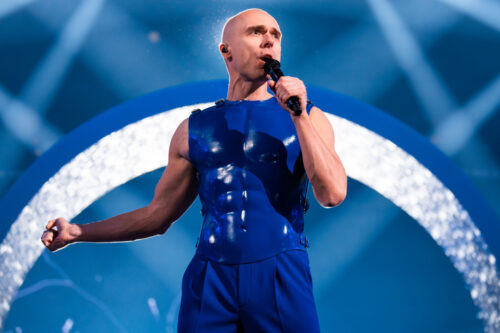
Latvia is represented by Dons with his song “Hollow”. Dons, dressed in a suit with a sleeveless blue jacket, stands alone on stage inside a sort of circle, also in blue with pink and orange. On the LED screens, we see gently blinking lights, as well as circles and other figures.
EBU/Corinne Cummings

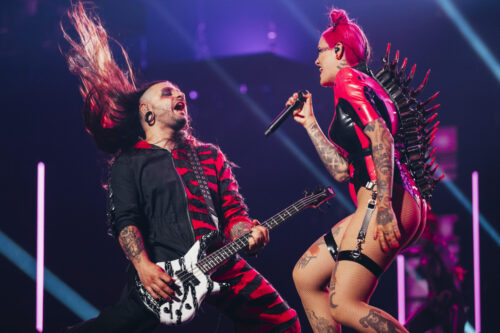
For San Marino, the Spanish group Megara will perform. They sing “11:11”. Just like during the national final, the members of Megara are again dressed in pink and black, but now with a slightly different pattern. The LED screens also display black and pink; we see a forest and dragons; a mix between Snow White and The Addams Family. According to eurovision.tv, the dance moves don’t quite match what we expect from a rock band. And of course, there are fireworks: smoke and large fireballs.
EBU/Sarah Louise Bennett

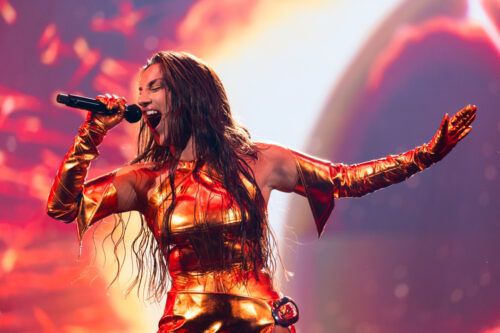
Nutsa Buzaladze will represent Georgia with a song about her Firefighter. Nutsa starts on a black platform, dressed in a golden mini dress with boots. She stands there alone in red light. Behind her is a glowing circle. However, after the first verse, four dancers in black appear. Throughout the song, the LED screens display fireballs. There is also a lot of, a great deal of fire on stage. It’s becoming a tradition.

EBU/Corinne Cumming

Then it’s Mustii’s turn. He will represent Belgium with his song “Before the party is over”. During the performance, Musti wears a white shirt that is open. He wears a top with inlaid sparkling stones. He builds the act slowly: at the beginning, he stands in a circle of microphones on a rotating platform. He is not only surrounded by smoke but also smoke appears on the LED screens. At the end of his performance, he steps forward. Then the choir, consisting of Eurovision fans who could send in their singing, can be heard. Especially this part seems to make a big impression.
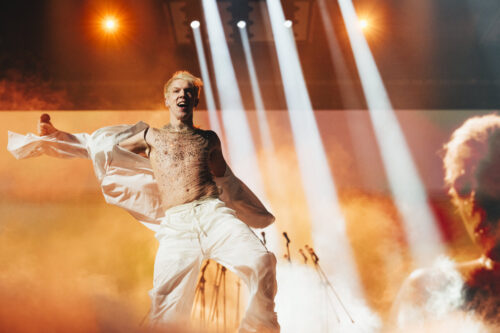
EBU/Sarah Louise Bennett

Related news

History

70 years of Eurovision: Céline Dion and…. eh… who?

The Eurovision Song Contest is celebrating its 70th anniversary. That is a wonderful milestone. We at Eurovision Universe love diving into the history of the contest. That is why we are taking a closer look at the contests of the past 70 years. 1988 For the second time, the Royal Dublin Society was the venue. Two hosts were in charge: Pat Kenny and Michelle Rocca. Cyprus had to withdraw. The Cypriot entry turned out to have already participated in the national final four years earlier. That came out so late that Cyprus could not find a new song in time. Tommy Körberg participated for Sweden. He did that back in 1969 as well. Back then, there were two winners in the national final: Tommy and Jan Malmsjö. After a runoff, Tommy was allowed to go to the Eurovision Song Contest. And lo and behold, in 1988 he was the replacement for…. that very same Jan Malmsjö! Yardena Arazi participated for Israel. She did so in 1976, but in 1979 she was the host. It is the first and only time that a former host participated. MFÖ represented Turkey for the second time. Furthermore, the duo Hot Eyes was present for the third time. This time, singer Kirsten Siggaard was pregnant for no less than eight months! And then there was Dora. She had participated for Portugal before, and now again. Many big stars traveled to Dublin. Scott Fitzgerald had already had a worldwide hit with “If I Had Words” and now sang “Go” for the United Kingdom. Gerard Joling, who had just completed a tour of Asia, was the Dutch candidate. And France also came up with a big star: Gérard Lenorman. Unfortunately, there was little attention for his “Chanteur de charme”. And then there was the Belgian Lara Fabian. She represented Luxembourg with the song “Croire”. At that time she was still unknown; later she would score many hits.   Céline Dion It was nail-bitingly exciting. The United Kingdom and Switzerland constantly swapped first place. Until the very last point, it was unclear who would win. It was ultimately Céline Dion for Switzerland. This Canadian singer sang “Ne partez pas sans moi”. It didn’t become a big hit everywhere. But a year later, she got to open the festival and sang “Where Does My Heart Beat Now”. It became her first international hit, but certainly not the last. Her absolute biggest success was “My Heart Will Go On”, but she scored many hits. Due to illness, she was unable to perform for a long time. So there was admiration when she did sing during the Olympic Games in Paris. And recently she announced that she will start performing again. 1989 The Eurovision Song Contest was held in Lausanne. Once again, there was a duo presentation: Jacques Descheneaux and Lolita Morena. Cyprus was back after a long absence. Not a single participant had been on the Eurovision stage before. However, two very young participants were striking and controversial. 12-year-old Gili Netanel participated for Israel as half of the duo Gili & Galit. For France, the even younger, 11-year-old Nathalie Pâque took the stage. This makes her the youngest soloist ever. Many people disagreed with the participation of such young children. A year later, a minimum age was therefore introduced. The show opened with the occasional duo Anna Oxa and Fausto Leali. Two big names in Italian music, who now finished ninth together with “Avrei voluto”. One of the favorites competed for the Netherlands: Justine Pelmelay. But Justine missed a high final note and did not finish as high as expected at all. Birthe Kjær (Denmark) and Anneli Saaristo (Finland) had both tried to represent their country several times before. Now that the time had finally come, both were very successful. With a bright red dress and a swinging song, Birthe came third. Anneli was accompanied by Spanish guitar sounds and sang her song to a seventh place. The Icelandic Daníel was also notable. During the national final, then still with a shaved head, he seemed unable to crack a smile after his victory. As if participating in the Eurovision Song Contest was a severe punishment for the Icelandic singer. Once in Lausanne, now with hair, the Icelander failed to secure even a single point. Riva For the third consecutive time, the duo Stevo Cvikić and Rajko Dujmić wrote the entry. Always following the same recipe: a group with a female singer and a cheerful trifle. As there was no other clear favorite, the group Riva won for Yugoslavia with “Rock Me”. In Yugoslavia, people were happy, but in the rest of Europe, incomprehension prevailed. This wasn’t the best song, was it? What had the jury done!? During the afterparty, a number of participating artists huddled together for a jam session. Among those on stage were the Spanish Nina and the Dutch Justine. Friend and foe alike agreed that this was all much better than the winning song.

Read More »
History
Martijn

70 years of Eurovision: Céline Dion and…. eh… who?

The Eurovision Song Contest is celebrating its 70th anniversary. That is a wonderful milestone. We at Eurovision Universe love diving into the history of the contest. That is why we are taking a closer look at the contests of the past 70 years. 1988 For the second time, the Royal Dublin Society was the venue. Two hosts were in charge: Pat Kenny and Michelle Rocca. Cyprus had to withdraw. The Cypriot entry turned out to have already participated in the national final four years earlier. That came out so late that Cyprus could not find a new song in time. Tommy Körberg participated for Sweden. He did that back in 1969 as well. Back then, there were two winners in the national final: Tommy and Jan Malmsjö. After a runoff, Tommy was allowed to go to the Eurovision Song Contest. And lo and behold, in 1988 he was the replacement for…. that very same Jan Malmsjö! Yardena Arazi participated for Israel. She did so in 1976, but in 1979 she was the host. It is the first and only time that a former host participated. MFÖ represented Turkey for the second time. Furthermore, the duo Hot Eyes was present for the third time. This time, singer Kirsten Siggaard was pregnant for no less than eight months! And then there was Dora. She had participated for Portugal before, and now again. Many big stars traveled to Dublin. Scott Fitzgerald had already had a worldwide hit with “If I Had Words” and now sang “Go” for the United Kingdom. Gerard Joling, who had just completed a tour of Asia, was the Dutch candidate. And France also came up with a big star: Gérard Lenorman. Unfortunately, there was little attention for his “Chanteur de charme”. And then there was the Belgian Lara Fabian. She represented Luxembourg with the song “Croire”. At that time she was still unknown; later she would score many hits.   Céline Dion It was nail-bitingly exciting. The United Kingdom and Switzerland constantly swapped first place. Until the very last point, it was unclear who would win. It was ultimately Céline Dion for Switzerland. This Canadian singer sang “Ne partez pas sans moi”. It didn’t become a big hit everywhere. But a year later, she got to open the festival and sang “Where Does My Heart Beat Now”. It became her first international hit, but certainly not the last. Her absolute biggest success was “My Heart Will Go On”, but she scored many hits. Due to illness, she was unable to perform for a long time. So there was admiration when she did sing during the Olympic Games in Paris. And recently she announced that she will start performing again. 1989 The Eurovision Song Contest was held in Lausanne. Once again, there was a duo presentation: Jacques Descheneaux and Lolita Morena. Cyprus was back after a long absence. Not a single participant had been on the Eurovision stage before. However, two very young participants were striking and controversial. 12-year-old Gili Netanel participated for Israel as half of the duo Gili & Galit. For France, the even younger, 11-year-old Nathalie Pâque took the stage. This makes her the youngest soloist ever. Many people disagreed with the participation of such young children. A year later, a minimum age was therefore introduced. The show opened with the occasional duo Anna Oxa and Fausto Leali. Two big names in Italian music, who now finished ninth together with “Avrei voluto”. One of the favorites competed for the Netherlands: Justine Pelmelay. But Justine missed a high final note and did not finish as high as expected at all. Birthe Kjær (Denmark) and Anneli Saaristo (Finland) had both tried to represent their country several times before. Now that the time had finally come, both were very successful. With a bright red dress and a swinging song, Birthe came third. Anneli was accompanied by Spanish guitar sounds and sang her song to a seventh place. The Icelandic Daníel was also notable. During the national final, then still with a shaved head, he seemed unable to crack a smile after his victory. As if participating in the Eurovision Song Contest was a severe punishment for the Icelandic singer. Once in Lausanne, now with hair, the Icelander failed to secure even a single point. Riva For the third consecutive time, the duo Stevo Cvikić and Rajko Dujmić wrote the entry. Always following the same recipe: a group with a female singer and a cheerful trifle. As there was no other clear favorite, the group Riva won for Yugoslavia with “Rock Me”. In Yugoslavia, people were happy, but in the rest of Europe, incomprehension prevailed. This wasn’t the best song, was it? What had the jury done!? During the afterparty, a number of participating artists huddled together for a jam session. Among those on stage were the Spanish Nina and the Dutch Justine. Friend and foe alike agreed that this was all much better than the winning song.

Read More »
Follow Us: