

🇳🇱 Road To Malmö: The Netherlands

In the Spotligh Joost Klein dream big

We can not wait for the Eurovision Song Contest in Malmö. Therefore, we have a closer look at one of the contestants every day. Today: The Netherlands.

Joost Klein

Joost Klein, known simply as Joost, is a versatile Dutch musician, writer, and former YouTuber born on November 10, 1997, in Leeuwarden, Netherlands. Growing up in Britsum, he faced early hardships, losing both parents during his school years. Joost first gained attention through his YouTube channel, EenhoornJoost, launched at the age of 10.

Joost’s music career accelerated with his single “Bitches,” which quickly amassed a million views. He briefly signed with the label Top Notch, but soon established his own label, releasing his influential album “Albino” in 2019. His mixtape “Scandinavian Boy” and collaborations like “M van Marketing” with Donnie have further cemented his reputation in the music industry.

In 2020, he released “Joost Klein 7,” featuring international artists like Canadian rapper bbno$. His album, “Fryslân,” reflects deep personal themes and includes collaborations with diverse artists. Joost continues to make significant strides in music, evidenced by his hit “Friesenjung” in Germany.

Joost was chosen to represent the Netherlands at the Eurovision Song Contest 2024 with the song “Europapa.” 

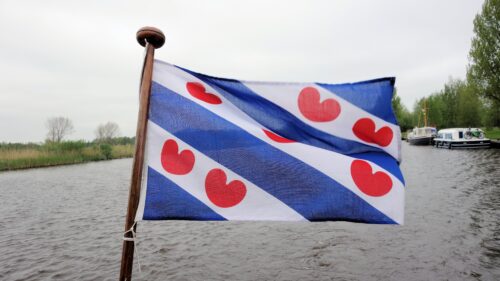
Friesland

Joost Klein is from Friesland and is proud to show that; we learned that from a.o. his song “Friesenjung”.

Friesland is a special province in the northern part of the Netherlands, known for its unique culture and language. The people there speak Frisian, which is one of the oldest languages in Europe, alongside Dutch. Friesland is famous for its beautiful landscapes, including vast lakes, canals, and green pastures, making it a great place for boating, skating, and cycling.

The capital of Friesland is Leeuwarden, a city rich in history with lovely old buildings and canals. Friesland is also known for the Elfstedentocht, a famous long-distance skating event that takes place on the frozen canals connecting eleven historical cities, but only when the ice is thick enough.

This province has a strong sense of identity and pride in its heritage, evident in its festivals, traditional sports like Frisian handball, and horse breeding, especially the black Friesian horse, known worldwide for its beauty and grace.
The Netherlands in the Eurovision Song Contest

The very first Eurovision song ever, the opening song in the 1956 contest, was a Dutch one: Jetty Paerl‘s “De vogels van Holland”. Only one year later, Corry Brokken took the trophy to the Netherlands with her “Net als toen”. In 1959, it was Teddy Scholten who won the contest with “Een beetje”. Lenny Kuhr was one of the four winners of 1969 with her “Troubadour”, while Teach In won in 1975 with their song “Ding-a-dong”. After this, the Netherlands had to wait for 44 years for a new victory. But it happened in 2019: Duncan Laurence won the contest with his “Arcade”. Other top-3 entries were “I see a star” by Mouth & MacNeal (1974) and “Calm after the storm” by The Common Linnets (2014).

Duncan Laurence, EBU/Andres Putting

The Bookmakers

Currently, Joost’s “Europapa” is no. 5 in the odds to win the Grand Final. However, the bookmakers also expect him to win the 2nd semifinal. If we follow the bookies, we can safely say that The Netherlands will do well in the current contest. 

The song

And this is the song: 

Related news

History

Austria in the Eurovision Song Contest, part 4

This year’s Eurovision Song Contest has been won by Austria. It was the 57th Austrian entry. Reason for us to go back to all the Austrian entries in history! For the fourth episode, we will look back at the early eighties. Austria returned to having a national final. Marty Brem and Gary Lux both took part twice. Austria 1980 – Blue Danube – “Du bist Musik” By 1980 Austria was back with “Du bist Musik”, performed by the group Blue Danube. Composer-lyricist Klaus-Peter Sattler wrote this German-language entry. The song is a love ballad comparing a beloved to music, name-dropping famous composers and dances. Blue Danube was a five-member ensemble formed just for Eurovision. Notably the group included singer Marty Brem. He would represent Austria again the following year. Conducted by Richard Ă–sterreicher, “Du bist Musik” opened the night’s show and scored 64 points for 8th place out of 19. Austria 1981 – Marty Brem – “Wenn du da bist” Marty Brem was part of Blue Danube in 1980. The singer returned solo for Austria in 1981. “Wenn du da bist” (“When You’re Here”) was composed and written by Werner Böhmler, and again Richard Ă–sterreicher conducted the orchestra. For the first time since 1963, the song was chosen through a national final. Brem was the only contestant. He sang three songs. “Wenn du da bist” is a romantic ballad with a slightly jazzy, complex composition. Unfortunately, it finished in 17th place (20 points) at the contest. Marty Brem’s performance featured an energetic stage show with flamboyant costumed dancers. The Austrian singer was frontman of a band called “Marty and the Bomfriz” at the time. After Eurovision, Brem pivoted to working in music journalism and the record industry. 1982 – Mess “Sonntag” Twelve songs competed in Austria’s 1982 national final. The duo Mess won with “Sonntag” (“Sunday”), an upbeat pop track full of early-’80s Europop charm. Both members, Michael Scheickl (also known as “Fritz”) and Elisabeth “Lizzi” Engstler, had also entered the competition as solo artists. Michael Scheickl (credited as “Michael Mell”) composed the song, while Rudolf Leve wrote the lyrics. Mess brought joyful energy to the stage with their lively, danceable performance. “Sonntag” celebrated the carefree feeling of a Sunday, wrapped in a catchy, cheerful style. The song earned 57 points and placed 9th out of 18 countries. Formed specifically for Eurovision, Mess disbanded soon after. Engstler, just 21 at the time, later built a successful career as a television presenter for Austria’s ORF network. 1983 – Westend “Hurricane” In 1983, Austria chose the pop group Westend to perform “Hurricane”, selecting them from 12 finalists that included Waterloo (ESC 1976). Band member Peter Vieweger composed the song, while Heli Deinboek and Heinz Nessizius wrote the lyrics. Sung in German, “Hurricane” delivers an upbeat synth-pop sound with Schlager influences, using a whirlwind metaphor to capture the chaos of lost love. The entry scored 53 points and finished in a tie for 9th place. Westend featured five members, including Gary Lux—whose role stood out. Lux went on to represent Austria at Eurovision six times during the 1980s, both as a solo performer and backing vocalist. “Hurricane” earned Austria a solid mid-table result and later became a beloved ’80s Eurovision memory. 1984 – Anita “Einfach weg” Twelve songs battled for the ticket to Luxembourg, with Gary Lux finishing as runner-up. Austria chose Anita Spanner, known simply as Anita, for the 1984 Eurovision Song Contest with “Einfach weg” (“Simply Gone”). Brigitte Seuberth composed the track, and Walter MĂĽller wrote the lyrics. This energetic pop song featured a catchy melody and a synth-driven arrangement typical of the mid-80s. Despite strong expectations, Austria landed in 19th (last) place with just 5 points. Ironically, the song found huge success at home. It climbed to #1 on the Austrian singles chart and stayed in the Top 20 for ten weeks. Anita, a newcomer and surprise national final winner, took the stage in Luxembourg backed by vocalists including Gary Lux. Although “Einfach weg” didn’t resonate internationally, its popularity in Austria turned it into an iconic Austropop hit of the decade. 1985 – Gary Lux “Kinder dieser Welt” By 1985, Gary Lux had become a familiar face for Austria at Eurovision. Having been in Westend (1983) and a backing singer in 1984, Lux took center stage with “Kinder dieser Welt” (“Children of this World”) in Gothenburg. He was internally selected for the contest. His uplifting song was a pop anthem calling for hope and joy for children around the globe. It was written by prominent lyricist Michael Kunze and composed by the British duo Mick Jackson and Geoff Bastow. “Kinder dieser Welt” earned 60 points and secured 8th place for Austria out of 19 entries. The entry affirmed Gary Lux’s status as one of Austria’s most frequent Eurovision participants.

Read More »
History
Martijn

Austria in the Eurovision Song Contest, part 4

This year’s Eurovision Song Contest has been won by Austria. It was the 57th Austrian entry. Reason for us to go back to all the Austrian entries in history! For the fourth episode, we will look back at the early eighties. Austria returned to having a national final. Marty Brem and Gary Lux both took part twice. Austria 1980 – Blue Danube – “Du bist Musik” By 1980 Austria was back with “Du bist Musik”, performed by the group Blue Danube. Composer-lyricist Klaus-Peter Sattler wrote this German-language entry. The song is a love ballad comparing a beloved to music, name-dropping famous composers and dances. Blue Danube was a five-member ensemble formed just for Eurovision. Notably the group included singer Marty Brem. He would represent Austria again the following year. Conducted by Richard Ă–sterreicher, “Du bist Musik” opened the night’s show and scored 64 points for 8th place out of 19. Austria 1981 – Marty Brem – “Wenn du da bist” Marty Brem was part of Blue Danube in 1980. The singer returned solo for Austria in 1981. “Wenn du da bist” (“When You’re Here”) was composed and written by Werner Böhmler, and again Richard Ă–sterreicher conducted the orchestra. For the first time since 1963, the song was chosen through a national final. Brem was the only contestant. He sang three songs. “Wenn du da bist” is a romantic ballad with a slightly jazzy, complex composition. Unfortunately, it finished in 17th place (20 points) at the contest. Marty Brem’s performance featured an energetic stage show with flamboyant costumed dancers. The Austrian singer was frontman of a band called “Marty and the Bomfriz” at the time. After Eurovision, Brem pivoted to working in music journalism and the record industry. 1982 – Mess “Sonntag” Twelve songs competed in Austria’s 1982 national final. The duo Mess won with “Sonntag” (“Sunday”), an upbeat pop track full of early-’80s Europop charm. Both members, Michael Scheickl (also known as “Fritz”) and Elisabeth “Lizzi” Engstler, had also entered the competition as solo artists. Michael Scheickl (credited as “Michael Mell”) composed the song, while Rudolf Leve wrote the lyrics. Mess brought joyful energy to the stage with their lively, danceable performance. “Sonntag” celebrated the carefree feeling of a Sunday, wrapped in a catchy, cheerful style. The song earned 57 points and placed 9th out of 18 countries. Formed specifically for Eurovision, Mess disbanded soon after. Engstler, just 21 at the time, later built a successful career as a television presenter for Austria’s ORF network. 1983 – Westend “Hurricane” In 1983, Austria chose the pop group Westend to perform “Hurricane”, selecting them from 12 finalists that included Waterloo (ESC 1976). Band member Peter Vieweger composed the song, while Heli Deinboek and Heinz Nessizius wrote the lyrics. Sung in German, “Hurricane” delivers an upbeat synth-pop sound with Schlager influences, using a whirlwind metaphor to capture the chaos of lost love. The entry scored 53 points and finished in a tie for 9th place. Westend featured five members, including Gary Lux—whose role stood out. Lux went on to represent Austria at Eurovision six times during the 1980s, both as a solo performer and backing vocalist. “Hurricane” earned Austria a solid mid-table result and later became a beloved ’80s Eurovision memory. 1984 – Anita “Einfach weg” Twelve songs battled for the ticket to Luxembourg, with Gary Lux finishing as runner-up. Austria chose Anita Spanner, known simply as Anita, for the 1984 Eurovision Song Contest with “Einfach weg” (“Simply Gone”). Brigitte Seuberth composed the track, and Walter MĂĽller wrote the lyrics. This energetic pop song featured a catchy melody and a synth-driven arrangement typical of the mid-80s. Despite strong expectations, Austria landed in 19th (last) place with just 5 points. Ironically, the song found huge success at home. It climbed to #1 on the Austrian singles chart and stayed in the Top 20 for ten weeks. Anita, a newcomer and surprise national final winner, took the stage in Luxembourg backed by vocalists including Gary Lux. Although “Einfach weg” didn’t resonate internationally, its popularity in Austria turned it into an iconic Austropop hit of the decade. 1985 – Gary Lux “Kinder dieser Welt” By 1985, Gary Lux had become a familiar face for Austria at Eurovision. Having been in Westend (1983) and a backing singer in 1984, Lux took center stage with “Kinder dieser Welt” (“Children of this World”) in Gothenburg. He was internally selected for the contest. His uplifting song was a pop anthem calling for hope and joy for children around the globe. It was written by prominent lyricist Michael Kunze and composed by the British duo Mick Jackson and Geoff Bastow. “Kinder dieser Welt” earned 60 points and secured 8th place for Austria out of 19 entries. The entry affirmed Gary Lux’s status as one of Austria’s most frequent Eurovision participants.

Read More »
Follow Us: