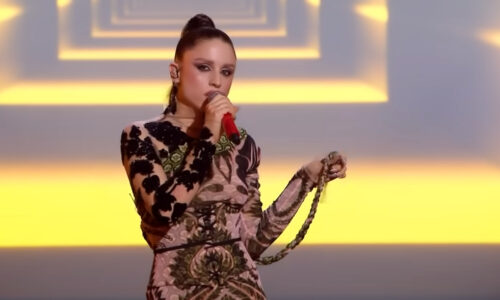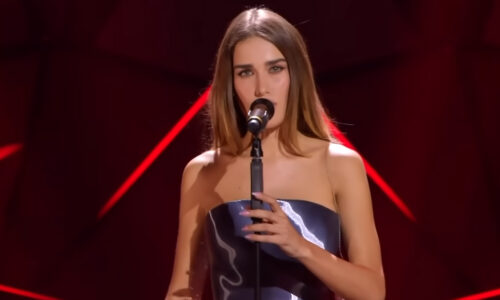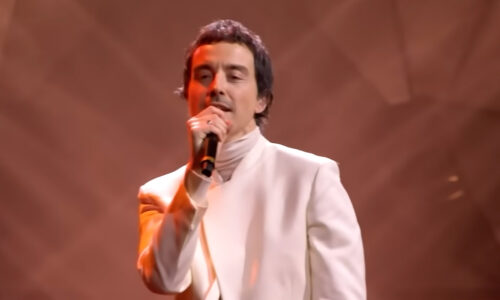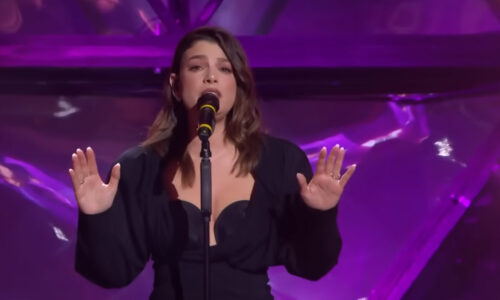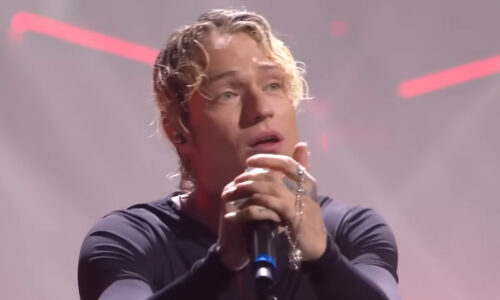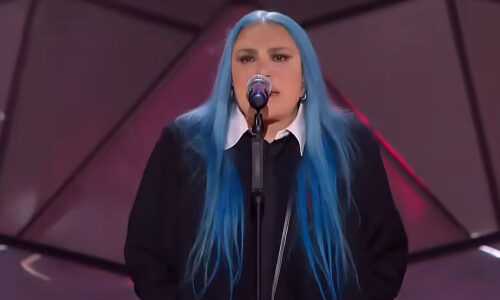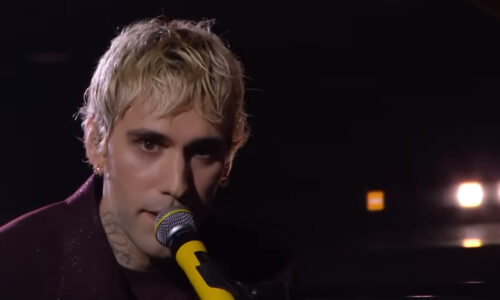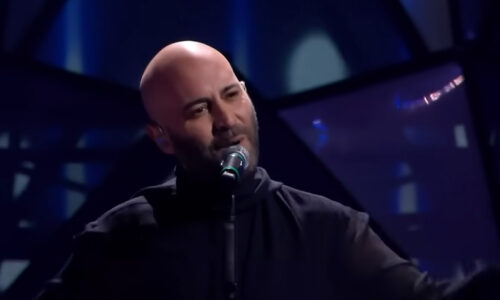
🇮🇹 Italy: Festival di Sanremo final

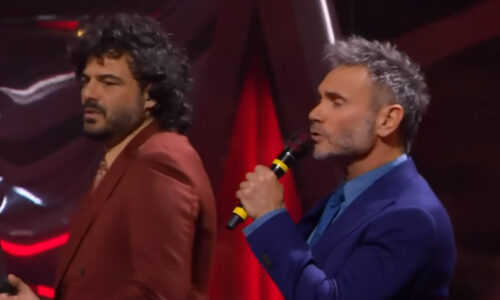
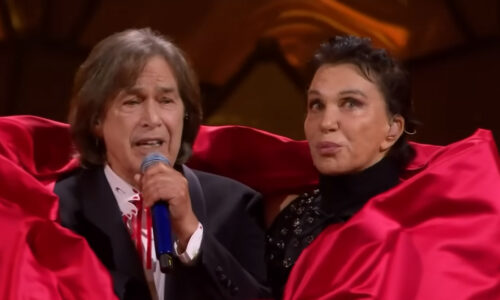
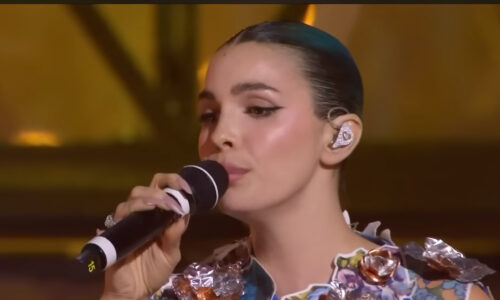
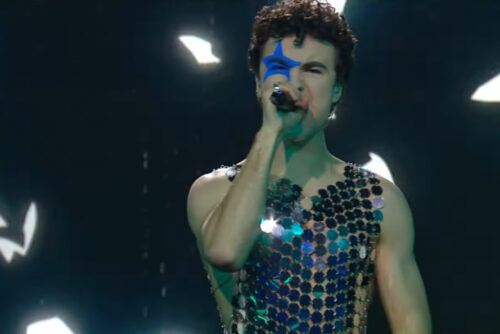
Tonight will be the final night of the famous Festival di Sanremo. 30 songs will compete for the trophy. 5 songs will be selected for a superfinal. The winner will be decided by 33% press jury, 33% radio jury and 34% televote. The winner is the one who got the first choice to go to Eurovision. In the press conference after the show, they will let the public now whether they go to Malmö or not. The show will start 20:45 CET and end deep in the night. You can watch it here.

Here are the 30 contestants:

nr. Title Artist (s)  
1 Fino a qui Alessandra Amoroso
2 Vai! Alfa
3 La noia Angelina Mango
4 Sinceramente Annalisa
5 La rabbia non ti basta BigMama
6 Governo punk Bnkr44
7 Diamanti grezzi Clara
8 Onda alta Dargen D’Amico
9 Ti muovi Diodato
10 Apnea Emma
11 Mariposa Fiorella Mannoia
12 Il cielo non ci vuole Fred De Palma
13 Tutto qui Gazzelle
14 I p’ me tu p’ te Geolier
15 Casa mia Ghali
16 Fragili Il Tre
17 Capolavoro Il Volo
18 Tu no Irama
19 Autodistruttivo La Sad
20 Pazza Loredana Berté
21 Tuta gold Mahmood
22 Spettacolare Maninni
23 Due altalene Mr. Rain
24 Ricominciamo tutto Negramaro
25 Pazzo di te Renga & Nek
26 Ma non tutta la vita Ricchi e Poveri
27 Click boom! Rose Villain
28 Finiscimi Sangiovanni
29 L’amore in bocca Santi Francesci
30 Un ragazzo una ragazza The Kolors

Participating in Festival di Sanremo before (in years that the Eurovision song was chosen from the contest):

Annalisa in 2013, 2015 (4th), 2016 (11th), 2018 (3rd), 2021 (7th)
Dargen D’Amico in 2022 (9th)
Diodato in 2018 (8th) and 2020 (1st). He was supposed to represent Italy in the 2020 ESC with “Fai rumore”, which was cancelled due to COVID19.
Emma in 2011, 2012, 2022 (6th). She was chosen to represent Italy in the 2014 ESC with “La mia cittĂ ”.
Fiorella Mannoia in 1987 (8th) and 1988 (10th).
Il Volo in 2015 (1st), 2019 (3rd). They represented Italy in 2015 with “Grande amore”.
Irama in 2019 (7th), 2021 (5th), 2022 (4th).
Loredana Bertè in 1987 (16th), 1993 (with Mia Martini, 14th), 1997 (20th), 2019 (4th).
Mahmood in 2019 (1st) and 2022 (1st, with Blanco). He represented Italy in both years, in 2019 with “Soldi” and in 2022 with “Brividi”.
Mr. Rain in 2023 (3rd).
Francesco Renga in 2012, in 2019 (15th), in 2021 (22nd).
Nek in 1997 (7th), 2015 (2nd), 2019 (19th).
Ricchi e Poveri in Canzonissima 1974, 1987 (7th), 1988 (9th), 1989 (9th), 1990 (17th). They were chosen to represent Italy in the 1978 ESC with “Questo amore”.
Sangiovanni in 2022 (5th).
The Kolors in 2018 (9th).


Diodato sings “Fai Rumore” in Eurovision Shine A Light in 2020.

Emma sings “La mia cittĂ ” in 2014.

Il Volo sing “Grande amore” in 2015.

Mahmood sings “Soldi” in 2019.

Mahmood (and Blanco) sings “Brividi” in 2022.

Ricchi e Poveri sing “Questo amore” in 1978.

Related news

Uncategorized

Israel Eurovision 2025 Participation Sparks Boycott

Israel Eurovision 2025 Participation Sparks Boycott Israel’s participation in the Eurovision Song Contest 2025 has ignited a major controversy. After organizers decided to allow Israel to remain in the competition, four countries, the Netherlands, Spain, Ireland, and Slovenia, announced their withdrawal from Eurovision 2026 in protest. This rare Eurovision boycott has turned the contest into a political flashpoint. Background: Israel in Eurovision 2025 Israel finished second at Eurovision 2025, a strong result driven by public votes. However, several countries complained that Israel had artificially boosted its tally through a broad advertising campaign urging Europeans to vote for its entry. The dispute unfolded amid the Gaza war, pushing the ostensibly apolitical contest into an uncomfortable spotlight. In response, the European Broadcasting Union (EBU) rolled out new measures to protect Eurovision’s neutrality. Government-led promotion campaigns were discouraged under the updated rules. In early December, EBU members reviewed these changes and decided not to hold a vote on Israel’s status. With this, they effectively confirmed Israel would remain in Eurovision 2026. Four Countries Withdraw in Protest Following the EBU decision to keep Israel in the contest, four national broadcasters promptly confirmed their withdrawal from Eurovision 2026. Ireland’s RTÉ deemed participation “unconscionable” amid Gaza’s civilian death toll. Spain’s RTVE and the Netherlands’ AVROTROS also pulled out after the Geneva vote, arguing that taking part was incompatible with their public service values. Slovenia likewise confirmed it would boycott the contest, as it had vowed if Israel stayed. Impact and Reactions The boycott is especially significant because it includes Spain. The country is one of Eurovision’s “Big Five” nations that provide major funding and automatic finalist spots. Organizers warn that losing multiple major countries could dent the show’s global audience (typically around 150 million viewers) and deter sponsors. Israeli officials, meanwhile, welcomed the EBU’s decision. President Isaac Herzog said Israel “deserves to be represented on every stage around the world”. This saga presents Eurovision with an unprecedented challenge: upholding its spirit of musical unity in the face of deep geopolitical divides.

Read More »
Uncategorized
Martijn

Israel Eurovision 2025 Participation Sparks Boycott

Israel Eurovision 2025 Participation Sparks Boycott Israel’s participation in the Eurovision Song Contest 2025 has ignited a major controversy. After organizers decided to allow Israel to remain in the competition, four countries, the Netherlands, Spain, Ireland, and Slovenia, announced their withdrawal from Eurovision 2026 in protest. This rare Eurovision boycott has turned the contest into a political flashpoint. Background: Israel in Eurovision 2025 Israel finished second at Eurovision 2025, a strong result driven by public votes. However, several countries complained that Israel had artificially boosted its tally through a broad advertising campaign urging Europeans to vote for its entry. The dispute unfolded amid the Gaza war, pushing the ostensibly apolitical contest into an uncomfortable spotlight. In response, the European Broadcasting Union (EBU) rolled out new measures to protect Eurovision’s neutrality. Government-led promotion campaigns were discouraged under the updated rules. In early December, EBU members reviewed these changes and decided not to hold a vote on Israel’s status. With this, they effectively confirmed Israel would remain in Eurovision 2026. Four Countries Withdraw in Protest Following the EBU decision to keep Israel in the contest, four national broadcasters promptly confirmed their withdrawal from Eurovision 2026. Ireland’s RTÉ deemed participation “unconscionable” amid Gaza’s civilian death toll. Spain’s RTVE and the Netherlands’ AVROTROS also pulled out after the Geneva vote, arguing that taking part was incompatible with their public service values. Slovenia likewise confirmed it would boycott the contest, as it had vowed if Israel stayed. Impact and Reactions The boycott is especially significant because it includes Spain. The country is one of Eurovision’s “Big Five” nations that provide major funding and automatic finalist spots. Organizers warn that losing multiple major countries could dent the show’s global audience (typically around 150 million viewers) and deter sponsors. Israeli officials, meanwhile, welcomed the EBU’s decision. President Isaac Herzog said Israel “deserves to be represented on every stage around the world”. This saga presents Eurovision with an unprecedented challenge: upholding its spirit of musical unity in the face of deep geopolitical divides.

Read More »
Follow Us: