Road to Liverpool: Romania

We can not wait for the Eurovision Song Contest in Liverpool. Therefore, we have a closer look at one of the contestants every day. Today: Romania.

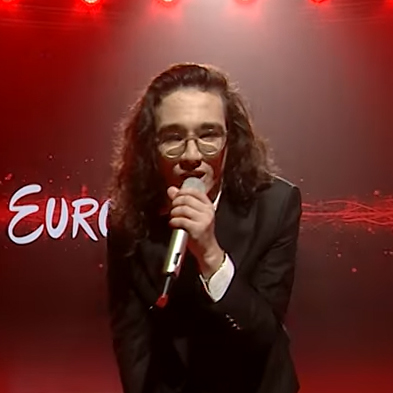
Theodor Andrei

The Romanian final has been won by Theodor Andrei. He won the contest with his own song “D.G.T. (Off and on”), that he wrote and composed together with Mikail Jahed. For the lyrics, Luca de Mezzo and Luca Udățeanu also signed.

Theodor Andrei participated in Vocea Romaniei Junior (The Voice Kids Romania). It resulted in two records: “Young and sweet” and “Și dacă azi zâmbesc”. In 2020, Theodor took part in The X-Factor Romania. After that, he had a main role in a theatre play. 2022 was the year of his debut album “Fragile” and the song “Ţigări mentolate”.

Mihai and the Eurovision Songcontest

If we have to mention someone in Romania who is connected to Eurovision, the first name that pops up is Mihai Trăistariu. He had a wish to participate in Eurovision, his dream came true but he decided to keep the dream alive. The famous Romanian singer started his career with the duo Valahia. In 2000 (“Why“), 2002 (“Mother“) and 2003 (“Friends are friends“) they participated in the Romanian national selection. In 2005, when the duo split up, he sang a duet with Nico: “All the time“. In 2006, it happened: he won the national selection and represented Romania with his song “Tornero“, which brought him a 4th place in the final!


After ten years, he wanted to do the job again. We saw him in 2016 (“Paradisio“), 2017 (“I won’t surrender“) and 2018 (“Heaven“). In 2019 he was also supposed to take part. However, he withdrew because he did not agree with the organization of the contest. In 2020, he expressed his disappointment for not being invited. That was the last time we saw him in a national final. But don’t worry, you can find him on Facebook, Instagram and OnlyFans. And yes, it is what you think it is…

Romania in the Eurovision Song Contest

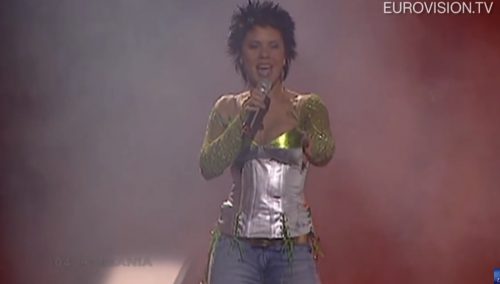
Romania first took part in the Eurovision Song Contest in 1994. In the beginning, it was hard for Romania to do well. The first top-10 score was in 2002, when Monica Anghel and Marcel Pavel reached the 9th place. A very high score, 4th, was there for the afornamed Mihai. Two 3rd places were there for Romania: in 2005 (Luminița Anghel and Sistem even won the semifinal!) and for Ovi and Paula Seling in 2010. In more recent years Ilinca and Alex Florea became 7th with “Yodel it!”.
Bookmakers

The betting odds for Romania are not very hopeful this year: currently they have a 36th place, out of 37 participating countries. Let’s hope for Romania they will do better than that.

The song:

And of course, this is the song:


Related news

Eurovision 2026

Vienna 12 points: From MUSEXPO to Musical

Several countries start their second rehearsals in Vienna. As we still don’t have access to the rehearsals, we will do something else. Per entry, we highlight one subject and give you some more information. That can be something about the artist, the song, the lyrics or even something completely different.  Switzerland — Veronica Fusaro, “Alice” Running order: 7 | Rehearsal: 8 May, 15:00–15:25 CEST MUSEXPO is one of the music industry’s key meeting places, where artists, labels, publishers, managers and media professionals come together to discover new talent and discuss the future of music. Founded by A&R Worldwide, the event combines panels, networking sessions, awards and live showcases. It has been held in Los Angeles and has also had European editions, including London, making it a truly international platform. For Eurovision fans, MUSEXPO is interesting because it often gives rising artists a stage before a wider breakthrough. Singer Veronica Fusaro performed at MUSEXPO in London and Los Angeles, showing how the event can connect young talent with influential people from the global music business. Unlike a traditional festival, MUSEXPO is mainly aimed at professionals. Its goal is not only entertainment, but also discovery, cooperation and new opportunities across the music, media and technology world, especially for artists ready to grow internationally today.  Cyprus — Antigoni, “Jalla” Running order: 8 | Rehearsal: 8 May, 15:35–16:00 CEST Tsifteteli is a lively dance style from Greece, Cyprus, Turkey and the wider eastern Mediterranean. The name comes from the Turkish çiftetelli, often linked to a “double string” musical style. In Greek culture, tsifteteli is known for fluid hip movements, expressive arms and a sensual, celebratory feeling. It is often compared with belly dancing, but it also belongs to everyday social life: people dance it at parties, weddings and festivals, not only on stage. That background gives extra colour to Antigoni’s Eurovision lyric “Shake my hips to tsifteteli”. As a British artist with Greek-Cypriot roots, she uses the word as a cultural reference, not just as a dance instruction. In “Jalla”, tsifteteli helps create a Mediterranean party atmosphere, mixing modern pop energy with sounds and movements that many Greek and Cypriot listeners will instantly recognise. For international fans, it is a small word with big cultural meaning at Eurovision 2026 in Vienna.  Latvia — Atvara, “Ēnā” Running order: 9 | Rehearsal: 8 May, 16:10–16:35 CEST Ēnā meaning is central to Latvia’s Eurovision 2026 entry by Atvara. In Latvian, ēna means “shadow” or “shade”, while ēnā means “in the shadow” or “in the shade”. That small grammatical change gives the title extra weight, because the song places its main character inside darkness, not just near it. The lyrics show someone losing confidence, hiding feelings and drifting away from the light. Atvara links this image to the pain of growing up around another person’s addiction, which gives “Ēnā” a personal and emotional meaning. For Eurovision viewers, the title explains the dark atmosphere of Latvia’s entry. This song does not tell a simple story about sadness. It explores fear, family pressure and the courage someone needs to step out of darkness in Vienna at Eurovision 2026. That makes it a strong title for a dramatic performance. “Ēnā” proves how one Latvian word can carry emotion, memory and resilience.  Denmark — Søren Torpegaard Lund, “Før vi går hjem” Running order: 10 | Rehearsal: 8 May, 16:45–17:10 CEST Matador musical brings one of Denmark’s best-loved classics to the stage. The story comes from DR’s “Matador”, with scripts by Lise Nørgaard and direction by Erik Balling, and takes audiences back to the fictional town of Korsbæk. There, banker Hans Christian Varnæs and newcomer Mads Skjern represent two families, two social worlds and a changing Denmark before and during the Second World War. In 2024, One & Only Musicals presented a new original version with songs by Lise Cabble and Burhan G. The production mixed nostalgia, humour, ambition and family drama with a fresh musical sound. Søren Torpegaard Lund played Daniel Skjern, the son of Mads and Ingeborg Skjern. His role gave him a touching solo moment with “En dreng som mig”, a song about expectations and identity. For Eurovision fans, Matador shows the theatre background behind Denmark’s 2026 artist and adds context to his performance skills on the Eurovision stage in Vienna.  

Read More »
Eurovision 2026
Martijn

Vienna 12 points: From MUSEXPO to Musical

Several countries start their second rehearsals in Vienna. As we still don’t have access to the rehearsals, we will do something else. Per entry, we highlight one subject and give you some more information. That can be something about the artist, the song, the lyrics or even something completely different.  Switzerland — Veronica Fusaro, “Alice” Running order: 7 | Rehearsal: 8 May, 15:00–15:25 CEST MUSEXPO is one of the music industry’s key meeting places, where artists, labels, publishers, managers and media professionals come together to discover new talent and discuss the future of music. Founded by A&R Worldwide, the event combines panels, networking sessions, awards and live showcases. It has been held in Los Angeles and has also had European editions, including London, making it a truly international platform. For Eurovision fans, MUSEXPO is interesting because it often gives rising artists a stage before a wider breakthrough. Singer Veronica Fusaro performed at MUSEXPO in London and Los Angeles, showing how the event can connect young talent with influential people from the global music business. Unlike a traditional festival, MUSEXPO is mainly aimed at professionals. Its goal is not only entertainment, but also discovery, cooperation and new opportunities across the music, media and technology world, especially for artists ready to grow internationally today.  Cyprus — Antigoni, “Jalla” Running order: 8 | Rehearsal: 8 May, 15:35–16:00 CEST Tsifteteli is a lively dance style from Greece, Cyprus, Turkey and the wider eastern Mediterranean. The name comes from the Turkish çiftetelli, often linked to a “double string” musical style. In Greek culture, tsifteteli is known for fluid hip movements, expressive arms and a sensual, celebratory feeling. It is often compared with belly dancing, but it also belongs to everyday social life: people dance it at parties, weddings and festivals, not only on stage. That background gives extra colour to Antigoni’s Eurovision lyric “Shake my hips to tsifteteli”. As a British artist with Greek-Cypriot roots, she uses the word as a cultural reference, not just as a dance instruction. In “Jalla”, tsifteteli helps create a Mediterranean party atmosphere, mixing modern pop energy with sounds and movements that many Greek and Cypriot listeners will instantly recognise. For international fans, it is a small word with big cultural meaning at Eurovision 2026 in Vienna.  Latvia — Atvara, “Ēnā” Running order: 9 | Rehearsal: 8 May, 16:10–16:35 CEST Ēnā meaning is central to Latvia’s Eurovision 2026 entry by Atvara. In Latvian, ēna means “shadow” or “shade”, while ēnā means “in the shadow” or “in the shade”. That small grammatical change gives the title extra weight, because the song places its main character inside darkness, not just near it. The lyrics show someone losing confidence, hiding feelings and drifting away from the light. Atvara links this image to the pain of growing up around another person’s addiction, which gives “Ēnā” a personal and emotional meaning. For Eurovision viewers, the title explains the dark atmosphere of Latvia’s entry. This song does not tell a simple story about sadness. It explores fear, family pressure and the courage someone needs to step out of darkness in Vienna at Eurovision 2026. That makes it a strong title for a dramatic performance. “Ēnā” proves how one Latvian word can carry emotion, memory and resilience.  Denmark — Søren Torpegaard Lund, “Før vi går hjem” Running order: 10 | Rehearsal: 8 May, 16:45–17:10 CEST Matador musical brings one of Denmark’s best-loved classics to the stage. The story comes from DR’s “Matador”, with scripts by Lise Nørgaard and direction by Erik Balling, and takes audiences back to the fictional town of Korsbæk. There, banker Hans Christian Varnæs and newcomer Mads Skjern represent two families, two social worlds and a changing Denmark before and during the Second World War. In 2024, One & Only Musicals presented a new original version with songs by Lise Cabble and Burhan G. The production mixed nostalgia, humour, ambition and family drama with a fresh musical sound. Søren Torpegaard Lund played Daniel Skjern, the son of Mads and Ingeborg Skjern. His role gave him a touching solo moment with “En dreng som mig”, a song about expectations and identity. For Eurovision fans, Matador shows the theatre background behind Denmark’s 2026 artist and adds context to his performance skills on the Eurovision stage in Vienna.  

Read More »
Follow Us: