Weekly Update

It’s time for a weekly update! A little over a week has passed since Austria won the Eurovision Song Contest 2025 with JJ’s “Wasted Love.” As the celebrations fade, Europe turns its eyes toward Eurovision 2026. Plenty is already happening: Austria is preparing to host, broadcasters question the voting, Israel’s role is debated, and the first countries are confirming participation.

Austria Gets Ready for 2026

Austria has officially confirmed that it will host Eurovision 2026. The Wiener Stadthalle in Vienna, which previously hosted the contest in 2015, has been confirmed as a strong candidate. Other cities including Graz, Innsbruck, Linz/Wels, Oberwart, St. Pölten and Ebreichsdorf have also expressed interest. A decision about the host city is expected later this year.

Vienna’s infrastructure and experience give it an edge. However, the competition is open, and local governments across Austria are keen to welcome the Eurovision spotlight. ORF, Austria’s national broadcaster, is currently reviewing proposals.
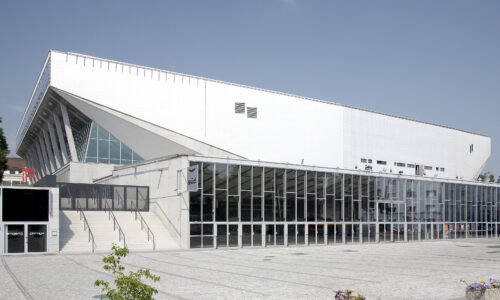
📷 Robert Zolles, Wikimedia Commons

Voting System Under Review

The results of Eurovision 2025 sparked discussion in several countries. In particular, Israel won the public televote by a large margin, which led to concerns about the voting process. Some broadcasters have officially asked the European Broadcasting Union (EBU) to investigate.

In response, the EBU released a statement. They confirmed that the televoting system worked according to the rules and that they found no irregularities. However, they promised to evaluate the situation and listen to feedback from participating countries. The goal is to keep Eurovision fair and transparent.

Debate Over Israel’s Participation

Alongside the voting concerns, Israel’s participation itself is a topic of discussion. Several broadcasters have asked the EBU to open talks about whether Israel should continue to take part in Eurovision. The request comes in the wake of political tensions and protests before the 2025 contest.

The EBU has not changed its position. It maintains that Eurovision is a non-political event and that all active members have the right to participate. Whether this debate will affect the 2026 lineup is still unclear.

The Netherlands and Others Begin 2026 Preparations

Broadcasters are already thinking about next year. In the Netherlands, AVROTROS opened its submission process on 19 May. Artists and songwriters can send in their songs until 31 August. The broadcaster expects to make a final decision in December.

Denmark and Finland have gone one step further. They have both set dates for their national finals. Denmark’s selection will take place on 14 February 2026, while Finland will choose its act on 28 February 2026.

So far, Austria, the Netherlands, and Montenegro have confirmed participation. Andorra has announced it will not return to the contest. Most other countries have not made official statements yet.

📷 EBU/Sarah Louise Bennett

Eurovision 2025 Songs on the Charts

The Eurovision Song Contest always has an impact on the charts, and this year is no exception. A number of songs from the 2025 contest are performing well across Europe. Here is an overview of current chart positions:

Country Artist Song Chart Countries & Peak Positions
Austria JJ Wasted Love #1 Austria, #3 Switzerland, #8 Sweden
Israel Yuval Raphael New Day Will Rise #1 Israel, #89 Sweden
Estonia Tommy Cash Espresso Macchiato #1 Estonia, #4 Sweden
Sweden KAJ Bara Bada Bastu #1 Sweden, #1 Norway
Germany Abor & Tynna Baller #3 Germany, #34 UK
United Kingdom Remember Monday What the Hell Just Happened? #31 UK
Norway Kyle Alessandro Lighter #6 Norway, #6 Lithuania
Italy Lucio Corsi Volevo essere un duro #5 Italy, #30 Sweden
Finland Erika Vikman Ich komme #1 Finland, #38 Sweden
France Louane Maman #23 France, Top 50 Belgium
Malta Miriana Conte Serving #90 Sweden
San Marino Gabry Ponte Tutta l’Italia #91 Sweden
The Netherlands Claude C’est la vie #1 Netherlands, #12 Lithuania, #16 Estonia

Clearly, the Eurovision Song Contest continues to influence popular music. Even songs that did not win are finding international success.

Looking Ahead

As the Eurovision season shifts from celebration to preparation, there is already a lot to follow. Cities are bidding to host, broadcasters are raising questions, and fans are replaying their favourites. We’ll be back next week with another Eurovision weekly update!

Related news

History

Austria in the Eurovision Song Contest, part 7

This year’s Eurovision Song Contest has been won by Austria. It was the 57th Austrian entry. Reason for us to go back to all the Austrian entries in history! For Austria in the Eurovision Song Contest, part 7, we look back at the start of the 21st century. Alf Poier participated for Austria, but there were also some unsuccesful entries. And there was a 3-year gap. 2000 – The Rounder Girls – All To You Austria’s 2000 entry “All To You” was internally selected by broadcaster ORF. The song was written by American songwriter Dave Moskin. Moskin gave the three-piece vocal group The Rounder Girls an up-tempo, gospel-influenced pop track. Performing last in the Stockholm final, the trio, with members from Austria, the US and the UK, delivered slick harmonies and choreography. They finished 14th out of 24 countries with 34 points. The Rounder Girls were a seasoned soul/gospel ensemble, and their Eurovision appearance raised their profile, though Austria’s middling result meant the country sat out the contest in 2001. 2002 – Manuel Ortega – Say A Word “Say A Word” by Manuel Ortega won Austria’s “Song.Null.Zwei” 2002 national final out of ten songs. this entry was an upbeat pop song with a catchy, boy-band style hook. It was composed by Alexander Kahr with lyrics by Robert Pfluger. At Eurovision 2002 in Tallinn, Ortega performed third and Austria placed 18th (26 points) in the final. Manuel Ortega, a young pop singer, had scored a summer hit in 2001 and was nicknamed “the Austrian Ricky Martin” for his Latin pop flair. His Eurovision song’s fun choreography and positive message reflected that image, though the result was a lower mid-table finish. 2003 – Alf Poier – Weil der Mensch zählt ORF organized the “Song.Null.Drei” 2003 selection. Petra Frey (ESC 1994) was the runner up. Comedian-singer Alf Poier triumphed with “Weil der Mensch zählt”. Poier penned this satirical song himself. Musically it’s a quirky folk-pop tune delivered in Styrian dialect. The performance, complete with cartoonish animal props, was a parody of Eurovision’s over-the-top style. At the Riga contest, this offbeat entry surprised many by scoring 6th place with 101 points. Alf Poier, an Austrian stand-up comedian known for absurdist humor, thus earned Austria’s best Eurovision result in over a decade. His comedic approach and catchy refrain turned him into a fan favorite that year. 2004 – Tie Break – Du bist Austria’s national final “Song.Null.Vier” chose Tie Break’s “Du bist” for Eurovision 2004. Waterloo & Robinson (ESC 1976!) were the runners up. Note that a song, written by popstar Falco, participated too. So posthumously, Falco did a Eurovision attempt!Written by composer Peter Zimmermann, “Du bist” is a tender schlager-style pop ballad performed in German. Tie Break, a trio of fresh-faced male singers (a boy band formed via a talent search), delivered tight harmonies in Istanbul’s final. Thanks to Austria’s top-10 result the year before, they pre-qualified directly for the final. Tie Break finished 21st out of 24 with 9 points. The group had gained national fame through the selection process, but on the Eurovision stage their gentle ballad struggled to stand out in a field dominated by more dynamic acts. 2005 – Global.Kryner – Y así In 2005, “Song.Null.Fünf” was held and the crossover folk band Global.Kryner won with “Y así”. They narrowly beated Alf Poier. The controversy was that Austria changed the rules of the voting on the very last moment. Would the original voting procedure be used, Alf Poier would have won. Band members Edi Köhldorfer (composer) and Christof Spörk (lyricist) combined Latin salsa rhythms with Austrian alpine polka to create this unique “salsa-polka-pop” song. Global.Kryner was a six-member ensemble known for blending folk and jazz influences. They opened the Eurovision semi-final in Kyiv with an energetic performance featuring yodels and Latin dance breaks. However, “Y así” did not advance to the final, placing 21st of 25 in the semi-final with 30 points. The group had earned acclaim in Austria and Germany, but their daring genre fusion proved too quirky for the Eurovision televote that year. 2007 – Eric Papilaya – Get A Life – Get Alive After a brief Eurovision hiatus, Austria returned in 2007 by internally selecting Eric Papilaya. His entry “Get A Life – Get Alive” – composed by Greg Usek with lyrics by Austin Howard. It was the official anthem of Vienna’s Life Ball AIDS charity event. This song is an upbeat pop-rock anthem with an inspirational message and flashy staging. Papilaya performed with a giant red ribbon on stage. Papilaya, a rock vocalist who rose to fame on the TV talent show Starmania, gave a spirited performance in Helsinki’s semi-final. Unfortunately Austria did not qualify for the final; he placed 27th (four points) in the semi. The entry drew media attention for its charity theme, but it wasn’t enough to overcome tough competition in 2007. 2011 – Nadine Beiler – The Secret Is Love Austria returned to Eurovision in 2011 through the national selection “Düsseldorf – wir kommen!”. The competition featured ten songs. However, well-known artists Alf Poier and Petra Frey failed to pass the online preselection. As a result, Nadine Beiler won the final with her soulful ballad “The Secret Is Love”. She co-wrote the song with veteran producer Thomas Rabitsch. Musically, the entry combines elements of gospel and pop, while it clearly highlights Beiler’s strong vocal range. Previously, Nadine Beiler had gained national fame by winning the television talent show Starmania in 2007 at the age of 16. Therefore, expectations were already high when she took the stage in Düsseldorf. Her Eurovision performance began a cappella and gradually built towards a powerful climax. Consequently, Austria qualified from the semi-final in seventh place with 69 points. In the grand final, Beiler finished 18th, scoring 64 points. Nevertheless, this result marked Austria’s first appearance in a Eurovision final in seven years and therefore signalled a credible and positive comeback.

Read More »
Eurovision 2026

Weekly Update

It’s Tuesday, January 6, 2026, and time for another weekly update! This week, national finals season is heating up across Europe. Malta has released all 18 competing songs for its selection. Germany is planning a three-hour national final show and two Eurovision documentaries. Greece revealed a packed lineup of 28 artists for its national final. Meanwhile, the European Broadcasting Union has introduced a new ident as part of a brand refresh. Preparations for Eurovision 2026 continue in Vienna, with the Semi-Final allocation draw just days away. Here are this week’s top stories: National Finals 🇲🇹 Malta: All MESC 2026 Songs Revealed Malta has now released all 18 songs competing in the Malta Eurovision Song Contest 2026. This week, Aidan’s entry “Bella” came out as the final song, completing the MESC 2026 lineup. With every song now available online, Maltese fans can preview the selection ahead of the competition. You can listen to all the songs here. The national selection kicks off with a semi-final on January 15. Jury and public voting will select 12 qualifiers for the final on January 17. The winner of that final will represent Malta at Eurovision 2026 in Vienna. 🇩🇪 Germany: Three-Hour National Final & ESC Documentaries Germany’s broadcaster SWR has revealed new details about its Eurovision 2026 plans. The national final, Eurovision Song Contest – Das Deutsche Finale 2026, will take place on February 28. It will be a live show running from 20:15 to 23:15 CET. The three-hour event promises multiple acts and entertainment. In addition, SWR announced two special Eurovision programs. A 90-minute documentary titled 70 Jahre ESC – Die Doku will air in May on Das Erste to celebrate 70 years of the contest. Another series, Inside ESC 2026 – Der Weg ins Finale, is in the works. It will stream on ARD Mediathek in 1–3 episodes, offering a behind-the-scenes look at preparations for the 70th Eurovision Song Contest in Vienna. source: esc-kompakt.de 🇬🇷 Greece: “Sing for Greece” Participants Announced Greece’s broadcaster ERT has revealed the 28 artists competing in Sing for Greece – Ellinikós Telikós 2026, the national selection for Eurovision. A special TV show introduced all the competing artists and featured song snippets. Eurovision 2025 representative Klavdia also made a guest appearance during the broadcast. The lineup includes some familiar names. Notably, rock band Koza Mostra – Greece’s Eurovision 2013 act – is back for another shot. Several artists from last year’s Greek selection (such as Evangelia and Rikki) are returning as well. The competition will feature two semi-finals where the public will choose seven qualifiers from each. Fourteen acts will then advance to a final later this season to determine who will represent Greece in Vienna. Eurovision 2026 News EBU Rolls Out New Ident for Eurovision Broadcasts The European Broadcasting Union has rolled out a new ident as part of an update to its corporate branding. This ident will play at the start of all EBU broadcasts, including major Eurovision events. It replaces the previous opening ident, which had been used since 2012. The fresh ident made its debut during the Vienna New Year’s Concert on January 1. It will become a familiar sight to viewers as Eurovision 2026 approaches. Vienna: Semi-Final Allocation Draw on January 12 Preparations for Eurovision 2026 are in full swing in Austria. Host broadcaster ORF has confirmed details for the Semi-Final Allocation Draw and host city handover. The event is set for January 12 at Vienna’s City Hall (Rathaus). ORF 1 will broadcast the draw live from 17:25 to 18:25 CET. During the draw, Austria and the Big Five will learn which Semi-Final they will vote in. The draw will also decide in which Semi-Final and in which half each of the other 30 countries will perform. This event officially kicks off the Eurovision 2026 season. Vienna now takes over hosting duties from last year’s host city, Basel. source: eurovision.com   

Read More »
Eurovision 2026
Martijn

Weekly Update

It’s Tuesday, January 6, 2026, and time for another weekly update! This week, national finals season is heating up across Europe. Malta has released all 18 competing songs for its selection. Germany is planning a three-hour national final show and two Eurovision documentaries. Greece revealed a packed lineup of 28 artists for its national final. Meanwhile, the European Broadcasting Union has introduced a new ident as part of a brand refresh. Preparations for Eurovision 2026 continue in Vienna, with the Semi-Final allocation draw just days away. Here are this week’s top stories: National Finals 🇲🇹 Malta: All MESC 2026 Songs Revealed Malta has now released all 18 songs competing in the Malta Eurovision Song Contest 2026. This week, Aidan’s entry “Bella” came out as the final song, completing the MESC 2026 lineup. With every song now available online, Maltese fans can preview the selection ahead of the competition. You can listen to all the songs here. The national selection kicks off with a semi-final on January 15. Jury and public voting will select 12 qualifiers for the final on January 17. The winner of that final will represent Malta at Eurovision 2026 in Vienna. 🇩🇪 Germany: Three-Hour National Final & ESC Documentaries Germany’s broadcaster SWR has revealed new details about its Eurovision 2026 plans. The national final, Eurovision Song Contest – Das Deutsche Finale 2026, will take place on February 28. It will be a live show running from 20:15 to 23:15 CET. The three-hour event promises multiple acts and entertainment. In addition, SWR announced two special Eurovision programs. A 90-minute documentary titled 70 Jahre ESC – Die Doku will air in May on Das Erste to celebrate 70 years of the contest. Another series, Inside ESC 2026 – Der Weg ins Finale, is in the works. It will stream on ARD Mediathek in 1–3 episodes, offering a behind-the-scenes look at preparations for the 70th Eurovision Song Contest in Vienna. source: esc-kompakt.de 🇬🇷 Greece: “Sing for Greece” Participants Announced Greece’s broadcaster ERT has revealed the 28 artists competing in Sing for Greece – Ellinikós Telikós 2026, the national selection for Eurovision. A special TV show introduced all the competing artists and featured song snippets. Eurovision 2025 representative Klavdia also made a guest appearance during the broadcast. The lineup includes some familiar names. Notably, rock band Koza Mostra – Greece’s Eurovision 2013 act – is back for another shot. Several artists from last year’s Greek selection (such as Evangelia and Rikki) are returning as well. The competition will feature two semi-finals where the public will choose seven qualifiers from each. Fourteen acts will then advance to a final later this season to determine who will represent Greece in Vienna. Eurovision 2026 News EBU Rolls Out New Ident for Eurovision Broadcasts The European Broadcasting Union has rolled out a new ident as part of an update to its corporate branding. This ident will play at the start of all EBU broadcasts, including major Eurovision events. It replaces the previous opening ident, which had been used since 2012. The fresh ident made its debut during the Vienna New Year’s Concert on January 1. It will become a familiar sight to viewers as Eurovision 2026 approaches. Vienna: Semi-Final Allocation Draw on January 12 Preparations for Eurovision 2026 are in full swing in Austria. Host broadcaster ORF has confirmed details for the Semi-Final Allocation Draw and host city handover. The event is set for January 12 at Vienna’s City Hall (Rathaus). ORF 1 will broadcast the draw live from 17:25 to 18:25 CET. During the draw, Austria and the Big Five will learn which Semi-Final they will vote in. The draw will also decide in which Semi-Final and in which half each of the other 30 countries will perform. This event officially kicks off the Eurovision 2026 season. Vienna now takes over hosting duties from last year’s host city, Basel. source: eurovision.com   

Read More »
Follow Us: