Vienna 12 points: from traditions to a worldwide hit

Several countries start their second rehearsals in Vienna. As we still don’t have access to the rehearsals, we will do something else. Per entry, we highlight one subject and give you some more information. That can be something about the artist, the song, the lyrics or even something completely different.


🇧🇬 Bulgaria — DARA, “Bangaranga”

Running order: 1 | Rehearsal: 8 May, 10:30–10:55 CEST

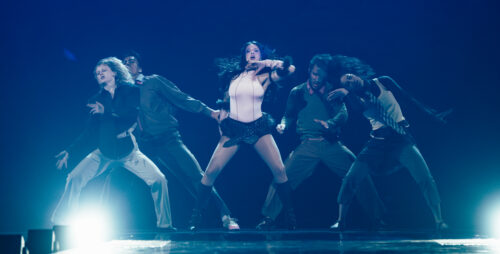
The Kukeri tradition in Bulgaria is one of the country’s most striking winter rituals. Dressed in heavy costumes, frightening masks and loud bells, Kukeri dancers move through villages to chase away evil spirits and welcome health, fertility and a good harvest. The custom is linked to ancient Balkan beliefs and is still passed on from generation to generation. Around New Year and before spring, communities gather for processions in which the sound, rhythm and costumes create a powerful, almost supernatural atmosphere.

That makes the tradition a fascinating link to Bulgaria’s Eurovision Song Contest staging in Vienna this year. When the dancers appear with wild movements and ritual energy, they are not just adding drama. They are referring to a living folklore practice that many Bulgarians immediately recognise. For international viewers, the Kukeri tradition in Bulgaria shows how music, dance and symbolism can turn a pop performance into a cultural story.
📷 EBU/Sarah Louise Bennett

🇦🇿 Azerbaijan — JIVA, “Just Go”

Running order: 2 | Rehearsal: 8 May, 11:05–11:30 CEST

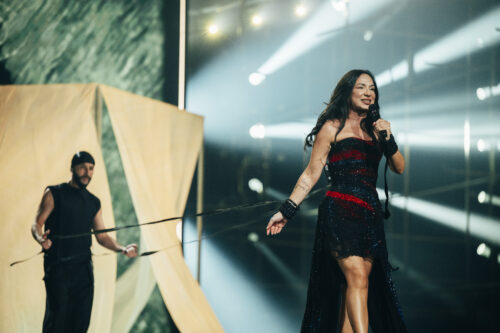
The Azerbaijan Eurovision AI rumours quickly became a talking point after JIVA released “Just Go” for the Eurovision Song Contest 2026. Some online discussions claimed that the song may have been created with artificial intelligence, partly because songwriter Fuad Javadov had been linked by fans to earlier AI-related demos. However, Azerbaijani broadcaster İctimai Television (İTV) has strongly denied the claims.

In a statement, İTV said the allegations did not reflect reality. The broadcaster described “Just Go” as an original musical work, created through a professional process based on experience and creative labour. İTV also explained that JIVA was chosen after a multi-stage internal selection, with expert opinions and a focus group helping to decide the entry.

For Eurovision viewers, the debate shows how sensitive the contest has become to questions about technology, authorship and transparency. For now, Azerbaijan insists that “Just Go” is a human-made Eurovision entry for Vienna 2026.
📷 EBU/Sarah Louise Bennett

🇷🇴 Romania — Alexandra Căpitănescu, “Choke Me”

Running order: 3 | Rehearsal: 8 May, 11:40–12:05 CEST

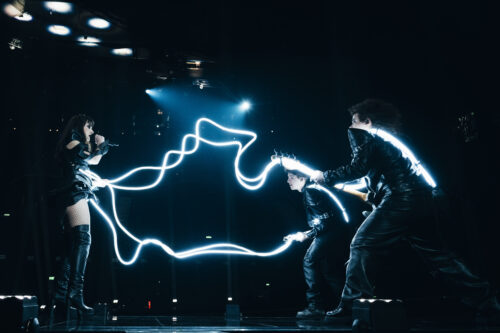
The Romanian Eurovision lyrics controversy around Alexandra Căpitănescu’s “Choke Me” has put the country’s 2026 entry under a sharp spotlight. After the song was selected for Vienna, some campaigners and fans argued that the repeated phrase “choke me” could be heard as a reference to sexual choking. They warned that, in a family show, such wording might normalise a dangerous practice rather than simply create drama.

Romania’s delegation and broadcaster TVR rejected that interpretation. According to TVR, the stage concept is designed to underline the metaphorical nature of the message and rule out a literal reading of the lyrics. Căpitănescu has also explained that the song is about emotional pressure, inner fears, self-doubt and feeling suffocated by expectations. In that reading, “Choke Me” is not a call for violence or sex, but a dark image for anxiety and the struggle to reclaim one’s voice before the worldwide audience in May.
📷 EBU/Sarah Louise Bennett

🇱🇺 Luxembourg — Eva Marija, “Mother Nature”

Running order: 4 | Rehearsal: 8 May, 12:20–12:45 CEST

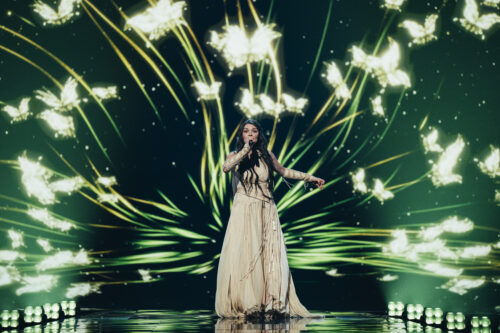
he Slovenian community in Luxembourg may be small, but it has a clear cultural presence in the Grand Duchy. For Eurovision fans, that background adds extra meaning to Eva Marija, Luxembourg’s 2026 contestant, who was born in Luxembourg to Slovenian parents. Around 768 Slovenian nationals lived in Luxembourg on 1 January 2025, according to STATEC. In such a multilingual country, the community connects Slovenian heritage with everyday Luxembourgish life. The Slovenian Association in Luxembourg, also known as Slolux, keeps that connection alive through events, language lessons, celebrations and informal support for newcomers. It promotes Slovenia, helps people integrate and brings families together throughout the year. In a country where almost half of residents are foreign nationals, Slovenes are part of Luxembourg’s wider European mosaic. Eva Marija’s story therefore clearly reflects both her Luxembourgish home and her Slovenian roots beautifully this year in Vienna for a wider Eurovision audience across Europe.
📷 EBU/Sarah Louise Bennett

🇨🇿 Czechia — Daniel Žižka, “CROSSROADS”

Running order: 5 | Rehearsal: 8 May, 12:55–13:20

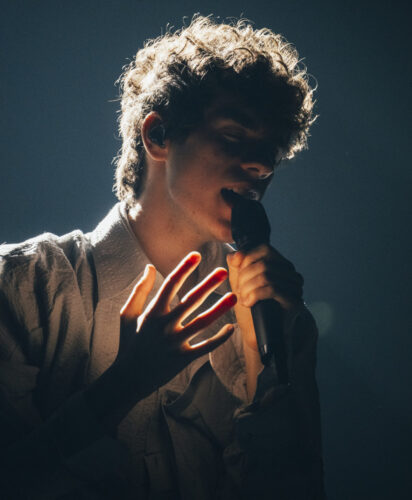
Mikolas Josef Eurovision history still matters for Czechia. In 2018, the Prague-born singer represented the country in Lisbon with “Lie To Me”, a playful pop song full of attitude, choreography and a memorable backpack. He finished sixth in the Grand Final with 281 points, Czechia’s best result at the contest so far. That record is now the benchmark Daniel Zizka may try to beat in Vienna 2026 with “CROSSROADS”.

After Eurovision, Mikolas did not disappear from the music scene. He released singles such as “Me Gusta”, “Abu Dhabi” and “Acapella”, built an international fanbase and later continued simply as MIKOLAS. Recent years brought new music, including “Boys Don’t Cry”, “Delilah” and his debut album “ONE”. His post-Eurovision career shows how one strong contest result can become the start of a longer pop journey, not just a one-night Eurovision success story for Czech music fans and the wider Eurovision audience today.
📷 EBU/Sarah Louise Bennett

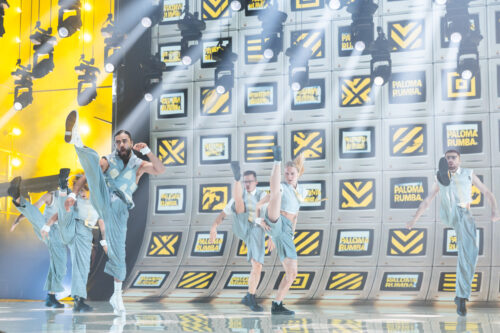
🇦🇲 Armenia — SIMÓN, “Paloma Rumba”

Running order: 6 | Rehearsal: 8 May, 13:30–13:55 CEST

Mikolas Josef Eurovision history still matters for Czechia. In 2018, the Prague-born singer represented the country in Lisbon with “Lie To Me”, a playful pop song full of attitude, choreography and a memorable backpack. He finished sixth in the Grand Final with 281 points, Czechia’s best result at the contest so far. That record is now the benchmark Daniel Zizka may try to beat in Vienna 2026 with “CROSSROADS”.

After Eurovision, Mikolas did not disappear from the music scene. He released singles such as “Me Gusta”, “Abu Dhabi” and “Acapella”, built an international fanbase and later continued simply as MIKOLAS. Recent years brought new music, including “Boys Don’t Cry”, “Delilah” and his debut album “ONE”. His post-Eurovision career shows how one strong contest result can become the start of a longer pop journey, not just a one-night Eurovision success story for Czech music fans and the wider Eurovision audience today.
 

📷 EBU/Corinne Cumming


Related news

Eurovision 2026

Vienna, 12 points: Animals and a groom on stage

Day six of rehearsals at the 70th Eurovision Song Contest in Vienna is the one that the Grand Final delegations have been waiting for. While the semi-finalists spent the past week breaking in the Wiener Stadthalle, Italy, Germany, France, the United Kingdom and host country Austria stepped onto that same stage for the very first time today. First rehearsals remain closed to press. Each delegation receives a 30-minute slot on stage, with official photographs released approximately 24 hours after each performance. The official EBU live blog on the Eurovision subreddit is the primary source of real-time descriptions; Eurovision Universe has supplemented those accounts with broadcaster statements, social media posts from the artists, and national press coverage. Second rehearsals for all five countries follow on Saturday, 9 May. All five compete directly in the Grand Final on Saturday, 16 May. 🇮🇹 Italy — Sal Da Vinci, “Per Sempre Sì” Running order: Grand Final position TBC | First rehearsal: 7 May, 13:00–13:25 CEST | Second rehearsal: 9 May The performance opens with a suit fitting. A pair of groomsmen assist a happy fellow choosing threads for his impending special day, while Sal performs at the front of the stage dressed in a white suit, modern in style but representative of Neapolitan design, made especially for him by a Neapolitan designer. For the next scene, a chandelier is lowered as Sal ushers the audience into an extravagant ballroom. An excited groom and his best men showcase choreography, including backflips, as the wedding reception begins to take shape. Then comes the big moment. The blushing bride walks slowly up the catwalk of the stage, while Sal himself moonlights as the marriage officiant. The song closes with the wedding reception itself. It’s set among lemon trees and lights, with fireworks depicted on the LED graphics.  Sal Da Vinci, born Salvatore Michael Sorrentino in 1969, is one of the most recognised voices of the Neapolitan pop scene, with a career spanning theatre, television and chart music. He secured his place in Vienna by winning the Festival di Sanremo 2026 with “Per Sempre Sì”, a victory that marked a full-circle moment in his long relationship with the festival. Italy’s second rehearsal takes place on Saturday, 9 May. Sources: EBU official live blog / RAI / Instagram @saldavinciofficial 🇩🇪 Germany — Sarah Engels, “Fire” Running order: Grand Final position TBC | First rehearsal: 7 May, 15:00–15:25 CEST | Second rehearsal: 9 May The centrepiece of the staging is a cube-shaped prop that gives Engels her own elevated performance platform. According to the official Eurovision subreddit live blog, she opens the performance lying on top of it, delivering a piano-ballad version of “Fire” directly to the camera positioned above her. It is a moment of stillness and control. However, it does not last long. The track ignites, the banger takes over, and Sarah Engels is off. The outfit is gold, head to toe. A bodysuit with a corset section designed to resemble roaring flames, with sparkling rhinestones scattered across it like golden embers. Four dancers join her on stage, also dressed in gold. The Reddit live blog notes that some staging surprises have been kept under wraps at the delegation’s request. What it can confirm is that the performance closes with a pyrotechnic finale. Given the song is called “Fire”, it could hardly end any other way. Sarah Engels first rose to national recognition in 2011 through Deutschland Sucht Den Superstar. She has since built one of Germany’s most varied careers across Let’s Dance, The Masked Singer, Dancing on Ice and her current lead role as Satine in Moulin Rouge! She won Das Deutsche Finale on 28 February 2026. Germany’s second rehearsal takes place on Saturday, 9 May. Sources: r/eurovision official live blog / ARD-SWR / Instagram @sarahengelsofficial 🇫🇷 France — Monroe, “Regarde !” Running order: Grand Final position TBC | First rehearsal: 7 May, 15:35–16:00 CEST | Second rehearsal: 9 May At just 17 years old, Monroe is one of the youngest artists ever to carry the French flag at Eurovision. The delegation around her has made one thing clear: “Regarde !” is a full theatrical event, not simply a televised pop performance. Head of delegation Alexandra Redde-Amiel has pushed the staging in a more theatrical direction than France’s recent entries, with the team working extensively on the song’s dramaturgy to bridge lyrical music with pop and musical theatre elements. The central phrase, “look at me”, reaches beyond the song’s lyrical meaning and functions as a directive for the entire visual concept. The French delegation has deliberately withheld staging details ahead of rehearsals, reinforcing the idea that this performance will only fully reveal itself in the moment. Five performers join Monroe on stage. For her first ever live performance of “Regarde !”, she brought over a dozen dancers. Eurovision’s stage rules cap the total to six, Monroe included. Monroe Vata Rigby, born 19 November 2008, grew up between France and the United States, discovered her love of classical music singing in a church choir, and won the eleventh season of Prodiges on France Télévisions in early 2025. France Télévisions selected her internally on 6 March 2026. France’s second rehearsal takes place on Saturday, 9 May. Sources: EBU official live blog / France Télévisions / Instagram @monroe.musique 🇬🇧 United Kingdom — LOOK MUM NO COMPUTER, “Eins, Zwei, Drei” Running order: Grand Final position TBC | First rehearsal: 7 May, 16:10–16:35 CEST | Second rehearsal: 9 May The British entry arrives at the Wiener Stadthalle with a supersized office that explodes into a synthesiser wonderland. As the song begins, rows of desks occupy the stage. Joining LOOK MUM NO COMPUTER for his shift are four co-workers.They are wearing computer monitors for heads. These co-workers embody precisely how the artist feels about the soul-crushing drudgery of office life. As the track kicks in, LOOK MUM NO COMPUTER breaks free and escapes. The office desks become a choreography centrepiece. Before long a stage makeover reveals his signature synthesisers and keyboard. The

Read More »
Uncategorized
Martijn

Vienna 12 points: from traditions to a worldwide hit

Several countries start their second rehearsals in Vienna. As we still don’t have access to the rehearsals, we will do something else. Per entry, we highlight one subject and give you some more information. That can be something about the artist, the song, the lyrics or even something completely different.  Bulgaria — DARA, “Bangaranga” Running order: 1 | Rehearsal: 8 May, 10:30–10:55 CEST The Kukeri tradition in Bulgaria is one of the country’s most striking winter rituals. Dressed in heavy costumes, frightening masks and loud bells, Kukeri dancers move through villages to chase away evil spirits and welcome health, fertility and a good harvest. The custom is linked to ancient Balkan beliefs and is still passed on from generation to generation. Around New Year and before spring, communities gather for processions in which the sound, rhythm and costumes create a powerful, almost supernatural atmosphere. That makes the tradition a fascinating link to Bulgaria’s Eurovision Song Contest staging in Vienna this year. When the dancers appear with wild movements and ritual energy, they are not just adding drama. They are referring to a living folklore practice that many Bulgarians immediately recognise. For international viewers, the Kukeri tradition in Bulgaria shows how music, dance and symbolism can turn a pop performance into a cultural story.  Azerbaijan — JIVA, “Just Go” Running order: 2 | Rehearsal: 8 May, 11:05–11:30 CEST The Azerbaijan Eurovision AI rumours quickly became a talking point after JIVA released “Just Go” for the Eurovision Song Contest 2026. Some online discussions claimed that the song may have been created with artificial intelligence, partly because songwriter Fuad Javadov had been linked by fans to earlier AI-related demos. However, Azerbaijani broadcaster İctimai Television (İTV) has strongly denied the claims. In a statement, İTV said the allegations did not reflect reality. The broadcaster described “Just Go” as an original musical work, created through a professional process based on experience and creative labour. İTV also explained that JIVA was chosen after a multi-stage internal selection, with expert opinions and a focus group helping to decide the entry. For Eurovision viewers, the debate shows how sensitive the contest has become to questions about technology, authorship and transparency. For now, Azerbaijan insists that “Just Go” is a human-made Eurovision entry for Vienna 2026.  Romania — Alexandra Căpitănescu, “Choke Me” Running order: 3 | Rehearsal: 8 May, 11:40–12:05 CEST The Romanian Eurovision lyrics controversy around Alexandra Căpitănescu’s “Choke Me” has put the country’s 2026 entry under a sharp spotlight. After the song was selected for Vienna, some campaigners and fans argued that the repeated phrase “choke me” could be heard as a reference to sexual choking. They warned that, in a family show, such wording might normalise a dangerous practice rather than simply create drama. Romania’s delegation and broadcaster TVR rejected that interpretation. According to TVR, the stage concept is designed to underline the metaphorical nature of the message and rule out a literal reading of the lyrics. Căpitănescu has also explained that the song is about emotional pressure, inner fears, self-doubt and feeling suffocated by expectations. In that reading, “Choke Me” is not a call for violence or sex, but a dark image for anxiety and the struggle to reclaim one’s voice before the worldwide audience in May.  Luxembourg — Eva Marija, “Mother Nature” Running order: 4 | Rehearsal: 8 May, 12:20–12:45 CEST he Slovenian community in Luxembourg may be small, but it has a clear cultural presence in the Grand Duchy. For Eurovision fans, that background adds extra meaning to Eva Marija, Luxembourg’s 2026 contestant, who was born in Luxembourg to Slovenian parents. Around 768 Slovenian nationals lived in Luxembourg on 1 January 2025, according to STATEC. In such a multilingual country, the community connects Slovenian heritage with everyday Luxembourgish life. The Slovenian Association in Luxembourg, also known as Slolux, keeps that connection alive through events, language lessons, celebrations and informal support for newcomers. It promotes Slovenia, helps people integrate and brings families together throughout the year. In a country where almost half of residents are foreign nationals, Slovenes are part of Luxembourg’s wider European mosaic. Eva Marija’s story therefore clearly reflects both her Luxembourgish home and her Slovenian roots beautifully this year in Vienna for a wider Eurovision audience across Europe.  Czechia — Daniel Žižka, “CROSSROADS” Running order: 5 | Rehearsal: 8 May, 12:55–13:20 Mikolas Josef Eurovision history still matters for Czechia. In 2018, the Prague-born singer represented the country in Lisbon with “Lie To Me”, a playful pop song full of attitude, choreography and a memorable backpack. He finished sixth in the Grand Final with 281 points, Czechia’s best result at the contest so far. That record is now the benchmark Daniel Zizka may try to beat in Vienna 2026 with “CROSSROADS”. After Eurovision, Mikolas did not disappear from the music scene. He released singles such as “Me Gusta”, “Abu Dhabi” and “Acapella”, built an international fanbase and later continued simply as MIKOLAS. Recent years brought new music, including “Boys Don’t Cry”, “Delilah” and his debut album “ONE”. His post-Eurovision career shows how one strong contest result can become the start of a longer pop journey, not just a one-night Eurovision success story for Czech music fans and the wider Eurovision audience today.  Armenia — SIMÓN, “Paloma Rumba” Running order: 6 | Rehearsal: 8 May, 13:30–13:55 CEST Mikolas Josef Eurovision history still matters for Czechia. In 2018, the Prague-born singer represented the country in Lisbon with “Lie To Me”, a playful pop song full of attitude, choreography and a memorable backpack. He finished sixth in the Grand Final with 281 points, Czechia’s best result at the contest so far. That record is now the benchmark Daniel Zizka may try to beat in Vienna 2026 with “CROSSROADS”. After Eurovision, Mikolas did not disappear from the music scene. He released singles such as “Me Gusta”, “Abu Dhabi” and “Acapella”, built an international fanbase and later continued simply as MIKOLAS. Recent years brought new music, including “Boys Don’t Cry”, “Delilah” and his debut album “ONE”.
Read More »
Follow Us: