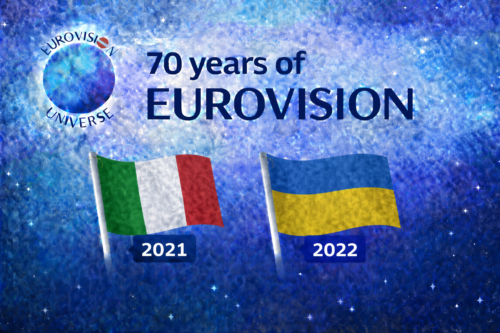
70 years of Eurovision: from squeezed legs to politics

The Eurovision Song Contest is celebrating its 70th anniversary. That is a wonderful milestone. We at Eurovision Universe love diving into the history of the contest. That is why we are taking a closer look at the contests of the past 70 years.

2021

After the cancellation of Eurovision 2020 due to the COVID-19 pandemic, the Song Contest finally returned in 2021. The host city was Rotterdam, the Netherlands. The city that had been ready to welcome Europe a year earlier. Edselia Rombley, Chantal Janzen, Jan Smit, and Nikkie de Jager presented the event. Strict COVID measures were in place, but the organisation managed to fill the Rotterdam Ahoy arena with a live audience during all three shows. A true feat.

Belarus was excluded by the EBU due to political circumstances following the disputed presidential election and the violent crackdown on protesters. Armenia withdrew because of its involvement in the Nagorno-Karabakh war. 

The songs

Many of the artists who were supposed to participate in 2020 were given the chance to try their luck in 2021 after all. It would be too much to name them all. However, the Estonian Uku Suviste is worth mentioning. He had not been given carte blanche, but managed to win the national final. Natalia Gordienko had already competed for Moldova in 2006. Composer Philipp Kirkorov incurred the wrath of the entire fan community during the presentation of Natalia’s song “Sugar” by saying about Conchita Wurst: “IT can sing”. And then there was Senhit: unsuccessful for San Marino in 2011, she did reach the final this time, but not alone. Rapper Flo Rida accompanied her on stage. We will see Senhit again this year, now with another global star: Boy George.

Due to the strict COVID-19 rules, Australian singer Montaigne was not allowed to travel to Rotterdam. During one of the press conferences, this became too much for her and she burst into tears.

The final

A big name represented Belgium: Hooverphonic. Unfortunately, their song “The Wrong Place” did not finish very high. Maltese singer Destiny, a former winner of the Junior Eurovision Song Contest, was considered one of the favorites. She won the semi-final, but finished seventh in the final. Not bad, but a disappointment given the expectations. Daði & Gagnamagnið performed for Iceland, or rather, they didn’t. The year before, they were the top favorites; their “10 Years” was well-received, but not as the expected winner. One of the group members tested positive for Corona, meaning the group was not allowed to perform and a video of one of the rehearsals was shown instead. Then there was Jendrik from Germany. His entry was seen as having no chance. But the act did stand out, with a large walking middle finger on stage.

The Roop for Lithuania did well. But it was the Ukrainian group Go-A that made the biggest impression. Both the music, which was very modern, and the act featuring an entire cardboard forest on stage ensured the group finished fifth. The Norwegian Tix also stood out. Not so much because of his enormous fur coat and his angel wings, but rather because of his story: Tix suffered from Gilles de la Tourette syndrome and had tics (Tix, that is). At the end of the performance, he took off his sunglasses, revealing his tics.

Final Showdown

It was the Swiss Gjon’s Tears who won the jury vote. With the high-pitched vocals in his “Tout l’univers,” he effortlessly received the highest number of points. Ultimately, he finished third. Because he mattered so much in the final showdown, poor Gjon couldn’t go to the toilet. With his legs squeezed together, he followed the scoring, pretending to relax every time the camera was focused on him.

Barbara Pravi from France was also a favorite for the final victory. Although her “Voila”, more French than French, narrowly missed winning the Eurovision Song Contest, Pravi managed to turn her song into a true Eurovision classic in a short time. It is one of the most covered Eurovision songs of recent years.

Måneskin

The Roman rock band Måneskin had won Sanremo. When the results at Eurovision came in, it quickly became clear that the televoters were wild about them. Frontman Damiano David was accused of drug use after the final. Cameras had caught a suspicious movement near the table in the green room. He denied everything, offered to take a drug test, and was cleared. The controversy only seemed to boost the band’s profile.

For Måneskin, it was just the beginning. Within months, they were performing sold-out shows across the United States. “Zitti e buoni” and especially “Beggin'”, an older track, became global streaming hits. Eurovision had rarely produced a winner with this kind of international commercial trajectory.

2022

For the first time since 1991, Italy hosted the Eurovision Song Contest. The Pala Olimpico arena in Turin was the venue. Laura Pausini, Alessandro Cattelan, and Mika hosted the event. Laura Pausini caught attention by suddenly disappearing during the final. Just as suddenly, she came back. Pausini didn’t feel well.

To be honest, the organization was a mess. The large sun in the middle of the stage, in particular, drew attention. Not because it was so beautiful, but because it didn’t work.

The context of the 2022 contest was dominated by one event: Russia’s invasion of Ukraine. The EBU expelled Russia from the contest shortly after the invasion began. There was also a debate about whether Belarus should be expelled as well, given its role in the conflict. It had already been excluded in 2021. Ukraine participated, and the contest quickly took on an emotional and political dimension that was impossible to ignore.

The songs

Mahmood, who had previously finished second, performed as half of a duo for host country Italy. Together with Blanco, he sang “Brividi”. It sounded good on the record, but live it didn’t. For the third time, the group Zdob și Zdub represented Moldova. The band finished seventh with a song about a train journey between Chișinău and Bucharest, and even came second in the televoter vote.

San Marino sent Achille Lauro to the festival with a wild act. It was not enough for a place in the final. The very popular Finnish band The Rasmus did reach the final, but finished 21st there. Rosa Linn, who also co-wrote the Armenian entry this year, did something special. She finished only 20th in the final, yet her “Snap” was the most streamed song. All thanks to TikTok, where the song was used extensively. Cornelia Jakobs from Sweden ended up in 4th place, keeping Sweden a succesful country.

Chanel from Spain was among the favorites. For years, Spain had not performed well, but now the country finished third! Chanel herself was welcomed home as if she had won. Sam Ryder from the United Kingdom also pulled his country out of the slump. Under normal circumstances, he might well have won the 2022 Eurovision Song Contest. With “Spaceman,” the YouTuber was one of the big favorites, and the jury winner.

Kalush Orchestra

The Ukrainian entry had done well at the bookmakers. But the moment Russia invaded Ukraine, it topped the odds, not to leave it anymore. Kalush Orchestra performed “Stefania,” a song that blended hip-hop with Ukrainian folk music, including traditional flute melodies and the hopak dance. The song had been written originally as a tribute to frontman Oleh Psiuk’s mother. The invasion transformed it into something much larger.

Ukraine received the maximum twelve points from the public vote of almost every country participating. The professional juries ranked them fifth, but the enormous outpouring of public support was unstoppable. Ukraine won its fifth Eurovision title by a significant margin.



Related news

Eurovision 2026

Road to Vienna: Ukraine

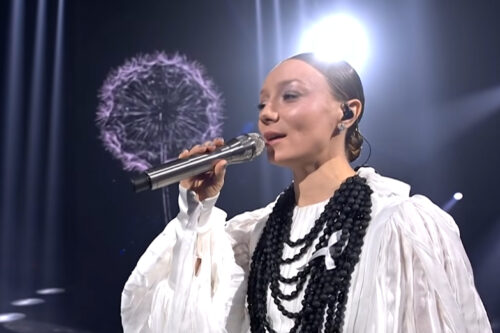
Road to Vienna: Ukraine As the Eurovision Song Contest 2026 in Vienna approaches, we continue our daily spotlight on this year’s contestants. Road to Vienna: Ukraine.   Leléka: Ukraine’s Jazz singer Viktoriia Kornikova, known as Leléka, is a Ukrainian singer, songwriter, and composer based in Berlin. She rose to international attention after winning Vidbir 2026, securing her spot as Ukraine’s representative at the Eurovision Song Contest 2026 in Vienna.                                                                                                                                    Born on 10 November 1990 in Pershotravensk (now Shakhtarske), Ukraine, Leléka developed a passion for the arts at a young age. Initially trained as an actress at the Karpenko-Karyi Theatre University in Kyiv, she performed in stage productions, shaping her storytelling skills—now a key element of her music. Move to Germany and Musical Evolution In 2014, Leléka moved to Germany to focus fully on music. She studied jazz vocals and composition at the Carl Maria von Weber University of Music in Dresden. During this time, she created a unique sound blending jazz with Ukrainian folk influences.                                                                                                                                            In 2016, she founded the Berlin-based band LELÉKA, combining international jazz with Ukrainian folk traditions. The group quickly gained recognition, winning major awards such as the Creole Global Music Contest (2017) and the European Jazz Award Burghausen (2018). Their discography includes Tuman (2019) and Sonce u Serci (2021), the latter earning a German Jazz Award nomination. The band also contributed music to the Ukrainian TV series And There Will Be People. Recent Projects Leléka continued exploring Ukrainian heritage through music with Rizdvo (2023), focused on Christmas traditions, and Kolysanky (2025), inspired by lullabies. She has performed widely across Europe, building a strong presence on the jazz and world music scene. Ridnym: A Song About Change and Renewal    Ridnym explores transformation, resilience, and emotional renewal. The track uses natural imagery and atmospheric storytelling to show that change is inevitable—and often necessary for growth. From Loss to Strength Rather than presenting loss as defeat, “Ridnym” frames it as part of a cycle. The song highlights how accepting difficult moments can lead to healing, strength, and new beginnings. Themes of Identity and Connection At its core, the track focuses on facing fear, overcoming hardship, and staying connected to one’s roots. It emphasizes perseverance and shared experience, creating a strong sense of belonging and continuity. Cultural Depth and Ukrainian Influence The use of Ukrainian-language passages adds authenticity and emotional depth. These elements connect tradition with modern music, enriching the song’s message and broadening its global appeal. Ukraine in the Eurovision Song Contest Ukraine has a distinguished history in the Eurovision Song Contest, having participated since 2003. The country has achieved three victories: in 2004 with Ruslana‘s “Wild Dances,” in 2016 with Jamala‘s “1944,” and in 2022 with Kalush Orchestra‘s “Stefania.” But in fact, Ukraine did always score well. It is the only country that always reached the final! The Bookmakers With a predicted 9th place in the final and a third-place ranking in the semi-finals, Ukraine looks set to qualify with ease once again this year    

Read More »
History
Martijn

70 years of Eurovision: from squeezed legs to politics

The Eurovision Song Contest is celebrating its 70th anniversary. That is a wonderful milestone. We at Eurovision Universe love diving into the history of the contest. That is why we are taking a closer look at the contests of the past 70 years. 2021 After the cancellation of Eurovision 2020 due to the COVID-19 pandemic, the Song Contest finally returned in 2021. The host city was Rotterdam, the Netherlands. The city that had been ready to welcome Europe a year earlier. Edselia Rombley, Chantal Janzen, Jan Smit, and Nikkie de Jager presented the event. Strict COVID measures were in place, but the organisation managed to fill the Rotterdam Ahoy arena with a live audience during all three shows. A true feat. Belarus was excluded by the EBU due to political circumstances following the disputed presidential election and the violent crackdown on protesters. Armenia withdrew because of its involvement in the Nagorno-Karabakh war.  The songs Many of the artists who were supposed to participate in 2020 were given the chance to try their luck in 2021 after all. It would be too much to name them all. However, the Estonian Uku Suviste is worth mentioning. He had not been given carte blanche, but managed to win the national final. Natalia Gordienko had already competed for Moldova in 2006. Composer Philipp Kirkorov incurred the wrath of the entire fan community during the presentation of Natalia’s song “Sugar” by saying about Conchita Wurst: “IT can sing”. And then there was Senhit: unsuccessful for San Marino in 2011, she did reach the final this time, but not alone. Rapper Flo Rida accompanied her on stage. We will see Senhit again this year, now with another global star: Boy George. Due to the strict COVID-19 rules, Australian singer Montaigne was not allowed to travel to Rotterdam. During one of the press conferences, this became too much for her and she burst into tears. The final A big name represented Belgium: Hooverphonic. Unfortunately, their song “The Wrong Place” did not finish very high. Maltese singer Destiny, a former winner of the Junior Eurovision Song Contest, was considered one of the favorites. She won the semi-final, but finished seventh in the final. Not bad, but a disappointment given the expectations. Daði & Gagnamagnið performed for Iceland, or rather, they didn’t. The year before, they were the top favorites; their “10 Years” was well-received, but not as the expected winner. One of the group members tested positive for Corona, meaning the group was not allowed to perform and a video of one of the rehearsals was shown instead. Then there was Jendrik from Germany. His entry was seen as having no chance. But the act did stand out, with a large walking middle finger on stage. The Roop for Lithuania did well. But it was the Ukrainian group Go-A that made the biggest impression. Both the music, which was very modern, and the act featuring an entire cardboard forest on stage ensured the group finished fifth. The Norwegian Tix also stood out. Not so much because of his enormous fur coat and his angel wings, but rather because of his story: Tix suffered from Gilles de la Tourette syndrome and had tics (Tix, that is). At the end of the performance, he took off his sunglasses, revealing his tics. Final Showdown It was the Swiss Gjon’s Tears who won the jury vote. With the high-pitched vocals in his “Tout l’univers,” he effortlessly received the highest number of points. Ultimately, he finished third. Because he mattered so much in the final showdown, poor Gjon couldn’t go to the toilet. With his legs squeezed together, he followed the scoring, pretending to relax every time the camera was focused on him. Barbara Pravi from France was also a favorite for the final victory. Although her “Voila”, more French than French, narrowly missed winning the Eurovision Song Contest, Pravi managed to turn her song into a true Eurovision classic in a short time. It is one of the most covered Eurovision songs of recent years. Måneskin The Roman rock band Måneskin had won Sanremo. When the results at Eurovision came in, it quickly became clear that the televoters were wild about them. Frontman Damiano David was accused of drug use after the final. Cameras had caught a suspicious movement near the table in the green room. He denied everything, offered to take a drug test, and was cleared. The controversy only seemed to boost the band’s profile. For Måneskin, it was just the beginning. Within months, they were performing sold-out shows across the United States. “Zitti e buoni” and especially “Beggin’”, an older track, became global streaming hits. Eurovision had rarely produced a winner with this kind of international commercial trajectory. 2022 For the first time since 1991, Italy hosted the Eurovision Song Contest. The Pala Olimpico arena in Turin was the venue. Laura Pausini, Alessandro Cattelan, and Mika hosted the event. Laura Pausini caught attention by suddenly disappearing during the final. Just as suddenly, she came back. Pausini didn’t feel well. To be honest, the organization was a mess. The large sun in the middle of the stage, in particular, drew attention. Not because it was so beautiful, but because it didn’t work. The context of the 2022 contest was dominated by one event: Russia’s invasion of Ukraine. The EBU expelled Russia from the contest shortly after the invasion began. There was also a debate about whether Belarus should be expelled as well, given its role in the conflict. It had already been excluded in 2021. Ukraine participated, and the contest quickly took on an emotional and political dimension that was impossible to ignore. The songs Mahmood, who had previously finished second, performed as half of a duo for host country Italy. Together with Blanco, he sang “Brividi”. It sounded good on the record, but live it didn’t. For the third time, the group Zdob și Zdub represented Moldova. The band finished seventh with a song about a train journey

Read More »
Follow Us: