🇸🇪 Road to Basel: Sweden

Road to Basel: Sweden

Road to Basel: Sweden. As the Eurovision Song Contest in Basel approaches, we continue our daily spotlight on this year’s contestants. Today, we focus on Sweden.

photo: SVT/Stina Stjernkvist

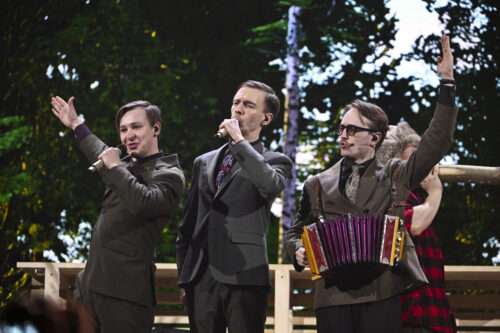
KAJ

KAJ is a music and comedy trio originating from the Swedish-speaking minority in Finland. The group comprises Axel Åhman, Jakob Norrgård, and Kevin Holmström. Known for their humorous and satirical songs, KAJ has gained popularity in both Finland and Sweden. Their unique blend of comedy and music has resonated with audiences, leading to a dedicated fan base and critical acclaim.

“Bara bada bastu” (What does AI say?)

Their Eurovision entry, “Bara bada bastu” (English: “Just Sauna”), is an epadunk song that pays homage to Finnish sauna culture. Performed in the Vörå dialect of Finland Swedish, with a few words in Finnish, the track combines traditional themes with modern musical elements. The song’s catchy melody and playful lyrics have made it a viral sensation, topping Spotify’s global Viral 50 chart and breaking records for the most-streamed Swedish-language song in a single day on the platform.

Melodifestivalen 2025

Sweden selected its Eurovision 2025 representative through the national competition Melodifestivalen 2025. The final took place on March 8, 2025, at the Strawberry Arena in Stockholm. KAJ participated with “Bara bada bastu,” advancing directly to the final from their heat in Malmö. In the final, they secured victory with 164 points, receiving the highest number of votes in the history of the competition—over 4.3 million. This win grants them the honor of representing Sweden in Basel.

  1. Kaj, “Bara bada bastu
  2. Måns Zelmerlöw, “Revolution
  3. Greczula, “Believe Me
  4. Klara Hammarström, “On and On and On
  5. Dolly Style, “Yihaa
  6. John Lundvik, “Voice of the Silent
  7. Scarlet, “Sweet n’ Psycho
  8. Annika Wickihalder, “Life Again
  9. Erik Segerstedt, “Show Me What Love Is
  10. Meira Omar, “Hush Hush
  11. Maja Ivarsson, “Kamikaze Life
  12. Saga Ludvigsson, “Hate You So Much
Who is Arja Saijonmaa?

“Som tango me Arja Saijonmaa”, Kaj sings, but who is Arja Saijonmaa? Arja Saijonmaa, born December 1, 1944, in Mikkeli, Finland, is a renowned singer, political activist, and actress. She gained prominence in Sweden, notably interpreting Mikis Theodorakis’s songs. Her 1979 album “Jag vill tacka livet,” featuring Swedish versions of Violeta Parra’s songs, includes her hit “Jag vill tacka livet.” In 1987, her song “Högt över havet” secured second place in Melodifestivalen. Beyond music, Saijonmaa has been a UNHCR Goodwill Ambassador since 1987.

Sweden in the Eurovision Song Contest

Sweden has a storied history in the Eurovision Song Contest, having participated since 1958. The country boasts seven victories: ABBA‘s “Waterloo” (1974), Herreys‘ “Diggi-Loo Diggi-Ley” (1984), Carola‘s “Fångad av en stormvind” (1991), Charlotte Nilsson‘s “Take Me to Your Heaven” (1999), Loreen‘s “Euphoria” (2012), Måns Zelmerlöw’s “Heroes” (2015), and Loreen’s “Tattoo” (2023). Known for its strong pop music tradition and high-quality entries, Sweden consistently ranks among the top contenders in the competition.
A Random Swedish Entry

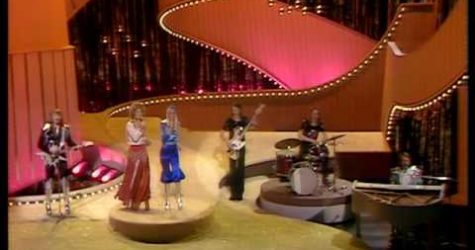
Reflecting on Sweden’s Eurovision history, random.org looks way back, to 1963. Monica Zetterlund was the singer of “En gång I Stockholm”. Unfortunately, the song didn’t gain a single point. However, lyricist Beppe Wolgers grew to world fame. Not for the lyrics of the song but for his role as Ephraim Longstocking, Pippi’s father.

Betting Odds

As of now, KAJ’s “Bara bada bastu” is leading the odds. Austria is close on a 2nd place, but will it be true? Will Kaj bring Sweden the 8th victory? It is a serious possibility. Let’s wait and see!

We eagerly await the Eurovision Song Contest in Basel and look forward to witnessing KAJ’s performance on the grand stage.

Related news

History

70 years of Eurovision: winners with violins

The Eurovision Song Contest is celebrating its 70th anniversary. That is a wonderful milestone. We at Eurovision Universe love diving into the history of the contest. That is why we are taking a closer look at the contests of the past 70 years. 2008 One semi-final was not enough anymore. From then on, semi-finals would be held on Tuesdays and Thursdays. The top ten advanced to the final. Only the host country and the four highest-paying countries (the United Kingdom, France, Germany, and Spain) automatically qualified for the final. Austria withdrew again in 2008, but San Marino and Azerbaijan participated for the first time.  The Eurovision Song Contest was held in the Belgrade Arena in, of course, Belgrade. Željko Joksimović hosted the show, together with Jovana Janković. That went very well. So well, in fact, that the two married in 2012.  The songs Roberto Meloni made a comeback. He had already participated for Latvia in 2007 with Bonaparti.LV; this time, he was the singer of the group Pirates of the Sea. Former winner Charlotte Perelli was also present, as was former runner-up Dima Bilan. A notable returnee was Tarmo Leinatamm. He was once a conductor, but now stood on stage as a ‘singer’. Tarmo was part of a novelty act. The trio Kreisiraadio sang their song “Leto Svet” in grammatically very poor Serbian. Singing was not the gentlemen’s strong suit. The Pirates of the Sea from Latvia had a sort of Jack Sparrow parody, a sing-along. But Ireland went the furthest with Dustin The Turkey: a turkey hand puppet, who tried to collect many points by incorporating the names of all the Eastern European countries into the lyrics. However, the audience had had enough of low-quality novelty acts. They all failed to advance to the final. Germany thought it could achieve success with a big name, the group No Angels. However, it was not enough; the Germans finished 23rd. The Portuguese Vânia Fernandes, who was the favorite with a song by a Croatian, also failed to live up to expectations with a 13th place finish. Expectations were high for Charlotte Perelli, but her “Hero” stalled in 18th place. And the only novelty act that did make it to the final (being from Spain) also finished low: Rodolfo Chikilicuatre, a character with a pompadour and oversized glasses. Armenia and Ukraine, on the other hand, understood things better. Both countries finished high with a swinging number and a solid act. Moreover, both countries sent their big stars: Sirusho for Armenia and Ani Lorak, who had previously missed the boat, represented Ukraine. Dima Bilan For the second time, Dima Bilan competed for Russia. Russia’s big star did not face strong competition this time, as he did in 2006. He won with ease. Bilan had pulled out all the stops for this. He was accompanied by Edvin Marton, who played a genuine Stradivarius. Additionally, figure skater and Olympic champion Evgeni Plushenko appeared during the act, naturally on skates. Even after the Eurovision Song Contest, Dima Bilan remained a big star in Russia, and he still is. 2009 Slovakia returned in 2009, but San Marino did not. Georgia wanted to participate, but was at the time at war with the host nation, Russia. Their song, “We Don’t Wanna Put In,” which according to the band members was not about Vladimir Putin, was rejected by the EBU. Georgia subsequently withdrew. The festival was held in the Olimpiyskiy Arena in Moscow. A new feature was that the semi-finals had a different presenting duo than the final. Natalia Vodianova and Andrey Malakhov were responsible for the semi-finals. Ivan Urgant and singer Alsou (see 2000) hosted the final. The songs Former presenter Sakis Rouvas participated for Greece for the second time. Chiara tried for Malta for the third time. Internationally famous names were once again present at the festival. Susanne Georgi, who represented Andorra, was one half of the Danish duo Me & My, together with her sister. The two had a European hit with “Dub i Dub,” among others. Noa participated for Israel. She was already a big name throughout Europe. Her song, together with the Palestinian Mira Awad, left little to the imagination regarding the lyrics: “There Must Be Another Way.” Patricia Kaas was also already a very big name in Europe. She participated with the ballad “Et s’il fallait le faire.” Arash represented Azerbaijan. This Iranian singer has lived and worked in Sweden his entire life and is well-known there as well. The Danish Brinck was not a celebrity himself, but performed a song by Boyzone frontman Ronan Keating. And the British Jade Ewen sang a song that could have come straight out of a musical. Not surprising, as Andrew Lloyd Webber was the composer. Jade would later become a member of the Sugababes. Also noteworthy was the group from the Netherlands: De Toppers. In their own country, they were mainly known for their individual careers and annual stadium concerts. In the rest of Europe, no one understood what was so appealing about these three somewhat older gentlemen in glitter suits. Sweden sent an opera singer: Malena Ernman. Malena’s daughter would later gain great fame as a climate activist: Greta Thunberg. Once again, Iceland would make a big impression: this time with a simple song, “Is It True?”. Urban Symphony from Estonia was also often considered a possible winner. Ultimately, their song “Rändajad” finished ‘only’ sixth. The Turkish delegation consisted almost entirely of Belgians. Singer Hadise was born in Belgium and lived there as well. She managed to secure a fourth place for Turkey. Alexander Rybak But the entire festival revolved around one person from the very beginning: a boy with a mischievous face and a violin. The Belarusian-born Norwegian Alexander Rybak easily won Melodi Grand Prix, the Norwegian national selection. With his song “Fairytale”, and thus with his violin, Rybak captured the hearts of all of Europe without any effort. Rybak would become inextricably linked to the Eurovision Song Contest: later as a commentator,

Read More »
History
Martijn

70 years of Eurovision: winners with violins

The Eurovision Song Contest is celebrating its 70th anniversary. That is a wonderful milestone. We at Eurovision Universe love diving into the history of the contest. That is why we are taking a closer look at the contests of the past 70 years. 2008 One semi-final was not enough anymore. From then on, semi-finals would be held on Tuesdays and Thursdays. The top ten advanced to the final. Only the host country and the four highest-paying countries (the United Kingdom, France, Germany, and Spain) automatically qualified for the final. Austria withdrew again in 2008, but San Marino and Azerbaijan participated for the first time.  The Eurovision Song Contest was held in the Belgrade Arena in, of course, Belgrade. Željko Joksimović hosted the show, together with Jovana Janković. That went very well. So well, in fact, that the two married in 2012.  The songs Roberto Meloni made a comeback. He had already participated for Latvia in 2007 with Bonaparti.LV; this time, he was the singer of the group Pirates of the Sea. Former winner Charlotte Perelli was also present, as was former runner-up Dima Bilan. A notable returnee was Tarmo Leinatamm. He was once a conductor, but now stood on stage as a ‘singer’. Tarmo was part of a novelty act. The trio Kreisiraadio sang their song “Leto Svet” in grammatically very poor Serbian. Singing was not the gentlemen’s strong suit. The Pirates of the Sea from Latvia had a sort of Jack Sparrow parody, a sing-along. But Ireland went the furthest with Dustin The Turkey: a turkey hand puppet, who tried to collect many points by incorporating the names of all the Eastern European countries into the lyrics. However, the audience had had enough of low-quality novelty acts. They all failed to advance to the final. Germany thought it could achieve success with a big name, the group No Angels. However, it was not enough; the Germans finished 23rd. The Portuguese Vânia Fernandes, who was the favorite with a song by a Croatian, also failed to live up to expectations with a 13th place finish. Expectations were high for Charlotte Perelli, but her “Hero” stalled in 18th place. And the only novelty act that did make it to the final (being from Spain) also finished low: Rodolfo Chikilicuatre, a character with a pompadour and oversized glasses. Armenia and Ukraine, on the other hand, understood things better. Both countries finished high with a swinging number and a solid act. Moreover, both countries sent their big stars: Sirusho for Armenia and Ani Lorak, who had previously missed the boat, represented Ukraine. Dima Bilan For the second time, Dima Bilan competed for Russia. Russia’s big star did not face strong competition this time, as he did in 2006. He won with ease. Bilan had pulled out all the stops for this. He was accompanied by Edvin Marton, who played a genuine Stradivarius. Additionally, figure skater and Olympic champion Evgeni Plushenko appeared during the act, naturally on skates. Even after the Eurovision Song Contest, Dima Bilan remained a big star in Russia, and he still is. 2009 Slovakia returned in 2009, but San Marino did not. Georgia wanted to participate, but was at the time at war with the host nation, Russia. Their song, “We Don’t Wanna Put In,” which according to the band members was not about Vladimir Putin, was rejected by the EBU. Georgia subsequently withdrew. The festival was held in the Olimpiyskiy Arena in Moscow. A new feature was that the semi-finals had a different presenting duo than the final. Natalia Vodianova and Andrey Malakhov were responsible for the semi-finals. Ivan Urgant and singer Alsou (see 2000) hosted the final. The songs Former presenter Sakis Rouvas participated for Greece for the second time. Chiara tried for Malta for the third time. Internationally famous names were once again present at the festival. Susanne Georgi, who represented Andorra, was one half of the Danish duo Me & My, together with her sister. The two had a European hit with “Dub i Dub,” among others. Noa participated for Israel. She was already a big name throughout Europe. Her song, together with the Palestinian Mira Awad, left little to the imagination regarding the lyrics: “There Must Be Another Way.” Patricia Kaas was also already a very big name in Europe. She participated with the ballad “Et s’il fallait le faire.” Arash represented Azerbaijan. This Iranian singer has lived and worked in Sweden his entire life and is well-known there as well. The Danish Brinck was not a celebrity himself, but performed a song by Boyzone frontman Ronan Keating. And the British Jade Ewen sang a song that could have come straight out of a musical. Not surprising, as Andrew Lloyd Webber was the composer. Jade would later become a member of the Sugababes. Also noteworthy was the group from the Netherlands: De Toppers. In their own country, they were mainly known for their individual careers and annual stadium concerts. In the rest of Europe, no one understood what was so appealing about these three somewhat older gentlemen in glitter suits. Sweden sent an opera singer: Malena Ernman. Malena’s daughter would later gain great fame as a climate activist: Greta Thunberg. Once again, Iceland would make a big impression: this time with a simple song, “Is It True?”. Urban Symphony from Estonia was also often considered a possible winner. Ultimately, their song “Rändajad” finished ‘only’ sixth. The Turkish delegation consisted almost entirely of Belgians. Singer Hadise was born in Belgium and lived there as well. She managed to secure a fourth place for Turkey. Alexander Rybak But the entire festival revolved around one person from the very beginning: a boy with a mischievous face and a violin. The Belarusian-born Norwegian Alexander Rybak easily won Melodi Grand Prix, the Norwegian national selection. With his song “Fairytale”, and thus with his violin, Rybak captured the hearts of all of Europe without any effort. Rybak would become inextricably linked to the Eurovision Song Contest: later as a commentator,

Read More »
Follow Us: