Weekly Update

It’s Tuesday, December 16, 2025. Time for another weekly update! The Eurovision world saw major developments this week as the path to Vienna 2026 takes shape. Iceland shocked fans by withdrawing from the Contest, while Poland confirmed its participation despite controversy. Portugal’s plans sparked internal debate, and the EBU’s Eurovision director reached out to address fan concerns. Meanwhile, we got our first glimpse of the Eurovision 2026 stage design. National selection season is also heating up across Europe with new song releases and lineup announcements from Luxembourg to Azerbaijan. And in a bold protest, a Eurovision legend joined the reigning champion in returning their trophies. Here are this week’s top stories:

Eurovision 2026 Updates
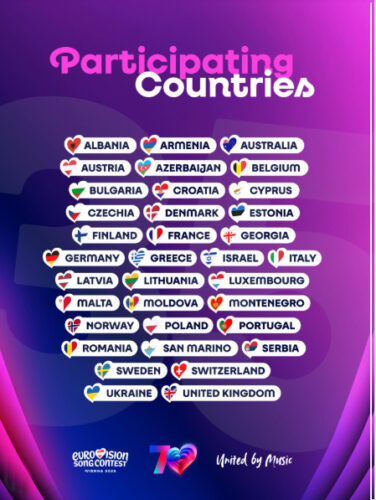
📷 The participating countries. source: Eurovision

🇮🇸 Iceland: Broadcaster Withdraws from Eurovision 2026

Iceland’s broadcaster RÚV has confirmed the country will not take part in Eurovision 2026. RÚV joins a boycott with other nations. The decision comes in protest of the EBU allowing Israel to participate despite the ongoing conflict. Iceland follows Ireland, Spain, the Netherlands, and Slovenia in withdrawing from next year’s contest. This marks the first time Iceland sits out Eurovision since 1998. RÚV’s announcement cited aligning with those countries taking a stand over “events in the Middle East”. Herwith they reflect significant political pressures around the 2026 contest. source: RÚV

🇵🇱 Poland: TVP Confirms Participation Despite Boycotts

Poland’s public broadcaster TVP has decided it will participate in Eurovision 2026. In an official statement, TVP acknowledged “the scale of tensions” surrounding the upcoming edition and said it understands the strong emotions involved. However, the Polish broadcaster is “giving Eurovision a chance” to remain a space filled with music – and only music. TVP noted it is siding with the majority of EBU members by staying in the contest. Poland’s confirmation comes after internal deliberations. The country will move forward with its selection process, aiming to focus on the song rather than politics. se.pl

🇵🇹 Portugal: RTP Stands Firm Amid Boycott Calls

In Portugal, Eurovision has sparked intense debate. Seventeen artists competing in Festival da Canção 2026 (Portugal’s national final) signed a joint statement vowing to boycott Eurovision if they win, unless Israel is barred. They argue they “do not accept complicity in human rights violations,” referencing that Israel was not excluded despite United Nations accusations. In response, broadcaster RTP publicly reaffirmed it will participate in Eurovision 2026 regardless. RTP said that,regardless of the artists’ choices, it will hold Festival da Canção and send an entry to Vienna. This stance drew criticism. Portugal’s only Eurovision winner, Salvador Sobral, blasted RTP’s decision as “political cowardice”. A public petition urging Portugal’s withdrawal has gathered over 22,000 signatures. Despite the backlash, RTP is proceeding with its selection, even hinting it could send an alternate act if the FdC winner declines   source: sabado.pt.

EBU Director Martin Green’s Open Letter to Fans

Eurovision’s Executive Supervisor Martin Green CBE addressed the fan community in an open letter amid the current controversies. He acknowledged many fans’ “strong emotions” over events in the Middle East and calls for a stance. Green emphasized that the Eurovision Song Contest must remain guided by its rules to keep bringing people together. He pledged that all participating broadcasters will be expected to respect the contest’s rules and values, “and if they don’t… we will not tolerate it”. Green also directly addressed fans from Ireland, Spain, Iceland, Slovenia, and the Netherlands, whose broadcasters withdrew. He said their decisions were made “with great dignity” Green affirmed the EBU’s respect for those choices, and expressed hope that those countries “return to the Contest soon”. Despite the divided world, Green wrote, Eurovision will remain a space where “music takes centre stage” and everyone is welcome, whatever their views are. source: eurovision.com

Vienna 2026 Stage Design Unveiled

Host broadcaster ORF has revealed the stage design for Eurovision 2026 in Vienna. The stage, designed by the renowned Florian Wieder, centers on a large curved LED “leaf” as its centerpiece, complemented by a sweeping arc and an intricate golden “construct” structure. The concept draws inspiration from the Viennese Secession art movement, aiming to break conventions and foster radical creativity while preserving Eurovision’s familiar DNA.

ORF describes the design as a blend of organic and modern elements: the Leaf symbolizes new beginnings, the Curved Line conveys musical movement, and the Construct brings architectural order in contrast. Notably, the Green Room will be directly connected to the stage via a walkway, enabling a dramatic “Winner’s Walk” through the audience for the victors. With state-of-the-art LED surfaces and a nod to Vienna’s artistic heritage, the stage promises to be both functional and visually striking as Europe gathers in May. source: eurovision.com

National Finals and Selections
🇱🇺 Luxembourg: Eight Finalist Songs Released

Luxembourg has published the songs competing in its much-anticipated national final return. All eight entries for the Luxembourg Song Contest 2026 (LSC 2026) are now available to hear on RTL’s platforms. Two entries are performed in French and the others in English, with some artists also weaving in lyrics from Portuguese and German. The national final will take place on 24 January 2026 at the Rockhal.  source: rtl.lu

🇲🇩 Moldova: 12 Finalists Chosen After Auditions

In Moldova, the national selection has moved forward with a live audition round. Out of around 36 songs that entered the Selecția Națională 2026 auditions, a jury will pick 5 to 10 songs to advance to the televised final. The audition stage will be held today in Chișinău, was eventful.  The finalists will prepare for Moldova’s national final, which is scheduled for 17 January 2026. This is the first time in years the auditions for the Moldovan national final will not be seen live on TV. source: TRM

🇮🇹 Italy: Sanremo 2026 Artists Lineup Revealed

In Italy, preparations for the iconic Festival di Sanremo 2026 are in full swing. RAI has announced the lineup of 30 big artists who will compete in the 76th edition of Sanremo. The list of performers was unveiled at the end of November. These 30 acts (ranging from Sanremo veterans to fresh faces) will each present an original song.

While the titles of their songs were disclosed on 14 December during the Sanremo Giovani event, we won’t get to hear the actual entries until Sanremo week because, by tradition, the songs remain under wraps until the festival nights. Sanremo 2026 will run from 24–28 February 2026 in the Teatro Ariston. Across five nights, the artists will perform and face a mix of jury and public voting. The winner of Sanremo will, as per Italian custom, earn the right of first refusal to become Italy’s act at Eurovision 2026. source: RAI

🇦🇹 Austria: National Final “Vienna Calling” Brings Public Vote Back

For the first time since 2016, Austria is returning to a public national final to choose its Eurovision entry. ORF announced “Vienna Calling – Wer singt für Österreich?”. It will be a live televised selection show set for 20 February 2026 on ORF 1. In the Ö3 radio breakfast show, the 12 acts competing were revealed: a mix of two bands and ten solo artists from across Austria’s regions.

Notably, Alice Tumler (Eurovision 2015 host) and César Sampson (Eurovision 2018 podium finisher) will host the national final. One song has been made public: “Chingona” by Tamara Flores, a Latin-pop track sung in Spanish. The remaining songs will be evenly split between English and German lyrics, reflecting a bilingual approach in the lineup. Viewers will have a say, combined with a jury. The stakes are high: the winner on Feb 20 will carry Austria’s hopes on home soil at Eurovision. source: ORF

🇦🇿 Azerbaijan: Open Submission for Internal Selection

Broadcaster İctimai TV has launched an open song submission process to find Azerbaijan’s entry for Eurovision 2026. Artists and songwriters are invited to send their songs (with performer applications) to İTV by 18 January 2026. The submitted songs must adhere to Eurovision rules – they cannot exceed 3 minutes in length and must not have been commercially released before 1 September 2025esctoday.com. Applicants are also required to include a short bio and information about themselves with the entryesctoday.com. İTV’s Instagram announcement emphasized that they are selecting both a performer and a song to represent the country in Vienna. Azerbaijan has typically opted for internal selections, and this open call suggests a continued internal choice, with the possibility for any interested artist to become the next representative if they have the right song.  source: ictimaieurovision

Other News
Eurovision Winners Return Trophies in Israel Protest

Two Eurovision champions have taken unprecedented action in solidarity with the Eurovision 2026 boycott. Nemo, the Swiss artist who won Eurovision 2024, announced that they are returning their trophy to the EBU in protest of Israel’s inclusion next year. In a powerful video statement, Nemo argued that Eurovision’s ideals of unity and dignity for all are in “clear conflict” with allowing a state accused of atrocities to participate. They said the contest has been used to “soften the image” of a country facing serious allegations, calling the situation “deeply wrong” and no longer feeling the trophy belongs on his shelf. source: Instagram

📷 Nemo photo: EBU

Following Nemo’s stand, Ireland’s Charlie McGettigan, who won Eurovision 1994, revealed he will also hand back his trophy in solidarity. McGettigan, now 72, admitted that he needs to locate his 1994 trophy first. However, he intends to return it as soon as he finds it. The Ireland-Palestine Solidarity Campaign praised his decision as “great solidarity” with the Palestinian people. source: ipsc
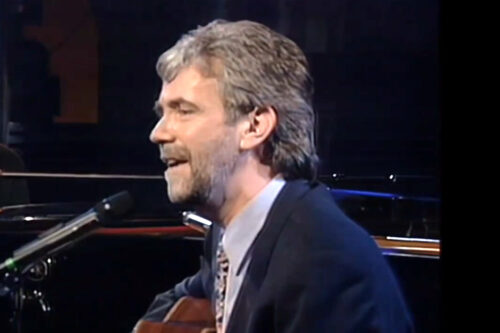
📷 Charlie McGettigan in 1994

The EBU responded to these developments by expressing sadness at Nemo’s choice but “respect for the deeply held views” they expressed. These protests by Eurovision winners underscore the unprecedented division in the fan community. The protests put further pressure on the EBU, which has thus far stood by its rule that the contest remain non-political.

Related news

Eurovision 2026

Vienna 12 points: from a princess to a winner

Several countries start their second rehearsals. As we still don’t have access to the rehearsals, we will do something else. Per entry, we highlight one subject and give you some more information. That can be something about the artist, the song, the lyrics or even something completely different.  Moldova – Satoshi, “Viva Moldova!” Running order: 1 | Rehearsal: 10:30–10:55 CEST “Viva Moldova,” sing the Moldovans this year, and they do so in Romanian. That language choice carries more history than many Eurovision viewers may realise. Romanian was long officially referred to as Moldovan in Moldova, a name rooted mainly in Soviet and post-Soviet politics rather than linguistic difference. In practice, Moldovan and Romanian are the same language, with regional accents and vocabulary, as Dutch in the Netherlands and Flanders can differ without becoming separate languages. In 2013, Moldova’s Constitutional Court ruled that the Declaration of Independence, which names Romanian, prevails. Since 2023, the constitution also refers to Romanian. At Eurovision, “Viva Moldova” therefore is not only a patriotic slogan from Chișinău, but also a clear political and linguistic statement today.Oddly enough, Satoshi uses a Japanese name. He explains why in an interview with us. Another interview with Satoshi came after the rehearsals:  Sweden – FELICIA, “My System” Running order: 2 | Rehearsal: 11:05–11:30 CEST Fröken Snusk was one of Sweden’s most talked-about pop phenomena: a pink-balaclava-wearing persona built on anonymity, provocative lyrics and the booming EPA-dunk sound. The act broke through online and became known far beyond its party-music niche, helped by Melodifestivalen 2024 and a strong visual identity that made the mask as recognisable as the songs. Behind the original Fröken Snusk was Felicia Eriksson, who later left the project and moved forward under her own name. That background gives today’s Eurovision rehearsal extra context. Still wearing a mask, Felicia is no longer hiding inside the Fröken Snusk character, but the confidence, controversy and curiosity around that chapter still follow her onto the Vienna stage.  Croatia – LELEK, “Andromeda” Running order: 3 | Rehearsal: 11:40–12:05 CEST Andromeda is a figure from Greek mythology: a princess, not a goddess, and the daughter of King Cepheus and Queen Cassiopeia. After her mother angered the sea nymphs by boasting of Andromeda’s beauty, Poseidon sent a monster to ravage the kingdom. To save her people, Andromeda was chained to a rock as a sacrifice, until Perseus rescued her. In Lelek’s song, that story becomes more than a myth. Andromeda can be read as a symbol of women treated as bodies, victims or bargaining chips by forces bigger than themselves. The title also carries a cosmic meaning: Andromeda is a constellation and gives its name to the Andromeda Galaxy. That link to the stars fits the song’s imagery of escape, distance and survival. For contemporary listeners, her ancient story adds emotional weight. Lelek’s Andromeda is therefore both a mythological princess and a powerful metaphor for pain, resistance and hard-won freedom.  Greece – Akylas, “Ferto” Running order: 4 | Rehearsal: 12:20–12:45 CEST Akylas has become an important figure for Greece’s LGBTQ+ community because his visibility is not presented as a side note, but as part of his artistic identity. Long before Eurovision, his music and stage presence were linked to queer self-expression, emotional honesty and performances at events such as Athens Pride. That background gives his Eurovision journey a broader meaning. In a country where queer voices have often had to fight for space in mainstream culture, Akylas represents a new kind of openness. He has also spoken about homophobic bullying and the support he received after winning the Greek selection, turning his own experiences into a message for younger LGBTQ+ people. For many Greek fans, his participation is therefore not only about a song. It is also about recognition: seeing someone openly queer carry Greek pop culture onto one of Europe’s biggest stages with confidence, vulnerability and a distinctly Greek sound.  Portugal – Bandidos do Cante, “Rosa” Running order: 5 | Rehearsal: 12:55–13:20 CEST Cante Alentejano is the traditional polyphonic singing of the Alentejo, the vast southern Portuguese region between the Tagus and the Algarve. It is usually performed by groups of amateur singers, without instruments. It’s in a slow, collective style built around two vocal lines and distinctive melodies. UNESCO added it to the Representative List of the Intangible Cultural Heritage of Humanity in 2014. In Portugal’s 2026 Eurovision entry, Bandidos do Cante bring that tradition into a pop setting. “Rosa” does not simply borrow a regional sound; it places the warmth of group singing at the centre of the song. That gives the entry a clear Portuguese identity. The voices suggest landscape, memory and togetherness, while the modern arrangement makes the old tradition accessible to a Eurovision audience that may be hearing Cante Alentejano for the first time, without losing its roots. You can read more about the meaningful lyrics here.  Georgia – Bzikebi, “On Replay” Running order: 6 | Rehearsal: 13:30–13:55 CEST Junior Eurovision has often been a first step towards bigger stages, but only four winners have later returned as Eurovision contestants. The Tolmachevy Sisters opened that path: after winning Junior Eurovision 2006 for Russia with “Vesenniy Jazz”, they represented Russia in 2014 with “Shine”, finishing seventh. Destiny followed Malta’s 2015 Junior victory with “Not My Soul” by taking “Je Me Casse” to Eurovision 2021, also ending seventh. Georgia’s Iru, winner as part of Candy in 2011, returned solo in 2023 with “Echo”. This year, Georgia completes the circle again with Bzikebi, the buzzing trio who won Junior Eurovision 2008 with “Bzz..” and now step onto the adult contest stage with “On Replay”. Their return adds a nostalgic layer to 2026. Still, one milestone remains untouched: no artist or group has ever won both Junior Eurovision and the Eurovision Song Contest. That unresolved challenge keeps the crossover story fascinating.

Read More »
Eurovision 2026
Martijn

Vienna 12 points: from a princess to a winner

Several countries start their second rehearsals. As we still don’t have access to the rehearsals, we will do something else. Per entry, we highlight one subject and give you some more information. That can be something about the artist, the song, the lyrics or even something completely different.  Moldova – Satoshi, “Viva Moldova!” Running order: 1 | Rehearsal: 10:30–10:55 CEST “Viva Moldova,” sing the Moldovans this year, and they do so in Romanian. That language choice carries more history than many Eurovision viewers may realise. Romanian was long officially referred to as Moldovan in Moldova, a name rooted mainly in Soviet and post-Soviet politics rather than linguistic difference. In practice, Moldovan and Romanian are the same language, with regional accents and vocabulary, as Dutch in the Netherlands and Flanders can differ without becoming separate languages. In 2013, Moldova’s Constitutional Court ruled that the Declaration of Independence, which names Romanian, prevails. Since 2023, the constitution also refers to Romanian. At Eurovision, “Viva Moldova” therefore is not only a patriotic slogan from Chișinău, but also a clear political and linguistic statement today.Oddly enough, Satoshi uses a Japanese name. He explains why in an interview with us. Another interview with Satoshi came after the rehearsals:  Sweden – FELICIA, “My System” Running order: 2 | Rehearsal: 11:05–11:30 CEST Fröken Snusk was one of Sweden’s most talked-about pop phenomena: a pink-balaclava-wearing persona built on anonymity, provocative lyrics and the booming EPA-dunk sound. The act broke through online and became known far beyond its party-music niche, helped by Melodifestivalen 2024 and a strong visual identity that made the mask as recognisable as the songs. Behind the original Fröken Snusk was Felicia Eriksson, who later left the project and moved forward under her own name. That background gives today’s Eurovision rehearsal extra context. Still wearing a mask, Felicia is no longer hiding inside the Fröken Snusk character, but the confidence, controversy and curiosity around that chapter still follow her onto the Vienna stage.  Croatia – LELEK, “Andromeda” Running order: 3 | Rehearsal: 11:40–12:05 CEST Andromeda is a figure from Greek mythology: a princess, not a goddess, and the daughter of King Cepheus and Queen Cassiopeia. After her mother angered the sea nymphs by boasting of Andromeda’s beauty, Poseidon sent a monster to ravage the kingdom. To save her people, Andromeda was chained to a rock as a sacrifice, until Perseus rescued her. In Lelek’s song, that story becomes more than a myth. Andromeda can be read as a symbol of women treated as bodies, victims or bargaining chips by forces bigger than themselves. The title also carries a cosmic meaning: Andromeda is a constellation and gives its name to the Andromeda Galaxy. That link to the stars fits the song’s imagery of escape, distance and survival. For contemporary listeners, her ancient story adds emotional weight. Lelek’s Andromeda is therefore both a mythological princess and a powerful metaphor for pain, resistance and hard-won freedom.  Greece – Akylas, “Ferto” Running order: 4 | Rehearsal: 12:20–12:45 CEST Akylas has become an important figure for Greece’s LGBTQ+ community because his visibility is not presented as a side note, but as part of his artistic identity. Long before Eurovision, his music and stage presence were linked to queer self-expression, emotional honesty and performances at events such as Athens Pride. That background gives his Eurovision journey a broader meaning. In a country where queer voices have often had to fight for space in mainstream culture, Akylas represents a new kind of openness. He has also spoken about homophobic bullying and the support he received after winning the Greek selection, turning his own experiences into a message for younger LGBTQ+ people. For many Greek fans, his participation is therefore not only about a song. It is also about recognition: seeing someone openly queer carry Greek pop culture onto one of Europe’s biggest stages with confidence, vulnerability and a distinctly Greek sound.  Portugal – Bandidos do Cante, “Rosa” Running order: 5 | Rehearsal: 12:55–13:20 CEST Cante Alentejano is the traditional polyphonic singing of the Alentejo, the vast southern Portuguese region between the Tagus and the Algarve. It is usually performed by groups of amateur singers, without instruments. It’s in a slow, collective style built around two vocal lines and distinctive melodies. UNESCO added it to the Representative List of the Intangible Cultural Heritage of Humanity in 2014. In Portugal’s 2026 Eurovision entry, Bandidos do Cante bring that tradition into a pop setting. “Rosa” does not simply borrow a regional sound; it places the warmth of group singing at the centre of the song. That gives the entry a clear Portuguese identity. The voices suggest landscape, memory and togetherness, while the modern arrangement makes the old tradition accessible to a Eurovision audience that may be hearing Cante Alentejano for the first time, without losing its roots. You can read more about the meaningful lyrics here.  Georgia – Bzikebi, “On Replay” Running order: 6 | Rehearsal: 13:30–13:55 CEST Junior Eurovision has often been a first step towards bigger stages, but only four winners have later returned as Eurovision contestants. The Tolmachevy Sisters opened that path: after winning Junior Eurovision 2006 for Russia with “Vesenniy Jazz”, they represented Russia in 2014 with “Shine”, finishing seventh. Destiny followed Malta’s 2015 Junior victory with “Not My Soul” by taking “Je Me Casse” to Eurovision 2021, also ending seventh. Georgia’s Iru, winner as part of Candy in 2011, returned solo in 2023 with “Echo”. This year, Georgia completes the circle again with Bzikebi, the buzzing trio who won Junior Eurovision 2008 with “Bzz..” and now step onto the adult contest stage with “On Replay”. Their return adds a nostalgic layer to 2026. Still, one milestone remains untouched: no artist or group has ever won both Junior Eurovision and the Eurovision Song Contest. That unresolved challenge keeps the crossover story fascinating.

Read More »
Follow Us: