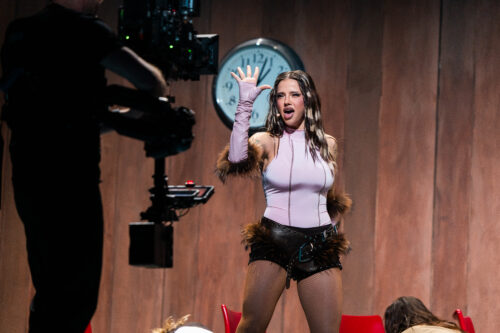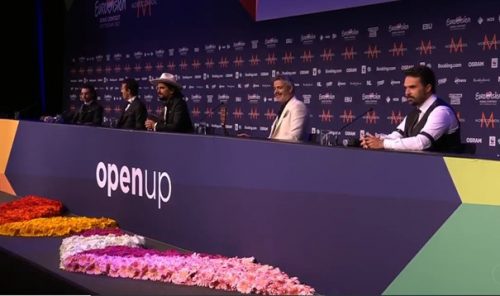
Live blog: press conferences may 15th

Also today, we will carefully follow the press conferences. New today is that, at the end of every press conference, the participant has to draw whether he or she will perform in the first or the second half of the final show.

14:37tBlas Cantó explains that he does not like to sing in the morning and is therefore happy that the Eurovision song contest takes place in the evening. Blas thinks being present at the Eurovision song contest is fantastic. He loves the people he has met. During the day he sleeps a lot, because he has to be ready to take the stage. He will also go to sleep after this press conference. Cantó indicates that he does not have too high expectations because he wants to be surprised. It is difficult for him to control the emotions in the song. Sometimes he feels he must be a machine, when he thinks about the words he sings he gets too emotional. About the 6 meter high moon on stage, the delegation leader says it is there because everything in the performance revolves around Blas. There is a conversation between Blas and someone he has lost. The moon symbolizes the course of life. When asked, Blas Cantó says he would have no idea what to do instead of sing; he has always sung, that is his life. Spain performs in the 1st half of the final.

14.10 British contestant James Newman sat in an ice bath in the hotel, as did Wim Hof in the clip of James’ last year. James’ brother John is a huge fan of his. He is afraid that James is the better singer. James will collaborate with Spanish participant Blas Cantó in the near future. Newman wants to party to his song. At the moment James is recording a new single, in his hotel room! An album will also be released at the end of the year. The United Kingdom will play in the 1st half of the final. 

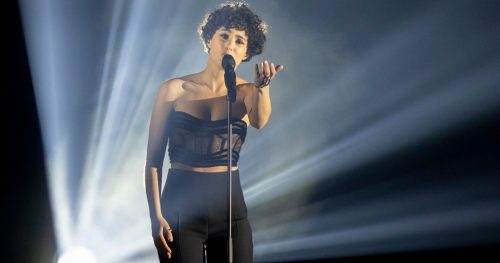
13.46 Barbara Pravi, the French singer, is feeling great. The little things that still needed to be changed were now going well. When asked by a Serbian journalist (Barbara has a Serbian grandfather), she answers that she wants to go to Serbia with her grandfather and wants to make the trip he used to make. Barbara Pravi, the No. 1 bookmaker, doesn’t feel like pressure. All she will have to do is sing and perform. For the rest, it is in the hands of the public. Barbara is proud because she is young, the words she sings are the words of a 28-year-old woman. The music may be geared more towards older listeners, but the song is aimed at everyone. She hopes that winning the Eurovision song contest will not change her. France performs in the second half of the final. 
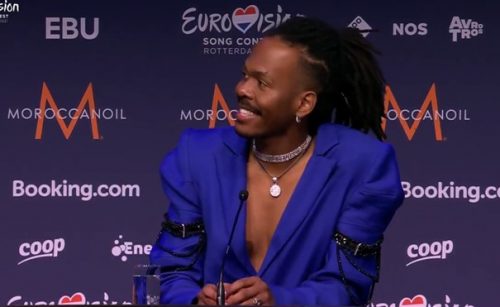
13.26 Jeangu Macrooy indicates that he was now a bit more used to the stage. Jeangu explains that the small change in clothes has to do with the proverb, “I’m half a cent, so you can’t break me.” He has a chain with a silver half penny around his neck. It’s nice to see our dreams come true. So it is very inspiring to be there with my brother. He wants to say about himself as a queer that he hopes that one day he can convey that there is such a thing as acceptance and emancipation of who you are. What you see is inspired by the Chinese culture, and that of the Creole culture. Jeangu reveals that all the voices on the band are also sung by his two backing vocals. Jeangu is looking forward to a performance with an audience. Performing with restrictions is no problem for him, because everyone is used to that now. 
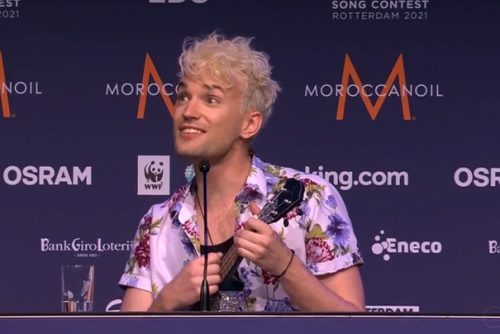
12:56 Today Jendrik is not very happy with himself. He thought he didn’t seem very natural today. He was too focused on camera exposure sites. Alexandra Wolfslast, delegation leader, was however satisfied. Jendrik reacted somewhat angrily when asked to play the ukulele because he was not prepared for it. Yet he sang a sweet tribute to presenter Samya. Jendrik had the idea of a clip and therefore got 18 broken washing machines. He didn’t buy them but managed to get them for free via ebay. Jendrik is not very careful with his ukulele, but it has never fallen. He does have a spare one. There is only one way of preparation for his energetic performance: practice, practice, practice. Germany performs in the second half of the final. 
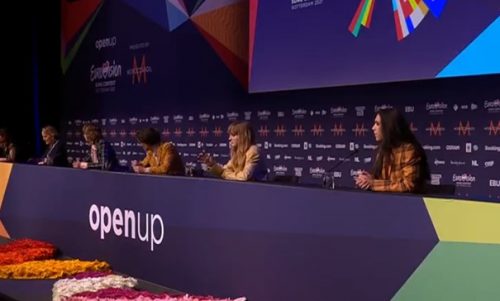
12.33 The Italian band Måneskin says that they are happy that the Dutch director exactly fulfills the wishes of the Italian team. The message of the song is “Be yourself, express yourself despite negative reactions”. The band wanted to go to San Remo with this song because it is atypical for the festival. At first they didn’t think of Eurovision, but once they entered they hoped they would win. Having many followers on social media will not help because they are mainly Italians. However, they feel very supported by the followers. The choice for the act is not to use graphics. The band is the message.
Italy performs in the 2nd half of the final. 
Related news

History

🇦🇹 Austria in the Eurovision Song Contest, part 3

📷 Waterloo & Robinson This year’s Eurovision Song Contest has been won by Austria. It was the 57th Austrian entry. Reason for us to go back to all the Austrian entries in history! For the third episode, we will look back at the seventies. Austria entered the top-5 twice. They also sang in a minority language. They also had some deviant entries. 1971 – Marianne Mendt – Musik Austria returned to the Eurovision Song Contest in 1971 after a two-year absence . They boycotted the Franco-ruled 1969 contest and protesting the four-way tie of 1969 by skipping 1970. Marianne Mendt performed “Musik.” Mendt, a jazz-pop singer from Vienna, delivered the song in her native Viennese German dialect, a rarity at Eurovision. Richard Schönherz and Manuel Rigoni composed “Musik” and also wrote its lyrics, giving the entry a swinging, soulful vibe about the power of music. At the contest in Dublin, “Musik” scored 66 points and finished 16th out of 18 entries. 1972 – The Milestones – Falter im Wind The Austrian rock band The Milestones represented the country at the Eurovision Song Contest 1972 in Edinburgh with “Falter im Wind” (“Butterfly in the Wind”). Composers Richard Schönherz and Manuel Rigoni teamed up with lyricist Heinz Unger to craft this folk-tinged pop song addressed to a butterfly. They reflected on life’s impermanence. The song’s gentle melody and rich harmonies resonated with the juries. Austria earned 100 points and achieved 5th place. This was the country’s best Eurovision result since its 1966 victory, showcasing a high point for Austria before a brief mid-’70s withdrawal from the contest. 1976 – Waterloo & Robinson – My Little World After skipping the contest from 1973 to 1975, Austria returned at the Eurovision Song Contest 1976 in The Hague with pop duo Waterloo & Robinson performing “My Little World.” The duo was already popular at home. They presented an upbeat, feel-good song that songwriter Gerhard Heinz had composed. Sung in English, “My Little World” celebrates the simple joys of love and life. It earned 80 points and reached 5th place, matching Austria’s 1972 success. This strong result followed ORF’s mid-’70s Eurovision hiatus, which was reportedly due to dissatisfaction with the contest’s scoring system at the time. 1977 – Die Schmetterlinge – Boom Boom Boomerang Austria took a daring turn at the Eurovision Song Contest 1977 in London with the group Schmetterlinge and their song “Boom Boom Boomerang.” Known for their political cabaret style, Schmetterlinge delivered a satirical pop performance. In that performance they lampooned the commercial music industry, complete with nonsense “international” lyrics and zany on-stage antics. Group members like Georg “Schurli” Herrnstadt and Willi Resetarits wrote the music, while Lukas Resetarits provided tongue-in-cheek lyrics skewering formulaic pop. Despite the bold concept and humor, the entry earned only 11 points, placing 17th out of 18 countries. Notably, two members of Schmetterlinge had been part of The Milestones (Austria’s 1972 act), adding a nod to the country’s earlier Eurovision experience. 1978 – Springtime – Mrs. Caroline Robinson In 1978, Austria was represented by Springtime, a pop trio formed by brothers Walter and Gerhard Markel with bassist Norbert Niedermayer. Their song “Mrs. Caroline Robinson” was an upbeat schlager-pop number with a humorous twist. It was written by the trio themselves. The lyrics told the quirky story of Caroline Robinson, the “top-witch of this town” who captivates everyone with her charm. Springtime’s performance in Paris was fun and energetic, and the song even became a hit at home. It earned a gold record in Austria. On the Eurovision scoreboard, however, “Mrs. Caroline Robinson” earned 14 points, finishing 15th out of 20 countries in 1978. 1979 – Christina Simon – Heute in Jerusalem Austria’s 1979 entry was the soulful “Heute in Jerusalem” (“Today in Jerusalem”), performed by singer Christina Simon. Christina had a background as a jazz vocalist. This reflective ballad was composed by Peter Wolf with lyrics by Austrian artist André Heller. Musically it blended contemporary jazz and blues influences, and its lyrics carried a heartfelt plea for peace in Jerusalem. That was quite fittingly, the contest was held in Jerusalem just days after the Israel–Egypt peace treaty. Simon’s emotional delivery brought gravitas to the stage. Unfortunately, “Heute in Jerusalem” received only 5 points, ending up in 18th (last) place at the 1979 contest. 

Read More »
History
Martijn

🇦🇹 Austria in the Eurovision Song Contest, part 3

📷 Waterloo & Robinson This year’s Eurovision Song Contest has been won by Austria. It was the 57th Austrian entry. Reason for us to go back to all the Austrian entries in history! For the third episode, we will look back at the seventies. Austria entered the top-5 twice. They also sang in a minority language. They also had some deviant entries. 1971 – Marianne Mendt – Musik Austria returned to the Eurovision Song Contest in 1971 after a two-year absence . They boycotted the Franco-ruled 1969 contest and protesting the four-way tie of 1969 by skipping 1970. Marianne Mendt performed “Musik.” Mendt, a jazz-pop singer from Vienna, delivered the song in her native Viennese German dialect, a rarity at Eurovision. Richard Schönherz and Manuel Rigoni composed “Musik” and also wrote its lyrics, giving the entry a swinging, soulful vibe about the power of music. At the contest in Dublin, “Musik” scored 66 points and finished 16th out of 18 entries. 1972 – The Milestones – Falter im Wind The Austrian rock band The Milestones represented the country at the Eurovision Song Contest 1972 in Edinburgh with “Falter im Wind” (“Butterfly in the Wind”). Composers Richard Schönherz and Manuel Rigoni teamed up with lyricist Heinz Unger to craft this folk-tinged pop song addressed to a butterfly. They reflected on life’s impermanence. The song’s gentle melody and rich harmonies resonated with the juries. Austria earned 100 points and achieved 5th place. This was the country’s best Eurovision result since its 1966 victory, showcasing a high point for Austria before a brief mid-’70s withdrawal from the contest. 1976 – Waterloo & Robinson – My Little World After skipping the contest from 1973 to 1975, Austria returned at the Eurovision Song Contest 1976 in The Hague with pop duo Waterloo & Robinson performing “My Little World.” The duo was already popular at home. They presented an upbeat, feel-good song that songwriter Gerhard Heinz had composed. Sung in English, “My Little World” celebrates the simple joys of love and life. It earned 80 points and reached 5th place, matching Austria’s 1972 success. This strong result followed ORF’s mid-’70s Eurovision hiatus, which was reportedly due to dissatisfaction with the contest’s scoring system at the time. 1977 – Die Schmetterlinge – Boom Boom Boomerang Austria took a daring turn at the Eurovision Song Contest 1977 in London with the group Schmetterlinge and their song “Boom Boom Boomerang.” Known for their political cabaret style, Schmetterlinge delivered a satirical pop performance. In that performance they lampooned the commercial music industry, complete with nonsense “international” lyrics and zany on-stage antics. Group members like Georg “Schurli” Herrnstadt and Willi Resetarits wrote the music, while Lukas Resetarits provided tongue-in-cheek lyrics skewering formulaic pop. Despite the bold concept and humor, the entry earned only 11 points, placing 17th out of 18 countries. Notably, two members of Schmetterlinge had been part of The Milestones (Austria’s 1972 act), adding a nod to the country’s earlier Eurovision experience. 1978 – Springtime – Mrs. Caroline Robinson In 1978, Austria was represented by Springtime, a pop trio formed by brothers Walter and Gerhard Markel with bassist Norbert Niedermayer. Their song “Mrs. Caroline Robinson” was an upbeat schlager-pop number with a humorous twist. It was written by the trio themselves. The lyrics told the quirky story of Caroline Robinson, the “top-witch of this town” who captivates everyone with her charm. Springtime’s performance in Paris was fun and energetic, and the song even became a hit at home. It earned a gold record in Austria. On the Eurovision scoreboard, however, “Mrs. Caroline Robinson” earned 14 points, finishing 15th out of 20 countries in 1978. 1979 – Christina Simon – Heute in Jerusalem Austria’s 1979 entry was the soulful “Heute in Jerusalem” (“Today in Jerusalem”), performed by singer Christina Simon. Christina had a background as a jazz vocalist. This reflective ballad was composed by Peter Wolf with lyrics by Austrian artist André Heller. Musically it blended contemporary jazz and blues influences, and its lyrics carried a heartfelt plea for peace in Jerusalem. That was quite fittingly, the contest was held in Jerusalem just days after the Israel–Egypt peace treaty. Simon’s emotional delivery brought gravitas to the stage. Unfortunately, “Heute in Jerusalem” received only 5 points, ending up in 18th (last) place at the 1979 contest. 

Read More »
Follow Us: