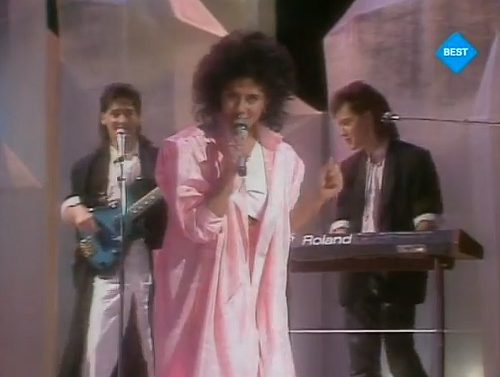
Blast from the past: Ireland 1986

We know a lot about Eurovision and we want to share this knowledge with you! Therefore we’d like to bring you a blast from the past. Today, we go back to 1986, when Luv Bug represented Ireland with the song “You Can Count On Me”.

Ireland in the Eurovision Song Contest

Ireland debuted at Eurovision in 1965 and holds a joint‑record seven victories, remaining the only country to win three in a row (1992–94). The winners are: Dana (1970); Johnny Logan (1980, 1987); Linda Martin (1992); Niamh Kavanagh (1993); Paul Harrington & Charlie McGettigan (1994); and Eimear Quinn (1996). Johnny Logan also wrote Linda Martin’s winner. Recent scores show a mixed picture: in 2024, Bambie Thug’s “Doomsday Blue” placed 6th in the Grand Final with 278 points after finishing 3rd in its semi‑final;  in 2025, Emmy’s “Laika Party” finished 13th in Semi‑Final Two and did not qualify; and in 2023, Wild Youth missed the final. Before that, Ireland last qualified in 2018, when Ryan O’Shaughnessy’s “Together” finished 16th; 2021–23 all ended in the semi‑finals. The 2024 result was Ireland’s best in more than two decades overall for the country. Despite fluctuations, Ireland remains the record‑holder with seven wins, now shared with Sweden.
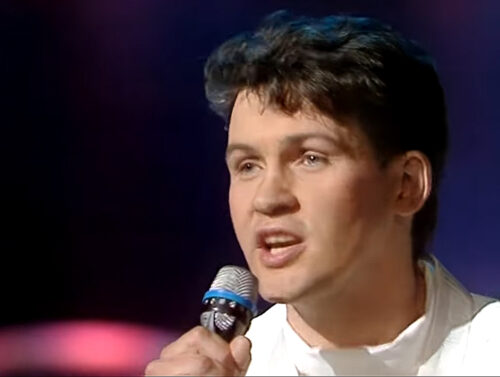
Johnny Logan

Irish National Song Contest 1986

The Irish national final in those days was called The Irish National Song Contest. A total of 9 different artists each sang one song. The contest was held on 30 March in the RTVÉ TV Studios in Dublin. Eleven regional juries made the decision.

  1. Fran Meen, “Here In The Night“, 12 pts, 5th
  2. Luv Bug, “You Can Count On Me“, 35 pts, 1st
  3. Theresa Lowe, “Only The Lonely Survive“, 2 pts, 8th
  4. The Rockets, “Life In The City“, 3 pts, 6th
  5. John Spillane & Mandy Murphy, “Ringo“, 3 pts, 6th
  6. Honor Heffernan, “Honey“, 19 pts, 3rd
  7. Loudest Whisper, “Johnny, Where Are You Now?“, 22 pts, 2nd
  8. Linda Martin, “If I Can Change Your Mind“, 14 pts, 4th
  9. Jim Walsh, “I’ll Never Love Again“, 0 pts, 9th


Linda Martin was already a familiar name in 1986, because 2 years earlier she represented Ireland. With a song penned by Johnny Logan, she would win in 1992. Also this year’s song was written by Johnny.

Luv Bug

Luv Bug is an Irish pop group from Newry, County Down. The group was formed in 1977 by siblings June, Hugh and Max Cunningham with Ricky Meyler and Majella Grant. After early charting singles on the Irish charts, including a cover of “Red Light Spells Danger” (1984) and the homegrown hits “Look at Me I’m Dancing” and “On My Own,” the band won Ireland’s National Song Contest in March 1986. That victory sent Luv Bug to the Eurovision Song Contest in Bergen with “You Can Count On Me” , a career‑defining moment that reached Ireland’s top five. Formed as a teenage band, Luv Bug turned professional in 1982 with manager Michael Magill and built a reputation as a live act across Ireland. Through the late 1980s the group toured widely, released an album, and briefly recorded for Virgin under the alias Heart of Ice. They returned to Ireland’s Eurosong in 1992 with “Close to Your Heart,” placing behind eventual Eurovision winner Linda Martin. Notably, Luv Bug were the first Northern group to represent the Republic at Eurovision. Today they remain an in‑demand live act for events and festivals across Ireland.


You Can Count On Me

“You Can Count On Me” was Ireland’s 1986 Eurovision entry, performed by Luv Bug and written by Kevin Sheerin. The song placed fourth in Bergen with 96 points after winning Ireland’s National Song Contest earlier that spring on RTÉ television. Musically it’s classic mid‑’80s pop: a bright, radio‑friendly ballad with synth gloss and warm backing vocals, balanced by Noel Kelehan’s live orchestral arrangement. The hook‑driven chorus and polished production helped it stand out on the night, and the single became an Irish hit, reaching No. 2 in Ireland

Related news

Eurovision 2026

Road to Vienna: San Marino

Road to Vienna: San Marino As the Eurovision Song Contest 2026 in Vienna approaches, we continue our daily spotlight on this year’s contestants. Today, we focus on San Marino. Senhit: From Musical Theatre to Eurovision Senhit, born in Bologna to Eritrean parents, began her career in musical theatre. In the late 1990s and early 2000s, she toured across Europe, starring in major productions like Fame, The Lion King, and Hair. These roles helped shape her stage presence and artistic foundation. Transition to Music and Early Albums After returning to Italy, Senhit launched her music career with her debut album Senit (2006), followed by Un tesoro è necessariamente nascosto (2007). In 2009, she released So High, an English-language album that highlighted her versatility in pop music. Eurovision Debut and Career Growth Senhit represented San Marino at Eurovision 2011 with “Stand By.” Although she didn’t reach the final, it boosted her international visibility. She continued releasing singles, rebranded from “Senit” to “Senhit” in 2014, and built a strong presence in the European club scene, leading to her EP Hey Buddy (2017). Eurovision Comeback and “Adrenalina” Success Selected again for Eurovision 2020, her entry was canceled due to the pandemic. She returned in 2021 with “Adrenalina” featuring Flo Rida, reaching the final and gaining major streaming success, becoming a fan favorite across Europe. Recent Music and Projects In recent years, Senhit has stayed active with new releases, live performances, and hosting San Marino’s national selection show. Her 2024 album Dangerous includes collaborations with top international producers and artists. Eurovision 2026 Return In 2026, Senhit won San Marino’s national selection with “Superstar,” featuring Boy George. This marks her third Eurovision appearance, reinforcing her status as a dynamic and enduring figure in the pop music scene. Boy George: An 80s Icon Boy George, born George Alan O’Dowd in London, grew up in a working-class Irish family. Inspired by glam rock legend David Bowie, he developed a passion for music early on. His bold, androgynous style and love for performance quickly made him stand out in London’s vibrant club scene. Culture Club and Global Fame In 1981, Boy George formed Culture Club, achieving worldwide success with hits like “Do You Really Want to Hurt Me” and “Karma Chameleon.” By the mid-1980s, the band became one of the biggest pop acts globally, winning a Grammy Award and multiple Brit Awards. His unique voice and image made him a defining figure of 80s pop culture. Challenges and Solo Career Facing personal struggles and addiction, Culture Club disbanded in 1986. Boy George later rebuilt his career with solo hits like “Everything I Own” and “The Crying Game.” He also explored DJing and dance music while becoming an influential LGBTQ+ icon. Reinvention and Creative Projects From the late 1990s onward, Boy George reunited with Culture Club and expanded into new ventures. He created the musical Taboo and remained active in music, television, and writing. Despite legal setbacks, he achieved sobriety and continued evolving as an artist. Legacy and Continued Success In the 2010s, Boy George appeared on shows like The Voice UK and toured globally. With over 50 million records sold, he is widely recognized as a trailblazer in music, fashion, and LGBTQ+ representation. Eurovision 2026 Debut In 2026, Boy George joins Senhit to represent San Marino at the Eurovision Song Contest 2026 with their song “Superstar.” This marks his long-awaited Eurovision debut, adding a new chapter to his legendary career. Superstar: Confidence and Self-Expression Set in a vibrant nightlife atmosphere, “Superstar” explores a world where appearances matter. People try to impress, creating a sense of pressure and expectation. In contrast, one person stands out—not for confidence, but for insecurity and self-doubt. From Insecurity to Empowerment As the song develops, it shifts into a powerful message of growth. The lyrics encourage stepping out of the shadows and embracing who you are. What starts as uncertainty transforms into confidence and self-belief. Strength Through Struggles References to heartbreak and emotional scars add depth to the story. The song highlights that true confidence doesn’t come from perfection, but from overcoming challenges and learning from past experiences. Embracing Individuality The second verse celebrates uniqueness, describing the individual as strong and valuable. Differences are not flaws—they are strengths. The journey through hardship becomes a source of inner power. Be Your Own Superstar At its heart, “Superstar” is about authenticity. It reminds listeners that being a “superstar” isn’t about fame, but about self-acceptance. By embracing imperfections and showing your true self, you turn vulnerability into confidence. San Marino in the Eurovision Song Contest San Marino has participated in the Eurovision Song Contest since 2008. Despite being one of the smallest countries in the competition, it has made notable contributions, with its best result in 2019 when Serhat‘s “Say Na Na Na” finished 19th in the Grand Final. But when we talk about San Marino, we must not forget Valentina Monetta. She participated for her country on no less than four occasions. She was, in 2014, the first one to bring San Marino to the final. The Bookmakers Ranked 27th with the bookmakers, San Marino faces an uphill battle — will they defy the odds and make it to the final?    

Read More »
Eurovision 2026
Anja Kroeze

Road to Vienna: San Marino

Road to Vienna: San Marino As the Eurovision Song Contest 2026 in Vienna approaches, we continue our daily spotlight on this year’s contestants. Today, we focus on San Marino. Senhit: From Musical Theatre to Eurovision Senhit, born in Bologna to Eritrean parents, began her career in musical theatre. In the late 1990s and early 2000s, she toured across Europe, starring in major productions like Fame, The Lion King, and Hair. These roles helped shape her stage presence and artistic foundation. Transition to Music and Early Albums After returning to Italy, Senhit launched her music career with her debut album Senit (2006), followed by Un tesoro è necessariamente nascosto (2007). In 2009, she released So High, an English-language album that highlighted her versatility in pop music. Eurovision Debut and Career Growth Senhit represented San Marino at Eurovision 2011 with “Stand By.” Although she didn’t reach the final, it boosted her international visibility. She continued releasing singles, rebranded from “Senit” to “Senhit” in 2014, and built a strong presence in the European club scene, leading to her EP Hey Buddy (2017). Eurovision Comeback and “Adrenalina” Success Selected again for Eurovision 2020, her entry was canceled due to the pandemic. She returned in 2021 with “Adrenalina” featuring Flo Rida, reaching the final and gaining major streaming success, becoming a fan favorite across Europe. Recent Music and Projects In recent years, Senhit has stayed active with new releases, live performances, and hosting San Marino’s national selection show. Her 2024 album Dangerous includes collaborations with top international producers and artists. Eurovision 2026 Return In 2026, Senhit won San Marino’s national selection with “Superstar,” featuring Boy George. This marks her third Eurovision appearance, reinforcing her status as a dynamic and enduring figure in the pop music scene. Boy George: An 80s Icon Boy George, born George Alan O’Dowd in London, grew up in a working-class Irish family. Inspired by glam rock legend David Bowie, he developed a passion for music early on. His bold, androgynous style and love for performance quickly made him stand out in London’s vibrant club scene. Culture Club and Global Fame In 1981, Boy George formed Culture Club, achieving worldwide success with hits like “Do You Really Want to Hurt Me” and “Karma Chameleon.” By the mid-1980s, the band became one of the biggest pop acts globally, winning a Grammy Award and multiple Brit Awards. His unique voice and image made him a defining figure of 80s pop culture. Challenges and Solo Career Facing personal struggles and addiction, Culture Club disbanded in 1986. Boy George later rebuilt his career with solo hits like “Everything I Own” and “The Crying Game.” He also explored DJing and dance music while becoming an influential LGBTQ+ icon. Reinvention and Creative Projects From the late 1990s onward, Boy George reunited with Culture Club and expanded into new ventures. He created the musical Taboo and remained active in music, television, and writing. Despite legal setbacks, he achieved sobriety and continued evolving as an artist. Legacy and Continued Success In the 2010s, Boy George appeared on shows like The Voice UK and toured globally. With over 50 million records sold, he is widely recognized as a trailblazer in music, fashion, and LGBTQ+ representation. Eurovision 2026 Debut In 2026, Boy George joins Senhit to represent San Marino at the Eurovision Song Contest 2026 with their song “Superstar.” This marks his long-awaited Eurovision debut, adding a new chapter to his legendary career. Superstar: Confidence and Self-Expression Set in a vibrant nightlife atmosphere, “Superstar” explores a world where appearances matter. People try to impress, creating a sense of pressure and expectation. In contrast, one person stands out—not for confidence, but for insecurity and self-doubt. From Insecurity to Empowerment As the song develops, it shifts into a powerful message of growth. The lyrics encourage stepping out of the shadows and embracing who you are. What starts as uncertainty transforms into confidence and self-belief. Strength Through Struggles References to heartbreak and emotional scars add depth to the story. The song highlights that true confidence doesn’t come from perfection, but from overcoming challenges and learning from past experiences. Embracing Individuality The second verse celebrates uniqueness, describing the individual as strong and valuable. Differences are not flaws—they are strengths. The journey through hardship becomes a source of inner power. Be Your Own Superstar At its heart, “Superstar” is about authenticity. It reminds listeners that being a “superstar” isn’t about fame, but about self-acceptance. By embracing imperfections and showing your true self, you turn vulnerability into confidence. San Marino in the Eurovision Song Contest San Marino has participated in the Eurovision Song Contest since 2008. Despite being one of the smallest countries in the competition, it has made notable contributions, with its best result in 2019 when Serhat‘s “Say Na Na Na” finished 19th in the Grand Final. But when we talk about San Marino, we must not forget Valentina Monetta. She participated for her country on no less than four occasions. She was, in 2014, the first one to bring San Marino to the final. The Bookmakers Ranked 27th with the bookmakers, San Marino faces an uphill battle — will they defy the odds and make it to the final?    

Read More »
Follow Us: