Austria in the Eurovision Song Contest, part 2

This year’s Eurovision Song Contest has been won by Austria. It was the 57th Austrian entry. Reason for us to go back to all the Austrian entries in history!

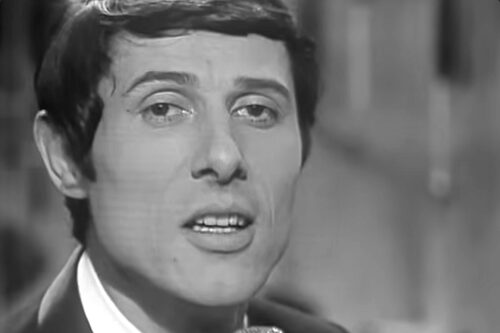
For the second episode, we will look back at the time when the world was still in black and white. Austria found the perfect contestant: Udo Jürgens. It took him three times to win, but he did it!

1963: Carmela Corren – “Vielleicht geschieht ein Wunder”

Carmela Corren, an Israeli-born singer and actress, represented Austria in 1963 with the song “Vielleicht geschieht ein Wunder” (“Maybe a Miracle Will Happen”). It’s a romantic schlager-style ballad. The song was composed by Erwin Halletz with lyrics by Peter Wehle and performed in German (with a few lines in English). It earned a respectable 16 points, finishing 7th out of 16 countries. Corren was already known in the early 1960s German-language music scene and had appeared in films, bringing star quality to Austria’s Eurovision stage. In 1962, she did an attempt to represent Germany.

1964: Udo Jürgens – “Warum nur, warum?”

Austria’s 1964 entry “Warum nur, warum?” was written and performed by Udo Jürgens. He was a renowned Austrian singer-songwrite. He would later win Eurovision 1966. The song is in an elegant chanson style, with Jürgens poignantly asking “why” bad things happen in life. Jürgens composed both the music and lyrics himself. The song scored 11 points and placed 6th among 16 entries, establishing Jürgens as a strong Eurovision contender.

1965: Udo Jürgens – “Sag ihr, ich lass sie grüßen”

For the second year in a row, Udo Jürgens represented Austria at Eurovision. In 1965 he performed “Sag ihr, ich lass sie grüßen” (“Tell Her I Send My Greetings”). The ballad brims with longing and emotional depth. Jürgens again composed the music, with Frank Bohlen supplying the lyrics. The song earned 16 points and finished 4th out of 18 entries in Naples. That strong result further cemented Udo Jürgens’s status as one of Austria’s leading pop stars and set up his ultimate Eurovision triumph the following year.

1966: Udo Jürgens – “Merci, Chérie”

In 1966, Udo Jürgens finally clinched Austria’s first Eurovision victory with “Merci, Chérie”. This entry, an earnest orchestral ballad of farewell, was composed by Jürgens with lyrics co-written by actor Thomas Hörbiger. Performed in Luxembourg, “Merci, Chérie” stood out for its emotional melody and gracious theme. It scored 31 points, securing the 1st-place trophy against 17 competitors. Already a beloved entertainer (Jürgens’s career spanned 50 years and over 1,000 songs), his Eurovision win solidified his legacy in Austrian pop music history.

1967: Peter Horten – “Warum es hunderttausend Sterne gibt”

As host country in 1967, Austria fielded singer‑guitarist Peter Horten (the stage name of Peter Müller) on home soil. His entry, “Warum es hunderttausend Sterne gibt” (“Why Are There a Hundred Thousand Stars”), delivered a gentle pop‑schlager ballad with philosophical lyrics about life’s mysteries. Kurt Peche composed the song, and Karin Bognar wrote the words. Despite its reflective tone, the entry earned just 2 points, finishing 14th of 17 contestants. Horten, a classically trained singer, began his career in the Vienna Boys’ Choir. He remained active in music throughout the years despite this low Eurovision placing.

1968: Karel Gott – “Tausend Fenster”

In 1968, Austria chose Karel Gott as its representative to perform its Eurovision entry. Fans dubbed the Czech pop superstar the “Golden Voice of Prague”. His song “Tausend Fenster” (“Thousand Windows”) is a dramatic chanson (a sweeping orchestral ballad). Eurovision veteran Udo Jürgens composed it, and Walter Brandin wrote the lyrics. The song about urban loneliness earned only 2 points, placing 13th out of 17 in London in the contest. Although Eurovision 1968 disappointed Austria, Karel Gott’s illustrious career continued. He released over 100 albums and enjoyed decades of fame across Europe.

Next time, we will look at the next episode of Austria in the Eurovision Song Contest.

Related news

Eurovision 2026

Road to Vienna: Malta

As the Eurovision Song Contest 2026 in Vienna approaches, we continue our daily spotlight on this year’s contestants. Road to Vienna: Malta.   Aidan: Inspired by the Eurovision Song Contest Aidan Cassar, known professionally as Aidan, is a Maltese singer-songwriter born on 17 December 1999 in Żejtun, Malta. Inspired by the Eurovision Song Contest from a young age, he set his sights on performing on that stage early in life. His breakthrough came in 2018 when he competed in the Malta Eurovision Song Contest (MESC) with “Dai Laga,” finishing fourth and launching his music career. Breakthrough and Growing Success Following his debut, Aidan steadily built a strong fanbase in Malta. In 2021, he gained major attention with “Naħseb Fik,” his first Maltese-language song, which won Video of the Year at the Lovin Malta Social Media Awards. His music blends modern pop with Mediterranean influences, helping him stand out in the local music scene. National Fame with “Ritmu” Aidan’s popularity surged in 2022 with “Ritmu,” which finished second at MESC but became a chart-topping hit in Malta. The song’s success established him as one of the country’s leading young pop artists, known for catchy tracks and energetic performances. Challenges and Continued Growth In 2023, Aidan faced a setback when he was disqualified from MESC due to rule violations related to social media promotion. Despite this, he released his debut album This Is Aidan, followed by the EP Wild, Wild, Wild in 2025. By then, he had achieved over ten number-one hits in Malta, confirming his status as a top pop act. Bella: A Multilingual Song with Global Appeal “Bella” is an emotional pop song performed in English, Maltese, and Italian. This multilingual approach gives the track a unique identity while making it accessible to an international audience. By blending languages, Aidan adds depth and authenticity to the song’s storytelling. What “Bella” Is About At its core, “Bella” explores love without closure. The lyrics focus on heartbreak, confusion, and the lingering feelings that remain after a relationship ends. Instead of anger, the song highlights vulnerability and honesty, making it relatable to anyone who has experienced unfinished love. Deep emotional attachment that refuses to fade In “Bella,” Aidan weaves together a story of deep emotional attachment that refuses to fade, even after a relationship has ended. The song captures that lingering sense of longing—where memories and feelings remain vivid despite time or distance. At the same time, there is a quiet but powerful sense of hope running through the track, as it imagines the possibility of reconnecting and finding love again in the future. This emotional narrative is further enriched by the song’s multilingual nature, where English, Maltese, and Italian blend seamlessly. The use of the word “Bella,” meaning “beautiful,” becomes both a symbol of affection and a central emotional thread, enhancing the song’s intimacy and universal appeal Malta in the Eurovision Song Contest Malta has participated in the Eurovision Song Contest 36 times since its debut in 1971. The country’s best results came in 2002 and 2005, achieving second place with Ira Losco‘s “7th Wonder” and Chiara‘s “Angel,” respectively. The most recent success was in 2021, when Destiny‘s “Je me casse” was 7th, after she won her semifinal. The Bookmakers Malta currently stands at a respectable 14th place with the bookmakers—surely a place in the final is within reach. But could a top ten finish be next?  

Read More »
Eurovision 2026
Anja Kroeze

Road to Vienna: Malta

As the Eurovision Song Contest 2026 in Vienna approaches, we continue our daily spotlight on this year’s contestants. Road to Vienna: Malta.   Aidan: Inspired by the Eurovision Song Contest Aidan Cassar, known professionally as Aidan, is a Maltese singer-songwriter born on 17 December 1999 in Żejtun, Malta. Inspired by the Eurovision Song Contest from a young age, he set his sights on performing on that stage early in life. His breakthrough came in 2018 when he competed in the Malta Eurovision Song Contest (MESC) with “Dai Laga,” finishing fourth and launching his music career. Breakthrough and Growing Success Following his debut, Aidan steadily built a strong fanbase in Malta. In 2021, he gained major attention with “Naħseb Fik,” his first Maltese-language song, which won Video of the Year at the Lovin Malta Social Media Awards. His music blends modern pop with Mediterranean influences, helping him stand out in the local music scene. National Fame with “Ritmu” Aidan’s popularity surged in 2022 with “Ritmu,” which finished second at MESC but became a chart-topping hit in Malta. The song’s success established him as one of the country’s leading young pop artists, known for catchy tracks and energetic performances. Challenges and Continued Growth In 2023, Aidan faced a setback when he was disqualified from MESC due to rule violations related to social media promotion. Despite this, he released his debut album This Is Aidan, followed by the EP Wild, Wild, Wild in 2025. By then, he had achieved over ten number-one hits in Malta, confirming his status as a top pop act. Bella: A Multilingual Song with Global Appeal “Bella” is an emotional pop song performed in English, Maltese, and Italian. This multilingual approach gives the track a unique identity while making it accessible to an international audience. By blending languages, Aidan adds depth and authenticity to the song’s storytelling. What “Bella” Is About At its core, “Bella” explores love without closure. The lyrics focus on heartbreak, confusion, and the lingering feelings that remain after a relationship ends. Instead of anger, the song highlights vulnerability and honesty, making it relatable to anyone who has experienced unfinished love. Deep emotional attachment that refuses to fade In “Bella,” Aidan weaves together a story of deep emotional attachment that refuses to fade, even after a relationship has ended. The song captures that lingering sense of longing—where memories and feelings remain vivid despite time or distance. At the same time, there is a quiet but powerful sense of hope running through the track, as it imagines the possibility of reconnecting and finding love again in the future. This emotional narrative is further enriched by the song’s multilingual nature, where English, Maltese, and Italian blend seamlessly. The use of the word “Bella,” meaning “beautiful,” becomes both a symbol of affection and a central emotional thread, enhancing the song’s intimacy and universal appeal Malta in the Eurovision Song Contest Malta has participated in the Eurovision Song Contest 36 times since its debut in 1971. The country’s best results came in 2002 and 2005, achieving second place with Ira Losco‘s “7th Wonder” and Chiara‘s “Angel,” respectively. The most recent success was in 2021, when Destiny‘s “Je me casse” was 7th, after she won her semifinal. The Bookmakers Malta currently stands at a respectable 14th place with the bookmakers—surely a place in the final is within reach. But could a top ten finish be next?  

Read More »
Follow Us: