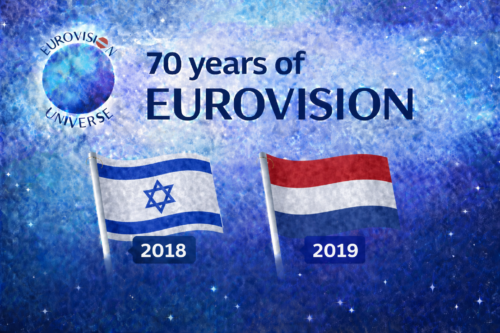
70 years of Eurovision: #metoo and TikTok

The Eurovision Song Contest is celebrating its 70th anniversary. That is a wonderful milestone. We at Eurovision Universe love diving into the history of the contest. That is why we are taking a closer look at the contests of the past 70 years.

2018

For the first time, Portugal was the host. The festival was held in the Altice Arena in Lisbon. Sílvia Alberto, Daniela Ruah, Catarina Furtado, and Filomena Cautela presented the event. Russia participated again, and there were no dropouts this year.

The songs

She didn’t really make a return, but the Russian Julia Samoylova, who missed out on participation last year, was present this time. Julia sang “I Won’t Break,” requiring a lot of support from the backing vocals. She herself did not really have a strong voice. Waylon participated for the Netherlands again. And a real Eurovision winner was also present: Alexander Rybak. Using virtual reality, he won the semi-final with “That’s How You Write A Song,” but finished in fifteenth place in the final.

In the final, we saw the Ukrainian Mélovin with a burning fake piano. Cesár Sampson, who had already performed twice as a backing vocalist for Bulgaria, now represented his native Austria. His gospel song “Nobody But You” won with the professional jury and finished third overall.

The British SuRie had also sung in backing choirs before, but for Belgium. At Eurovision In Concert in Amsterdam, she already showed she was capable of a lot: she stepped in for her French colleague who was ill. During the live broadcast, someone snatched the microphone out of her hands. She bravely continued singing, although she later admitted to having been traumatized by it.

Michael Schulte brought Germany back to the top with a song about his father. The duo Ermal Meta and Fabrizio Moro finished high for Italy. And then there was Eleni Foureira for Cyprus. No one expected a high position for her “Fuego”. But once the act had been seen after the first rehearsals, Foureira slowly but surely rose to first place with the bookmakers.

Netta

She alternated that first place with the Israeli Netta. Immediately after the release of her song “Toy,” she was first in the odds and never relinquished that spot. With an act featuring Japanese lucky cats, the so-called Maneki Neko, she ultimately took first place. Israel achieved its fourth victory with Netta.

“Toy” was a song with a message. Inspired by the #metoo movement, Netta sang that she was not a toy. Remarkably: although Netta’s charisma and performance had contributed significantly to the victory, composer Doron Medalie felt that Netta owed everything to him. Apparently, he hadn’t quite understood his own lyrics.

2019

The Eurovision Song Contest was held in Israel for the third time. That caused some trouble. The festival could not be held in Jerusalem, and the favorite in the national final had to withdraw due to rehearsals on Shabbat. That was a problem in itself. The EBU had to force things. “Either rehearsals take place on Shabbat, or the festival will not be held in Israel,” they stated. It eventually became the Expo Hall in Tel Aviv, and Erez Tal, Bar Refaeli, Assi Azar, and Lucy Ayoub were allowed to present it.

Bulgaria did not participate. Ukraine did have an entry, but it turned out that the singer had performed on the peninsula after Russia’s annexation of Crimea. She was disqualified, and after the tightening of national rules, no one in Ukraine was willing to participate anymore. So, no Ukrainian entry.

For some strange reason, we are not allowed to embed the second semifinal. However, you can watch it here.

The songs

Serhat participated again for San Marino, but this time he did make it to the final. Joci Pápai did not make it to the final for Hungary.

Sergey Lazarev represented Russia for the second time. When the song “Scream” was released, Sergey immediately lost his number one spot with the bookmakers. With a slick act, Lazarev managed to secure third place once again. Tamara Todevska was the woman who once started Macedonia’s streak of failed finals. Now, she did the reverse. She even won at the jury. With a seventh place, her “Proud” achieved the best score ever for North Macedonia.

One of the favorites was gospel singer John Lundvik. With “Too Late For Love” for Sweden, he was expected to be in the running for the final victory up to the very last moment. However, he did not receive enough points from the televoter. Keiino did; this Norwegian group even received the highest score from the televoter. And if you are wondering what that special chant is that can be heard in the song “Spirit In The Sky”: it is the joik, a traditional song of the Sami, who live in Northern Scandinavia.

Iceland came up with a BDSM act. The group Hatari made no secret of being pro-Palestinian. During the scoring, they showed a Palestinian shawl.

For France, the androgynous Bilal Hassani was the contender. He received many hateful comments in his own country regarding his feminine appearance and his open homosexuality. This prompted presenter Assi Azar to stand up for Bilal and offer him encouragement online.

Switzerland was back after many lean years: Luca Hänni came with the swinging “She Got Me”. The song was originally going to be called “Dirty Dancing”, but that was not allowed. Copyrights were attached to this title.

Watch the final here.

Duncan Laurence

It was Common Linnet Ilse Delange who discovered Duncan Laurence through The Voice. Now it was also Ilse who suggested him as a contestant and guided him in Tel Aviv. She had devised the act. “Arcade” was the overwhelming favorite in the odds. However, the performance was quite disappointing during the first rehearsals. A new light was needed, and the camera work had to be different. Ilse Delange repeatedly informed the press present that ‘little things’ needed to be improved. This was to conceal the fact that there was panic within the Dutch team.

Although Duncan Laurence won neither the televoting nor the professional jury, he was still the overall winner. Soon, “Arcade” was one of the most streamed songs. It was used on TikTok and a hit in the USA.

Related news

Eurovision 2026

Road to Vienna: Denmark

Road to Vienna: Denmark As the Eurovision Song Contest 2026 in Vienna approaches, we continue our daily spotlight on this year’s contestants. Road to Vienna: Denmark Søren Torpegaard Lund: Danish Pop & Musical Star Søren Torpegaard Lund, born on 23 December 1998 in Gudme, Denmark, discovered his passion for performing at a young age. Drawn to musical theatre, he gained early acting experience in short films before pursuing formal training. From 2016 to 2019, he studied at Den Danske Scenekunstskole in Fredericia, earning a bachelor’s degree in musical performance. This foundation shaped his versatile career as both a singer and stage performer. Breakthrough in Music Lund gained national recognition in 2023 through Dansk Melodi Grand Prix with his ballad “Lige her.” Although he didn’t reach the final, his vocal performance stood out. He later released an English version, “In a Perfect World,” expanding his international reach. In the same year, Lund debuted as a songwriter with “Stor Kunst,” collaborating with Tim Schou. He continued building momentum in 2024 with tracks like “De ting, jeg hvisker” and “En dreng som mig,” the latter connected to the musical Matador. His debut EP Øjesten, released in October 2024, blends contemporary pop with theatrical storytelling. Theatre Career & Achievements Alongside his music career, Lund has established himself in Danish musical theatre. He has performed in major productions including Oliver!, Grease, Dirty Dancing, Kinky Boots, and Jersey Boys. A career highlight came in 2022 when he played Tony in West Side Story at the Copenhagen Opera House. His talent earned him the prestigious Reumert Talent Prize in 2021. Lund has also performed at major national events, including Denmark’s televised Christmas show and Queen Margrethe II’s 50-year jubilee concert. In addition to stage work, he has appeared in the TV series Sommerdahl. As an openly queer artist, he received a nomination for Artist of the Year at the Danish Rainbow Awards 2024. Eurovision 2026 Journey In 2026, Lund returned to Dansk Melodi Grand Prix with “Før vi går hjem,” an upbeat pop track he co-wrote. His dynamic performance secured victory, beating strong competition and earning him the chance to represent Denmark at the Eurovision Song Contest 2026 in Vienna. Musical Style & Future Outlook Søren Torpegaard Lund’s music combines modern pop with theatrical influences, reflecting his stage background. With growing recognition in both music and theatre, he is quickly becoming one of Denmark’s most promising artists to watch on the international stage. Før Vi Går Hjem: Love, Temptation & Late-Night Emotion “Før Vi Går Hjem” explores the intensity of attraction and the struggle between emotion and self-control. The song follows someone who knows they should walk away, yet feels pulled back by a powerful connection. This push-and-pull creates a relatable narrative about love, temptation, and emotional conflict. Capturing the Nightlife Atmosphere Set against a vivid late-night backdrop, the track highlights the thrill of living in the moment. It focuses on passion, closeness, and the excitement of giving in to feelings—despite the awareness that regret may come later. This tension between pleasure and consequence drives the song’s emotional depth. A Relatable Modern Love Story With its mix of intimacy and realism, the song delivers a compelling message about connection and the fragile balance between excitement and reality—making it resonate strongly with today’s listeners. Denmark in the Eurovision Song Contest Denmark has participated in the Eurovision Song Contest 52 times since its debut in 1957. The country has won the contest three times: in 1963 with “Dansevise” by Grethe and Jørgen Ingmann, in 2000 with “Fly on the Wings of Love” by the Olsen Brothers, and in 2013 with “Only Teardrops” by Emmelie de Forest.  The Bookmakers Denmark is currently ranked 3rd by the bookmakers and 2nd in the semi-final odds — things are looking strong. Søren says he’s coming to win… and who knows, he just might.        

Read More »
History
Martijn

70 years of Eurovision: #metoo and TikTok

The Eurovision Song Contest is celebrating its 70th anniversary. That is a wonderful milestone. We at Eurovision Universe love diving into the history of the contest. That is why we are taking a closer look at the contests of the past 70 years. 2018 For the first time, Portugal was the host. The festival was held in the Altice Arena in Lisbon. Sílvia Alberto, Daniela Ruah, Catarina Furtado, and Filomena Cautela presented the event. Russia participated again, and there were no dropouts this year. The songs She didn’t really make a return, but the Russian Julia Samoylova, who missed out on participation last year, was present this time. Julia sang “I Won’t Break,” requiring a lot of support from the backing vocals. She herself did not really have a strong voice. Waylon participated for the Netherlands again. And a real Eurovision winner was also present: Alexander Rybak. Using virtual reality, he won the semi-final with “That’s How You Write A Song,” but finished in fifteenth place in the final. In the final, we saw the Ukrainian Mélovin with a burning fake piano. Cesár Sampson, who had already performed twice as a backing vocalist for Bulgaria, now represented his native Austria. His gospel song “Nobody But You” won with the professional jury and finished third overall. The British SuRie had also sung in backing choirs before, but for Belgium. At Eurovision In Concert in Amsterdam, she already showed she was capable of a lot: she stepped in for her French colleague who was ill. During the live broadcast, someone snatched the microphone out of her hands. She bravely continued singing, although she later admitted to having been traumatized by it. Michael Schulte brought Germany back to the top with a song about his father. The duo Ermal Meta and Fabrizio Moro finished high for Italy. And then there was Eleni Foureira for Cyprus. No one expected a high position for her “Fuego”. But once the act had been seen after the first rehearsals, Foureira slowly but surely rose to first place with the bookmakers. Netta She alternated that first place with the Israeli Netta. Immediately after the release of her song “Toy,” she was first in the odds and never relinquished that spot. With an act featuring Japanese lucky cats, the so-called Maneki Neko, she ultimately took first place. Israel achieved its fourth victory with Netta. “Toy” was a song with a message. Inspired by the #metoo movement, Netta sang that she was not a toy. Remarkably: although Netta’s charisma and performance had contributed significantly to the victory, composer Doron Medalie felt that Netta owed everything to him. Apparently, he hadn’t quite understood his own lyrics. 2019 The Eurovision Song Contest was held in Israel for the third time. That caused some trouble. The festival could not be held in Jerusalem, and the favorite in the national final had to withdraw due to rehearsals on Shabbat. That was a problem in itself. The EBU had to force things. “Either rehearsals take place on Shabbat, or the festival will not be held in Israel,” they stated. It eventually became the Expo Hall in Tel Aviv, and Erez Tal, Bar Refaeli, Assi Azar, and Lucy Ayoub were allowed to present it. Bulgaria did not participate. Ukraine did have an entry, but it turned out that the singer had performed on the peninsula after Russia’s annexation of Crimea. She was disqualified, and after the tightening of national rules, no one in Ukraine was willing to participate anymore. So, no Ukrainian entry. For some strange reason, we are not allowed to embed the second semifinal. However, you can watch it here. The songs Serhat participated again for San Marino, but this time he did make it to the final. Joci Pápai did not make it to the final for Hungary. Sergey Lazarev represented Russia for the second time. When the song “Scream” was released, Sergey immediately lost his number one spot with the bookmakers. With a slick act, Lazarev managed to secure third place once again. Tamara Todevska was the woman who once started Macedonia’s streak of failed finals. Now, she did the reverse. She even won at the jury. With a seventh place, her “Proud” achieved the best score ever for North Macedonia. One of the favorites was gospel singer John Lundvik. With “Too Late For Love” for Sweden, he was expected to be in the running for the final victory up to the very last moment. However, he did not receive enough points from the televoter. Keiino did; this Norwegian group even received the highest score from the televoter. And if you are wondering what that special chant is that can be heard in the song “Spirit In The Sky”: it is the joik, a traditional song of the Sami, who live in Northern Scandinavia. Iceland came up with a BDSM act. The group Hatari made no secret of being pro-Palestinian. During the scoring, they showed a Palestinian shawl. For France, the androgynous Bilal Hassani was the contender. He received many hateful comments in his own country regarding his feminine appearance and his open homosexuality. This prompted presenter Assi Azar to stand up for Bilal and offer him encouragement online. Switzerland was back after many lean years: Luca Hänni came with the swinging “She Got Me”. The song was originally going to be called “Dirty Dancing”, but that was not allowed. Copyrights were attached to this title. Watch the final here. Duncan Laurence It was Common Linnet Ilse Delange who discovered Duncan Laurence through The Voice. Now it was also Ilse who suggested him as a contestant and guided him in Tel Aviv. She had devised the act. “Arcade” was the overwhelming favorite in the odds. However, the performance was quite disappointing during the first rehearsals. A new light was needed, and the camera work had to be different. Ilse Delange repeatedly informed the press present that ‘little things’ needed to be improved. This was to conceal the fact that there was

Read More »
Follow Us: