Road to Vienna: Portugal

Road to Vienna: Portugal

We cannot wait for the Eurovision Song Contest in Vienna. Therefore, we take a closer look at one of the contestants each day. Today, we highlight: Portugal

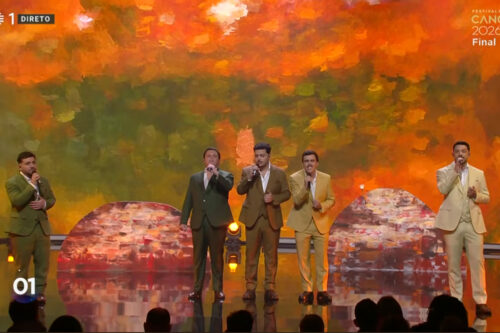
Bandidos do Cante: Who are they?

Bandidos do Cante are a Portuguese vocal group from the Alentejo region, formed by five childhood friends: Miguel Costa, Duarte Farias, Francisco Raposo, Luís Aleixo, and Francisco Pestana. Known for blending traditional cante alentejano with modern pop, the group has created a fresh, emotional sound that connects heritage with contemporary audiences.

Early Beginnings and Breakthrough

The group started informally in 2022, singing together at gatherings. Their breakthrough came after collaborating on the hit single “Casa” with D.A.M.A. and Buba Espinho, which gained massive radio play in Portugal. Originally called “Os Amigos do Alentejo,” they rebranded to Bandidos do Cante in 2023, marking a new chapter in their career.

Hit Singles and Growing Popularity

In 2024, they released their debut single “Amigos Coloridos,” which became the most-played Portuguese song on national radio. This success led to over 50 live performances and a rapidly growing fan base.
Their 2025 follow-up, “Já Não Há Pardais No Céu,” strengthened their signature style and earned them a Best New Artist nomination at the Play – Portuguese Music Awards. Collaborations with artists like Diogo Piçarra further boosted their visibility.

Debut Album and Musical Evolution

Their debut album Bairro das Flores (2026) showcases eight tracks that merge traditional folk with modern production. Featuring artists like António Zambujo, the album highlights their artistic growth. A national tour, including sold-out shows in Beja, confirmed their status as one of Portugal’s most promising acts.

Eurovision 2026 Journey

They  won Festival da Canção , securing their place at the Eurovision Song Contest 2026. Their victory, driven by strong jury and public support, marked a major milestone in their rising international career.

Rosa : A Poetic Story of Love and Saudade

Rosa is a deeply emotional song about love, memory, and loss. The lyrics create a calm, reflective atmosphere, using nature and silence to evoke nostalgia. At its core, the song connects a past relationship to the image of a rose garden, symbolizing both the beauty of love and the pain of its absence.

The Garden as a Symbol of Love

The garden represents a once-thriving relationship. It was full of life, care, and emotion. Over time, however, it fades due to neglect, mirroring the decline of love.
In the end, only the roses remain. These roses act as powerful symbols, keeping memories alive even after the relationship has ended.

The Power of Saudade

A key theme in “Rosa” is saudade, a uniquely Portuguese feeling of longing. It blends sadness with warmth and remembrance. The lyrics highlight this through images of a lover’s kiss and the idea of a loved one as the “most beautiful rose.”
Even though the relationship is over, the emotional connection remains strong.

Portugal in the Eurovision Song Contest.

Portugal has been part of the Eurovision Song Contest since 1964, but its track record has been relatively modest. The country achieved its first, and so far only, victory in 2017, when Salvador Sobral won with the song Amar pelos dois.

Despite limited success in terms of wins, Portugal is known for sending entries that highlight its rich musical identity. Its songs often blend traditional influences with modern sounds, offering something distinctive on the Eurovision stage. In recent years, the national selection Festival da Canção has played a key role in showcasing diverse genres and introducing new and emerging artists.

The Bookmakers

This year, confidence in the Portuguese entry is once again low. Currently sitting in 30th place with the bookmakers, it seems likely that Portugal will struggle to qualify for the final.

Related news

History

70 years of Eurovision: the UK and France

The Eurovision Song Contest is celebrating its 70th anniversary. That is a wonderful milestone. We at Eurovision Universe love diving into the history of the contest. That is why we are taking a closer look at the contests of the past 70 years. 1976 For the first time, a former participant hosted the Eurovision Song Contest. It was the 1957 winner, Corrie Brokken, who was given the task at the Congress Centre in The Hague. 18 countries participated. Turkey, Malta, and Sweden dropped out, but Austria and Greece returned. There were also returning artists: Fredi for Finland, Anne-Karine Strøm of the Bendik Singers for Norway, and Sandra Reemer for the Netherlands. Anne-Karine Strøm sang a song called “Mata Hari.” For this, she received an award from the municipality of Leeuwarden, where Mata Hari came from. And then there were also Peter, Sue & Marc, for the second time. This time, they were accompanied by a clown in their song “Djambo Djambo.” The Les Humphries Singers, whom we already knew from hits like “To My Father’s House,” represented Germany. It wasn’t easy: the song by the national winner in Germany, Tony Marshall, turned out to already exist and was disqualified. A German star also participated for Luxembourg: Jürgen Marcus. This was done in almost traditionally bad French. Later big stars Al Bano and Romina Power were also present; they sang their song bilingually, which is fairly unique for Italy. One of the favorites was France. Catherine Ferry sang “Un, deux, trois” for this country. Although she did not win, Catherine Ferry did manage to score an international hit with this song, despite or perhaps because of the simple title. Brotherhood of Man The other favorite was the British group Brotherhood of Man. They had already had a big hit with “Kiss Me Kiss Your Baby” but now sang another song about kissing: “Save Your Kisses For Me”, in which it only became clear in the very last line that this was an ode from one of the singers to his three-year-old daughter. The Brotherhood of Man also managed to pull out all the stops. “Save Your Kisses For Me” was not only a hit, but has also remained one of the greatest Eurovision classics. 1977 For a moment it seemed as though a new country would make its debut, but Tunisia withdrew under pressure of the other Arab countries. After all, the intention was not to throw a party where Israel was also present. The Eurovision Song Contest was to be presented by Angela Rippon on April 2 from the Wembley Conference Centre in London. Was to be… because a strike by camera operators caused the entire event to be cancelled. In the search for a solution, the Netherlands seemed willing to take over the whole thing. Ultimately, the unions there made it clear that they did not want to be strike breakers: the Dutch camera operators would not cooperate either. The strike was eventually resolved through negotiations, and on May 7, the Song Contest was able to go ahead after all. The group Dream Express made a comeback. They once participated for the Netherlands as Hearts of Soul, now for Belgium. Michèle Torr once represented Luxembourg, now Monaco. The Portuguese group Os Amigos included no fewer than two former participants. Austria sent a protest song against the record companies: “Boom Boom Boomerang”. Monica Aspelund from Finland came with an ode to “Lapponia”. The internationally renowned Silver Convention represented Germany. Also internationally known was the British candidate Lynsey De Paul, who was already known for the hit “Sugar Me”. In a duet with Mike Moran, she now sang “Rock Bottom”, one of the favorites for the final victory. Marie Myriam But after an exciting battle between the United Kingdom and France, just like in 1976, it was France that won this time. Marie Myriam was born in Congo. She had had a minor hit in Canada, but otherwise no one knew her yet. Until the Eurovision Song Contest of 1977, where she successfully won with her song “L’oiseau et l’enfant”.

Read More »
Eurovision 2026
Anja Kroeze

Road to Vienna: Portugal

Road to Vienna: Portugal We cannot wait for the Eurovision Song Contest in Vienna. Therefore, we take a closer look at one of the contestants each day. Today, we highlight: Portugal Bandidos do Cante: Who are they? Bandidos do Cante are a Portuguese vocal group from the Alentejo region, formed by five childhood friends: Miguel Costa, Duarte Farias, Francisco Raposo, Luís Aleixo, and Francisco Pestana. Known for blending traditional cante alentejano with modern pop, the group has created a fresh, emotional sound that connects heritage with contemporary audiences. Early Beginnings and Breakthrough The group started informally in 2022, singing together at gatherings. Their breakthrough came after collaborating on the hit single “Casa” with D.A.M.A. and Buba Espinho, which gained massive radio play in Portugal. Originally called “Os Amigos do Alentejo,” they rebranded to Bandidos do Cante in 2023, marking a new chapter in their career. Hit Singles and Growing Popularity In 2024, they released their debut single “Amigos Coloridos,” which became the most-played Portuguese song on national radio. This success led to over 50 live performances and a rapidly growing fan base.Their 2025 follow-up, “Já Não Há Pardais No Céu,” strengthened their signature style and earned them a Best New Artist nomination at the Play – Portuguese Music Awards. Collaborations with artists like Diogo Piçarra further boosted their visibility. Debut Album and Musical Evolution Their debut album Bairro das Flores (2026) showcases eight tracks that merge traditional folk with modern production. Featuring artists like António Zambujo, the album highlights their artistic growth. A national tour, including sold-out shows in Beja, confirmed their status as one of Portugal’s most promising acts. Eurovision 2026 Journey They  won Festival da Canção , securing their place at the Eurovision Song Contest 2026. Their victory, driven by strong jury and public support, marked a major milestone in their rising international career. Rosa : A Poetic Story of Love and Saudade Rosa is a deeply emotional song about love, memory, and loss. The lyrics create a calm, reflective atmosphere, using nature and silence to evoke nostalgia. At its core, the song connects a past relationship to the image of a rose garden, symbolizing both the beauty of love and the pain of its absence. The Garden as a Symbol of Love The garden represents a once-thriving relationship. It was full of life, care, and emotion. Over time, however, it fades due to neglect, mirroring the decline of love.In the end, only the roses remain. These roses act as powerful symbols, keeping memories alive even after the relationship has ended. The Power of Saudade A key theme in “Rosa” is saudade, a uniquely Portuguese feeling of longing. It blends sadness with warmth and remembrance. The lyrics highlight this through images of a lover’s kiss and the idea of a loved one as the “most beautiful rose.”Even though the relationship is over, the emotional connection remains strong. Portugal in the Eurovision Song Contest. Portugal has been part of the Eurovision Song Contest since 1964, but its track record has been relatively modest. The country achieved its first, and so far only, victory in 2017, when Salvador Sobral won with the song Amar pelos dois. Despite limited success in terms of wins, Portugal is known for sending entries that highlight its rich musical identity. Its songs often blend traditional influences with modern sounds, offering something distinctive on the Eurovision stage. In recent years, the national selection Festival da Canção has played a key role in showcasing diverse genres and introducing new and emerging artists. The Bookmakers This year, confidence in the Portuguese entry is once again low. Currently sitting in 30th place with the bookmakers, it seems likely that Portugal will struggle to qualify for the final.

Read More »
Follow Us: