
Road to Vienna: Czechia


Road to Vienna: Czechia

We are very looking forward to the Eurovision Song Contest in Vienna.                                                                We will highlight one participating country each day. Today, we turn our attention to Czechia


Daniel Žižka: A Fresh Voice in Czech Pop & Indie Music

Daniel Žižka, born in 2003 in the Czech Republic, is a singer, songwriter, and actor who showed early talent in both music and performance. He began writing songs at just 10 years old and recorded his first track by 15. His passion for the arts led him to study musical theater at the Jaroslav Ježek Conservatory in Prague, where he developed strong vocal and stage skills.

Music Career and Breakthrough

Starting under the name “Daniell,” he released early singles like Wrong (2019) and Go On (2020), gaining attention on Czech radio. Transitioning to his real name, Daniel Žižka continued building his reputation with tracks such as Pierrot (2023) and Talk (2024).

In 2025, he reached a major milestone with 23:23, performed live with the Czech Radio Symphony Orchestra in Prague. His music blends pop and indie-pop with emotional vocals and atmospheric sounds, further strengthened by collaborations with international producers.

Acting Career and TV Appearances

Alongside music, Daniel has built a solid acting career. He gained early recognition in the TV film Rašín (2018) and appeared in popular Czech series like Modrý kód. His later roles in shows such as Špunti na cestě and Taneční (2024) expanded his presence on screen.

A Promising Talent in Czechia

With a unique mix of musical talent and acting experience, Daniel Žižka stands out as a rising star in the Czech entertainment industry. His growing discography and on-screen work position him as an artist to watch in the coming years.

Crossroads: A Dive into Self-Discovery and Emotion

Crossroads captures the essence of navigating life without a clear direction. The track reflects the tension between curiosity and caution, as it explores the challenges of making choices and finding meaning in an unpredictable world.

Themes of Growth and Connection

At its heart, the song focuses on personal growth, emotional resilience, and human relationships. It highlights the balance between independence and connection, offering a relatable perspective on how people deal with shared experiences, pain, and change.

A Layered Musical Experience

Musically, Crossroads blends atmospheric melodies with rich instrumentation, creating an immersive and emotional soundscape. The dynamic composition mirrors the journey of self-discovery, balancing moments of reflection with a sense of movement and exploration.


Czechia in the Eurovision Song Contest

Czechia, formerly known as the Czech Republic in the contest, debuted in Eurovision in 2007. After initial challenges, the country withdrew in 2010 but returned in 2015. Since then, Czechia has achieved notable success, including a sixth-place finish in 2018 with Mikolas Josef‘s “Lie to Me” and a tenth-place finish in 2023 with Vesna‘s “My Sister’s Crown.” ​                                                                                                                                                      Last year, Czechia, represented by ADONXS, did not manage to qualify for the final.

The bookmakers

At 12th place with the bookmakers, a spot in the final is firmly back within reach this year.


Related news

History

70 years of Eurovision: winners with violins

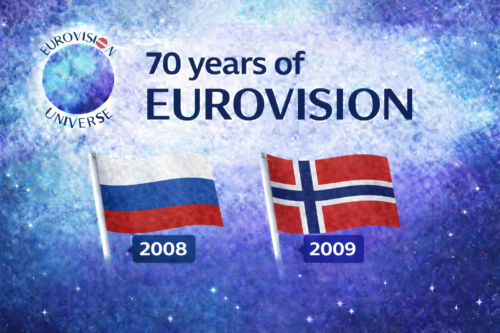
The Eurovision Song Contest is celebrating its 70th anniversary. That is a wonderful milestone. We at Eurovision Universe love diving into the history of the contest. That is why we are taking a closer look at the contests of the past 70 years. 2008 One semi-final was not enough anymore. From then on, semi-finals would be held on Tuesdays and Thursdays. The top ten advanced to the final. Only the host country and the four highest-paying countries (the United Kingdom, France, Germany, and Spain) automatically qualified for the final. Austria withdrew again in 2008, but San Marino and Azerbaijan participated for the first time.  The Eurovision Song Contest was held in the Belgrade Arena in, of course, Belgrade. Željko Joksimović hosted the show, together with Jovana Janković. That went very well. So well, in fact, that the two married in 2012.  The songs Roberto Meloni made a comeback. He had already participated for Latvia in 2007 with Bonaparti.LV; this time, he was the singer of the group Pirates of the Sea. Former winner Charlotte Perelli was also present, as was former runner-up Dima Bilan. A notable returnee was Tarmo Leinatamm. He was once a conductor, but now stood on stage as a ‘singer’. Tarmo was part of a novelty act. The trio Kreisiraadio sang their song “Leto Svet” in grammatically very poor Serbian. Singing was not the gentlemen’s strong suit. The Pirates of the Sea from Latvia had a sort of Jack Sparrow parody, a sing-along. But Ireland went the furthest with Dustin The Turkey: a turkey hand puppet, who tried to collect many points by incorporating the names of all the Eastern European countries into the lyrics. However, the audience had had enough of low-quality novelty acts. They all failed to advance to the final. Germany thought it could achieve success with a big name, the group No Angels. However, it was not enough; the Germans finished 23rd. The Portuguese Vânia Fernandes, who was the favorite with a song by a Croatian, also failed to live up to expectations with a 13th place finish. Expectations were high for Charlotte Perelli, but her “Hero” stalled in 18th place. And the only novelty act that did make it to the final (being from Spain) also finished low: Rodolfo Chikilicuatre, a character with a pompadour and oversized glasses. Armenia and Ukraine, on the other hand, understood things better. Both countries finished high with a swinging number and a solid act. Moreover, both countries sent their big stars: Sirusho for Armenia and Ani Lorak, who had previously missed the boat, represented Ukraine. Dima Bilan For the second time, Dima Bilan competed for Russia. Russia’s big star did not face strong competition this time, as he did in 2006. He won with ease. Bilan had pulled out all the stops for this. He was accompanied by Edvin Marton, who played a genuine Stradivarius. Additionally, figure skater and Olympic champion Evgeni Plushenko appeared during the act, naturally on skates. Even after the Eurovision Song Contest, Dima Bilan remained a big star in Russia, and he still is. 2009 Slovakia returned in 2009, but San Marino did not. Georgia wanted to participate, but was at the time at war with the host nation, Russia. Their song, “We Don’t Wanna Put In,” which according to the band members was not about Vladimir Putin, was rejected by the EBU. Georgia subsequently withdrew. The festival was held in the Olimpiyskiy Arena in Moscow. A new feature was that the semi-finals had a different presenting duo than the final. Natalia Vodianova and Andrey Malakhov were responsible for the semi-finals. Ivan Urgant and singer Alsou (see 2000) hosted the final. The songs Former presenter Sakis Rouvas participated for Greece for the second time. Chiara tried for Malta for the third time. Internationally famous names were once again present at the festival. Susanne Georgi, who represented Andorra, was one half of the Danish duo Me & My, together with her sister. The two had a European hit with “Dub i Dub,” among others. Noa participated for Israel. She was already a big name throughout Europe. Her song, together with the Palestinian Mira Awad, left little to the imagination regarding the lyrics: “There Must Be Another Way.” Patricia Kaas was also already a very big name in Europe. She participated with the ballad “Et s’il fallait le faire.” Arash represented Azerbaijan. This Iranian singer has lived and worked in Sweden his entire life and is well-known there as well. The Danish Brinck was not a celebrity himself, but performed a song by Boyzone frontman Ronan Keating. And the British Jade Ewen sang a song that could have come straight out of a musical. Not surprising, as Andrew Lloyd Webber was the composer. Jade would later become a member of the Sugababes. Also noteworthy was the group from the Netherlands: De Toppers. In their own country, they were mainly known for their individual careers and annual stadium concerts. In the rest of Europe, no one understood what was so appealing about these three somewhat older gentlemen in glitter suits. Sweden sent an opera singer: Malena Ernman. Malena’s daughter would later gain great fame as a climate activist: Greta Thunberg. Once again, Iceland would make a big impression: this time with a simple song, “Is It True?”. Urban Symphony from Estonia was also often considered a possible winner. Ultimately, their song “Rändajad” finished ‘only’ sixth. The Turkish delegation consisted almost entirely of Belgians. Singer Hadise was born in Belgium and lived there as well. She managed to secure a fourth place for Turkey. Alexander Rybak But the entire festival revolved around one person from the very beginning: a boy with a mischievous face and a violin. The Belarusian-born Norwegian Alexander Rybak easily won Melodi Grand Prix, the Norwegian national selection. With his song “Fairytale”, and thus with his violin, Rybak captured the hearts of all of Europe without any effort. Rybak would become inextricably linked to the Eurovision Song Contest: later as a commentator,

Read More »
Eurovision 2026
Anja Kroeze

Road to Vienna: Czechia

  Road to Vienna: Czechia We are very looking forward to the Eurovision Song Contest in Vienna.                                                                We will highlight one participating country each day. Today, we turn our attention to Czechia   Daniel Žižka: A Fresh Voice in Czech Pop & Indie Music Daniel Žižka, born in 2003 in the Czech Republic, is a singer, songwriter, and actor who showed early talent in both music and performance. He began writing songs at just 10 years old and recorded his first track by 15. His passion for the arts led him to study musical theater at the Jaroslav Ježek Conservatory in Prague, where he developed strong vocal and stage skills. Music Career and Breakthrough Starting under the name “Daniell,” he released early singles like Wrong (2019) and Go On (2020), gaining attention on Czech radio. Transitioning to his real name, Daniel Žižka continued building his reputation with tracks such as Pierrot (2023) and Talk (2024). In 2025, he reached a major milestone with 23:23, performed live with the Czech Radio Symphony Orchestra in Prague. His music blends pop and indie-pop with emotional vocals and atmospheric sounds, further strengthened by collaborations with international producers. Acting Career and TV Appearances Alongside music, Daniel has built a solid acting career. He gained early recognition in the TV film Rašín (2018) and appeared in popular Czech series like Modrý kód. His later roles in shows such as Špunti na cestě and Taneční (2024) expanded his presence on screen. A Promising Talent in Czechia With a unique mix of musical talent and acting experience, Daniel Žižka stands out as a rising star in the Czech entertainment industry. His growing discography and on-screen work position him as an artist to watch in the coming years. Crossroads: A Dive into Self-Discovery and Emotion Crossroads captures the essence of navigating life without a clear direction. The track reflects the tension between curiosity and caution, as it explores the challenges of making choices and finding meaning in an unpredictable world. Themes of Growth and Connection At its heart, the song focuses on personal growth, emotional resilience, and human relationships. It highlights the balance between independence and connection, offering a relatable perspective on how people deal with shared experiences, pain, and change. A Layered Musical Experience Musically, Crossroads blends atmospheric melodies with rich instrumentation, creating an immersive and emotional soundscape. The dynamic composition mirrors the journey of self-discovery, balancing moments of reflection with a sense of movement and exploration.   Czechia in the Eurovision Song Contest Czechia, formerly known as the Czech Republic in the contest, debuted in Eurovision in 2007. After initial challenges, the country withdrew in 2010 but returned in 2015. Since then, Czechia has achieved notable success, including a sixth-place finish in 2018 with Mikolas Josef‘s “Lie to Me” and a tenth-place finish in 2023 with Vesna‘s “My Sister’s Crown.” ​                                                                                                                                                      Last year, Czechia, represented by ADONXS, did not manage to qualify for the final. The bookmakers At 12th place with the bookmakers, a spot in the final is firmly back within reach this year.  
Read More »
Follow Us: