
Road to Vienna: Azerbaijan

Road to Vienna: Azerbaijan

We cannot wait for the Eurovision Song Contest in Vienna. Therefore, we take a closer look at one of the contestants each day. Today, we highlight Azerbaijan.

JIVA: Azerbaijani versatility Pop Star

JIVA, born Jamila Hashimova on 9 September 1982 in Moscow, is an Azerbaijani singer and songwriter. Known for her versatility, she performs in Azerbaijani, Russian, and English, blending pop, dance, and R&B into her sound.

Early Career and Breakthrough

JIVA began her musical journey in the early 2000s. Her first major recognition came in 2003 when she finished second at the Baku Autumn song contest. In 2007, she expanded her audience by competing in the TV music show Show Time, establishing herself in Azerbaijan’s music scene.

Musical Growth and Collaborations

Over the years, JIVA refined her artistry through collaborations and live performances. She worked with the RAST ensemble and performed at the Montreux Jazz Festival, gaining international exposure. As the lead singer of the Hazz Band, she combined jazz influences with modern pop. She also appeared at major events like the Zhara Festival in 2018 and collaborated with artists such as Emin, Zülfiyyə Xanbabayeva, and Manana Japaridze.

Solo Career Success

In 2017, JIVA focused on her solo career, releasing multilingual tracks across pop, dance, and R&B genres. Her big breakthrough came in 2025 when she won Səs Azərbaycan (The Voice of Azerbaijan), significantly boosting her popularity and opening new doors.

Eurovision 2026 Journey

After an earlier attempt in 2011, JIVA was selected to represent Azerbaijan at the Eurovision Song Contest 2026 in Vienna. Chosen through a competitive internal process, she is set to bring her dynamic style to an international audience.

Just Go: Emotional Storytelling That Connects

The latest single delivers a powerful story of lost love, betrayal, and personal growth. It captures the journey from deep devotion to the painful realization of deception, ultimately highlighting the strength it takes to move on.

Themes of Betrayal and Self-Discovery

At its core, the song explores universal themes like heartbreak, self-discovery, and emotional healing. Its relatable lyrics reflect the process of facing the truth, letting go, and reclaiming personal power—making it a standout breakup anthem.

Bilingual Twist with Azerbaijani Lyrics

A unique feature of the track is its bilingual element, including a segment in Azerbaijani. This adds cultural depth and enhances the emotional impact, while broadening its appeal to a global audience.

Dynamic Sound and Powerful Composition

Musically, the song blends emotional melodies with dynamic production. The contrast between intimate verses and powerful choruses mirrors the highs and lows of a failing relationship, reinforcing its message of resilience and empowerment.

Azerbaijan in the Eurovision Song Contest

Since debuting in 2008Azerbaijan has been a strong contender in the Eurovision Song Contest. Azerbaijan ended up in the top5 on many occasions. The country secured its first victory in 2011 with Ell and Nikki‘s “Running Scared.” Over the years, Azerbaijan has achieved several top-ten finishes, reflecting its commitment to the competition and its emphasis on high-quality performances and productions. The last few years, however, Azerbaijan didn’t manage to reach the final.

The Bookmakers

Once again, a spot in the final seems far out of reach—sitting at 35th with the bookmakers, turning things around now feels almost impossible.

 

Related news

History

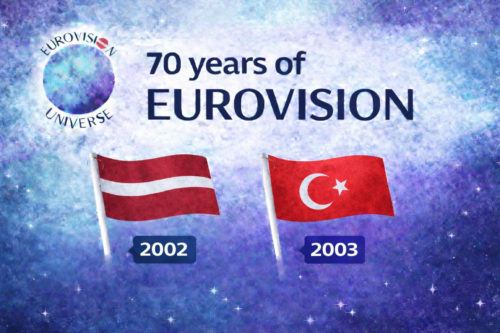
70 years of Eurovision: it was a close call

The Eurovision Song Contest is celebrating its 70th anniversary. That is a wonderful milestone. We at Eurovision Universe love diving into the history of the contest. That is why we are taking a closer look at the contests of the past 70 years. 2002 For the first time, the Eurovision Song Contest was held in a Baltic state. The festival took place in a small hall, the Saku Suurhal in Tallinn, Estonia, hosted by an actor/singer (Marko Matvere) and an opera singer (Anneli Peebo). 24 countries participated. The songs Constantinos from Cyprus made a comeback. He was part of the boy band One, which had the honor of opening the festival and finished a respectable sixth. Not exactly a comeback, but still somewhat so: the German Corinna May. The blind singer had already won the national final in 1999 but was disqualified at the time. Now she was allowed to participate for real. Monica Anghel failed to make it through the audio preliminary round for Romania in 1996. Now, together with Marcel Pavel, she managed to finish 9th for Romania, the best score to date. Host country Estonia sent a Swedish singer, Sahlene. With her song “Runaway,” she finished third. Estonia had established itself as a successful nation at the Eurovision Song Contest. The United Kingdom also finished third with the ballad “Come Back” by Jessica Garlick. After a few less successful years for the British, this was a nice… er… comeback. Although the Netherlands was in the relegation zone and therefore did not participate, the Belgian entry still had a Dutch touch: Sergio & The Ladies participated on behalf of that country. Sergio was Belgian, but the ladies were definitely Dutch. Expectations in Belgium were very high. However, the Belgians’ self-confidence slowly but surely ebbed away, and ultimately they finished 13th instead of first. Ira Losco was the Maltese participant. She had previously participated in national finals but was now on the Eurovision stage for the first time. Ira came very close to winning the festival. However, Lithuania had to vote last and awarded 12 points to fellow Baltic state Estonia. Lithuania must not go unmentioned. The group B-Avarija had very high odds for a long time with the song “We All”. However, it turned out that the song had already appeared in Lithuanian on a B-Avarija record. It was disqualified. The popular group never managed to win for Lithuania again. Instead of them, Lithuania sent a boy with a song that wasn’t particularly strong, but above all with a very striking sweater. Marie N Her real name was Marija Naumova, but the winner was given the name Marie N for the international market. The lyrics of her song were written in such poor English that the entire thing had to be rewritten. And with success! “I wanna”, with an act in which Marie N initially dressed as a man but ended up in an evening gown, became the first and so far only Latvian victory. And so the Eurovision Song Contest remained within the Baltic states! 2003 Too many countries knocked at the door of the Eurovision Song Contest. This would be the last one that could be held on one single evening. Ukraine was admitted, the others had to wait a little longer. The contest was held in the Skonto Hall in Riga. Latvia had only participated three times. Two of the three participants took charge of the presentation: Renārs Kaupers from Brainstorm and winner Marie N. The songs None of the artists had participated before. However, there were a number of notable participants. Alf Poier represented Austria. By his own account, he did so to ridicule the Eurovision Song Contest. He was a Eurovision hater. It earned him a remarkable sixth place with “Weil der Mensch zählt”. Esther Hart participated for the Netherlands with her “One More Night”. Later, Esther Hart would become active in organizing J’aime La Vlie, an event featuring Eurovision participants on the Dutch Wadden Island of Vlieland. The group Ich Troje participated for Poland. They sang their song not only in Polish but also in Russian and German. With his purple-red hair, singer Michał Wiśniewski was a striking figure in any case. And then there was Urban Trad for Belgium. This group sang a song in a fake language: “Sanomi”. The folk song was not a favorite beforehand, but ultimately nearly won. And this despite the fact that quite a few things had been going on within the group. According to the Belgian secret service, singer Soetkin Collier had participated in far-right demonstrations and even attended a memorial service for Nazi leader Rudolf Hess. Such a person was not allowed to represent Belgium, and Soetkin had to stay home. The accusations all turned out to be false: she no longer harbored far-right sympathies, and the Rudolf Hess story turned out to be utter nonsense. But in 2003, everything revolved around t.A.T.u. The supposedly lesbian (in fact heterosexual) girl duo had been instructed to behave as annoyingly as possible. Spoiled to the core, they made it clear that they mainly thought the Eurovision Song Contest was stupid. But when they thought they were unobserved for a moment, a Russian journalist heard the girls say that they were actually very impressed by the big stage. They just missed out on winning. Sertab Erener Because after an exciting battle with Belgium and Russia, Turkey ultimately won. Already one of the pre-contest favorites, Sertab Erener took first place with her Türkpop song “Every Way That I Can”. The genre had become popular throughout Europe thanks to Tarkan, and Sertab was now reaping the benefits. Her song became a hit across Europe, and Sertab remains a major star to this day.

Read More »
Eurovision 2026
Anja Kroeze

Road to Vienna: Azerbaijan

Road to Vienna: Azerbaijan We cannot wait for the Eurovision Song Contest in Vienna. Therefore, we take a closer look at one of the contestants each day. Today, we highlight Azerbaijan. JIVA: Azerbaijani versatility Pop Star JIVA, born Jamila Hashimova on 9 September 1982 in Moscow, is an Azerbaijani singer and songwriter. Known for her versatility, she performs in Azerbaijani, Russian, and English, blending pop, dance, and R&B into her sound. Early Career and Breakthrough JIVA began her musical journey in the early 2000s. Her first major recognition came in 2003 when she finished second at the Baku Autumn song contest. In 2007, she expanded her audience by competing in the TV music show Show Time, establishing herself in Azerbaijan’s music scene. Musical Growth and Collaborations Over the years, JIVA refined her artistry through collaborations and live performances. She worked with the RAST ensemble and performed at the Montreux Jazz Festival, gaining international exposure. As the lead singer of the Hazz Band, she combined jazz influences with modern pop. She also appeared at major events like the Zhara Festival in 2018 and collaborated with artists such as Emin, Zülfiyyə Xanbabayeva, and Manana Japaridze. Solo Career Success In 2017, JIVA focused on her solo career, releasing multilingual tracks across pop, dance, and R&B genres. Her big breakthrough came in 2025 when she won Səs Azərbaycan (The Voice of Azerbaijan), significantly boosting her popularity and opening new doors. Eurovision 2026 Journey After an earlier attempt in 2011, JIVA was selected to represent Azerbaijan at the Eurovision Song Contest 2026 in Vienna. Chosen through a competitive internal process, she is set to bring her dynamic style to an international audience. Just Go: Emotional Storytelling That Connects The latest single delivers a powerful story of lost love, betrayal, and personal growth. It captures the journey from deep devotion to the painful realization of deception, ultimately highlighting the strength it takes to move on. Themes of Betrayal and Self-Discovery At its core, the song explores universal themes like heartbreak, self-discovery, and emotional healing. Its relatable lyrics reflect the process of facing the truth, letting go, and reclaiming personal power—making it a standout breakup anthem. Bilingual Twist with Azerbaijani Lyrics A unique feature of the track is its bilingual element, including a segment in Azerbaijani. This adds cultural depth and enhances the emotional impact, while broadening its appeal to a global audience. Dynamic Sound and Powerful Composition Musically, the song blends emotional melodies with dynamic production. The contrast between intimate verses and powerful choruses mirrors the highs and lows of a failing relationship, reinforcing its message of resilience and empowerment. Azerbaijan in the Eurovision Song Contest Since debuting in 2008, Azerbaijan has been a strong contender in the Eurovision Song Contest. Azerbaijan ended up in the top5 on many occasions. The country secured its first victory in 2011 with Ell and Nikki‘s “Running Scared.” Over the years, Azerbaijan has achieved several top-ten finishes, reflecting its commitment to the competition and its emphasis on high-quality performances and productions. The last few years, however, Azerbaijan didn’t manage to reach the final. The Bookmakers Once again, a spot in the final seems far out of reach—sitting at 35th with the bookmakers, turning things around now feels almost impossible.  

Read More »
Follow Us: