Basel Bulletin: the big five and Switzerland

📷 EBU/Corinne Cumming/Sarah Louise Bennett/Alma Bengtsson

The Big Five and Switzerland have their second rehearsal. We have no liveblog from EBU, however we are expecting 30 seconds videos later today. We also have pictures.

🇩🇪 Germany

Germany’s Abor & Tynna have been riding the positive wave on social media. The duo shared behind-the-scenes snaps from Basel and thanked fans for their support, with Tynna joking that she “might need a new boombox after that performance!” Their playful, upbeat posts convey confidence and gratitude, showing they’re enjoying every moment of their Eurovision journey with the fans.

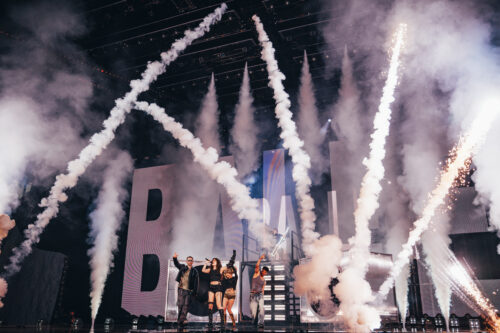
Abor & Tynna delivered a high-energy “Baller” rehearsal with a dramatic ’80s flair. It opens with Abor on a glowing white electric cello before a curtain drops to unveil Tynna standing atop a giant boombox prop. Four dancers and pulsing LED graphics join the mix, creating a gritty warehouse party vibe with flashing “BALLER” visuals. Pyrotechnics cap off the number as the boombox “explodes” amid fireworks. The performance is being hailed as a “huge glow-up” from the German national final. Eurovision bloggers and fans praised the inventive staging – one Reddit user gushed that it “looks absolutely amazing” and said the clip raised their “hopes up a LOT”. The edgy Lara Croft-meets-rave styling and the sibling duo’s musical prowess have earned Germany a surge of online excitement. 

Despite the buzz, Germany is still seen as an underdog. Bookmakers have kept “Baller” around the lower mid-pack – roughly 19th to 24th position in the odds – but there’s hope that this memorable staging could boost their ranking during live shows.
🇫🇷 France

On social media, France’s Louane has been gracious and heartfelt. The French star shared that representing France on the Eurovision stage is “a dream come true ✨” and thanked fans “infiniment” (infinitely) for their support. In an Instagram post after rehearsals, she posted a photo of herself amid the falling sand with a caption about feeling her mother’s presence during the performance, reflecting the song’s personal theme.

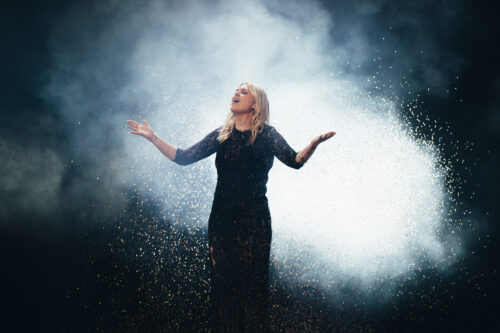
Louane delivered a powerful first rehearsal of “Maman”, built around a central hourglass theme. On a dimly lit stage, sand poured steadily from above as she stood barefoot in a flowing black lace gown, spotlit within a circle of sand. At one point, she knelt and cleared the sand to reveal a mirror beneath. Each gesture followed the rhythm of the drums with precision. Fans and media alike praised her performance. The sand motif captivated many viewers; one fan on Facebook described Louane’s staging as a “universe of realness and emotion,” comparing it to a past winner and adding, “Can see this winning now.” Commentators frequently linked her emotional delivery to Barbara Pravi’s 2021 performance, while highlighting how Louane brings a distinctly modern, pop-chanson style to the Eurovision stage.

Louane remains firmly among the favorites to win Eurovision 2025. France is currently the 3rd favorite in the betting markets with roughly a 7% chance to win. Her odds have held steady (around 11/1) and even improved slightly after the impactful rehearsal, narrowing the gap behind front-runners Sweden and Austria. There’s a sense that France’s odds could shorten further if the strong rehearsal buzz continues into the jury show.
🇬🇧 United Kingdom

The UK’s all-female trio Remember Monday have been infectiously enthusiastic on social media. After their rehearsal, they tweeted, “And we’re back – FIRST REHEARSAL DONE!!! ❤️”, showing both relief and excitement. A TikTok followed, playfully referencing the “morning after” theme with confused wake-up expressions, echoing the song’s storyline. The trio has also been chatting with fans on Twitter, joking about needing “a bigger chandelier budget next time.” Their posts remain upbeat and self-deprecating, and they continue to thank fans for “all the love from London to Basel,” clearly eager to do the UK proud.

Their first rehearsal for “What The Hell Just Happened?” made a strong impression. It begins in a Regency-style boudoir before erupting into neon chaos, complete with a crashed chandelier and vivid lighting. The scene transitions smoothly between calm and chaos, ending with a return to the quiet boudoir and one final harmony.

Reaction to the rehearsal has been largely positive. Many fans praised the bold concept, calling it one of the UK’s most creative stagings in recent years. Reviewers highlighted the trio’s “powerful, three-part harmonies” and authentic stage presence. While a few felt the staging was slightly over-the-top, most agree that the UK has taken a welcome creative leap. The group’s chemistry and humour are winning over new supporters.

Bookmakers currently place the UK mid-table. Before rehearsals, the trio sat around 13th in the odds. Some outlets have since shortened their odds, citing growing buzz, though others still rate the UK as an outsider, with odds near 100/1. Overall, Remember Monday’s rehearsal has helped the UK’s momentum, and with continued strong performances, the entry could climb higher in the coming days.

🇨🇭 Switzerland

Host nation Switzerland’s Zoë Më was visibly moved after her first rehearsal on home soil. The Basel-born singer shared a heartfelt Instagram message, calling Eurovision in her hometown “the journey of a lifetime.” In a behind-the-scenes clip, she nervously smiled and said, “C’est parti – let’s go, wish me luck!” blending French and English. After rehearsing, she tweeted, “One shot, one soul – I felt every second on that stage 🙏.” Zoë has continued engaging with fans in French, German, and English, thanking them for their support and feedback on the staging.

Her performance of “Voyage” takes a daringly minimalist route: a single, uncut three-minute handheld shot. With vintage film lenses and moody lighting, the staging focuses entirely on Zoë, seated in darkness and framed like a painting. As the song builds, soft lighting, wind effects, and audience phone lights add subtle movement. Reactions have been largely positive. Press described the staging as “cinematic” and praised the emotional intimacy. Fans were split—some found it “hypnotic” and powerful, while others worried its stillness might not capture casual viewers. Nonetheless, the home crowd gave Zoë an extended ovation, recognizing the risk and vocal precision.

In the betting odds, Switzerland holds steady in the 15th–17th range. The rehearsal hasn’t shifted expectations dramatically, but some analysts now call it a potential “sleeper pick” for a top 10 finish, especially if juries reward the artistic vision. While not a frontrunner, Zoë’s staging has earned widespread respect—and if it connects in the final, Switzerland may quietly climb the scoreboard.
🇮🇹 Italy

Lucio Corsi keeps a modest presence on social media, posting simple, heartfelt updates. His recent posts — including a lyric quote and sunflower emoji — align with the reflective tone of his performance. Fans have responded warmly to his sincerity, and the atmosphere around Italy’s entry is quietly confident.

Lucio Corsi stayed true to his artistic roots in his first Eurovision rehearsal, delivering a near-replica of his Sanremo performance. Dressed in his signature mustard bolero jacket with shoulder pads and white makeup, he sat at a long piano while vintage-style speakers and a sepia filter evoked a 1970s rock vibe. English subtitles appeared on screen for key lyrics, and midway through, Lucio transitioned to center stage for a harmonica solo before closing the song alongside guitarist Tommaso Ottomano. The reaction was largely positive. Fans and press praised the performance’s authenticity and clarity, calling it “sharper and more sophisticated” than before. The subtitles were widely seen as a smart addition. Supporters celebrated Lucio’s decision to keep the Sanremo spirit intact, while some noted the act may feel understated next to more theatrical entries. Still, a viral fan moment — Lucio taking time to meet a supporter after a six-hour wait — reinforced the goodwill around his candidacy.

In the betting odds, Italy remains steady. Lucio sits just outside the top 10, currently between 12th and 16th place. Bookmakers list him at around 20/1 to 30/1, reflecting respect rather than frontrunner status. A top 10 finish seems within reach, particularly if juries reward his sincerity and style.
🇪🇸 Spain

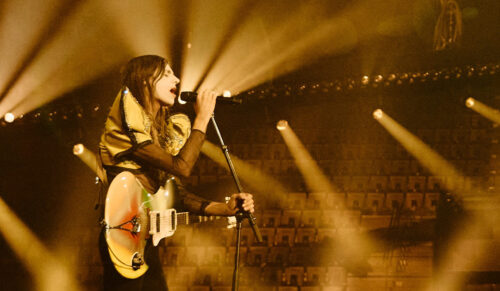
Melody has embraced the support. On social media, she posted, “Primer ensayo superado! Qué emoción, mi gente!!!” with fire and heart emojis. On Instagram, she called the moment “incredible” and thanked the stage crew. She reposted fan art and a video of girls copying her dance, replying, “Vosotras sí que sois divas!” Her tone has remained energetic, grateful, and empowering—just like her song.

Melody’s first rehearsal brought theatrical flair to Basel, with a performance split into three bold acts. It begins in deep purple lighting, with Melody in a black corseted outfit, fedora, and thigh-high boots. Three male dancers join for flamenco-pop choreography. Act Two brings fiery red lighting and two female dancers as Melody drops the hat and intensifies the movement. Act Three explodes in white, matching the lyric about rising to the top. All five dancers join for the climax, ending with a surprise dance break. Fans and press reacted passionately. Spanish media highlighted clear growth in energy and presence since earlier previews. Many praised the staging’s ambition and Melody’s vocal strength despite intense choreography. “Winner vibes” trended on X, and “Viva la diva” caught fire among Spanish fans. Still, some found the visuals overwhelming or dated, and questioned how sustainable the vocals would be. Overall, the rehearsal transformed Spain from under-the-radar to showstopper status.

Spain’s odds improved dramatically. From 36th place before rehearsals, Melody has climbed to 18th. Betting sites now show Spain as an outside contender, with some analysts tipping it for a potential top 10 finish.
 

Related news

History

70 years of Eurovision: the semifinal came

The Eurovision Song Contest is celebrating its 70th anniversary. That is a wonderful milestone. We at Eurovision Universe love diving into the history of the contest. That is why we are taking a closer look at the contests of the past 70 years. 2004 It was a nice idea to have Enrique Iglesias host the Eurovision Song Contest. It didn’t happen. Whether it was an excessive fee or protests within the broadcaster because the man wasn’t Turkish, we don’t know exactly. But in the now-demolished Abdi İpekçi Arena in Istanbul, Korhan Abay and Meltem Cumbul hosted the contest. And for the first time, there was a semi-final. Countries that had not finished in the top 10 the previous year and countries that were on the reserve bench at the time had to participate. Debuting countries Albania, Belarus, Serbia & Montenegro, and Andorra were also in it. The songs The Belarusians sent the duo Aleksandra and Konstantin with the song “My Galileo”. It was sung in English, but you had to mention that. For a few years, there was an Aleksandra and Konstantin Award for the very worst English. Jonathan Cerrada was the participant for France. By then, the Belgian was a big star in the French-speaking countries. Amidst the stilt-walking backing singers, he failed to live up to expectations. Neither did the Belgian top favorite Xandee with the disco track “1 Life.” How different it was for the Albanian Anjeza Shahini. Festivali i Këngës, a major Albanian national song contest held at the end of December, became the national selection from then on. Only the song “Dua të jem imazhi yt” had to be shortened by a minute and a half, and was therefore immediately translated into English. The Bosnian Dane also stood out with his disco beat, his bleached hair, and his pink suit. Macedonia sent its biggest star, Toše Proeski. He would die in a car accident four years later. His fame has since grown to legendary proportions. Lena Philipsson was already a big star in Sweden. Yet she never managed to win Melodifestivalen. Until 2004, that is. Greece had had an extensive national final. But while it was still underway, their biggest star, Sakis Rouvas, announced his intention to go to the Eurovision Song Contest. The entire national final was set aside, and Sakis went to Istanbul. Serbia and Montenegro were represented by Željko Joksimović, who performed a piece of his own Serbian culture with “Lane moje.” Sakis and Željko would go on to compete in the final. Ruslana But they did not fight that final battle alone. The Ukrainian Ruslana also participated. She, too, had brought her own culture with her. In the song “Wild Dances,” a Ukrainian instrument, the trembita, played the leading role. Ruslana had been internally selected to go to the Eurovision Song Contest. When she won, she was honored by President Kuchma with the highest possible distinction, People’s Artist of Ukraine. With the presidential elections of late 2004 and the subsequent Orange Revolution, she sided with presidential candidate Yushchenko. He did not win; fraud was suspected. During the revolution that followed, Ruslana went on a hunger strike for a short time. Besides being a singer, she would remain a political activist and politician. 2005 Ruslana was set to present the Eurovision Song Contest, which was held at the Palace of Sports in Kyiv. She was to do so together with Pavlo Shylko. However, Ruslana withdrew, officially because she had other commitments. But it is quite possible that her poor English also played a role. Since there was a semifinal,  Bulgaria and Moldova wanted to participate as well, Hungary returned, and even Monaco came back after 26 years. The songs The Icelandic Selma participated one more time. This time, however, she did not reach the final. Chiara from Malta also took part again. She even improved on her previous success by finishing second with her “Angel”. Constantinos from Cyprus even participated for the third time. And Helena Paparizou, who represented Greece in 2001 with the duo Antique, was also present again. Debuting Moldova sent the group Zdob și Zdub. They performed their ode to a grandmother with a real grandmother on stage, who occasionally beat a huge drum. Moldova finished an impressive sixth with it. Host country Ukraine really went all out. From no fewer than 75 songs, 15 finalists emerged. But actually, no one doubted the victory for top favorite Ani Lorak. Until the broadcaster suddenly awarded wildcards to four songs: protest songs stemming from the recently concluded revolution. With that, Ani Lorak lost her chance. Karma catches up with them: the winning group Greenjolly first had to change the lyrics of their song of praise to the president. Ultimately, the group finished 19th. The German entry was controversial. Gracia already had a major hit in her own country at the time she won the German national final. What turned out to be the case? Producer David Brandes had personally bought up many CDs to boost the sales figures. David Brandes was also the producer of the Swiss entry: the Estonian group Vanilla Ninja. But these four rock chicks, popular in German-speaking countries, experienced no hindrance from their producer. And then there was a song from Latvia, sung by the duo Walters and Kazha. They sang part of their song in sign language. Helena Paparizou Greece won for the first time. As mentioned, Helena Paparizou had participated before. The singer, who lives in Sweden, previously sang in the popular duo Antique. Now she sang solo. She was to sing four songs from which one Eurovision entry would be chosen. However, the favorite, “The Light of Our Soul”, was disqualified because it had been released too early. The song chosen from the remaining three was “My Number One”. And that did indeed become number 1.

Read More »
History
Martijn

70 years of Eurovision: the semifinal came

The Eurovision Song Contest is celebrating its 70th anniversary. That is a wonderful milestone. We at Eurovision Universe love diving into the history of the contest. That is why we are taking a closer look at the contests of the past 70 years. 2004 It was a nice idea to have Enrique Iglesias host the Eurovision Song Contest. It didn’t happen. Whether it was an excessive fee or protests within the broadcaster because the man wasn’t Turkish, we don’t know exactly. But in the now-demolished Abdi İpekçi Arena in Istanbul, Korhan Abay and Meltem Cumbul hosted the contest. And for the first time, there was a semi-final. Countries that had not finished in the top 10 the previous year and countries that were on the reserve bench at the time had to participate. Debuting countries Albania, Belarus, Serbia & Montenegro, and Andorra were also in it. The songs The Belarusians sent the duo Aleksandra and Konstantin with the song “My Galileo”. It was sung in English, but you had to mention that. For a few years, there was an Aleksandra and Konstantin Award for the very worst English. Jonathan Cerrada was the participant for France. By then, the Belgian was a big star in the French-speaking countries. Amidst the stilt-walking backing singers, he failed to live up to expectations. Neither did the Belgian top favorite Xandee with the disco track “1 Life.” How different it was for the Albanian Anjeza Shahini. Festivali i Këngës, a major Albanian national song contest held at the end of December, became the national selection from then on. Only the song “Dua të jem imazhi yt” had to be shortened by a minute and a half, and was therefore immediately translated into English. The Bosnian Dane also stood out with his disco beat, his bleached hair, and his pink suit. Macedonia sent its biggest star, Toše Proeski. He would die in a car accident four years later. His fame has since grown to legendary proportions. Lena Philipsson was already a big star in Sweden. Yet she never managed to win Melodifestivalen. Until 2004, that is. Greece had had an extensive national final. But while it was still underway, their biggest star, Sakis Rouvas, announced his intention to go to the Eurovision Song Contest. The entire national final was set aside, and Sakis went to Istanbul. Serbia and Montenegro were represented by Željko Joksimović, who performed a piece of his own Serbian culture with “Lane moje.” Sakis and Željko would go on to compete in the final. Ruslana But they did not fight that final battle alone. The Ukrainian Ruslana also participated. She, too, had brought her own culture with her. In the song “Wild Dances,” a Ukrainian instrument, the trembita, played the leading role. Ruslana had been internally selected to go to the Eurovision Song Contest. When she won, she was honored by President Kuchma with the highest possible distinction, People’s Artist of Ukraine. With the presidential elections of late 2004 and the subsequent Orange Revolution, she sided with presidential candidate Yushchenko. He did not win; fraud was suspected. During the revolution that followed, Ruslana went on a hunger strike for a short time. Besides being a singer, she would remain a political activist and politician. 2005 Ruslana was set to present the Eurovision Song Contest, which was held at the Palace of Sports in Kyiv. She was to do so together with Pavlo Shylko. However, Ruslana withdrew, officially because she had other commitments. But it is quite possible that her poor English also played a role. Since there was a semifinal,  Bulgaria and Moldova wanted to participate as well, Hungary returned, and even Monaco came back after 26 years. The songs The Icelandic Selma participated one more time. This time, however, she did not reach the final. Chiara from Malta also took part again. She even improved on her previous success by finishing second with her “Angel”. Constantinos from Cyprus even participated for the third time. And Helena Paparizou, who represented Greece in 2001 with the duo Antique, was also present again. Debuting Moldova sent the group Zdob și Zdub. They performed their ode to a grandmother with a real grandmother on stage, who occasionally beat a huge drum. Moldova finished an impressive sixth with it. Host country Ukraine really went all out. From no fewer than 75 songs, 15 finalists emerged. But actually, no one doubted the victory for top favorite Ani Lorak. Until the broadcaster suddenly awarded wildcards to four songs: protest songs stemming from the recently concluded revolution. With that, Ani Lorak lost her chance. Karma catches up with them: the winning group Greenjolly first had to change the lyrics of their song of praise to the president. Ultimately, the group finished 19th. The German entry was controversial. Gracia already had a major hit in her own country at the time she won the German national final. What turned out to be the case? Producer David Brandes had personally bought up many CDs to boost the sales figures. David Brandes was also the producer of the Swiss entry: the Estonian group Vanilla Ninja. But these four rock chicks, popular in German-speaking countries, experienced no hindrance from their producer. And then there was a song from Latvia, sung by the duo Walters and Kazha. They sang part of their song in sign language. Helena Paparizou Greece won for the first time. As mentioned, Helena Paparizou had participated before. The singer, who lives in Sweden, previously sang in the popular duo Antique. Now she sang solo. She was to sing four songs from which one Eurovision entry would be chosen. However, the favorite, “The Light of Our Soul”, was disqualified because it had been released too early. The song chosen from the remaining three was “My Number One”. And that did indeed become number 1.

Read More »
Follow Us: