🇮🇪 Road to Basel: Ireland

Road to Basel: Ireland

Road to Basel: Ireland! As the Eurovision Song Contest 2025 in Basel approaches, we continue our daily spotlight on this year’s contestants. Today, we focus on Ireland.

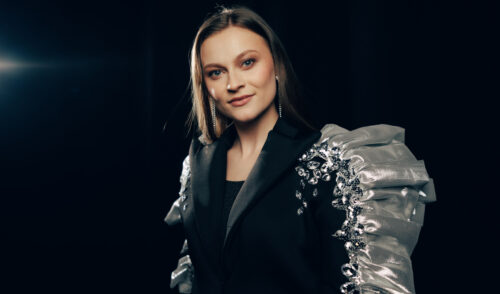
photo: RTE/Ole-Martin Evensen Sandness

Emmy

Emmy Kristine Guttulsrud Kristiansen, known mononymously as Emmy, is a Norwegian singer-songwriter born on 13 September 2000 in Holmestrand, Norway. She began her musical journey at a young age, participating in the youth music show Melodi Grand Prix Junior in 2015 with the song “Aiaiaiai.” In 2021, she competed in Norway’s Melodi Grand Prix with “Witch Woods,” qualifying for the final. Emmy has also been involved as a songwriter for other artists and gained an international audience through her TikTok account, amassing over a million followers.

“Laika Party” (What does AI say?)

Emmy’s Eurovision entry, “Laika Party,” is a synth-pop track co-written with her brother Erlend Guttulsrud Kristiansen, Henrik Østlund, Truls Marius Aarra, and Irish-based songwriter Larissa Tormey. The song pays tribute to Laika, the Soviet space dog who became the first living being to orbit the Earth in 1957. Emmy was inspired to write the song after learning about Laika’s story, imagining an alternative fate where the dog enjoys an endless party in space.

National Selection Process

Ireland’s national broadcaster, RTÉ, organized Eurosong 2025 to select its Eurovision entry. The competition took place on 7 February 2025 during a special edition of The Late Late Show. Six acts competed, with the winner determined by a combination of votes from a national jury, an international jury, and a public televote. Emmy’s “Laika Party” won both the national jury and public votes, securing a total of 34 points and earning her the right to represent Ireland in Basel.

  1. Emmy, “Laika Party
  2. Samantha Mumba, “My Way
  3. Bobbi Arlo, “Powerplay
  4. Niyl, “Growth
  5. Reylta, “Fire
  6. Adgy, “Run into the Night
Ireland in the Eurovision Song Contest

Ireland has a rich history in the Eurovision Song Contest, having participated 56 times since its debut. The country holds the record for the most wins, with seven victories, including three consecutive wins in the 1990s. Notably, Johnny Logan is the only three-time winner, having won as a performer and songwriter. Linda Martin sang his “Why Me”. She was followed by Niamh Kavanagh, Paul Harrington & Charlie McGettigan and Eimear Quinn. But let’s not forget that it all started in 1970 with Dana’s “All Kinds of Everything”. In recent years, Ireland’s best result came in 2024 when Bambie Thug’s “Doomsday Blue” achieved sixth place.

A Random Irish Entry

Reflecting on Ireland’s Eurovision history, random.org chose Liam Reilly. He represented Ireland in 1990 and reached a 2nd place with “Somewhere in Europe”. Reilly was really somewhere in Europe, as he took the wrong plane when he travelled to Zagreb for the Eurovision Song Contest.

Betting Odds

As of now, Emmy’s “Laika Party” is currently in 20th place in order to win the Eurovision Song Contest. In the odds to win the semifinal, she has a 10th place at this moment. That means it is still nailbiting for Ireland, but a place in the final is possible for sure!

We eagerly await the Eurovision Song Contest in Basel and look forward to witnessing Emmy’s performance on the grand stage.

Related news

Uncategorized

Vienna 12 points: Of monsters, pink little stars and the Beatles

Several countries start their second rehearsals. As we still don’t have access to the rehearsals, we will do something else. Per entry, we highlight one subject and give you some more information. That can be something about the artist, the song, the lyrics or even something completely different.  Finland – Linda Lampenius x Pete Parkkonen, “Liekinheitin” Running order: 7 | Rehearsal: 15:00–15:25 CEST Finland has moved to the top of the Eurovision 2026 betting odds, putting extra attention on Linda Lampenius and Pete Parkkonen’s entry “Liekinheitin”. For Finnish fans, that leading position will inevitably bring back memories of the country’s greatest Eurovision night. In 2006, Lordi shocked and thrilled Europe with “Hard Rock Hallelujah”, a hard-rock anthem performed in monster costumes. The band won the contest in Athens with 292 points, giving Finland its first, and so far only, Eurovision victory. It was a turning point for a country that had often struggled at the contest and had waited decades for a win. Lordi proved that Eurovision could reward something loud, theatrical and completely different. Now, twenty years later, Finland once again finds itself at the centre of the race. The odds may still change, but the comparison with 2006 gives this year’s Finnish campaign an extra layer of excitement and expectation too.  Montenegro – Tamara Živković, “Nova Zora” Running order: 8 | Rehearsal: 15:35–16:00 CEST Pinkove Zvezdice, literally “Pink’s Little Stars”, was a Serbian television talent show for young singers, broadcast by RTV Pink from 2014. The format was aimed at children and teenagers up to 15, and quickly became a regional platform across the former Yugoslav area. Contestants performed well-known Balkan and international songs in front of a star jury, often turning emotional performances into viral moments. For Eurovision fans, the show has become a useful talent-map. Montenegro’s Tamara Živković was one of the young singers who took part, years before her Eurovision journey. Two Croatian Eurovision acts went even further: Marko Bošnjak, Croatia 2025, won the second season after breaking through as an 11-year-old, while Roko Blažević, Croatia 2019, also won Pinkove Zvezdice before moving on to Dora and Eurovision. The programme therefore helped shape several Balkan pop careers, and its name still carries recognition among regional viewers with strong musical memories today.  Estonia – Vanilla Ninja, “Too Epic To Be True” Running order: 9 | Rehearsal: 16:10–16:35 CEST “Club Kung Fu” was the explosive first calling card of Vanilla Ninja. The Estonian girl band entered the song in Eurolaul 2003, Estonia’s national selection for Eurovision. Written by Sven Lõhmus and Piret Järvis, it mixed pop-rock guitars with a cheeky party lyric and a martial-arts gimmick that made the performance instantly memorable. The jury was not convinced: the song finished near the bottom with 32 points. The public, however, reacted very differently. “Club Kung Fu” became the moment that introduced Vanilla Ninja to a wider audience and helped turn them from a new Tallinn band into a national pop phenomenon at home and soon abroad. Later that year it appeared on their self-titled debut album, which launched their early career. In hindsight, the song is classic Vanilla Ninja: playful, loud, slightly absurd and impossible to ignore. It was less a Eurovision failure than the start of a European story. 📷 EBU/Sarah Louise Bennett  Israel – Noam Bettan, “Michelle” Running order: 10 | Rehearsal: 16:45–17:10 CEST There are more songs called ‘Michelle’. Yet the best-known remains the tender ballad introduced by The Beatles on their 1965 album Rubber Soul. Written mainly by Paul McCartney, with John Lennon contributing part of the middle section, it blends English lyrics with a few French lines, giving the song its unmistakable continental charm. Although The Beatles did not release it as a single in Britain, it quickly became one of their most covered compositions. The Overlanders, a British harmony group, seized the opportunity in 1966 and turned Michelle into a major hit, reaching number one on the UK Singles Chart. Their version is smoother and more folk-pop than the Beatles recording, but it keeps the melody’s quiet elegance. The song’s success shows how strong the composition was: even without The Beatles’ name on the label, Michelle could captivate listeners worldwide and become part of sixties pop history forever.    

Read More »
Uncategorized
Martijn

Vienna 12 points: Of monsters, pink little stars and the Beatles

Several countries start their second rehearsals. As we still don’t have access to the rehearsals, we will do something else. Per entry, we highlight one subject and give you some more information. That can be something about the artist, the song, the lyrics or even something completely different.  Finland – Linda Lampenius x Pete Parkkonen, “Liekinheitin” Running order: 7 | Rehearsal: 15:00–15:25 CEST Finland has moved to the top of the Eurovision 2026 betting odds, putting extra attention on Linda Lampenius and Pete Parkkonen’s entry “Liekinheitin”. For Finnish fans, that leading position will inevitably bring back memories of the country’s greatest Eurovision night. In 2006, Lordi shocked and thrilled Europe with “Hard Rock Hallelujah”, a hard-rock anthem performed in monster costumes. The band won the contest in Athens with 292 points, giving Finland its first, and so far only, Eurovision victory. It was a turning point for a country that had often struggled at the contest and had waited decades for a win. Lordi proved that Eurovision could reward something loud, theatrical and completely different. Now, twenty years later, Finland once again finds itself at the centre of the race. The odds may still change, but the comparison with 2006 gives this year’s Finnish campaign an extra layer of excitement and expectation too.  Montenegro – Tamara Živković, “Nova Zora” Running order: 8 | Rehearsal: 15:35–16:00 CEST Pinkove Zvezdice, literally “Pink’s Little Stars”, was a Serbian television talent show for young singers, broadcast by RTV Pink from 2014. The format was aimed at children and teenagers up to 15, and quickly became a regional platform across the former Yugoslav area. Contestants performed well-known Balkan and international songs in front of a star jury, often turning emotional performances into viral moments. For Eurovision fans, the show has become a useful talent-map. Montenegro’s Tamara Živković was one of the young singers who took part, years before her Eurovision journey. Two Croatian Eurovision acts went even further: Marko Bošnjak, Croatia 2025, won the second season after breaking through as an 11-year-old, while Roko Blažević, Croatia 2019, also won Pinkove Zvezdice before moving on to Dora and Eurovision. The programme therefore helped shape several Balkan pop careers, and its name still carries recognition among regional viewers with strong musical memories today.  Estonia – Vanilla Ninja, “Too Epic To Be True” Running order: 9 | Rehearsal: 16:10–16:35 CEST “Club Kung Fu” was the explosive first calling card of Vanilla Ninja. The Estonian girl band entered the song in Eurolaul 2003, Estonia’s national selection for Eurovision. Written by Sven Lõhmus and Piret Järvis, it mixed pop-rock guitars with a cheeky party lyric and a martial-arts gimmick that made the performance instantly memorable. The jury was not convinced: the song finished near the bottom with 32 points. The public, however, reacted very differently. “Club Kung Fu” became the moment that introduced Vanilla Ninja to a wider audience and helped turn them from a new Tallinn band into a national pop phenomenon at home and soon abroad. Later that year it appeared on their self-titled debut album, which launched their early career. In hindsight, the song is classic Vanilla Ninja: playful, loud, slightly absurd and impossible to ignore. It was less a Eurovision failure than the start of a European story. 📷 EBU/Sarah Louise Bennett  Israel – Noam Bettan, “Michelle” Running order: 10 | Rehearsal: 16:45–17:10 CEST There are more songs called ‘Michelle’. Yet the best-known remains the tender ballad introduced by The Beatles on their 1965 album Rubber Soul. Written mainly by Paul McCartney, with John Lennon contributing part of the middle section, it blends English lyrics with a few French lines, giving the song its unmistakable continental charm. Although The Beatles did not release it as a single in Britain, it quickly became one of their most covered compositions. The Overlanders, a British harmony group, seized the opportunity in 1966 and turned Michelle into a major hit, reaching number one on the UK Singles Chart. Their version is smoother and more folk-pop than the Beatles recording, but it keeps the melody’s quiet elegance. The song’s success shows how strong the composition was: even without The Beatles’ name on the label, Michelle could captivate listeners worldwide and become part of sixties pop history forever.    

Read More »
Follow Us: