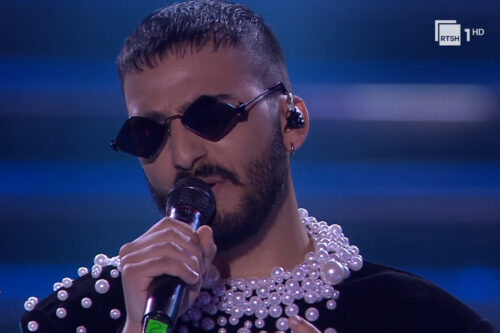
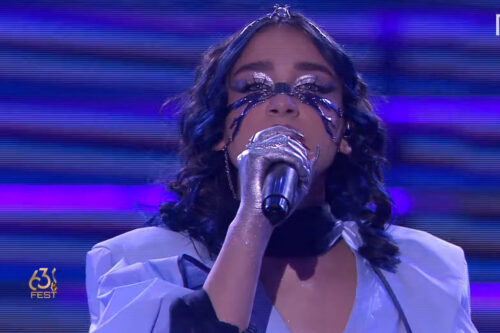
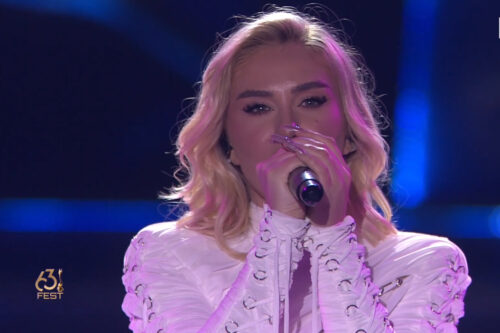
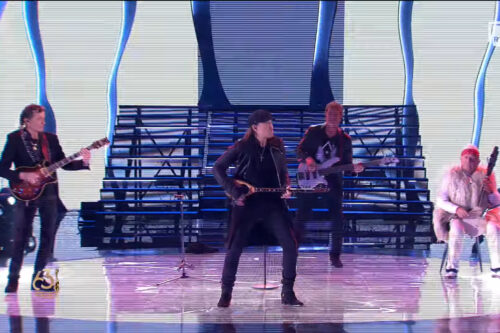
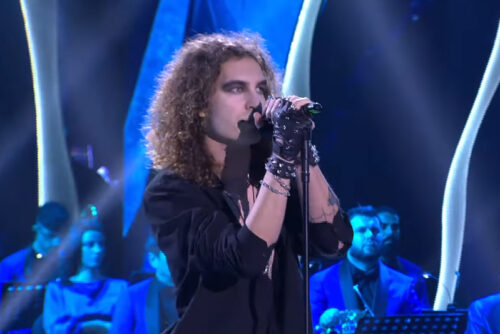
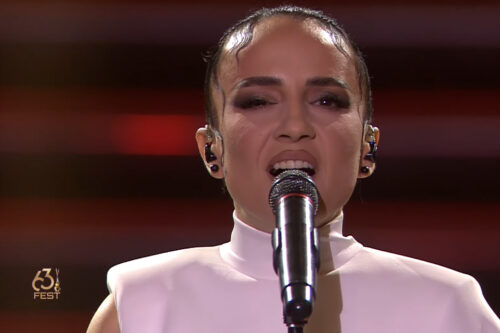
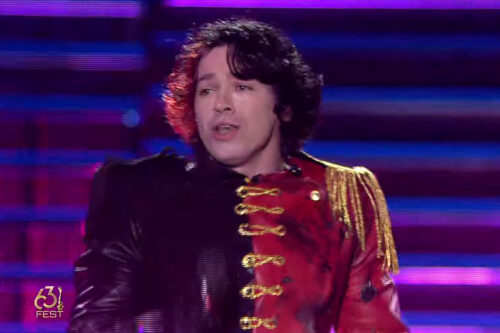
The latest Eurovision 2026 entries have sharpened the picture for Vienna. Switzerland has confirmed Veronica Fusaro with Alice. Armenia has completed the artist lineup with SIMÓN and Paloma Rumba. Czechia moves forward with Daniel Zizka and CROSSROADS. Georgia closes the release cycle with Bzikebi’s On Replay. Together, these four songs add alternative pop, rebellious energy, emotional sincerity and a strong dose of comeback value to a contest field that is now taking clear shape ahead of May. Switzerland brings a darker message with Alice Switzerland’s new entry may be one of the most serious songs in this latest batch of Eurovision 2026 entries. Eurovision describes Veronica Fusaro’s Alice as an alternative pop track with rock influences. The song tells the story of a woman whose boundaries are crossed under the disguise of affection. In the official article you can read the lyrics explore several forms of violence, including manipulation, control and abuse of power. It is also a new version of a song from Fusaro’s 2025 album Looking for Connection, reworked with British producer Charlie McClean. Armenia completes the lineup with Paloma Rumba Armenia, meanwhile, arrives with one of the day’s most immediate concepts. Paloma Rumba, performed by SIMÓN, is framed by Eurovision as a rebellious anthem about breaking out of a suffocating routine and choosing ambition over comfort. The official story explains that the title refers to a joyful dance of freedom, while the lyrics follow a character who walks away from an unrewarding nine-to-five life. The song was composed by LI’LITH, and the lyric team includes Rosa Linn, who represented Armenia at Eurovision 2022. With this announcement on 11 March, Armenia also became the final country to confirm its singer for Vienna 2026. Czechia puts its faith in Daniel Zizka Czechia takes a different route. Rather than leaning into spectacle, broadcaster ČT appears to be backing authenticity with 23-year-old Daniel Zizka. Eurovision describes him as one of the most compelling voices of a new generation in Czech music, while the official participant list confirms CROSSROADS as his song for Vienna. The Eurovision feature also notes that magazine Headliner has named him among the future talents of the Czech scene. In addition, Czech delegation head Kryštof Šámal praised Zizka’s focus and control in early studio sessions, while Zizka himself said he wants to bring music and emotion rather than hide behind flashy tricks. Georgia turns nostalgia into a new Eurovision chapter Finally, Georgia offers one of the most intriguing stories of the season. Bzikebi are no ordinary newcomers: the trio won Junior Eurovision for Georgia in 2008, and Eurovision.com notes that the country has since gone on to collect a record-setting four Junior Eurovision victories. Now reunited as adults, Giorgi Shiolashvili, Mariam Tatulashvili and Mariam Kikuashvili return with On Replay, which Eurovision calls the final song to be released for the 70th contest. Composed by Giga Kukhianidze with lyrics by Lizi Japaridze, the entry sends Georgia into the First Half of the First Semi-Final on 12 May with a familiar name and a fresh mission. What these Eurovision 2026 entries say about this year Taken together, these Eurovision 2026 entries reveal a striking balance. Switzerland brings social weight and a darker lyrical edge. Armenia goes for motion, release and personal freedom. Czechia bets on sincerity and clean emotional delivery. Georgia, by contrast, turns proven Eurovision history into a contemporary comeback story. That variety matters. In a contest where memorability is often just as important as melody, none of these four countries has chosen the same lane, and that should help each entry carve out its own identity as rehearsals draw closer. source: eurovision.com