🇨🇭 Road to Basel: Switzerland

Road to Basel: Switzerland

Road to Basel: Switzerland! As we eagerly anticipate the Eurovision Song Contest in Basel, we continue our daily spotlight on this year’s contestants. Today, we focus on the host nation, Switzerland.

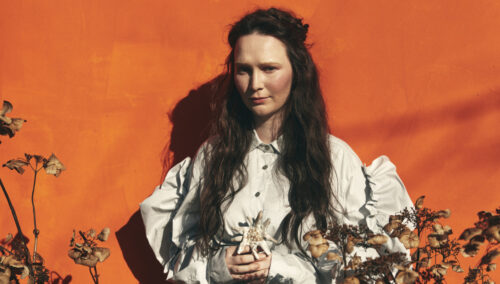
photo: SRF/Maurice Haas

Zoë Më

Zoë Alina Kressler, better known by her stage name Zoë Më, is a Swiss singer-songwriter. She was born on October 6, 2000, in Basel. At the age of ten, she already began writing her own songs. Over time, she developed a unique musical style by mixing German and French lyrics and combining pop music with chanson, creating what she calls “poetry-pop.” As a result, Zoë gained attention and, in 2024, received two important awards: RTS Artiste Radar and SRF 3 Best Talent. These awards recognized her as one of Switzerland’s most promising new musicians. Additionally, Zoë has performed at prestigious events, such as the Montreux Jazz Festival and Luzern Live. Moreover, she has toured with well-known artists like Remo Forrer and Joya Marleen.

Voyage (What does AI say?)

“Voyage” is Zoë Më’s entry for the Eurovision Song Contest 2025. The song showcases her signature poetic lyrics and melodic composition, reflecting themes of personal growth and exploration. It was released on March 10, 2025, and has been praised for its artistic depth and emotional resonance.

National Selection Process

Switzerland’s national broadcaster, SRG SSR, opted for an internal selection process to choose their Eurovision representative for 2025. A submission period was open from August 8 to 22, 2024, during which 431 entries were received. The selection involved multiple rounds of evaluation by Swiss and international public panels, as well as a 25-member international expert jury. On March 5, 2025, Zoë Më was announced as the selected artist, with her song “Voyage” unveiled on March 10.

Switzerland in the Eurovision Song Contest

Switzerland has participated in the Eurovision Song Contest since its inception in 1956, achieving victories in 1956 with Lys Assia‘s “Refrain,” in 1988 with Céline Dion‘s “Ne partez pas sans moi,” and in 2024 with Nemo‘s “The Code.” As the host country in 2025, Switzerland automatically qualifies for the Grand Final, scheduled for May 17, 2025, at St. Jakobshalle in Basel.

A Random Swiss Entry

Reflecting on Switzerland’s Eurovision history, random.org selected Gjon’s Tears‘ “Tout l’univers”. Gjon’s Tears was supposed to participate in 2020, but due to the cancellation of the contest, he had to wait a year. He won the jury vote and was 3rd overall in 2021. Never had anybody with Kosovar and Albanian roots scored so well in Eurovision. 

Betting Odds

As of now, Zoë Më’s “Voyage” currently has the 22nd place in the betting odds. That means it’s the 22nd song in order to win the contest. According to the bookmakers, it is not likely that Switzerland will earn a second consecutive victory. But is that a problem? We don’t think so!

We eagerly await the Eurovision Song Contest in Basel and look forward to witnessing Zoë Më’s performance on the grand stage.

Related news

History

70 years of Eurovision: it was a close call

The Eurovision Song Contest is celebrating its 70th anniversary. That is a wonderful milestone. We at Eurovision Universe love diving into the history of the contest. That is why we are taking a closer look at the contests of the past 70 years. 2002 For the first time, the Eurovision Song Contest was held in a Baltic state. The festival took place in a small hall, the Saku Suurhal in Tallinn, Estonia, hosted by an actor/singer (Marko Matvere) and an opera singer (Anneli Peebo). 24 countries participated. The songs Constantinos from Cyprus made a comeback. He was part of the boy band One, which had the honor of opening the festival and finished a respectable sixth. Not exactly a comeback, but still somewhat so: the German Corinna May. The blind singer had already won the national final in 1999 but was disqualified at the time. Now she was allowed to participate for real. Monica Anghel failed to make it through the audio preliminary round for Romania in 1996. Now, together with Marcel Pavel, she managed to finish 9th for Romania, the best score to date. Host country Estonia sent a Swedish singer, Sahlene. With her song “Runaway,” she finished third. Estonia had established itself as a successful nation at the Eurovision Song Contest. The United Kingdom also finished third with the ballad “Come Back” by Jessica Garlick. After a few less successful years for the British, this was a nice… er… comeback. Although the Netherlands was in the relegation zone and therefore did not participate, the Belgian entry still had a Dutch touch: Sergio & The Ladies participated on behalf of that country. Sergio was Belgian, but the ladies were definitely Dutch. Expectations in Belgium were very high. However, the Belgians’ self-confidence slowly but surely ebbed away, and ultimately they finished 13th instead of first. Ira Losco was the Maltese participant. She had previously participated in national finals but was now on the Eurovision stage for the first time. Ira came very close to winning the festival. However, Lithuania had to vote last and awarded 12 points to fellow Baltic state Estonia. Lithuania must not go unmentioned. The group B-Avarija had very high odds for a long time with the song “We All”. However, it turned out that the song had already appeared in Lithuanian on a B-Avarija record. It was disqualified. The popular group never managed to win for Lithuania again. Instead of them, Lithuania sent a boy with a song that wasn’t particularly strong, but above all with a very striking sweater. Marie N Her real name was Marija Naumova, but the winner was given the name Marie N for the international market. The lyrics of her song were written in such poor English that the entire thing had to be rewritten. And with success! “I wanna”, with an act in which Marie N initially dressed as a man but ended up in an evening gown, became the first and so far only Latvian victory. And so the Eurovision Song Contest remained within the Baltic states! 2003 Too many countries knocked at the door of the Eurovision Song Contest. This would be the last one that could be held on one single evening. Ukraine was admitted, the others had to wait a little longer. The contest was held in the Skonto Hall in Riga. Latvia had only participated three times. Two of the three participants took charge of the presentation: Renārs Kaupers from Brainstorm and winner Marie N. The songs None of the artists had participated before. However, there were a number of notable participants. Alf Poier represented Austria. By his own account, he did so to ridicule the Eurovision Song Contest. He was a Eurovision hater. It earned him a remarkable sixth place with “Weil der Mensch zählt”. Esther Hart participated for the Netherlands with her “One More Night”. Later, Esther Hart would become active in organizing J’aime La Vlie, an event featuring Eurovision participants on the Dutch Wadden Island of Vlieland. The group Ich Troje participated for Poland. They sang their song not only in Polish but also in Russian and German. With his purple-red hair, singer Michał Wiśniewski was a striking figure in any case. And then there was Urban Trad for Belgium. This group sang a song in a fake language: “Sanomi”. The folk song was not a favorite beforehand, but ultimately nearly won. And this despite the fact that quite a few things had been going on within the group. According to the Belgian secret service, singer Soetkin Collier had participated in far-right demonstrations and even attended a memorial service for Nazi leader Rudolf Hess. Such a person was not allowed to represent Belgium, and Soetkin had to stay home. The accusations all turned out to be false: she no longer harbored far-right sympathies, and the Rudolf Hess story turned out to be utter nonsense. But in 2003, everything revolved around t.A.T.u. The supposedly lesbian (in fact heterosexual) girl duo had been instructed to behave as annoyingly as possible. Spoiled to the core, they made it clear that they mainly thought the Eurovision Song Contest was stupid. But when they thought they were unobserved for a moment, a Russian journalist heard the girls say that they were actually very impressed by the big stage. They just missed out on winning. Sertab Erener Because after an exciting battle with Belgium and Russia, Turkey ultimately won. Already one of the pre-contest favorites, Sertab Erener took first place with her Türkpop song “Every Way That I Can”. The genre had become popular throughout Europe thanks to Tarkan, and Sertab was now reaping the benefits. Her song became a hit across Europe, and Sertab remains a major star to this day.

Read More »
History
Martijn

70 years of Eurovision: it was a close call

The Eurovision Song Contest is celebrating its 70th anniversary. That is a wonderful milestone. We at Eurovision Universe love diving into the history of the contest. That is why we are taking a closer look at the contests of the past 70 years. 2002 For the first time, the Eurovision Song Contest was held in a Baltic state. The festival took place in a small hall, the Saku Suurhal in Tallinn, Estonia, hosted by an actor/singer (Marko Matvere) and an opera singer (Anneli Peebo). 24 countries participated. The songs Constantinos from Cyprus made a comeback. He was part of the boy band One, which had the honor of opening the festival and finished a respectable sixth. Not exactly a comeback, but still somewhat so: the German Corinna May. The blind singer had already won the national final in 1999 but was disqualified at the time. Now she was allowed to participate for real. Monica Anghel failed to make it through the audio preliminary round for Romania in 1996. Now, together with Marcel Pavel, she managed to finish 9th for Romania, the best score to date. Host country Estonia sent a Swedish singer, Sahlene. With her song “Runaway,” she finished third. Estonia had established itself as a successful nation at the Eurovision Song Contest. The United Kingdom also finished third with the ballad “Come Back” by Jessica Garlick. After a few less successful years for the British, this was a nice… er… comeback. Although the Netherlands was in the relegation zone and therefore did not participate, the Belgian entry still had a Dutch touch: Sergio & The Ladies participated on behalf of that country. Sergio was Belgian, but the ladies were definitely Dutch. Expectations in Belgium were very high. However, the Belgians’ self-confidence slowly but surely ebbed away, and ultimately they finished 13th instead of first. Ira Losco was the Maltese participant. She had previously participated in national finals but was now on the Eurovision stage for the first time. Ira came very close to winning the festival. However, Lithuania had to vote last and awarded 12 points to fellow Baltic state Estonia. Lithuania must not go unmentioned. The group B-Avarija had very high odds for a long time with the song “We All”. However, it turned out that the song had already appeared in Lithuanian on a B-Avarija record. It was disqualified. The popular group never managed to win for Lithuania again. Instead of them, Lithuania sent a boy with a song that wasn’t particularly strong, but above all with a very striking sweater. Marie N Her real name was Marija Naumova, but the winner was given the name Marie N for the international market. The lyrics of her song were written in such poor English that the entire thing had to be rewritten. And with success! “I wanna”, with an act in which Marie N initially dressed as a man but ended up in an evening gown, became the first and so far only Latvian victory. And so the Eurovision Song Contest remained within the Baltic states! 2003 Too many countries knocked at the door of the Eurovision Song Contest. This would be the last one that could be held on one single evening. Ukraine was admitted, the others had to wait a little longer. The contest was held in the Skonto Hall in Riga. Latvia had only participated three times. Two of the three participants took charge of the presentation: Renārs Kaupers from Brainstorm and winner Marie N. The songs None of the artists had participated before. However, there were a number of notable participants. Alf Poier represented Austria. By his own account, he did so to ridicule the Eurovision Song Contest. He was a Eurovision hater. It earned him a remarkable sixth place with “Weil der Mensch zählt”. Esther Hart participated for the Netherlands with her “One More Night”. Later, Esther Hart would become active in organizing J’aime La Vlie, an event featuring Eurovision participants on the Dutch Wadden Island of Vlieland. The group Ich Troje participated for Poland. They sang their song not only in Polish but also in Russian and German. With his purple-red hair, singer Michał Wiśniewski was a striking figure in any case. And then there was Urban Trad for Belgium. This group sang a song in a fake language: “Sanomi”. The folk song was not a favorite beforehand, but ultimately nearly won. And this despite the fact that quite a few things had been going on within the group. According to the Belgian secret service, singer Soetkin Collier had participated in far-right demonstrations and even attended a memorial service for Nazi leader Rudolf Hess. Such a person was not allowed to represent Belgium, and Soetkin had to stay home. The accusations all turned out to be false: she no longer harbored far-right sympathies, and the Rudolf Hess story turned out to be utter nonsense. But in 2003, everything revolved around t.A.T.u. The supposedly lesbian (in fact heterosexual) girl duo had been instructed to behave as annoyingly as possible. Spoiled to the core, they made it clear that they mainly thought the Eurovision Song Contest was stupid. But when they thought they were unobserved for a moment, a Russian journalist heard the girls say that they were actually very impressed by the big stage. They just missed out on winning. Sertab Erener Because after an exciting battle with Belgium and Russia, Turkey ultimately won. Already one of the pre-contest favorites, Sertab Erener took first place with her Türkpop song “Every Way That I Can”. The genre had become popular throughout Europe thanks to Tarkan, and Sertab was now reaping the benefits. Her song became a hit across Europe, and Sertab remains a major star to this day.

Read More »
Follow Us: