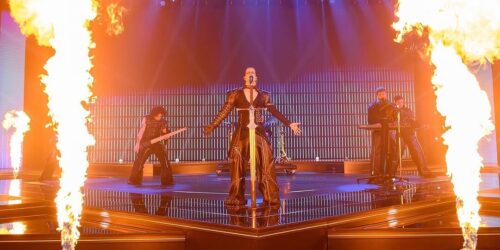
🇦🇺 Go-Jo represents Australia

Go-Jo represents Australia in the 2025 Eurovision Song Contest. Today, he presents his song Milkshake Man. A few hours ago, SBS accidentally leaked the track.

Go-Jo

Born on December 7, 1989, in Manjimup, Western Australia, Go-Jo is an Australian pop singer-songwriter and producer known for his guitar-driven pop sound infused with R&B. He launched his music career in 2016 and quickly gained recognition for his original songs and distinctive covers. His version of Iris by the Goo Goo Dolls has earned over 3 million streams on Spotify, while his original track Mrs. Hollywood went viral after a food court performance clip exceeded 1 million views.

With over 600,000 TikTok followers and 21 million likes, Go-Jo captivates fans with spontaneous guitar solos and singing challenges. Growing up in a rural setting shaped his creative style, setting him apart in the Australian music scene. His energetic performances and relatable lyrics continue to draw a wide audience. He shares his life with his partner, Sharni-Leigh, and remains active in the music industry in 2025.

Australia in the Eurovision Song Contest

Australia joined the Eurovision Song Contest in 2015 as a special guest to celebrate the contest’s 60th anniversary. The European Broadcasting Union (EBU) later extended its participation. The country competes as an associate member of the EBU, with broadcaster SBS organizing the selection process.

Since its debut, Australia has consistently reached the Grand Final. Dami Im secured the best result in 2016 with Sound of Silence, finishing second. Over the years, Australia has sent a mix of internal selections and national final winners.

In 2023, Voyager represented Australia with Promise, achieving a top-ten result. The following year, Electric Fields competed with One Milkali (One Blood).

Go-Jo represents Australia this year. His entry, Milkshake Man, follows a diverse lineup of Australian acts that have showcased different musical styles on the Eurovision stage.


Related news

Eurovision 2026

Eurovision 2026 reactions after second semi-final

The Eurovision 2026 reactions continued immediately after Thursday night’s second semi-final in Vienna. Bulgaria, Ukraine, Norway, Australia, Romania, Malta, Cyprus, Albania, Denmark and Czechia qualified for Saturday’s Grand Final. Azerbaijan, Luxembourg, Armenia, Switzerland and Latvia did not make it through. Since Eurovision will only reveal the detailed ranking after the final, the “winners” of the night are again the ten qualifiers. Social media quickly filled with tears, hugs and short messages from the green room. Qualifiers celebrate their Grand Final place Bulgaria’s DARA was the first name announced, and her disbelief was clear. In a filmed reaction, she said she “could not believe” it, while also underlining how much she loved being on stage with “Bangaranga”. Ukraine’s LELÉKA reacted with a softer kind of joy. She said she felt happy, hopeful and “lightful” after taking “Ridnym” to the final. Australia’s Delta Goodrem also moved quickly into gratitude mode. After qualifying with “Eclipse”, she called the moment “pure magic” and thanked fans for every vote, message and bit of love. Norway’s Jonas Lovv sounded equally relieved. Speaking to Norwegian press, he said the result felt “insanely” good and joked that his celebration plan was to go straight to bed. Malta’s AIDAN gave one of the most emotional reactions of the night. He said he was “genuinely so happy” and pointed out that the Maltese language was back on the Eurovision stage after 54 years. Denmark’s Søren Torpegaard Lund described himself as overwhelmed and happy, while Czechia’s Daniel Zizka said he was grateful, tired and still trying to understand what had happened. Albania’s Alis also remained emotional after “Nân” reached the final. Cyprus’ Antigoni thanked everyone who supported “JALLA” and said she had felt confident Cyprus could qualify. Romania’s Alexandra Căpitănescu also celebrated online after “Choke Me” secured Romania a place in the Grand Final. For all ten qualifiers, the mood immediately shifted from nerves to preparation for Saturday. Non-qualifiers thank fans and look back For the five non-qualifiers, the Eurovision 2026 reactions were more reflective. Luxembourg’s Eva Marija looked back with pride after “Mother Nature” missed the final. She said she had given everything, was proud of herself and felt grateful for the Eurovision adventure. Azerbaijan’s JIVA ended her performance by thanking Europe, but “Just Go” did not qualify. Armenia’s SIMÓN, Switzerland’s Veronica Fusaro and Latvia’s Atvara also stayed in the semi-final. Their latest Eurovision messages focused on the performance itself, the meaning behind their songs and the support around them. That made their reactions quieter, but not less meaningful. The second semi-final therefore showed the familiar two sides of Eurovision: pure celebration for the qualifiers and gratitude, disappointment and pride for those whose Vienna journey ended before Saturday.

Read More »
Eurovision 2026
Martijn

Eurovision 2026 reactions after second semi-final

The Eurovision 2026 reactions continued immediately after Thursday night’s second semi-final in Vienna. Bulgaria, Ukraine, Norway, Australia, Romania, Malta, Cyprus, Albania, Denmark and Czechia qualified for Saturday’s Grand Final. Azerbaijan, Luxembourg, Armenia, Switzerland and Latvia did not make it through. Since Eurovision will only reveal the detailed ranking after the final, the “winners” of the night are again the ten qualifiers. Social media quickly filled with tears, hugs and short messages from the green room. Qualifiers celebrate their Grand Final place Bulgaria’s DARA was the first name announced, and her disbelief was clear. In a filmed reaction, she said she “could not believe” it, while also underlining how much she loved being on stage with “Bangaranga”. Ukraine’s LELÉKA reacted with a softer kind of joy. She said she felt happy, hopeful and “lightful” after taking “Ridnym” to the final. Australia’s Delta Goodrem also moved quickly into gratitude mode. After qualifying with “Eclipse”, she called the moment “pure magic” and thanked fans for every vote, message and bit of love. Norway’s Jonas Lovv sounded equally relieved. Speaking to Norwegian press, he said the result felt “insanely” good and joked that his celebration plan was to go straight to bed. Malta’s AIDAN gave one of the most emotional reactions of the night. He said he was “genuinely so happy” and pointed out that the Maltese language was back on the Eurovision stage after 54 years. Denmark’s Søren Torpegaard Lund described himself as overwhelmed and happy, while Czechia’s Daniel Zizka said he was grateful, tired and still trying to understand what had happened. Albania’s Alis also remained emotional after “Nân” reached the final. Cyprus’ Antigoni thanked everyone who supported “JALLA” and said she had felt confident Cyprus could qualify. Romania’s Alexandra Căpitănescu also celebrated online after “Choke Me” secured Romania a place in the Grand Final. For all ten qualifiers, the mood immediately shifted from nerves to preparation for Saturday. Non-qualifiers thank fans and look back For the five non-qualifiers, the Eurovision 2026 reactions were more reflective. Luxembourg’s Eva Marija looked back with pride after “Mother Nature” missed the final. She said she had given everything, was proud of herself and felt grateful for the Eurovision adventure. Azerbaijan’s JIVA ended her performance by thanking Europe, but “Just Go” did not qualify. Armenia’s SIMÓN, Switzerland’s Veronica Fusaro and Latvia’s Atvara also stayed in the semi-final. Their latest Eurovision messages focused on the performance itself, the meaning behind their songs and the support around them. That made their reactions quieter, but not less meaningful. The second semi-final therefore showed the familiar two sides of Eurovision: pure celebration for the qualifiers and gratitude, disappointment and pride for those whose Vienna journey ended before Saturday.

Read More »
Follow Us: