🇺🇦 Road to Malmö: Ukraine

photo: UA:PBC

We can not wait for the Eurovision Song Contest in Malmö. Therefore, we have a closer look at one of the contestants every day. Today: Ukraine.

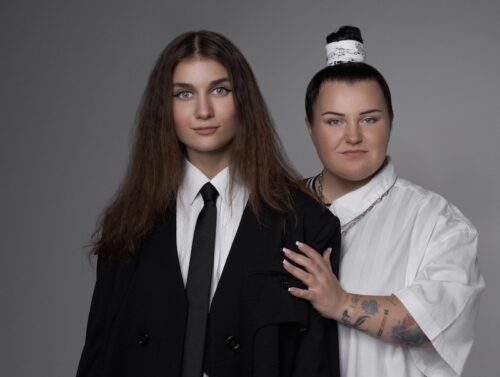
Alyona Alyona

Aliona Olehivna Savranenko, known professionally as Alyona Alyona, is a groundbreaking Ukrainian rapper and songwriter, born on June 14, 1991, in Kapitanivka, Novomyrhorod Raion, Kirovohrad Oblast. With a background in education, holding two bachelor’s degrees and experience as a kindergarten teacher, she transitioned from teaching to pursue music full-time. Gaining attention with her debut video for “Rybky” in October 2018, Alyona Alyona’s career quickly ascended. Her first album, “Pushka,” released in April 2019, showcased her storytelling prowess and unique approach to rap, earning her acclaim as “Ukraine’s most unlikely rap star” by Vogue. Alyona Alyona’s impact extended internationally with her signing to Def Jam Polska in 2020 and winning the Public Choice Award at the Music Moves Europe Talent Awards in 2021. 

Jerry Heil

Yana Oleksandrivna Shemayeva, known as Jerry Heil, is a versatile Ukrainian singer, songwriter, and YouTuber, born on October 21, 1995, in Vasylkiv, near Kyiv. Her musical journey was shaped by her studies at the R. Glier Kyiv Institute of Music and the Kyiv Conservatory. Adopting the stage name Jerry Heil at 15, she launched a YouTube channel in 2012, covering songs and sharing vlogs, which caught the attention of notable musicians, including Sviatoslav Vakarchuk from Okean Elzy. Signing with Vidlik Records in 2017, Heil’s debut EP, “De miy dim,” marked her professional entry into music. Her career further blossomed with hits like “Okhrana, otmyena,” leading to her debut album “Ya, Yana.” Heil’s distinctiveness continued with her engagement in Vidbir, notably winning Vidbir 2024 alongside Alyona Alyona with “Teresa & Maria” for Eurovision 2024. Fluent in multiple languages and a committed vegan, Heil’s personal and artistic choices are closely intertwined, reflecting her unique identity and values in the music industry.

Vidbir

Vidbir is the name of the Ukrainian national selection. The contest this year contained 11 entries. One of them was added in a late stadium as a wildcard, as a winner of an online election. One former Eurovision participant was among the contestants: MĂ©lovin. The singer presented the song “Dreamer” and was the runner up of the contest. Following the completion of the performances, the Diia app (an app especially for the Ukrainian diaspora) experienced a malfunction, which caused the voting period to be prolonged and resulted in the postponement of the results announcement to February 4. 

Ukraine in the Eurovision Song Contest

In 2003, Ukraine debuted in the contest. Already one year later, the country had its first victory: Ruslana won the contest with “Wild dances”. Ukraine won again in 2016 with Jamala‘s “1944” and in 2022 with Kalush Orchestra and “Stefania”. Ukraine never failed to reach the Grand Final, reaching the top-3 on no less than 6 occasions.
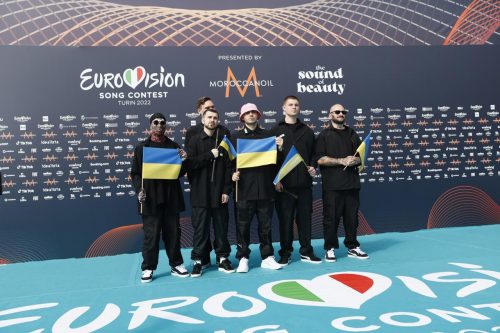
photo: EBU

The Bookmakers

It looks like Ukraine is gonna be succesful: in the betting odds Ukraine is currently the 3rd country in chances to win the 2024 Eurovision Song Contest.

The song

This is the song:

Related news

Eurovision 2026

Vienna 12 points: from eighties music to progressive metal

Five more countries start their second rehearsals. As we still don’t have access to the rehearsals, we will do something else. Per entry, we highlight one subject and give you some more information. That can be something about the artist, the song, the lyrics or even something completely different.  Belgium – Essyla, “Dancing on the Ice” Running order: 11 | Rehearsal: 10:30–10:55 CEST During Belgium’s second rehearsal in Vienna, with ESSYLA carrying the flag in 2026, another Belgian Eurovision story returns to the spotlight. Forty years ago, Sandra Kim won the contest in Bergen with “J’aime la vie”, giving Belgium its first and so far only victory. Her triumph, however, has always carried an unusual footnote. In the song she sang that she was fifteen. At the time, the public was told she was fourteen. Later, Sandra Kim admitted she had actually been only thirteen when she stepped onto the Eurovision stage. The revelation made her the youngest winner in contest history, a record that can no longer be broken under today’s age rules. While ESSYLA rehearses for a new Belgian chapter, Kim’s story remains a reminder of Eurovision’s unpredictable past: a bright, youthful performance that became both a national celebration and a lasting controversy for fans across Europe and beyond, even today.  Lithuania – Lion Ceccah, “Sólo Quiero Más” Running order: 12 | Rehearsal: 11:05–11:30 CEST Six languages in the Lithuanian entry may sound like a Eurovision record, but the multilingual crown still belongs to Norway. In 1973, the Bendik Singers performed “It’s Just A Game” in Luxembourg and packed an extraordinary twelve languages into one playful pop song. English and French carried most of the lyrics, but the performance also included brief phrases in Spanish, Italian, Dutch, German, Irish, Serbo-Croatian, Hebrew, Finnish, Swedish and Norwegian. The result was more than a gimmick: the song’s jazzy vocal exchanges and theatrical delivery made it stand out in a year when Eurovision had just introduced the free-language rule. Norway finished seventh with 89 points, its best result for several years. Today, “It’s Just A Game” remains a fascinating reminder that Eurovision’s love of linguistic experiments is not new. Long before Lion Ceccah, Bendik Singers had already turned the contest into a multilingual playground and a lasting Eurovision curiosity.  San Marino – Senhit feat. Boy George, “Superstar” Running order: 13 | Rehearsal: 11:40–12:05 CEST ulture Club may be a household name for older pop fans, but many people watching Eurovision this year might not know the band, for a simple reason: they were not born yet when the group ruled the charts. Formed in London in 1981, Culture Club became one of the defining acts of the 1980s. With Boy George as their charismatic frontman, the band stood out with a colourful image and a sound that mixed pop, soul, reggae and new wave. Their breakthrough came with “Do You Really Want to Hurt Me”, followed by international hits such as “Karma Chameleon” and “Time (Clock of the Heart)”. Culture Club’s impact went beyond record sales. They helped shape the look and feel of 1980s pop and challenged expectations around fashion, identity and performance. For younger Eurovision viewers, this is a chance to discover an influential chapter in British pop history for themselves today.  Poland – Alicja, “Pray” Running order: 14 | Rehearsal: 12:20–12:45 CEST Hit Hit Hurra! was a Polish music talent show aimed at young performers, broadcast on TVP1. The format gave children and teenagers a national stage, combining competitive performances with professional guidance and live musical backing. Its jury included well-known figures from the Polish music scene, among them Eurovision 1994 runner-up Edyta Górniak, music journalist Hirek Wrona and vocal coach Bartek Caboń. One of the programme’s most notable winners was Alicja Szemplińska. In 2016, at just 14, she won the first edition after impressing viewers and the jury with her performance of Beyoncé’s “Listen”. Her victory became an early milestone in a career that later led her to The Voice of Poland and to Eurovision. Alicja rehearses today for the Eurovision Song Contest in Vienna. Today, Hit Hit Hurra! is remembered as an important stepping stone for young Polish talent and future pop stars nationwide.  Serbia – Lavina, “Kraj mene” Running order: 15 | Rehearsal: 12:55–13:20 CEST Progressive metal is built on ambition. The genre takes the power of heavy metal and combines it with complex rhythms, extended song structures and influences from progressive rock, classical music and jazz. Instead of relying only on short, direct hooks, progressive metal often develops slowly, moving through different moods and dramatic contrasts. That makes it a natural fit for artists who want to tell a story on stage. At this year’s Eurovision Song Contest in Vienna, Serbia’s Lavina brings that approach into a very different arena. The six-member band from Niš, formed in 2020, represents Serbia with “Kraj Mene”. Their music, rooted in metal and rock influences, adds a darker, theatrical edge to a contest often associated with pop. For viewers less familiar with the genre, Lavina’s rehearsal today offers a chance to hear how progressive metal can be emotional, technical and accessible at the same time for audiences watching live.  

Read More »
Eurovision 2026
Martijn

Vienna 12 points: from eighties music to progressive metal

Five more countries start their second rehearsals. As we still don’t have access to the rehearsals, we will do something else. Per entry, we highlight one subject and give you some more information. That can be something about the artist, the song, the lyrics or even something completely different.  Belgium – Essyla, “Dancing on the Ice” Running order: 11 | Rehearsal: 10:30–10:55 CEST During Belgium’s second rehearsal in Vienna, with ESSYLA carrying the flag in 2026, another Belgian Eurovision story returns to the spotlight. Forty years ago, Sandra Kim won the contest in Bergen with “J’aime la vie”, giving Belgium its first and so far only victory. Her triumph, however, has always carried an unusual footnote. In the song she sang that she was fifteen. At the time, the public was told she was fourteen. Later, Sandra Kim admitted she had actually been only thirteen when she stepped onto the Eurovision stage. The revelation made her the youngest winner in contest history, a record that can no longer be broken under today’s age rules. While ESSYLA rehearses for a new Belgian chapter, Kim’s story remains a reminder of Eurovision’s unpredictable past: a bright, youthful performance that became both a national celebration and a lasting controversy for fans across Europe and beyond, even today.  Lithuania – Lion Ceccah, “Sólo Quiero Más” Running order: 12 | Rehearsal: 11:05–11:30 CEST Six languages in the Lithuanian entry may sound like a Eurovision record, but the multilingual crown still belongs to Norway. In 1973, the Bendik Singers performed “It’s Just A Game” in Luxembourg and packed an extraordinary twelve languages into one playful pop song. English and French carried most of the lyrics, but the performance also included brief phrases in Spanish, Italian, Dutch, German, Irish, Serbo-Croatian, Hebrew, Finnish, Swedish and Norwegian. The result was more than a gimmick: the song’s jazzy vocal exchanges and theatrical delivery made it stand out in a year when Eurovision had just introduced the free-language rule. Norway finished seventh with 89 points, its best result for several years. Today, “It’s Just A Game” remains a fascinating reminder that Eurovision’s love of linguistic experiments is not new. Long before Lion Ceccah, Bendik Singers had already turned the contest into a multilingual playground and a lasting Eurovision curiosity.  San Marino – Senhit feat. Boy George, “Superstar” Running order: 13 | Rehearsal: 11:40–12:05 CEST ulture Club may be a household name for older pop fans, but many people watching Eurovision this year might not know the band, for a simple reason: they were not born yet when the group ruled the charts. Formed in London in 1981, Culture Club became one of the defining acts of the 1980s. With Boy George as their charismatic frontman, the band stood out with a colourful image and a sound that mixed pop, soul, reggae and new wave. Their breakthrough came with “Do You Really Want to Hurt Me”, followed by international hits such as “Karma Chameleon” and “Time (Clock of the Heart)”. Culture Club’s impact went beyond record sales. They helped shape the look and feel of 1980s pop and challenged expectations around fashion, identity and performance. For younger Eurovision viewers, this is a chance to discover an influential chapter in British pop history for themselves today.  Poland – Alicja, “Pray” Running order: 14 | Rehearsal: 12:20–12:45 CEST Hit Hit Hurra! was a Polish music talent show aimed at young performers, broadcast on TVP1. The format gave children and teenagers a national stage, combining competitive performances with professional guidance and live musical backing. Its jury included well-known figures from the Polish music scene, among them Eurovision 1994 runner-up Edyta Górniak, music journalist Hirek Wrona and vocal coach Bartek Caboń. One of the programme’s most notable winners was Alicja Szemplińska. In 2016, at just 14, she won the first edition after impressing viewers and the jury with her performance of Beyoncé’s “Listen”. Her victory became an early milestone in a career that later led her to The Voice of Poland and to Eurovision. Alicja rehearses today for the Eurovision Song Contest in Vienna. Today, Hit Hit Hurra! is remembered as an important stepping stone for young Polish talent and future pop stars nationwide.  Serbia – Lavina, “Kraj mene” Running order: 15 | Rehearsal: 12:55–13:20 CEST Progressive metal is built on ambition. The genre takes the power of heavy metal and combines it with complex rhythms, extended song structures and influences from progressive rock, classical music and jazz. Instead of relying only on short, direct hooks, progressive metal often develops slowly, moving through different moods and dramatic contrasts. That makes it a natural fit for artists who want to tell a story on stage. At this year’s Eurovision Song Contest in Vienna, Serbia’s Lavina brings that approach into a very different arena. The six-member band from Niš, formed in 2020, represents Serbia with “Kraj Mene”. Their music, rooted in metal and rock influences, adds a darker, theatrical edge to a contest often associated with pop. For viewers less familiar with the genre, Lavina’s rehearsal today offers a chance to hear how progressive metal can be emotional, technical and accessible at the same time for audiences watching live.  

Read More »
Follow Us: