About
Biography
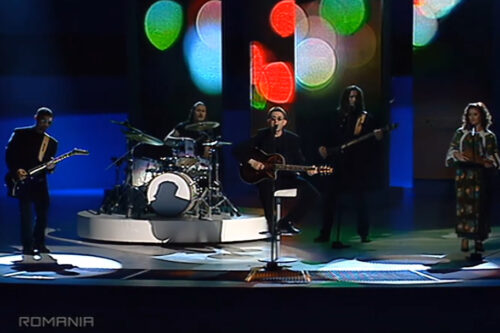
Taxi is a Romanian pop-rock band formed in 1999. The group is known for blending rock and contemporary pop with witty, satirical lyrics. Dan Teodorescu (born 1965) is the founder, lead vocalist, and songwriter of Taxi. Under his leadership, the band achieved national fame with humorous songs that also make listeners think. Taxi represented Romania at the Eurovision Song Contest 2000 and remains active today..
Formation and Early Years (1999–2000)
Dan Teodorescu formed Taxi on March 13, 1999, in Bucharest. He first recruited bassist Adrian Borțun, a former bandmate, then brought in drummer Andrei Bărbulescu and guitarist George Pătrănoiu to complete the initial lineup. The band’s very first single, “Criogenia salvează România” (“Cryogeny Saves Romania”), became an instant hit in late 1999. The song’s ironic political lyrics even won over members of Romania’s parliament. That same year, Taxi released their debut album Jumătate de album (“Half an Album”), introducing their eclectic pop-rock sound to the country.
In 2000 Taxi gained international exposure. After a lineup change that saw Lucian Cioargă replace Bărbulescu on drums, the band represented Romania at Eurovision 2000 with the song “Luna” (“The Moon”). They finished in 17th place. Unsatisfied with the result, the group responded in their trademark style, by writing a tongue-in-cheek song about the contest, titled “E.B.U. – European Broadcasting Union”. Back home, Taxi continued to build momentum. In March 2000 they released the singles “Doi zero zero zero” and “Jumătatea mea,” which appeared on the second album Trag un claxon (“Honk the Horn”) in July 2000. The band also scored another hit with “Comunitaru’”, a song referencing the stray dogs being rounded up in Bucharest at that time. By the turn of the millennium, Taxi had established itself as a fresh voice in Romanian pop rock. Radio Romania even named them the “pop-rock revelation of the year” in 1999.
Albums and Satirical Hits (2001–2004)
In 2001 Taxi released the album Americanofonia, whose title track humorously critiqued the flood of American expressions entering the Romanian language. The band continued to put out albums almost yearly, each containing songs with sharp social or political insight. They followed up with De cursă lungă in 2002 and an album simply titled C in 2003. In 2004, Taxi released the boldly named Politica (“Politics”) album. This satirical record came out during Romania’s 2004 election season and featured songs like “Aici sunt banii dumneavoastră” (“Here Is Your Money”), “Noi cu cine votăm” (“Who Are We Voting For?”), and “Situația din Țară” (“The Situation in the Country”). These tracks, filled with irony and social commentary, struck a chord with listeners. Through these years, Taxi used upbeat pop-rock music as a vehicle for pointed lyrics about everyday life, language, and governance. The formula proved successful..
Musical Diversity and Viral Success (2005–2011)
By the mid-2000s, Taxi showed its versatility by exploring new themes. In 2007 they released Romantica, an album composed of twelve love songs. This project featured numerous guest collaborators and demonstrated that Taxi could be as sentimental as it was satirical. One notable music video from Romantica was for the song “Dragostea ca o pereche de pantofi” (“Love Is Like a Pair of Shoes”). This even inspired a designer to create a unique pair of shoes featured on the album cover. The Romantica era proved that the band’s creativity extended beyond political humor into the realm of heartfelt pop rock.
Taxi continued to engage fans with new singles as they reached their 10th anniversary. In 2009, they released “Probleme de memorie,” a tongue-in-cheek song celebrating the band’s ten-year milestone. They also put out timely tracks such as “E criză” (“It’s a Crisis”) during the late-2000s economic downturn. With this song they showed that their commentary adapted to current events. The band’s lineup evolved in this period as well, with long-time keyboardist Mugurel Coman and vocalist Victoria “Vicky” Albu joining in the mid-2000s to enrich Taxi’s sound.
Released in early 2011, Cele 2 Cuvinte confirmed Taxi’s enduring popularity. The title track “Cele două cuvinte” gained millions of views and even spawned an interactive project called “Those Three Words,” inviting fans to record their own versions as love declarations. This clever blend of humor and romance gave Taxi one of its biggest cross-cultural successes. It also showed how the band could use simple social observations to create something both funny and genuinely touching.. In this case, it’s about men being shy to say “Te iubesc” (I love you).
Continued Relevance and Legacy (2012–Present)
Entering the 2010s and beyond, Taxi maintained its status as one of Romania’s most beloved pop-rock acts. In 2014, the band marked 15 years together by releasing an anniversary album titled 15. Five years later, in 2019, they celebrated two decades of Taxi with a double album aptly named 20. These releases featured new songs alongside hits, highlighting the band’s consistent output over the years.
Taxi also continued to address current social issues through music in the 2010s. In 2016, the band made waves with the song “Despre smerenie” (“About Humility”). This track was a musical protest against the construction of a gigantic national cathedral, emphasizing humility over grandiosity. The accompanying video featured dozens of Romanian public figures singing along. “Despre smerenie” sparked intense public debate and even some controversy. One participant requested to be removed after realizing the song’s critical message. In response, Taxi re-released the video with even more well-known guests, doubling down on its peaceful protest theme. The incident showcased the band’s courage in using art to comment on sensitive social topics, while keeping a respectful, witty tone.
Lineup change and legacy
Through every era, Taxi’s music has mixed sincerity with satire. Many of their songs deliver social or political commentary in a humorous package. For example, “Comunitaru’” tackled the stray dog crisis, “Americanofonia” poked fun at Romanian language trends, and “Noi cu cine votăm” questioned electoral choices. Yet the band is equally adept at sentimental tunes like “Jumătatea mea” or “Dragostea ca o pereche de pantofi.” This balance has been key to Taxi’s broad appeal. As one music publication noted, Taxi continually surprises the public with “sincere and original messages”, whether about social and political life or about love, often delivered with a dose of humor.
After more than 25 years, Taxi remains a fixture of Romanian pop rock. The band has performed thousands of concerts and produced numerous hit songs that have entertained multiple generations. Dan Teodorescu still leads Taxi with his unmistakable voice and sharp songwriting. Over time the lineup has evolved. Founding bassist Adrian Borțun departed in 2009, and new members joined. However, the group’s spirit persists. Today, Taxi’s members include Dan alongside Mugurel Coman (keyboards), Kerezsi Csongor (bass), Vicky Albu (vocals) and others, continuing the legacy. They regularly tour and release new music, showing no signs of slowing down.