About
Biography
Early life and first bands
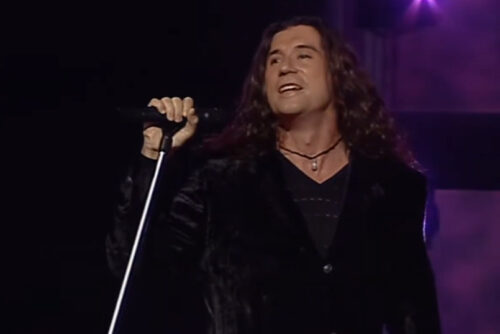
Goran Karan (born 2 April 1964) is a Croatian singer-songwriter. He first rose to fame in the 1990s as the lead singer of the rock band Big Blue, before launching a successful solo career in 1997. Karan later earned international recognition when he represented Croatia at the Eurovision Song Contest 2000, where he achieved a top-ten finish.
Success with Big Blue and musical theatre
In the early 1980s, Karan began performing in several local bands, including Epicentar, Deveti krug, and Zippo. His breakthrough came with Big Blue. In 1995, as Big Blue’s frontman, he won Croatia’s Rock Hit of the Year award for the song “Priznaj mi”. That same year, he also took on a leading role in the rock musical Sarajevski krug (“The Sarajevo Circle”), which toured in Croatia and internationally. By 1997 Karan had left the band to pursue a solo career. He quickly made a name as a solo artist by winning the Zadar-Fest music competition in 1998 with the song “Kazna mi je što te ljubim”. Later that year, he starred in Rock It, a musical theater production in Vienna featuring hits from popular rock musicals.
Solo breakthrough and first album
Karan’s first solo album, Kao da te ne volim (“As If I Don’t Love You”), was released in 1999 and became the best-selling album in Croatia that year. Created in collaboration with renowned Split composer Zdenko Runjić, the album went platinum. Karan capped off 1999 by winning the prestigious Melodije hrvatskog Jadrana festival with the Runjić-penned ballad “Prozor kraj đardina”. He was also voted Croatia’s Singer of the Year in multiple media polls, confirming his place as one of the country’s top performers.
Eurovision Song Contest and second album
In early 2000, Karan entered Dora, Croatia’s national selection for Eurovision. He won with the song “Kad zaspu anđeli” (“When Angels Fall Asleep”). He went on to represent Croatia at the Eurovision Song Contest 2000 in Stockholm, delivering a powerful performance and finishing in ninth place in the final. This achievement made him one of Croatia’s most successful Eurovision acts of the era. The year 2000 was a milestone in Karan’s career in other ways as well. He staged a series of sold-out solo concerts in Zagreb’s Vatroslav Lisinski Concert Hall and released his second album, Vagabundo, which also achieved platinum sales. At the 2000 Porin Awards (Croatia’s top music honors), Karan won three major prizes: Best Album, Best Male Vocal Performance, and Best Vocal Collaboration (for a duet with the legendary Oliver Dragojević).
After Eurovision
Karan’s Eurovision entry also found life beyond the contest. The English-language version of “Kad zaspu anđeli,” titled “Stay With Me,” hit number one on the pop charts in Turkey in 2001. Off the back of that success, Karan made promotional appearances in Turkey and saw “Stay With Me” covered by artists in countries from South Korea to Germany. In the following years, he continued to release hit records and to perform internationally. In 2002, he won the Melodije Jadrana festival a second time with the song “Ahoj!”. Later that year he took second place at the Megahit Mediterranean Song Festival in Turkey, underscoring his cross-border appeal.
Music Festivals and Hrvatski Idol
By the mid-2000s, Goran Karan was a household name in Croatia and a regular winner at music festivals. In 2005, he achieved a rare feat: his song “Ružo moja bila” (“My White Rose”) won both the Split Festival in Croatia and the Sunčane Skale festival in Montenegro. That same year, he expanded into television by serving as a judge on Hrvatski Idol, the Croatian edition of Pop Idol. Amid these successes, Karan also released multiple albums. His 2003 album Ahoj! and 2005’s Od srca do usana (“From Heart to Lips”) further showcased his romantic pop style, and he toured extensively across Croatia and its neighboring countries to support his releases.
Goran Karan and charity
Karan remained very active in the late 2000s, both in music and philanthropy. In 2007, deeply moved by a tragic wildfire that claimed the lives of 12 firefighters in the Kornati islands, he responded by composing a tribute song called “Ovo nije kraj” (“This Is Not the End”). He gathered a group of famous Croatian singers from the Split region to record the song and music video in honor of the fallen heroes. That same year, he helped organize a massive charity event at Split’s Poljud Stadium – a football match and concert – to raise funds for the firefighters’ families, drawing an audience of around 30,000 people. In 2008, Karan released his sixth solo album, Dite jubavi (“Child of Love”), which produced several radio hits.
The following year, in June 2009, he staged another charitable spectacle at the Poljud Stadium called “Naš mali svijet” (“Our Little World”). This event featured Croatian and Italian pop stars (including guests like Eros Ramazzotti and Zucchero) as well as famous footballers, united to perform and play in support of charity. Karan even wrote a theme song, also titled “Naš mali svijet,”. This song was performed by an ensemble of Croatia’s leading singers.
The 2010s
As the 2010s began, Karan continued to diversify his career. He penned theme songs for international events. For example, he wrote and performed “Do zadnjeg daha” (“Until the Last Breath”), the official anthem of the 2010 European Water Polo Championship in Zagreb. He also released a live CD/DVD in 2011, Romanca pod zvizdama, capturing a gala concert he gave at the Split Summer Festival. In 2013, he put out another studio album titled Čovik tvoj (“Your Man”). Karan then returned to his love of musical theater. In 2017, he co-wrote and co-produced a jukebox musical called Naša bila štorija (“Our White Story”) with songwriter Nenad Ninčević. The stage show premiered in Split. The show went on to tour in Zagreb and even abroad to Ljubljana and Maribor.
Karan’s output remained strong into the late 2010s. In February 2018, he released the album Glas juga (“Voice of the South”), a collection of his recent singles. The following year, Glas juga earned him a Porin Award for Best Pop Album. This is one of Croatia’s highest music honors. In the summer of 2019, he also scored a double victory at the 59th Split Festival. His song “Kuća naše pisme” (“The House of Our Song”), performed alongside veteran singer Tedi Spalato and the klapa group Sveti Juraj, won both the official jury award and the audience award.
Current activities
After more than three decades in the spotlight, Goran Karan remains an active and beloved figure on the Croatian music scene. He continues to perform concerts at home and abroad and to write new music. In 2025 he teamed up with the Dubrovnik-based Klapa Kaše ensemble. They released a new single titled “Bonaca se vitra uželila,”. It was a song in the traditional klapa style that he debuted at the Melodije Jadrana festival.