About
Biography
Early Life and 1960s
Charlie was born as Károly Horváth on 28 October 1947 in Ondód, Hungary. He originally trained to become a ballet dancer, but a childhood illness ended that path. As a teenager he shifted to music and formed his first rock band while in high school. In 1967, Charlie joined a band named Decca, which soon had to rename itself Olympia due to legal reasons. Olympia became popular on the local club circuit and even performed abroad in Belgrade. However, internal conflicts led to the band’s breakup in 1970.
1970s: Africa and Generál
After Olympia disbanded, Charlie sought opportunities abroad. He spent two and a half years performing in Africa with a group called Afrika. This experience shifted his style towards funk and soul music. Upon returning to Hungary in 1975, he joined the well-known band Generál alongside guitarist Tibor Tátrai. Charlie’s gritty voice gave Generál a new sound. He even introduced conga rhythms influenced by his African experience. The band released successful albums (e.g. Zenegép) and toured in countries like Poland and East Germany. Despite these efforts, Generál struggled for support at home and disbanded in 1979.
1980s: Pannónia Express and Homecoming
In the early 1980s, Charlie continued to perform abroad. In 1982 he joined the band Pannónia Express. He spent much of the decade touring internationally from Europe to Asia and the United States with this group. After nearly ten years overseas, Charlie returned to Hungary in 1990. He became the lead singer of the Tátrai Band, a rock-blues group formed by Tibor Tátrai. Tátrai Band became one of Hungary’s top acts in that era. The group produced several popular albums and songs in the early 1990s.
1990s: Solo Success and Eurovision
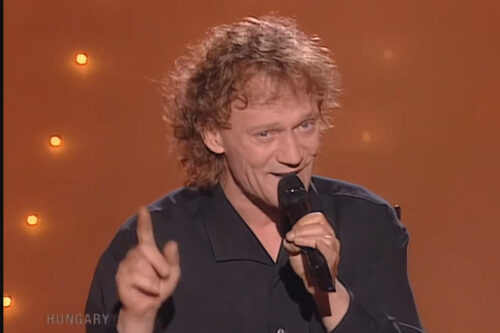
By the mid-1990s, Charlie launched a solo career and firmly established himself in the Hungarian pop-rock scene. His debut solo album Charlie (1994) went platinum and won the Album of the Year award in Hungary. The follow-up album Mindenki valakié (1995) also achieved gold status upon its release. During this decade he scored many hit songs that became modern classics. In 1998, he represented Hungary at the 1998 Eurovision Song Contest in Birmingham. He performed the song “A holnap már nem lesz szomorú” (“Sadness Will Be Over Tomorrow”) at the contest. Charlie’s soulful Eurovision performance earned 23rd place in the contest final. The song later appeared on his 1998 album Fűszer cseppenként. By the end of the 1990s, Charlie had released multiple solo albums. He also garnered numerous awards, including the prestigious Liszt Ferenc Prize in 1997.
2000s: Jazz Projects and Continued Work
At the turn of the century, Charlie explored new musical directions. He collaborated with jazz composers like István Lerch and Attila László. This collaboration produced a trilogy of soul- and jazz–inspired albums between 2001 and 2005. These richly arranged records went against mainstream pop trends but still achieved critical acclaim and gold status in Hungary. In 2006, Charlie returned to his classic rock/soul sound with the album Másképp ugyanúgy. He also published an autobiography in 2004 titled Ami soul, az szól, chronicling his life and adventures in music. Throughout the 2000s, Charlie remained a popular live performer. He celebrated 40 years on stage with a big anniversary concert and a live DVD release in 2007.
2010s and Beyond: Milestones and Legacy
Charlie continued to stay active in the 2010s, celebrating major career milestones. In 2017, he marked his 70th birthday with a jubilee concert at the Budapest Sports Arena featuring many fellow artists. In 2018, he became an honorary citizen of Budapest in recognition of his cultural contributions. He also received a lifetime achievement Petőfi Music Award in 2020. That same year, Charlie released a new studio album, Mindenen túl, which was his first album in over a decade. In 2022, at age 75, the singer embarked on a nationwide Charlie 75 anniversary tour (titled “Csak a zene van!”, meaning “Only the Music Remains”). This tour celebrated over half a century of his music career. Even in his late seventies, Charlie remains a beloved figure in Hungarian music.
Personal Life
Charlie married Katalin Széles, a painter, in 1978, and they remained together until her passing in 2014. Their son Ákos also became a musician, writing songs for his father and sometimes performing with him on stage. Charlie’s distinctive husky voice and passionate style have made him an icon of Hungarian rock and soul. He continues to be celebrated as one of Hungary’s most enduring musical performers.