
📷 Wikimedia Commons
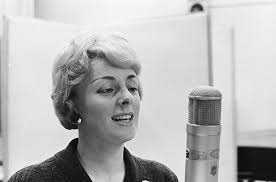
We know a lot about Eurovision and we want to share this knowledge with you! Therefore we’d like to bring you a blast from the past. Today, we go back to 1963, when Annie Palmen represented The Netherlands with her song “Een speeldoos”.
The Netherlands in the Eurovision Song Contest
The Netherlands at the Eurovision Song Contest boasts five wins: Corry Brokken (“Net Als Toen”, 1957), Teddy Scholten (“Een Beetje”, 1959), Lenny Kuhr (“De Troubadour”, 1969), Teach-In (“Ding-A-Dong”, 1975) and Duncan Laurence (“Arcade”, 2019). Recent Dutch Eurovision entries show range: in 2022 S10’s “De Diepte” finished 11th; in 2023 Mia Nicolai & Dion Cooper’s “Burning Daylight” did not qualify; in 2024 Joost Klein’s “Europapa” was disqualified before the Grand Final. At Basel 2025 Claude’s “C’est La Vie” reached the final, placing 12th with 175 points. From classic chanson to modern pop, the Netherlands remains a consistent Eurovision contender today.

Cancelled Nationaal Songfestival 1963
As always, Het Nationaal Songfestival was the national final for the Eurovision Song Contest. For the first time, one artist was supposed to sing all the songs, three in total. Annie Palmen was chosen to do the job. The contest should have been held on 23 January in Tivoli, Utrecht. The songs chosen were:
- “Een droombeeld” (previously entitled “Geen ander”)
- “Hoor je mij”
- “Kijk daar is de zon”
Due to a strike, a dispute between Dutch broadcaster NTS and the tv orchestras, the contest had to be postponed until 11 February. The strike was still not over in February. The contest was thus cancelled. A comittee chose “Een droombeeld”. The title later changed into “Een Speeldoos”. On 8 February 1963, the song was presented in the Rudi Carell show.
Annie Palmen
Annie Palmen (born Anna Maria Palmen, 19 August 1926, IJmuiden; died 15 January 2000, Beverwijk) was a Dutch singer. She began as a teenager with dance orchestras around Haarlem and soon became a regular voice on Dutch radio. In 1958 she scored her first hit, “Ik zal je nooit meer vergeten,” which brought her national attention.
She first entered the Nationaal Songfestival in 1960 with “Wat een geluk,” but the ticket went to Rudi Carrell. In 1963 broadcaster NTS selected Palmen as the artist and planned a televised final with three songs. A musicians’ strike led to the cancellation, and the chosen title “Geen ander” was rewritten and retitled “Een speeldoos.” In London on 23 March 1963 she performed “Een speeldoos,” written by Pieter Goemans, and finished joint last with zero points, tied with Finland, Norway and Sweden that night.
After Eurovision she changed direction. In 1967 Palmen took the role of Drika with the KRO house orchestra De Boertjes van Buuten on the monthly TV programme Mik. She was invited by entertainer Kees Schilperoort to replace singer Annie de Reuver. Annie accepted the part with some hesitation. The character and the songs proved popular, and a related album reached gold status in 1969. When Mik ended in 1972, Palmen largely withdrew from show business. She died in 2000 after a long illness. Her career links post‑war light music on radio, the early years of the Eurovision Song Contest, and the rise of Dutch television entertainment and comedy on television.
Een straat voor Annie Palmen
On Facebook, the action ‘Een straat voor Annie Palmen’ by Rob Keesen rallied Beverwijk residents to honour the singer with a street name. The municipality embraced the idea, and around 2016 approved Annie Palmenlaan in Beverwijk, North Holland. Supporters and family marked the naming locally, turning an online campaign into a lasting tribute
Een Speeldoos
“Een Speeldoos” represented the Netherlands at the 1963 Eurovision Song Contest in London, performed by Annie Palmen. Written by lyricist Pieter Goemans with music by Dick Schallies, it reworked the earlier selection title “Geen ander” into a fairytale about a shepherd and shepherdess on a music box. The arrangement and melody sit in a gentle, chanson‑styled ballad tradition, with tinkling, music‑box imagery at its heart. On the night in London, the entry failed to score and finished last with nul points, joining three other countries on zero. The song remains a curious, delicate snapshot of early‑sixties Dutch pop at Eurovision.


