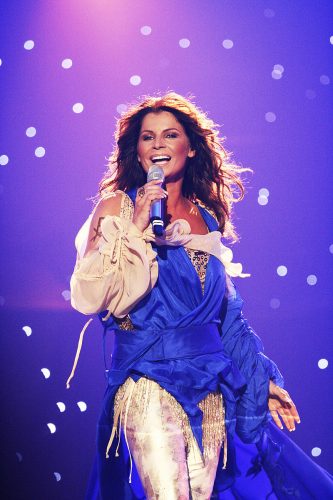
After the Eurovision fame – Carola

Carola (Maria Häggkvist)  was born on 8 September 1966 at Södersjukhuset in Stockholm, Sweden.  She grew up in Norsborg, south of the Swedish capital. At the age of eight, she began to perform. She also attended Adolf Fredrik’s Music School. In 1977, Carola won a talent competition and appeared on television for the first time.

In 1981, Swedish music promotor Bert Karlsson met the then 15-year-old Carola after she performed on the television series Hylands hörna. He offered her the chance to take part in Melodifestivalen, the Swedish preselection for the Eurovision Song Contest in 1982. She said no.  The next year, songwriter Lasse Holm offered her two of his songs :  “Mona Lisa” and “Främling”. “Främling” won Melodifestivalen 1983, and with this song Carola won the right to represent Sweden at that year’s Eurovision Song Contest in Munich on April 23.


She finished third in front of 6.1 million Swedish television viewers, 84% of the country’s population. This is still a record in Sweden.

“Främling” became the title track to her debut album, which sold over one million copies, making it the biggest selling album in Swedish history.  After Eurovision, Carola went on a tour of European television programs, promoting “Främling” and performing it in several languages.

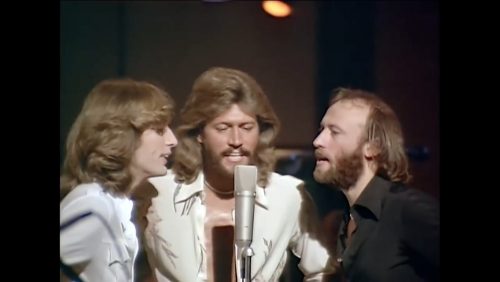
In 1985, the Bee Gees collaborated with her on the album Runaway, which was written by the Gibb brothers and produced by Maurice Gibb. The record sold double platinum when released in Sweden the following year. “The Runaway”, “Brand New Heart”, “Spread your wings” and “Radiate” became massive hits in Scandinavia.
 

In 1990, she returned to Melodifestivalen, with “Mitt i ett äventyr” (In the middle of an adventure). The song finished second in the festival. Her comeback album, titled “Much More”, was released, earning a gold certificate in Sweden. However, Carola and songwriter Stephan Berg had already begun planning another attempt at Eurovision.

In 1991, she returned to Melodifestivalen again with “Fångad av en stormvind” (Captured by a lovestorm). The song won the festival by thirty-two points and became the Swedish entry for the Eurovision Song Contest in Rome. British bookmakers considered Carola as the  second favourite to win the contest. On the night of the contest, with one voting jury left to announce their scores, three countries were in competition to win the contest: Sweden, with 146 points; Israel, with 139; and France, with 134. Neither Israel nor Sweden received any points from the Italian jury, but France received twelve, leaving Sweden and France tied for first place with 146 at the conclusion of the voting. Sweden won the contest after a recount, having received five ten-point scores during the voting versus France’s two. “Fångad av en stormvind” became a huge hit in Europe, and was followed by a compilation album, “Hits”, and a Christmas album, “Jul”. After her victory, she released an international version of “Much More” and went on an extended promotional tour throughout Europe. Her album produced several hits, among them “I’ll live” and “All the Reasons to Live”

Carola was the first Scandinavian pop artist to perform in China—in front of an estimated 600 million television viewers; she also released an album in China in 1992. In 1992 and 1993, Rival International, released Carola’s earlier albums on CD. She was originally signed to Mariann Records in Scandinavia.

In 1993, ten years after her breakthrough representing Sweden at the 1983 Eurovision Song Contest, she recorded a gospel album, My Tribute, which was released in sixteen countries, making her gospel artist of the year in the Netherlands in 1994. The album contains the hit-single “My Tribute”, one Carola’s  best-known songs. In 1994, she  released a rock-themed album, ‘”Personligt” (Personally), marking her debut as a songwriter and selling gold. “Så länge jag lever”, “Sanna Vänner” and “Guld i dina ögon” became hits and received a great amount of radio airplay.

In 1995, Häggkvist made her debut as a musical actress, playing Maria in The Sound of Music. Three years later, she sang the theme song in the Norwegian musical Sophie’s World, which was released on the album “Songs” from Sophie’s World. Also in 1998, Carola played the voice of Mirjam in the Swedish version of The Prince of Egypt. In 2002, she made a short appearance as Fantine in Les Misérables in London and five Scandinavian cities.

In November 1997, Carola released another compilation album, De bästa av Carola (“The Best of Carola”), and with it several new singles like “Dreamer”. Following this came an album of tracks penned by Lina Sandell, Blott en dag (“Just One Day”). The album received excellent reviews and revealed Carola’s passion for hymns. In 1999, another Christmas album was released: Jul i Betlehem (“Christmas in Bethlehem”). The album sold 600,000 copies throughout Scandinavia, including 350,000 in Sweden and became the biggest-selling album of 1999. She also co-wrote the ballad “Himlen i min famn”, which remains a popular Christmas song that is often performed at Christmas concerts. In the summer of 1999, she toured in the Rhapsody in Rock.

In 2001, she released “Sov på min arm”, an album based on Christian hymns, gospel melodies and intimate ballads. It became one of the most-sold albums in Scandinavia that year. In 2002, she release the pop/country album “My Show”, which received great reviews. The album, which marked Carola’s return to the pop scene, contained several hits such as “The Light”, “I believe in love”, which also topped the Estonian and Brazilian charts, and “A Kiss Goodbye”. Even though the album only peaked at number 6 on the Swedish album chart, it sold 100,000 copies by the end of the year. In the summer, she embarked on a huge and luxurious Scandinavian tour.

In 2003, Carola submitted a song, “Autumn Leaf”, for Melodifestivalen 2003. Having performed the demo, she was required to perform the song when it qualified for the competition. She decided against doing that, and the song was disqualified from the competition. “Autumn Leaf” appeared on her next album, “Guld, platina & passion”, in Swedish as “När löven faller”. The ballad became an enormous hit, and the album itself reached number 1 on the Swedish charts and sold over 300,000 copies. She also recorded her favorite Elvis Presley songs, “Walk a mile in my shoes” and “If I can dream”. The following year, Carola released a religious album, “Credo”, which she described as “an expression of my love for God”. The album peaked at spot 2 on the Swedish album chart. This was followed by “Störst av allt”, which Dan Backman wrote. “Genom Allt” became a huge radio hit in Sweden and the soul ballad “Allt kommer bli bra mamma”, a dedication to her deceased mother, became popular at religious events.

Having performed as part of the interval act at Melodifestivalen 2005, Carola confirmed that she would return to the competition in 2006. She performed “Evighet” (“Eternity”) which she described as a “true winning song”. The song qualified from the semi-final in,  and was widely tipped to win. Despite finishing second with the regional juries, “Evighet” won the competition with 232 points. The English version  “Invincible” qualified from the semi-final of the Eurovision Song Contest in Athens, and  finished fifth out of twenty-four with 170 points. This placing also made her the second-most successful artist in the history of Eurovision.

Following Melodifestivalen, Carola released a pop album, Från nu till evighet (“From Now to Eternity”).  Lennart Wrigholm reviewed the album for Musiklandet; It earned her a lot of criticism, both positive and negative. The album topped the Swedish sales chart, and sold approximately 100,000 copies by the end of the year. “Stanna eller gå”, a Latin-inspired pop song, became a radio hit during the summer.

In late 2007, Carola released another Christmas album, “I denna natt blir världen ny” (“There is a New World This Night”). The album featured songs in Swedish and English, and was recorded in Jerusalem in June 2007. The album was reported to have sold 90,000 copies.. After the release she toured Scandinavia.

Carola entered Melodifestivalen 2008 as part of the duo Johnson & Häggkvist with Andreas Johnson. Their first single was called “Lucky Star” which became popular on the radio. In the Melodifestivalen in February, they sang “One Love”, written by Carola, Johnson and Peter Kvint. They were the early favourites to win the whole show, taking part in the second qualifier. They qualified for the Second Chance round, missing out on an automatic final spot. Though widely tipped to qualify for the final after all, they did not even proceed from the first voting round in the Second Chance programme. Although “One Love” did not become an enormous success, the song “Lucky Star”, which they released a few months prior to the contest did sell well, and topped the Swedish charts for weeks.

Carola decided to take it easy the rest of the year, but did make a small Christmas tour at the end of the year. In 2009, Carola was reportedly working on her upcoming album, and other projects. She went to the United States to record some new material. She departed from her recording company and signed a contract with X5 Music Group, in which she aims to transfer her music abroad through the internet. In June, she hosted Carola Camp, a camp designed to help talented young singers and entertainers. In May, she performed at the Eurovision Song Contest held in Moscow at the kick-off ceremony, performing her 3 Eurovision songs. In July, she performed, together with the Eurovision winner Alexander Rybak in Norway and sang “Fairytale”, “Främling” and The Jackson 5’s “I’ll Be There”. At the end of 2009, she released the album Christmas in Bethlehem, which contained duets with artists like Paul Potts. She embarked on yet another Christmas tour, visiting Sweden, Norway, Denmark and Finland. She also launched her new website.

.

In the summer of 2010, Carola went on tour across Sweden, singing the hits of both Elvis Presley and Barbra Streisand. The influence came from Carola’s childhood, where her father and her mother would play records by both their favourite artists. The tour was an instant success, selling out and becoming one of the few tours to sell out that year. She took time out from the tour to appear on Allsång på Skansen, and in March 2011 she released a studio album, containing twelve songs.

Carola attended in the final of the Eurovision Song Contest 2013 in Malmö and performed in a humorous interval act about Swedish culture.

In 2014 Carola  participated in Så mycket bättre on the Swedish free-to-air television network TV4.

Carola attended the final of the Eurovision Song Contest 2016 in Stockholm and was briefly interviewed on screen along with another previous Swedish winner Loreen.

In late-October 2016, she released her new Christmas album titled “Drömmen om julen”. The release was followed by a tour.

In April 2021, it was announced that Carola would be the spokesperson for Sweden at the Eurovision Song Contest 2021, reading out the Swedish jury points at the Grand Final.


Her status as one of the most popular national celebrities of her country made her more or less constantly followed by the tabloid press. She has often talked about her Christian faith and much of the focus has been around her membership in the controversial evangelical church Livets Ord (Word of Life).

She was married to Runar Søgaard, a Norwegian Christian preacher, with whom she has a son, Amadeus. The couple divorced in 2000, after ten years of marriage. She adopted a daughter, Zoe, from South Africa, in 2012. (The girl’s parents had both died in 2004.)

Controvesry regarding opinions on homosexuality

In an interview in 2002 for the Swedish gay magazine QX, she alienated many gays and some heterosexual fans by alleging that she knew homosexual people who had become heterosexual through prayers. She also said that homosexuality would always remain “unnatural” to her.

Four years later, her comment was brought up when she participated in the Swedish national selection for the Eurovision Song Contest in March 2006. During a press conference a journalist tried to ask her about her opinions on homosexuality, but she did not answer.

On 15 March 2006 Rickard Engfors, who was Carola’s cooperating partner during the Melodifestivalen and Eurovision Song Contest 2006, said “Carola doesn’t hate gays. If she did, I wouldn’t work for her. She is a fantastic person.”

During an exclusive interview for one of the Eurovision-related websites before the 2006 contest, Carola was also questioned about this, and she stated that she “would love for every gay person to feel that she loves them” and that she does not think that “being gay is a sickness”. She went on to criticize the tabloids for misinterpreting her original words and making an issue out of it. Later in the interview, she also commented on one of her supporting dancers being gay and his boyfriend being “great”.

In 2008, she spoke to the newspaper Aftonbladet and again revisited her opinions about homosexuality, which she insisted have evolved over the past two decades and are very inclusive. She said, “I actually invited gays from QX to my 25-year anniversary, but QX turned it down. What can I do? I love all people. I love the gays. So I am definitely not homophobic in any way. We are here for the music and I have no wacky opinions. And I feel love from many homosexuals too.”


Many fans hope Carola will once again participate in Melodifestivalen. Will she do it…. Who knows?



Related news

History

Austria in the Eurovision Song Contest, part 7

This year’s Eurovision Song Contest has been won by Austria. It was the 57th Austrian entry. Reason for us to go back to all the Austrian entries in history! For Austria in the Eurovision Song Contest, part 7, we look back at the start of the 21st century. Alf Poier participated for Austria, but there were also some unsuccesful entries. And there was a 3-year gap. 2000 – The Rounder Girls – All To You Austria’s 2000 entry “All To You” was internally selected by broadcaster ORF. The song was written by American songwriter Dave Moskin. Moskin gave the three-piece vocal group The Rounder Girls an up-tempo, gospel-influenced pop track. Performing last in the Stockholm final, the trio, with members from Austria, the US and the UK, delivered slick harmonies and choreography. They finished 14th out of 24 countries with 34 points. The Rounder Girls were a seasoned soul/gospel ensemble, and their Eurovision appearance raised their profile, though Austria’s middling result meant the country sat out the contest in 2001. 2002 – Manuel Ortega – Say A Word “Say A Word” by Manuel Ortega won Austria’s “Song.Null.Zwei” 2002 national final out of ten songs. this entry was an upbeat pop song with a catchy, boy-band style hook. It was composed by Alexander Kahr with lyrics by Robert Pfluger. At Eurovision 2002 in Tallinn, Ortega performed third and Austria placed 18th (26 points) in the final. Manuel Ortega, a young pop singer, had scored a summer hit in 2001 and was nicknamed “the Austrian Ricky Martin” for his Latin pop flair. His Eurovision song’s fun choreography and positive message reflected that image, though the result was a lower mid-table finish. 2003 – Alf Poier – Weil der Mensch zählt ORF organized the “Song.Null.Drei” 2003 selection. Petra Frey (ESC 1994) was the runner up. Comedian-singer Alf Poier triumphed with “Weil der Mensch zählt”. Poier penned this satirical song himself. Musically it’s a quirky folk-pop tune delivered in Styrian dialect. The performance, complete with cartoonish animal props, was a parody of Eurovision’s over-the-top style. At the Riga contest, this offbeat entry surprised many by scoring 6th place with 101 points. Alf Poier, an Austrian stand-up comedian known for absurdist humor, thus earned Austria’s best Eurovision result in over a decade. His comedic approach and catchy refrain turned him into a fan favorite that year. 2004 – Tie Break – Du bist Austria’s national final “Song.Null.Vier” chose Tie Break’s “Du bist” for Eurovision 2004. Waterloo & Robinson (ESC 1976!) were the runners up. Note that a song, written by popstar Falco, participated too. So posthumously, Falco did a Eurovision attempt!Written by composer Peter Zimmermann, “Du bist” is a tender schlager-style pop ballad performed in German. Tie Break, a trio of fresh-faced male singers (a boy band formed via a talent search), delivered tight harmonies in Istanbul’s final. Thanks to Austria’s top-10 result the year before, they pre-qualified directly for the final. Tie Break finished 21st out of 24 with 9 points. The group had gained national fame through the selection process, but on the Eurovision stage their gentle ballad struggled to stand out in a field dominated by more dynamic acts. 2005 – Global.Kryner – Y así In 2005, “Song.Null.Fünf” was held and the crossover folk band Global.Kryner won with “Y así”. They narrowly beated Alf Poier. The controversy was that Austria changed the rules of the voting on the very last moment. Would the original voting procedure be used, Alf Poier would have won. Band members Edi Köhldorfer (composer) and Christof Spörk (lyricist) combined Latin salsa rhythms with Austrian alpine polka to create this unique “salsa-polka-pop” song. Global.Kryner was a six-member ensemble known for blending folk and jazz influences. They opened the Eurovision semi-final in Kyiv with an energetic performance featuring yodels and Latin dance breaks. However, “Y así” did not advance to the final, placing 21st of 25 in the semi-final with 30 points. The group had earned acclaim in Austria and Germany, but their daring genre fusion proved too quirky for the Eurovision televote that year. 2007 – Eric Papilaya – Get A Life – Get Alive After a brief Eurovision hiatus, Austria returned in 2007 by internally selecting Eric Papilaya. His entry “Get A Life – Get Alive” – composed by Greg Usek with lyrics by Austin Howard. It was the official anthem of Vienna’s Life Ball AIDS charity event. This song is an upbeat pop-rock anthem with an inspirational message and flashy staging. Papilaya performed with a giant red ribbon on stage. Papilaya, a rock vocalist who rose to fame on the TV talent show Starmania, gave a spirited performance in Helsinki’s semi-final. Unfortunately Austria did not qualify for the final; he placed 27th (four points) in the semi. The entry drew media attention for its charity theme, but it wasn’t enough to overcome tough competition in 2007. 2011 – Nadine Beiler – The Secret Is Love Austria returned to Eurovision in 2011 through the national selection “Düsseldorf – wir kommen!”. The competition featured ten songs. However, well-known artists Alf Poier and Petra Frey failed to pass the online preselection. As a result, Nadine Beiler won the final with her soulful ballad “The Secret Is Love”. She co-wrote the song with veteran producer Thomas Rabitsch. Musically, the entry combines elements of gospel and pop, while it clearly highlights Beiler’s strong vocal range. Previously, Nadine Beiler had gained national fame by winning the television talent show Starmania in 2007 at the age of 16. Therefore, expectations were already high when she took the stage in Düsseldorf. Her Eurovision performance began a cappella and gradually built towards a powerful climax. Consequently, Austria qualified from the semi-final in seventh place with 69 points. In the grand final, Beiler finished 18th, scoring 64 points. Nevertheless, this result marked Austria’s first appearance in a Eurovision final in seven years and therefore signalled a credible and positive comeback.

Read More »
Eurovision 2026

Weekly Update

It’s Tuesday, December 23, 2025. Time for another weekly update! This week saw the first two countries confirm their Eurovision 2026 entries. Several others moved forward with national selection plans. Broadcasters from San Marino to Bulgaria unveiled updates on their contests. Meanwhile in Vienna, preparations for the 70th Eurovision Song Contest are in full swing. Here are this week’s top stories: New Entries 🇦🇱 Albania: Alis – Nân Albania has now selected its entry for the Eurovision Song Contest 2026. At the 64th Festivali i Këngës, Alis won with the song “Nân”. The festival is one of Europe’s longest-running national selection events. Combined jury and public televoting in the final decided the winner. “Nân” topped both the televote and the jury scoreboard, earning Alis the overall victory and the right to compete for Albania at the upcoming contest. “Nân” is described as a poignant ballad about enduring love and personal connection. Its success at FiK 64 marks a new chapter for Albania’s Eurovision journey. You can write all about the 64th Festivali i Këngës here, and a full biography of Alis here. 🇲🇪 Montenegro: Tamara Živković – Nova Zora Tamara Živković emerged victorious in Montesong 2025. She will thus represent at Eurovision 2026 with her song “Nova zora”. Fifteen acts competed in the live show in Podgorica, where the winner was decided by an equal mix of jury and televote. Tamara is a newcomer on the Eurovision stage. You can read everything about Montesong here. You can read Tamara’s full biography here. National Finals and Selections 🇸🇲 San Marino San Marino RTV has adjusted the dates of its newly rebranded San Marino Song Contest selection. The two semi-finals will now take place on March 2 and 3. This will be followed by the grand final on March 6. Itmoved one day earlier than initially planned. Over the past week, San Marino continued holding casting auditions, including online sessions for international hopefuls. At a year-end press conference, the SMRTV Director General also affirmed ongoing efforts to strengthen the broadcaster’s relationship with the EBU. He was underscoring San Marino’s commitment to a successful Eurovision return. source: SMRTV 🇲🇩 Moldova 16 Finalists Chosen for Selecția Națională – Teleradio-Moldova (TRM) has revealed the 16 artists who will compete in Moldova’s national final on January 17, 2026. These finalists were selected on December 16 after live auditions involving 34 performers. Initially the selection was to be only 10 acts. However, TRM expanded the lineup to 16, citing an unexpected surge of high-quality entries and polished performances at the auditions. Producers noted that the talent level “exceeded initial expectations,” leading to the rule change to give more acts a shot at the big stage. Moldova returns to Eurovision in 2026 after a one-year absence, aiming to build on its past successes. source: TRM 🇧🇬 Bulgaria Bulgaria’s broadcaster BNT has published the rules for its Eurovision 2026 selection. They confirm a national final on February 28. The process will unfold in three televised phases. First, 15 invited artists perform one of their own songs on January 24, with a jury and an online public vote narrowing the field to seven. Those top 7 acts will sing again on January 31. The highest combined jury+public score that night wins the ticket to Eurovision for the artist. Finally, on Feb 28 the winning artist will present three brand-new songs created for Eurovision. A 10-person jury alongside the public will pick the winning song that becomes Bulgaria’s entry. This marks Bulgaria’s return to Eurovision after last participating in 2022. source: BNT 🇦🇹 Austria In host country Austria, preparations continue for the national final “Vienna Calling – Wer singt für Österreich?”. The national final is scheduled on February 20, 2026. This week the line-up of 12 acts was finalized after singer Tamara Flores withdrew from the competition for personal reasons. Sidrit Vokshi, a 35-year-old artist from Vienna, has been announced as her replacement, joining the other eleven contenders vying to represent Austria in May. source: ORF 🇵🇹 Portugal A wave of artist protests has hit Portugal’s Eurovision selection. AGRIDOCE, an indie pop duo competing in Festival da Canção 2026, announced that they will not go to Eurovision even if they win the national final. In fact, 13 of the 16 composers/acts in FdC 2026 have now publicly stated they would refuse Eurovision participation should they win Portugal’s ticket. The artists cite political and ethical reasons behind this stance. In an Instagram post, Agridoce expressed hope for “signs of accountability and justice” in response to ongoing events, lamenting that the situation “remains unchanged”. They refer to the Israel-Palestine conflict. Portugal’s broadcaster RTP has not yet commented on how it will proceed if its FdC winner declines to go to Vienna. source: Instagram Eurovision 2026 News Vienna: 2,000 Apply for Eurovision Stand-In Roles Host broadcaster ORF reports an overwhelming response to its call for stand-in performers for Eurovision 2026. Around 2,000 singers and dancers from around the world applied to be stand-ins. Those are the performers who rehearse in place of the actual acts during early technical rehearsals. ORF invited about 650 of them to live auditions in Vienna this montht. Only 30 stand-in positions are available in total. The final selection of these lucky performers will be announced by the end of January 2026. In past years, stand-in opportunities have even led to some performers later joining actual Eurovision delegations as backing vocalists or dancers. That’s a true backstage springboard. source: ORF Allocation Draw Scheduled for January 12 The official Semi-Final Allocation Draw for Eurovision 2026 will take place on January 12, 2026. This ceremony will be held in the historic Vienna Rathaus (City Hall) and broadcast live on ORF 1 and online via ORF’s streaming platform. During the event, the Mayor of Vienna will receive the Eurovision insignia (the symbolic keys to the contest) from the Mayor of Basel (host city of ESC 2025). He will get it in the traditional Host City handover ceremony. Following that, officials will draw lots

Read More »
Eurovision 2026
Martijn

Weekly Update

It’s Tuesday, December 23, 2025. Time for another weekly update! This week saw the first two countries confirm their Eurovision 2026 entries. Several others moved forward with national selection plans. Broadcasters from San Marino to Bulgaria unveiled updates on their contests. Meanwhile in Vienna, preparations for the 70th Eurovision Song Contest are in full swing. Here are this week’s top stories: New Entries 🇦🇱 Albania: Alis – Nân Albania has now selected its entry for the Eurovision Song Contest 2026. At the 64th Festivali i Këngës, Alis won with the song “Nân”. The festival is one of Europe’s longest-running national selection events. Combined jury and public televoting in the final decided the winner. “Nân” topped both the televote and the jury scoreboard, earning Alis the overall victory and the right to compete for Albania at the upcoming contest. “Nân” is described as a poignant ballad about enduring love and personal connection. Its success at FiK 64 marks a new chapter for Albania’s Eurovision journey. You can write all about the 64th Festivali i Këngës here, and a full biography of Alis here. 🇲🇪 Montenegro: Tamara Živković – Nova Zora Tamara Živković emerged victorious in Montesong 2025. She will thus represent at Eurovision 2026 with her song “Nova zora”. Fifteen acts competed in the live show in Podgorica, where the winner was decided by an equal mix of jury and televote. Tamara is a newcomer on the Eurovision stage. You can read everything about Montesong here. You can read Tamara’s full biography here. National Finals and Selections 🇸🇲 San Marino San Marino RTV has adjusted the dates of its newly rebranded San Marino Song Contest selection. The two semi-finals will now take place on March 2 and 3. This will be followed by the grand final on March 6. Itmoved one day earlier than initially planned. Over the past week, San Marino continued holding casting auditions, including online sessions for international hopefuls. At a year-end press conference, the SMRTV Director General also affirmed ongoing efforts to strengthen the broadcaster’s relationship with the EBU. He was underscoring San Marino’s commitment to a successful Eurovision return. source: SMRTV 🇲🇩 Moldova 16 Finalists Chosen for Selecția Națională – Teleradio-Moldova (TRM) has revealed the 16 artists who will compete in Moldova’s national final on January 17, 2026. These finalists were selected on December 16 after live auditions involving 34 performers. Initially the selection was to be only 10 acts. However, TRM expanded the lineup to 16, citing an unexpected surge of high-quality entries and polished performances at the auditions. Producers noted that the talent level “exceeded initial expectations,” leading to the rule change to give more acts a shot at the big stage. Moldova returns to Eurovision in 2026 after a one-year absence, aiming to build on its past successes. source: TRM 🇧🇬 Bulgaria Bulgaria’s broadcaster BNT has published the rules for its Eurovision 2026 selection. They confirm a national final on February 28. The process will unfold in three televised phases. First, 15 invited artists perform one of their own songs on January 24, with a jury and an online public vote narrowing the field to seven. Those top 7 acts will sing again on January 31. The highest combined jury+public score that night wins the ticket to Eurovision for the artist. Finally, on Feb 28 the winning artist will present three brand-new songs created for Eurovision. A 10-person jury alongside the public will pick the winning song that becomes Bulgaria’s entry. This marks Bulgaria’s return to Eurovision after last participating in 2022. source: BNT 🇦🇹 Austria In host country Austria, preparations continue for the national final “Vienna Calling – Wer singt für Österreich?”. The national final is scheduled on February 20, 2026. This week the line-up of 12 acts was finalized after singer Tamara Flores withdrew from the competition for personal reasons. Sidrit Vokshi, a 35-year-old artist from Vienna, has been announced as her replacement, joining the other eleven contenders vying to represent Austria in May. source: ORF 🇵🇹 Portugal A wave of artist protests has hit Portugal’s Eurovision selection. AGRIDOCE, an indie pop duo competing in Festival da Canção 2026, announced that they will not go to Eurovision even if they win the national final. In fact, 13 of the 16 composers/acts in FdC 2026 have now publicly stated they would refuse Eurovision participation should they win Portugal’s ticket. The artists cite political and ethical reasons behind this stance. In an Instagram post, Agridoce expressed hope for “signs of accountability and justice” in response to ongoing events, lamenting that the situation “remains unchanged”. They refer to the Israel-Palestine conflict. Portugal’s broadcaster RTP has not yet commented on how it will proceed if its FdC winner declines to go to Vienna. source: Instagram Eurovision 2026 News Vienna: 2,000 Apply for Eurovision Stand-In Roles Host broadcaster ORF reports an overwhelming response to its call for stand-in performers for Eurovision 2026. Around 2,000 singers and dancers from around the world applied to be stand-ins. Those are the performers who rehearse in place of the actual acts during early technical rehearsals. ORF invited about 650 of them to live auditions in Vienna this montht. Only 30 stand-in positions are available in total. The final selection of these lucky performers will be announced by the end of January 2026. In past years, stand-in opportunities have even led to some performers later joining actual Eurovision delegations as backing vocalists or dancers. That’s a true backstage springboard. source: ORF Allocation Draw Scheduled for January 12 The official Semi-Final Allocation Draw for Eurovision 2026 will take place on January 12, 2026. This ceremony will be held in the historic Vienna Rathaus (City Hall) and broadcast live on ORF 1 and online via ORF’s streaming platform. During the event, the Mayor of Vienna will receive the Eurovision insignia (the symbolic keys to the contest) from the Mayor of Basel (host city of ESC 2025). He will get it in the traditional Host City handover ceremony. Following that, officials will draw lots

Read More »
Follow Us: