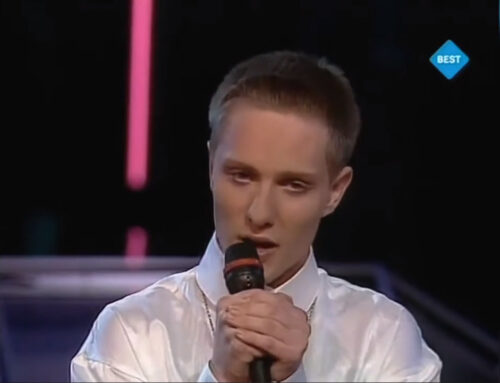
🇼🇾 Blast from the Past: Iceland 1989

We know a lot about Eurovision and we want to share this knowledge with you! Therefore we’d like to bring you a blast from the past. Today this year’s last one before we fully head over to the national final season: Iceland 1989.

Iceland in the Eurovision Song Contest

Iceland’s journey in the Eurovision Song Contest is a tale of persistence, creativity, and cultural expression. Debuting in 1986, this small island nation has become a Eurovision staple, despite never securing the coveted first place. Iceland’s music scene, known for its distinctiveness and innovation, is reflected in their Eurovision entries, ranging from pop and rock to avant-garde and electronic.

Iceland’s near-victories include the uptempo song Selma presented in 1999: “All Out Of Luck” and Yohanna‘s heartfelt ballad “Is It True?” in 2009. Both songs reached a 2nd place. Daði og Gagnamagnið‘s quirky, yet catchy “Think About Things” was the top favourite to win in 2020. Unfortunately it didn’t happen as the contest was cancelled due to COVID19.

One Icelandic entry ended up with a zero: “Það sem enginn sĂ©r” by Daniel ÁgĂșst Haraldsson. That is the song we talk about today.
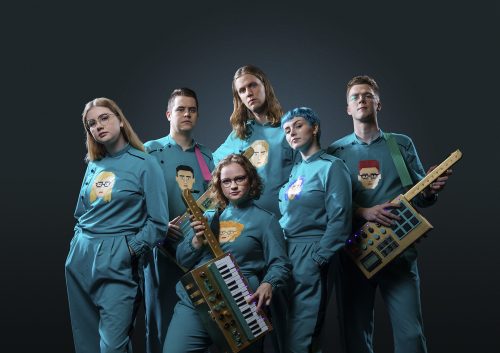
photo: RUV

Söngvakeppnin 1989

The Icelandic national final is called Söngvakeppnin. In 1989 it contained only five songs, being:

  1. Það sem enginn sĂ©r“, by Daniel ÁgĂșst Haraldsson, 66 pts, 1st
  2. ÞĂș leiddir mig i ljĂłs“, by JĂłhanna Linnet, 30 pts, 5th
  3. Linudans“, by Ellen KristjĂĄnsdĂłttir & Mannakorn, 58 pts, 2nd
  4. SĂłley“, by Björgvin HalldĂłrsson & Katla Maria, 44 pts, 4th
  5. Alpatwist” by BĂ­tlavinafĂ©lagið, 58 pts, 2nd

When the winner was announced, it was not a happy moment for Daniel. Whoever saw the national final could conclude that the singer didn’t express a single sign of happiness. The entire show can be watched here.

Daniel ÁgĂșst Haraldsson

Daniel ÁgĂșst Haraldsson, an Icelandic musician with a distinctive artistic vision, has carved a unique niche in the world of music. Born on August 26, 1969, in Reykjavik, Iceland, Daniel ÁgĂșst grew up in a country known for its rich musical heritage and stunning landscapes, both of which have influenced his artistic journey.

Daniel ÁgĂșst’s musical career began to take shape in the 1980s when he co-founded the band NĂœdönsk, one of Iceland’s most popular bands. Known for their blend of rock and brass, NĂœdönsk became a cornerstone of the Icelandic music scene. His tenure with NĂœdönsk showcased his versatility as a musician and his ability to blend different genres seamlessly.
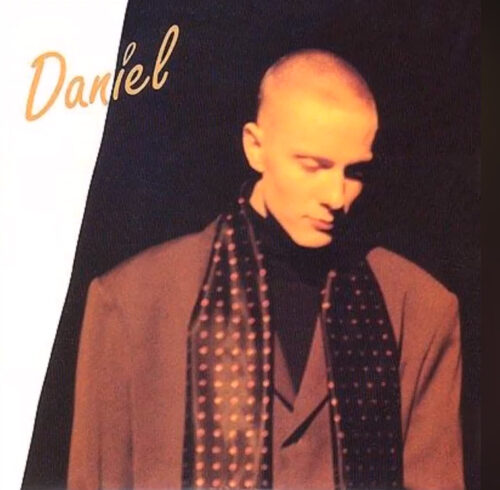
In 1989, as said, he won Söngvakeppnin and thus represented Iceland in the Eurovision Song Contest. Unfortunately, Daniel didn’t manage to earn any points with his song.

In 1994, Daniel ÁgĂșst’s musical direction took a significant turn when he joined GusGus, a collective known for its eclectic mix of electronic, house, and techno music. As one of the founding members, he contributed to the band’s first two albums, notably their self-titled debut and “Polydistortion,” which gained international acclaim. His work with GusGus solidified his reputation as a talented and innovative artist in the electronic music scene.

After his stint with GusGus, Daniel ÁgĂșst embarked on a solo career, exploring new musical territories. His solo debut, “Swallowed a Star” (2005), was a critical success, lauded for its experimental approach and emotional depth. The album demonstrated his ability to craft intricate soundscapes that are both haunting and beautiful.

Aside from his band and solo work, Daniel ÁgĂșst has been involved in various collaborations and projects, contributing to film soundtracks and working with other artists.

Það sem enginn sĂ©r

“Það sem enginn sĂ©r” stands out for its emotive and introspective nature, showcasing Daniel ÁgĂșst’s distinctive vocal style. The song’s lyrical depth, exploring themes of introspection and the unseen struggles of the human experience, resonated with the Icelandic audience, making it a strong choice for Eurovision. The song was written and composed by Valgeir GuðjĂłnsson, who previously wrote the 1987 Icelandic entry for Halla MĂĄrgret.

However, despite its artistic merit and Daniel ÁgĂșst’s compelling performance, “Það sem enginn sĂ©r” faced an unexpected setback at the contest. In a turn of events that stunned both the Icelandic delegation and Eurovision fans, the song received zero points, joining the infamous “nul points” club in Eurovision history.

Related news

Uncategorized

Vienna 12 points: from traditions to a worldwide hit

Several countries start their second rehearsals in Vienna. As we still don’t have access to the rehearsals, we will do something else. Per entry, we highlight one subject and give you some more information. That can be something about the artist, the song, the lyrics or even something completely different.  Bulgaria — DARA, “Bangaranga” Running order: 1 | Rehearsal: 8 May, 10:30–10:55 CEST The Kukeri tradition in Bulgaria is one of the country’s most striking winter rituals. Dressed in heavy costumes, frightening masks and loud bells, Kukeri dancers move through villages to chase away evil spirits and welcome health, fertility and a good harvest. The custom is linked to ancient Balkan beliefs and is still passed on from generation to generation. Around New Year and before spring, communities gather for processions in which the sound, rhythm and costumes create a powerful, almost supernatural atmosphere. That makes the tradition a fascinating link to Bulgaria’s Eurovision Song Contest staging in Vienna this year. When the dancers appear with wild movements and ritual energy, they are not just adding drama. They are referring to a living folklore practice that many Bulgarians immediately recognise. For international viewers, the Kukeri tradition in Bulgaria shows how music, dance and symbolism can turn a pop performance into a cultural story.  Azerbaijan — JIVA, “Just Go” Running order: 2 | Rehearsal: 8 May, 11:05–11:30 CEST The Azerbaijan Eurovision AI rumours quickly became a talking point after JIVA released “Just Go” for the Eurovision Song Contest 2026. Some online discussions claimed that the song may have been created with artificial intelligence, partly because songwriter Fuad Javadov had been linked by fans to earlier AI-related demos. However, Azerbaijani broadcaster İctimai Television (İTV) has strongly denied the claims. In a statement, İTV said the allegations did not reflect reality. The broadcaster described “Just Go” as an original musical work, created through a professional process based on experience and creative labour. İTV also explained that JIVA was chosen after a multi-stage internal selection, with expert opinions and a focus group helping to decide the entry. For Eurovision viewers, the debate shows how sensitive the contest has become to questions about technology, authorship and transparency. For now, Azerbaijan insists that “Just Go” is a human-made Eurovision entry for Vienna 2026.  Romania — Alexandra Căpitănescu, “Choke Me” Running order: 3 | Rehearsal: 8 May, 11:40–12:05 CEST The Romanian Eurovision lyrics controversy around Alexandra Căpitănescu’s “Choke Me” has put the country’s 2026 entry under a sharp spotlight. After the song was selected for Vienna, some campaigners and fans argued that the repeated phrase “choke me” could be heard as a reference to sexual choking. They warned that, in a family show, such wording might normalise a dangerous practice rather than simply create drama. Romania’s delegation and broadcaster TVR rejected that interpretation. According to TVR, the stage concept is designed to underline the metaphorical nature of the message and rule out a literal reading of the lyrics. Căpitănescu has also explained that the song is about emotional pressure, inner fears, self-doubt and feeling suffocated by expectations. In that reading, “Choke Me” is not a call for violence or sex, but a dark image for anxiety and the struggle to reclaim one’s voice before the worldwide audience in May.  Luxembourg — Eva Marija, “Mother Nature” Running order: 4 | Rehearsal: 8 May, 12:20–12:45 CEST he Slovenian community in Luxembourg may be small, but it has a clear cultural presence in the Grand Duchy. For Eurovision fans, that background adds extra meaning to Eva Marija, Luxembourg’s 2026 contestant, who was born in Luxembourg to Slovenian parents. Around 768 Slovenian nationals lived in Luxembourg on 1 January 2025, according to STATEC. In such a multilingual country, the community connects Slovenian heritage with everyday Luxembourgish life. The Slovenian Association in Luxembourg, also known as Slolux, keeps that connection alive through events, language lessons, celebrations and informal support for newcomers. It promotes Slovenia, helps people integrate and brings families together throughout the year. In a country where almost half of residents are foreign nationals, Slovenes are part of Luxembourg’s wider European mosaic. Eva Marija’s story therefore clearly reflects both her Luxembourgish home and her Slovenian roots beautifully this year in Vienna for a wider Eurovision audience across Europe.  Czechia — Daniel ĆœiĆŸka, “CROSSROADS” Running order: 5 | Rehearsal: 8 May, 12:55–13:20 Mikolas Josef Eurovision history still matters for Czechia. In 2018, the Prague-born singer represented the country in Lisbon with “Lie To Me”, a playful pop song full of attitude, choreography and a memorable backpack. He finished sixth in the Grand Final with 281 points, Czechia’s best result at the contest so far. That record is now the benchmark Daniel Zizka may try to beat in Vienna 2026 with “CROSSROADS”. After Eurovision, Mikolas did not disappear from the music scene. He released singles such as “Me Gusta”, “Abu Dhabi” and “Acapella”, built an international fanbase and later continued simply as MIKOLAS. Recent years brought new music, including “Boys Don’t Cry”, “Delilah” and his debut album “ONE”. His post-Eurovision career shows how one strong contest result can become the start of a longer pop journey, not just a one-night Eurovision success story for Czech music fans and the wider Eurovision audience today.  Armenia — SIMÓN, “Paloma Rumba” Running order: 6 | Rehearsal: 8 May, 13:30–13:55 CEST Mikolas Josef Eurovision history still matters for Czechia. In 2018, the Prague-born singer represented the country in Lisbon with “Lie To Me”, a playful pop song full of attitude, choreography and a memorable backpack. He finished sixth in the Grand Final with 281 points, Czechia’s best result at the contest so far. That record is now the benchmark Daniel Zizka may try to beat in Vienna 2026 with “CROSSROADS”. After Eurovision, Mikolas did not disappear from the music scene. He released singles such as “Me Gusta”, “Abu Dhabi” and “Acapella”, built an international fanbase and later continued simply as MIKOLAS. Recent years brought new music, including “Boys Don’t Cry”, “Delilah” and his debut album “ONE”.

Read More »
Uncategorized
Martijn

Vienna 12 points: from traditions to a worldwide hit

Several countries start their second rehearsals in Vienna. As we still don’t have access to the rehearsals, we will do something else. Per entry, we highlight one subject and give you some more information. That can be something about the artist, the song, the lyrics or even something completely different.  Bulgaria — DARA, “Bangaranga” Running order: 1 | Rehearsal: 8 May, 10:30–10:55 CEST The Kukeri tradition in Bulgaria is one of the country’s most striking winter rituals. Dressed in heavy costumes, frightening masks and loud bells, Kukeri dancers move through villages to chase away evil spirits and welcome health, fertility and a good harvest. The custom is linked to ancient Balkan beliefs and is still passed on from generation to generation. Around New Year and before spring, communities gather for processions in which the sound, rhythm and costumes create a powerful, almost supernatural atmosphere. That makes the tradition a fascinating link to Bulgaria’s Eurovision Song Contest staging in Vienna this year. When the dancers appear with wild movements and ritual energy, they are not just adding drama. They are referring to a living folklore practice that many Bulgarians immediately recognise. For international viewers, the Kukeri tradition in Bulgaria shows how music, dance and symbolism can turn a pop performance into a cultural story.  Azerbaijan — JIVA, “Just Go” Running order: 2 | Rehearsal: 8 May, 11:05–11:30 CEST The Azerbaijan Eurovision AI rumours quickly became a talking point after JIVA released “Just Go” for the Eurovision Song Contest 2026. Some online discussions claimed that the song may have been created with artificial intelligence, partly because songwriter Fuad Javadov had been linked by fans to earlier AI-related demos. However, Azerbaijani broadcaster İctimai Television (İTV) has strongly denied the claims. In a statement, İTV said the allegations did not reflect reality. The broadcaster described “Just Go” as an original musical work, created through a professional process based on experience and creative labour. İTV also explained that JIVA was chosen after a multi-stage internal selection, with expert opinions and a focus group helping to decide the entry. For Eurovision viewers, the debate shows how sensitive the contest has become to questions about technology, authorship and transparency. For now, Azerbaijan insists that “Just Go” is a human-made Eurovision entry for Vienna 2026.  Romania — Alexandra Căpitănescu, “Choke Me” Running order: 3 | Rehearsal: 8 May, 11:40–12:05 CEST The Romanian Eurovision lyrics controversy around Alexandra Căpitănescu’s “Choke Me” has put the country’s 2026 entry under a sharp spotlight. After the song was selected for Vienna, some campaigners and fans argued that the repeated phrase “choke me” could be heard as a reference to sexual choking. They warned that, in a family show, such wording might normalise a dangerous practice rather than simply create drama. Romania’s delegation and broadcaster TVR rejected that interpretation. According to TVR, the stage concept is designed to underline the metaphorical nature of the message and rule out a literal reading of the lyrics. Căpitănescu has also explained that the song is about emotional pressure, inner fears, self-doubt and feeling suffocated by expectations. In that reading, “Choke Me” is not a call for violence or sex, but a dark image for anxiety and the struggle to reclaim one’s voice before the worldwide audience in May.  Luxembourg — Eva Marija, “Mother Nature” Running order: 4 | Rehearsal: 8 May, 12:20–12:45 CEST he Slovenian community in Luxembourg may be small, but it has a clear cultural presence in the Grand Duchy. For Eurovision fans, that background adds extra meaning to Eva Marija, Luxembourg’s 2026 contestant, who was born in Luxembourg to Slovenian parents. Around 768 Slovenian nationals lived in Luxembourg on 1 January 2025, according to STATEC. In such a multilingual country, the community connects Slovenian heritage with everyday Luxembourgish life. The Slovenian Association in Luxembourg, also known as Slolux, keeps that connection alive through events, language lessons, celebrations and informal support for newcomers. It promotes Slovenia, helps people integrate and brings families together throughout the year. In a country where almost half of residents are foreign nationals, Slovenes are part of Luxembourg’s wider European mosaic. Eva Marija’s story therefore clearly reflects both her Luxembourgish home and her Slovenian roots beautifully this year in Vienna for a wider Eurovision audience across Europe.  Czechia — Daniel ĆœiĆŸka, “CROSSROADS” Running order: 5 | Rehearsal: 8 May, 12:55–13:20 Mikolas Josef Eurovision history still matters for Czechia. In 2018, the Prague-born singer represented the country in Lisbon with “Lie To Me”, a playful pop song full of attitude, choreography and a memorable backpack. He finished sixth in the Grand Final with 281 points, Czechia’s best result at the contest so far. That record is now the benchmark Daniel Zizka may try to beat in Vienna 2026 with “CROSSROADS”. After Eurovision, Mikolas did not disappear from the music scene. He released singles such as “Me Gusta”, “Abu Dhabi” and “Acapella”, built an international fanbase and later continued simply as MIKOLAS. Recent years brought new music, including “Boys Don’t Cry”, “Delilah” and his debut album “ONE”. His post-Eurovision career shows how one strong contest result can become the start of a longer pop journey, not just a one-night Eurovision success story for Czech music fans and the wider Eurovision audience today.  Armenia — SIMÓN, “Paloma Rumba” Running order: 6 | Rehearsal: 8 May, 13:30–13:55 CEST Mikolas Josef Eurovision history still matters for Czechia. In 2018, the Prague-born singer represented the country in Lisbon with “Lie To Me”, a playful pop song full of attitude, choreography and a memorable backpack. He finished sixth in the Grand Final with 281 points, Czechia’s best result at the contest so far. That record is now the benchmark Daniel Zizka may try to beat in Vienna 2026 with “CROSSROADS”. After Eurovision, Mikolas did not disappear from the music scene. He released singles such as “Me Gusta”, “Abu Dhabi” and “Acapella”, built an international fanbase and later continued simply as MIKOLAS. Recent years brought new music, including “Boys Don’t Cry”, “Delilah” and his debut album “ONE”.

Read More »
Follow Us: