Weekly Update

It’s time for another weekly Eurovision update! This week’s news spans a heartfelt farewell, a surprise comeback announcement, and national selection developments across Europe. A German hit-maker behind Eurovision classics has sadly passed away. France’s Patrick Fiori eyes a Eurovision return for Armenia. Countries like Czechia, Estonia, and Italy are gearing up their Eurovision 2026 plans. Here are this week’s top stories:

Germany: Eurovision Songwriter Bernd Meinunger Dies at 81

Legendary German lyricist Bernd Meinunger, who penned 19 songs for the Eurovision Song Contest, has passed away at age 81. He died on 17 October 2025 at his home in Grünwald, Bavaria, due to multiple organ failure. Meinunger was best known for his long-time collaboration with composer Ralph Siegel. Together they created iconic Eurovision entries that shaped Germany’s Eurovision history. He wrote the lyrics for Germany’s 1982 winner “Ein bisschen Frieden”, as well as other classics like “Dschinghis Khan” (1979) and “Theater” (1980). Meinunger’s Eurovision career spanned from 1979 to 2015 with a total of 19 entries. His first entry “Dschinghis Khan” placed 4th, and his crowning achievement was Nicole’s victory in 1982. His final Eurovision contribution came in 2015, writing San Marino’s entry “Chain of Lights”.

Outside Eurovision, Meinunger was extraordinarily prolific. He reportedly wrote over 5,500 songs in multiple languages. More than 200 of his songs reached the Top 100 charts internationally. Meinunger earned around 400 gold and platinum records over his career. His work extended far beyond Eurovision, but within the contest community he earned a reputation as Germany’s Schlager poet” for his contributions to pop music.  source: promiflash.de
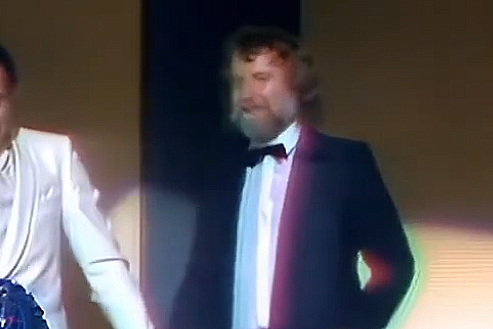
Meinunger receiving the Grand Prix of Eurovision 1982

🇦🇲 Armenia: Patrick Fiori Plans Eurovision Return in 2027

French singer Patrick Fiori, who achieved 4th place for France at Eurovision 1993, has revealed plans for a comeback. He would be representing Armenia this time. Appearing on France 2’s talk show Quelle époque! on 18 October, Fiori announced that he has “an agreement in principle” to represent Armenia at the Eurovision Song Contest 2027. Fiori is of Corsican-Armenian descent (his father is Armenian). He expressed pride in his roots by stating, “I will represent Armenia in Eurovision.” Fiori even hinted at hoping to perform as a duet with an Armenian artist on the Eurovision stage. 

Patrick Fiori’s original Eurovision appearance was over three decades ago. He sang “Mama Corsica” for France in 1993, finishing a respectable 4th in Millstreet. As of now, Armenia’s broadcaster (AMPTV) has not officially confirmed Fiori’s 2027 participation or even their 2026 plans. It’s early days, but Fiori’s announcement has created excitement about a potential Franco-Armenian collaboration in a future Eurovision. source: Gala.fr

🇨🇿 Czechia: Eurovision 2026 Song Submissions Window Closes

In Czechia, the first phase of selecting a Eurovision 2026 entry has just concluded. Česká televize (Czech TV) closed its song submission window on 19 October, after a six-week period inviting artists and songwriters to send in their entries. The deadline was set at 23:59 CEST. All proposals submitted by then will now proceed to the review stage. Czechia’s Eurovision 2026 representative will be chosen through a combined process involving an expert jury and a public vote, similar to the method used for the 2025 selection.

Next, the Czech broadcaster will screen the entries and likely shortlist finalists for a national selection or an internal selection process. With the submissions closed, we can anticipate an announcement of the selected song and artist in the coming months. Czechia has been steadily improving its Eurovision approach. The 2026 selection aims to build on past success. The hope is that this mixed jury-public selection will pick an entry capable of achieving a strong result on home turf of the contest’s host country. source: Eurovoix.com

🇪🇪 Estonia: 171 Entries Submitted for Eesti Laul 2026

Estonia’s Eurovision season is off to a strong start with a high volume of entries for its national final. Broadcaster ERR announced that 171 songs were submitted for Eesti Laul 2026, the country’s selection contest for Eurovision. This figure is only slightly lower than last year’s submissions, indicating sustained enthusiasm from creators. Of the 171 entries, 77 are in Estonian and 94 in other languages. Ssongwriters from 20 different countries (including Brazil and Australia) have entered songs.

Despite the global interest, Eesti Laul producer Riin Vann noted that domestic Estonian artists still dominate the field, keeping a strong local flavor in the competition. Now that the submission window has closed (it ended on 20 October), a professional jury will review all entries blindly (without knowing the writers or performers) to pick the best ones. Only 12 songs will be chosen for the televised Eesti Laul 2026 final. The final is scheduled for 14 February 2026 in Tallinn. As in previous years, the winner will be decided over two rounds: a jury-and-televote round to pick superfinalists, followed by a televote to choose the ultimate winner. Estonia had a remarkable Eurovision result in 2025 (3rd place). source: eeter.err.et

🇮🇹 Italy: Sanremo 2026 Rules Published, Eurovision Participation Confirmed

Italy has officially kicked off its Eurovision 2026 preparations by releasing the rules for the upcoming Festival di Sanremo 2026. National broadcaster RAI published the Sanremo 2026 regulations on 16 October, confirming that the winner of Sanremo will again represent Italy at Eurovision 2026 in Vienna. With this announcement, Italy also formally confirmed its participation in the 70th Eurovision Song Contest. The Sanremo rules outline a festival with 26 artists in the Campioni category (established stars) and 4 artists in Nuove Proposte (newcomers). The two competitions will run separately as they did last year.

RAI also reiterated the usual Eurovision clause: if the Sanremo winner declines the Eurovision slot, the offer will pass to the runner-up (and further down if necessary) until an artist accepts the ticket to Vienna. The five-night Sanremo festival will maintain its traditional format, including special theme nights. For example, the fourth night will be a covers night where contestants perform classic hits (Italian or international) for fun, which won’t affect the competition results. The grand final of Sanremo will feature voting from multiple juries (press jury, radio jury, and televoting) with a weighted system to determine the winner. It will be followed by a final round sing-off among the top 5 acts. Italy’s 2025 Eurovision entrant (Lucio Corsi) finished 5th in the contest.

Each of these stories marks an important development on the road to Eurovision 2026. Stay tuned for more updates on EurovisionUniverse.com as the journey to Vienna continues!

Related news

Eurovision 2026

Road to Vienna: Austria

Just before rehearsals kick off in Vienna, we’ve got one more stop on our daily Road to Vienna: the host country itself, Austria. Cosmó: Austria’s Young Pop Star and student to Eurovision 2026 Cosmó, born Benjamin Gedeon on 18 June 2006 in Budapest, is a 19-year-old Austrian singer-songwriter from Burgenland. He started music early, attending music school at just four years old and learning piano by six. By his early teens, he was already writing songs, inspired by musical theatre, karaoke experiences, and a growing love for pop music. Early Career and TV Breakthrough Cosmó first appeared on The Voice Kids Germany in 2020, gaining early stage experience. His breakthrough came in 2022 when he reached the final under the mentorship of Álvaro Soler. Around the same time, he won a regional songwriting competition with his original track “Fall into Your Arms,” strengthening his reputation as a rising young talent. Building His Sound and Identity After his TV success, Cosmó began performing live across Austria and collaborating with established artists. He formed his own band and developed a distinct pop style influenced by electronic music and club culture. In 2025, he released his debut EP From My Room, showcasing his modern, youthful sound and growing artistic identity.      Now based in Vienna and studying dentistry, Cosmó balances academic life with a fast-growing music career. His name, short for “Cosmopolitan,” reflects his open-minded and global outlook. Tanzschein: A Club Anthem with a Deeper Message At first listen, “Tanzschein” by Cosmó sounds like a high-energy club track built for the dance floor. Neon lights, nightlife excitement, and party energy set the tone—but underneath the upbeat surface lies a layered social commentary. The Club as a Mirror of Society In “Tanzschein,” the nightclub becomes a metaphor for society itself. The lyrics portray partygoers as instinct-driven and performative, highlighting themes of dominance, ego, and social hierarchy. By exaggerating nightlife behavior, the song subtly reflects real-world social dynamics in a humorous yet critical way. The Meaning of the “Dance License” A central concept in the song is the fictional “dance license.” While it sounds playful, it represents emotional intelligence, respect, and self-awareness. Those who “have it” are welcomed into the club, while those who don’t remain outside—symbolizing exclusion caused by ego-driven or impulsive behavior. Satire, Vulnerability, and Growth What makes “Tanzschein” stand out is its balance between satire and sincerity. The song critiques toxic behavior often found in nightlife culture, but it also introduces vulnerability through a character afraid to join the dance floor. This shift transforms the club from a place of competition into one of acceptance and self-expression. A Dance Floor as a Social Lesson Ultimately, “Tanzschein” turns nightlife into a reflection of society. It suggests that true connection goes beyond rhythm and appearance—it requires empathy, awareness, and openness. The song delivers a playful yet thought-provoking message, making it one of the more conceptually rich entries on the Eurovision 2026 stage.   Austria in the Eurovision Song Contest Austria has participated in the Eurovision Song Contest 56 times since its debut in 1957. The country has won three times: in 1966 with Udo Jürgens‘ “Merci, Chérie”, in 2014 with Conchita Wurst‘s “Rise Like a Phoenix.” And ofcourse last year with JJ‘s “Wasted love” Austria has experienced varying success over the years, with several last-place finishes and instances of receiving zero points. The Bookmakers With a guaranteed spot in the Grand Final as last year’s winner, Austria somehow finds itself ranked 32nd with the bookmakers—while only 25 acts will actually compete.  

Read More »
Eurovision 2026
Anja Kroeze

Road to Vienna: Austria

Just before rehearsals kick off in Vienna, we’ve got one more stop on our daily Road to Vienna: the host country itself, Austria. Cosmó: Austria’s Young Pop Star and student to Eurovision 2026 Cosmó, born Benjamin Gedeon on 18 June 2006 in Budapest, is a 19-year-old Austrian singer-songwriter from Burgenland. He started music early, attending music school at just four years old and learning piano by six. By his early teens, he was already writing songs, inspired by musical theatre, karaoke experiences, and a growing love for pop music. Early Career and TV Breakthrough Cosmó first appeared on The Voice Kids Germany in 2020, gaining early stage experience. His breakthrough came in 2022 when he reached the final under the mentorship of Álvaro Soler. Around the same time, he won a regional songwriting competition with his original track “Fall into Your Arms,” strengthening his reputation as a rising young talent. Building His Sound and Identity After his TV success, Cosmó began performing live across Austria and collaborating with established artists. He formed his own band and developed a distinct pop style influenced by electronic music and club culture. In 2025, he released his debut EP From My Room, showcasing his modern, youthful sound and growing artistic identity.      Now based in Vienna and studying dentistry, Cosmó balances academic life with a fast-growing music career. His name, short for “Cosmopolitan,” reflects his open-minded and global outlook. Tanzschein: A Club Anthem with a Deeper Message At first listen, “Tanzschein” by Cosmó sounds like a high-energy club track built for the dance floor. Neon lights, nightlife excitement, and party energy set the tone—but underneath the upbeat surface lies a layered social commentary. The Club as a Mirror of Society In “Tanzschein,” the nightclub becomes a metaphor for society itself. The lyrics portray partygoers as instinct-driven and performative, highlighting themes of dominance, ego, and social hierarchy. By exaggerating nightlife behavior, the song subtly reflects real-world social dynamics in a humorous yet critical way. The Meaning of the “Dance License” A central concept in the song is the fictional “dance license.” While it sounds playful, it represents emotional intelligence, respect, and self-awareness. Those who “have it” are welcomed into the club, while those who don’t remain outside—symbolizing exclusion caused by ego-driven or impulsive behavior. Satire, Vulnerability, and Growth What makes “Tanzschein” stand out is its balance between satire and sincerity. The song critiques toxic behavior often found in nightlife culture, but it also introduces vulnerability through a character afraid to join the dance floor. This shift transforms the club from a place of competition into one of acceptance and self-expression. A Dance Floor as a Social Lesson Ultimately, “Tanzschein” turns nightlife into a reflection of society. It suggests that true connection goes beyond rhythm and appearance—it requires empathy, awareness, and openness. The song delivers a playful yet thought-provoking message, making it one of the more conceptually rich entries on the Eurovision 2026 stage.   Austria in the Eurovision Song Contest Austria has participated in the Eurovision Song Contest 56 times since its debut in 1957. The country has won three times: in 1966 with Udo Jürgens‘ “Merci, Chérie”, in 2014 with Conchita Wurst‘s “Rise Like a Phoenix.” And ofcourse last year with JJ‘s “Wasted love” Austria has experienced varying success over the years, with several last-place finishes and instances of receiving zero points. The Bookmakers With a guaranteed spot in the Grand Final as last year’s winner, Austria somehow finds itself ranked 32nd with the bookmakers—while only 25 acts will actually compete.  

Read More »
Follow Us: