
Road to Vienna: Estonia

Road to Vienna: Estonia

As we eagerly anticipate the Eurovision Song Contest in Basel, we continue our daily spotlight on this year’s contestants. Today, we focus on Estonia

Vanilla Ninja: A Pop-Rock Comeback Story

Vanilla Ninja is an Estonian girl band formed in 2002 in Tallinn. The original lineup—Maarja Kivi, Lenna Kuurmaa, Katrin Siska, and Piret Järvis—quickly gained attention with their energetic pop-rock sound. Their 2003 debut album introduced hits like “Club Kung Fu,” which became a fan favorite and boosted their popularity across Estonia and Central Europe.

Eurovision Breakthrough and International Fame

With the release of “Traces of Sadness” in 2004, the band expanded its reach. After a lineup change, they represented Switzerland at the Eurovision Song Contest 2005 with “Cool Vibes,” finishing 8th. Their third album, “Blue Tattoo,” and singles like “Tough Enough” helped establish them as one of Estonia’s biggest music exports.

Lineup Changes and Musical Evolution

Following more lineup changes, Vanilla Ninja continued as a trio and released “Love Is War” (2006), showcasing a more mature rock sound. Despite continued releases and performances, including the single “Crashing Through the Doors,” the band slowed down and went on hiatus by 2008.

Hiatus and Solo Careers (2009–2019)

During their long break from 2009 ’till 2019, members pursued individual careers. Lenna Kuurmaa found success as a solo artist and actress, while Maarja Kivi reinvented herself as rock singer Marya Roxx. Fans remained loyal, keeping hopes for a reunion alive.

Reunion and New Music 

Vanilla Ninja reunited in 2020, releasing their comeback album “Encore” in 2021. After further lineup changes, the band continued as a trio and remained active, releasing new music like.

Eurovision Return (2026)

In 2026, Vanilla Ninja made a major comeback by winning Eesti Laul with “Too Epic To Be True,” earning them a spot at the Eurovision Song Contest once again.

To Epic to be true: A Love That Feels Larger Than Life

To Epic to be true  tells the story of a romance that feels almost unreal. The narrator experiences a deep emotional connection that seems guided by fate. Love, destiny, and intensity are at the heart of the track, creating a cinematic and powerful atmosphere.

Vulnerability and Self-Doubt

Alongside passion, the song explores uncertainty. The narrator questions whether their feelings are too impulsive or naïve. Despite these doubts, they choose to trust their emotions, highlighting themes of honesty, risk, and emotional courage.

From Chaos to Clarity

A key element of the song is personal growth. The narrator reflects on a previously chaotic life, now transformed by love and stability. This contrast adds depth and shows how meaningful relationships can bring clarity and direction.

A Story of Transformation

By blending romance with self-discovery, the track delivers a relatable message. It shows how intense love can reshape identity and turn uncertainty into belief, making it both emotional and inspiring for listeners.


Estonia in the Eurovision Song Contest

Estonia has participated in the Eurovision Song Contest since 1994 and secured its only victory in 2001 with “Everybody” performed by Tanel Padar, Dave Benton, and 2XL. Another top-3 songs was “Runaway” by Sahlene. She became 3rd. Over the years, Estonia has showcased a diverse range of musical styles, often earning praise for its innovative and bold entries. The country’s commitment to promoting its artists on the international stage remains steadfast, with Eesti Laul serving as a platform for both established and emerging talents. Last years entry, “Espresso Machiato” ended on place 3, in the grand final in Basel. 

The Bookmakers

Bookmakers are showing little confidence this year, with Estonia currently sitting at the bottom of the rankings. Their chances of reaching the final look quite slim.

Related news

History

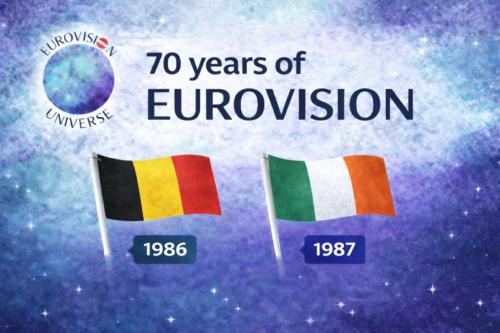
70 years of Eurovision: a child and a double

The Eurovision Song Contest is celebrating its 70th anniversary. That is a wonderful milestone. We at Eurovision Universe love diving into the history of the contest. That is why we are taking a closer look at the contests of the past 70 years. 1986 For the first time, Norway was allowed to host the Eurovision Song Contest. Former contestant Åse Kleveland hosted the event at the Grieg Hallen in Bergen. Greece withdrew at a late stage, and Italy was not included either. However, the Netherlands and Yugoslavia were back, and Iceland made its debut! Elpida, who participated for Greece in 1979, entered the stage for Cyprus. The ladies of the French group Cocktail-Chic had performed in backing choirs many times but had never participated solo. Debuting Iceland had selected a solo singer for the national final, but internationally he was flanked by two colleagues. Together they formed the group Icy. For Turkey, the group Klips Ve Onlar performed a song about Halley’s Comet. Once again, Dutchman Peter Schön was asked to arrange the music. For the first time, Turkey finished in the top half of the rankings with a respectable 9th place. Also striking was the ballad from Switzerland, a song that might well have won effortlessly in another year: “Pas pour moi”, sung by Daniela Simons. And certainly striking was the Swedish entry “E’ de’ det här du källar kärlek”. Duo partners Lasse Holm and Monica Törnell were already making it a party, but when the delegation leader appeared on stage shirtless, the spectacle was complete. Sandra Kim However, no one could match Belgium. Sandra Kim sang that she was 15, said she was 14, and only admitted ten years later that she was actually 13 when she won the song contest. Sandra had already released a single before. With “J’aime la vie”, she effortlessly won the national final and later the Eurovision Song Contest. The question was no longer whether she would win or not, but by how many points she would do so. Immediately after she won, presenter Åse Kleveland promised her a giant ice cream. In the turmoil following the victory, it took a while before she actually received it. Sandra Kim is still a well-known singer in Belgium. A few years ago, she won the Belgian version of “The Masked Singer”.   1987 In Belgium, the agreement was that the Flemish and Walloon broadcasters would organize the contest in case of a victory. Given the political sensitivity of the time, this went disastrously wrong. Ultimately, it was the Walloon broadcaster that organized the contest. Viktor Lazlo presented the Eurovision Song Contest at the Palace on the Heysel in Brussels. She garnered much praise for this.  Gary Lux participated for Austria for the third time. The group Wind, finishing second two years earlier, performed for Germany. We saw one of the group members, Rob Pilatus, shortly afterwards as half of the duo Milli Vanilli. The two scored a number of big hits before it came out that they didn’t sing a single note themselves. Alexia was once part of the first group to participate for Cyprus, but now she was alone on stage. She performed the swinging “Aspro mavro”. And then, of course, there was Johnny Logan. For the second time, he was on the Eurovision stage as a singer. He was immediately the big favorite. Big stars Umberto Tozzi and Raff participated for Italy. Their song, “Gente Di Mare”, came third. People were outraged that the two did not appear in tuxedos, but they certainly had a gigantic hit with the song. By now, we can consider “Gente Di Mare” a Eurovision classic. Also noteworthy were Anne Catherine Herdorff and her backing band Bandjo. Their “En lille melodi” was frequently compared to “Ein bißchen Frieden”. And then there was Novi Fosili, the group that participated for Yugoslavia. Singer Sanja Doležal celebrated her birthday that day, although presenter Viktor Lazlo did not allow you to tell anyone. For group member Rajko Dujmić and his colleague Stevo Cvikić, it was the first entry they wrote, but certainly not the last. Johnny Logan The Irishman Johnny Logan, whose real name was Sean Sherrard, won the Eurovision Song Contest back in 1980. After that, just about everything went against him. As an inexperienced artist, he was ripped off by producers and managers. As a result, he took to drinking and ran into financial trouble. The years that followed his Eurovision win were not pleasant for Logan. But the Irishman fought his way back. And when things improved for him, he wanted to go to the Eurovision Song Contest one more time, if only to prove that it *can* be done in a pleasant way. And he did it. Johnny Logan was the overwhelming favorite for the final victory. When it finally came to that, Logan was so emotional that he could barely manage to sing the reprise. He had to stop halfway through, and the final note didn’t come out very cleanly. But that didn’t spoil the fun. Johnny Logan never disappeared from the scene. As a composer, he would even win the Eurovision Song Contest one more time. And anyone who is a loyal visitor to the annual Het Grote Songfestivalfeest in Amsterdam can still see him live every year.

Read More »
Eurovision 2026
Anja Kroeze

Road to Vienna: Estonia

Road to Vienna: Estonia As we eagerly anticipate the Eurovision Song Contest in Basel, we continue our daily spotlight on this year’s contestants. Today, we focus on Estonia Vanilla Ninja: A Pop-Rock Comeback Story Vanilla Ninja is an Estonian girl band formed in 2002 in Tallinn. The original lineup—Maarja Kivi, Lenna Kuurmaa, Katrin Siska, and Piret Järvis—quickly gained attention with their energetic pop-rock sound. Their 2003 debut album introduced hits like “Club Kung Fu,” which became a fan favorite and boosted their popularity across Estonia and Central Europe. Eurovision Breakthrough and International Fame With the release of “Traces of Sadness” in 2004, the band expanded its reach. After a lineup change, they represented Switzerland at the Eurovision Song Contest 2005 with “Cool Vibes,” finishing 8th. Their third album, “Blue Tattoo,” and singles like “Tough Enough” helped establish them as one of Estonia’s biggest music exports. Lineup Changes and Musical Evolution Following more lineup changes, Vanilla Ninja continued as a trio and released “Love Is War” (2006), showcasing a more mature rock sound. Despite continued releases and performances, including the single “Crashing Through the Doors,” the band slowed down and went on hiatus by 2008. Hiatus and Solo Careers (2009–2019) During their long break from 2009 ’till 2019, members pursued individual careers. Lenna Kuurmaa found success as a solo artist and actress, while Maarja Kivi reinvented herself as rock singer Marya Roxx. Fans remained loyal, keeping hopes for a reunion alive. Reunion and New Music  Vanilla Ninja reunited in 2020, releasing their comeback album “Encore” in 2021. After further lineup changes, the band continued as a trio and remained active, releasing new music like. Eurovision Return (2026) In 2026, Vanilla Ninja made a major comeback by winning Eesti Laul with “Too Epic To Be True,” earning them a spot at the Eurovision Song Contest once again. To Epic to be true: A Love That Feels Larger Than Life To Epic to be true  tells the story of a romance that feels almost unreal. The narrator experiences a deep emotional connection that seems guided by fate. Love, destiny, and intensity are at the heart of the track, creating a cinematic and powerful atmosphere. Vulnerability and Self-Doubt Alongside passion, the song explores uncertainty. The narrator questions whether their feelings are too impulsive or naïve. Despite these doubts, they choose to trust their emotions, highlighting themes of honesty, risk, and emotional courage. From Chaos to Clarity A key element of the song is personal growth. The narrator reflects on a previously chaotic life, now transformed by love and stability. This contrast adds depth and shows how meaningful relationships can bring clarity and direction. A Story of Transformation By blending romance with self-discovery, the track delivers a relatable message. It shows how intense love can reshape identity and turn uncertainty into belief, making it both emotional and inspiring for listeners.   Estonia in the Eurovision Song Contest Estonia has participated in the Eurovision Song Contest since 1994 and secured its only victory in 2001 with “Everybody” performed by Tanel Padar, Dave Benton, and 2XL. Another top-3 songs was “Runaway” by Sahlene. She became 3rd. Over the years, Estonia has showcased a diverse range of musical styles, often earning praise for its innovative and bold entries. The country’s commitment to promoting its artists on the international stage remains steadfast, with Eesti Laul serving as a platform for both established and emerging talents. Last years entry, “Espresso Machiato” ended on place 3, in the grand final in Basel.  The Bookmakers Bookmakers are showing little confidence this year, with Estonia currently sitting at the bottom of the rankings. Their chances of reaching the final look quite slim.

Read More »
Follow Us: